A customer name that differs between the CRM and billing system is not a cosmetic defect. It can send a renewal notice to the wrong account, split revenue reporting, and force staff to decide which record is trustworthy. Master data management is the discipline of defining shared business entities, assigning stewardship, and distributing changes in a controlled way. It is valuable when it makes ordinary work faster and safer, not when it creates a new approval queue around every field.
Build master data management around an accountable operating model
Start with a small set of entities whose inconsistency already creates cost: customers, legal entities, products, suppliers, or locations. For each entity, name the canonical identifier, the system permitted to create it, the attributes other systems may update, and the event that communicates a change. A customer record, for example, may be created in a CRM but require finance-owned tax and legal-name attributes before it can become billable. This boundary prevents a program from becoming a vague promise to clean every database. Teams planning adjacent work should also consider this ERP integration guide, because shared records and handoffs often determine whether an apparently local improvement survives production use.

Define the records and states that make master data management explainable
The central model should separate identity, attributes, relationships, and history. Identity answers which real-world thing the record represents; attributes describe it; relationships show ownership or hierarchy; history preserves when a value changed and by whom. Matching rules can propose duplicates, but a steward should resolve ambiguous cases. Treating a confidence score as an automatic merge decision is risky when two subsidiaries share addresses, names, or contacts.
| Decision | Practical definition | Why it matters |
|---|---|---|
| Entity scope | Customer, product, supplier, or location with an immediate operational consequence | Stops an unbounded cleanup effort |
| Identifier policy | Stable internal ID plus approved external identifiers | Lets systems reconcile changes without guessing |
| Attribute ownership | One accountable source for each shared field | Prevents competing updates and silent overwrite |
| Correction path | Steward decision, audit entry, replay or notification | Makes a bad match recoverable |
Set ownership and controls before automating the happy path
Good governance is operational rather than ceremonial. A data owner decides policy for an entity, a steward resolves exceptions, and a technical custodian runs integrations and quality checks. Publish the definitions that affect business decisions, such as active customer, approved supplier, or sellable product. The team should also agree how to correct a bad merge: restore the prior identifiers, replay downstream events where necessary, and document the reason. The related CRM automation guide is a useful comparison when the design includes cross-team rules, because both practices depend on knowing whose decision controls the next state.
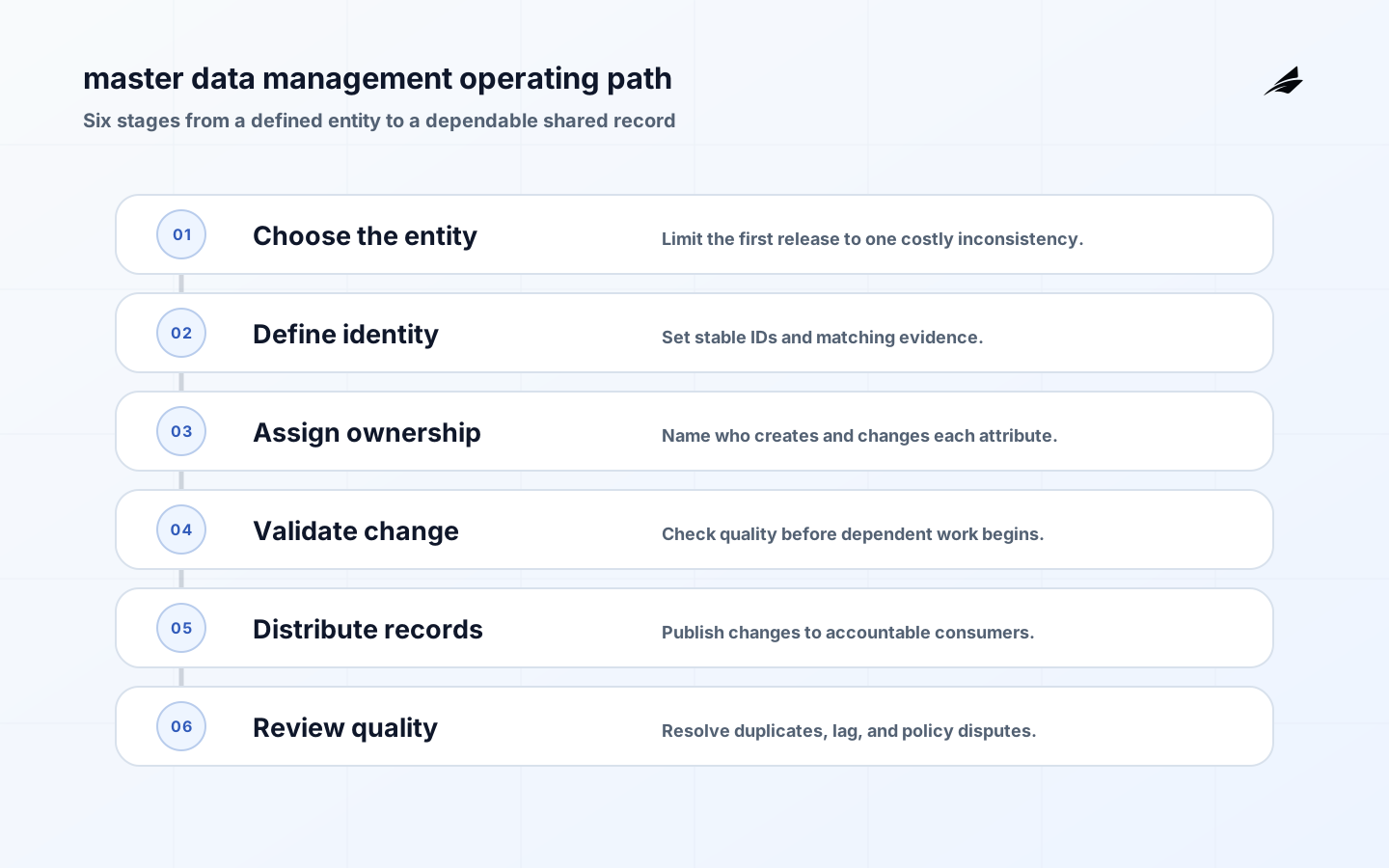
- Choose one entity and one decision harmed by inconsistent values.
- Write the canonical identifier and the fields each system owns.
- Add source-side validation before data enters the shared path.
- Route uncertain matches to a named steward with a service target.
- Publish change events or an auditable outbound feed for consumers.
- Review duplicate, rejected, and late-change trends every month.
Deliver master data management in slices and make exceptions visible
Deliver one critical path before expanding coverage. Map where the chosen entity is created, enriched, consumed, and archived; then add validation at the source and a review queue for ambiguity. Use immutable change events or a durable audit trail so downstream systems can reconcile a missed update. A nightly export may still be appropriate for low-risk analytics, but it should not silently replace the event path that operational teams depend on.
Use operating signals that lead to an action
Measure quality in the context of a business use. Completeness can mean required tax fields are present before invoicing; uniqueness can mean duplicate suppliers are held for review; timeliness can mean an approved address reaches fulfillment before the next shipment. Pair each metric with an owner, an acceptable threshold, and a remediation route. A dashboard that merely counts null fields is easy to build and rarely tells a team what to fix next.
| Control area | Signal to review | Accountable role |
|---|---|---|
| Duplicate candidates | Match precision and review age | Data steward |
| Required fields | Completeness before a dependent action | Source-system owner |
| Distribution | Change delivery failures and lag | Integration owner |
| Definitions | Policy changes and unresolved disputes | Business data owner |
Common master data management failure modes and practical responses
Master data management has its own failure patterns. A configured tool can still fail because a key record is ambiguous, authority is missing, or an integration hides a rejected change. Treat each repeated exception as a case with evidence, a named owner, and a specific decision about whether policy, data, process, or code must change. That approach preserves operational learning without normalizing a workaround as part of the system.
Use a decision workshop before expanding scope
A useful decision workshop for master data management starts with a concrete operating case rather than a platform diagram. Put the people who create the record, apply the policy, consume the result, and repair failures in the same discussion. Ask them to trace the first design choice: entity scope. The team should agree on customer, product, supplier, or location with an immediate operational consequence and why it matters: stops an unbounded cleanup effort. Then repeat the exercise for identifier policy. Disagreement is useful evidence; it often reveals that two teams have been using the same term for different business conditions.
Turn the workshop into a short operational rehearsal. First, choose one entity and one decision harmed by inconsistent values. Next, write the canonical identifier and the fields each system owns. Then test whether the team can add source-side validation before data enters the shared path. Do this with a representative, non-sensitive record and an ordinary time constraint. A review that only describes the ideal path will miss the handoff, authorization, or missing-data condition that causes the real escalation. The purpose is to make ownership and evidence usable before more users depend on the workflow.
The exception path deserves equal design attention. Use the next steps as a practical test: route uncertain matches to a named steward with a service target. Also, publish change events or an auditable outbound feed for consumers. Finally, review duplicate, rejected, and late-change trends every month. Record the decision with the relevant source evidence and avoid repairing a symptom in a private message. When an exception returns, compare it with the earlier case; recurrence is a signal to change the input rule, policy, mapping, or service boundary rather than simply closing another ticket.
As scope grows, preserve the second set of design choices. For attribute ownership, the operating definition is one accountable source for each shared field; this matters because it prevents competing updates and silent overwrite. For correction path, use steward decision, audit entry, replay or notification so the team can make a bad match recoverable. These details are where a pilot becomes a service other teams can rely on. They also give reviewers a stable way to distinguish a legitimate exception from an undocumented bypass.
Review evidence on a regular cadence with the people able to change the system. Look at duplicate candidates through match precision and review age, owned by data steward. Pair that with required fields: completeness before a dependent action. The goal is not a perfect dashboard. It is a short list of decisions: which failure needs an immediate repair, which trend needs a policy change, and which measurement no longer represents the operating outcome the team cares about.
Use a written acceptance test for the next release of master data management. The test should show that a normal record completes, an invalid record is stopped with a useful reason, and a corrected record can continue without creating a second outcome. It should also prove the policy behind entity scope remains visible to the person reviewing the result. These tests create shared confidence between the business owner and the delivery team, especially when a change crosses an integration boundary.
Keep the review practical by sampling a recent case and asking the questions users actually ask: Is master data management only for large enterprises? Should every application read from one master database? How should a team handle duplicate records? Then compare the answers with the current evidence in the system. The control view should help the responsible team inspect distribution through change delivery failures and lag, and decide whether the next improvement belongs in policy, data, product behavior, or operations. This small discipline prevents a growing system from accumulating unexplained exceptions.
Key master data management takeaways
- A canonical record is a contract of ownership, not simply a centralized table.
- Identifiers and reversible history matter more than a one-time deduplication effort.
- Quality metrics should point to a business action and an accountable owner.
Frequently asked questions about master data management
Is master data management only for large enterprises?
No. A growing team benefits as soon as the same customer, supplier, product, or location is copied across tools and staff begin reconciling records by hand. The smallest useful program can own one entity and a few high-value attributes.
Should every application read from one master database?
Usually no. Applications can retain local copies for performance and resilience. The important design choice is to document the authoritative source for each attribute, publish changes reliably, and make stale or failed synchronization visible.
How should a team handle duplicate records?
Use matching rules to identify candidates, keep the original evidence, and send uncertain cases to review. Automatic merges are appropriate only when the identifying evidence is strong and a reversal path is tested.
Conclusion
Master data management succeeds when people can explain where a shared fact comes from, who may change it, and how a correction reaches every dependent workflow. Begin with one painful entity and one decision that needs reliable data. Once the ownership, identifiers, and recovery path work under real change, extend the pattern to the next entity instead of launching a blanket cleanup campaign.