Finance systems carry decisions that affect cash, obligations, reporting, and trust in the organization’s numbers. IT managers should treat them as business-critical services with specialized controls, not as generic applications that happen to sit in the back office. The practical task is to make access, integrations, change, backup, and support predictable while finance retains authority over accounting policy and business outcomes.
Build finance systems around an accountable operating model
Identify the systems and interfaces that materially affect financial records: general ledger, accounts payable, expense, billing, payroll feeds, banking, tax, reporting, and identity. For each, define service ownership, data classification, recovery objective, dependency, and close-period constraints. A finance dashboard may be important, but it has different failure consequences than a system that posts a payment or journal. Make those distinctions explicit in service tiers. Teams planning adjacent work should also consider this billing operations guide, because shared records and handoffs often determine whether an apparently local improvement survives production use.

Define the records and states that make finance systems explainable
Model the landscape around business records and control points. A document may originate in an expense tool, be approved in a workflow, post to a ledger, and appear in a report; the system map should show identifiers and handoffs at each point. Preserve audit logs for privileged access, configuration changes, integration failures, and manual data corrections. Configuration is often part of financial control, so treat changes to mappings, tax rules, and approvals as governed releases.
| Decision | Practical definition | Why it matters |
|---|---|---|
| Service tier | Financial consequence, close dependency, and recovery need | Sets support and continuity expectations |
| Access | Business role, approval, and review cadence | Supports segregation of duties |
| Configuration | Mapping, tax, approval, and posting rules | Treats setup as a controlled change |
| Continuity | Backup, recovery objective, vendor and interface dependencies | Prepares for material disruption |
Set ownership and controls before automating the happy path
Finance owns accounting treatment, close procedures, and acceptance of business outcomes. IT owns platform reliability, identity, security operations, vendor coordination, and technical change management. Agree who can grant access, approve elevated roles, run emergency maintenance, and make a configuration change during close. Segregation of duties must be supported in both role design and operational practice; a powerful administrator account should not become a shortcut around finance policy. The related ERP integration guide is a useful comparison when the design includes cross-team rules, because both practices depend on knowing whose decision controls the next state.
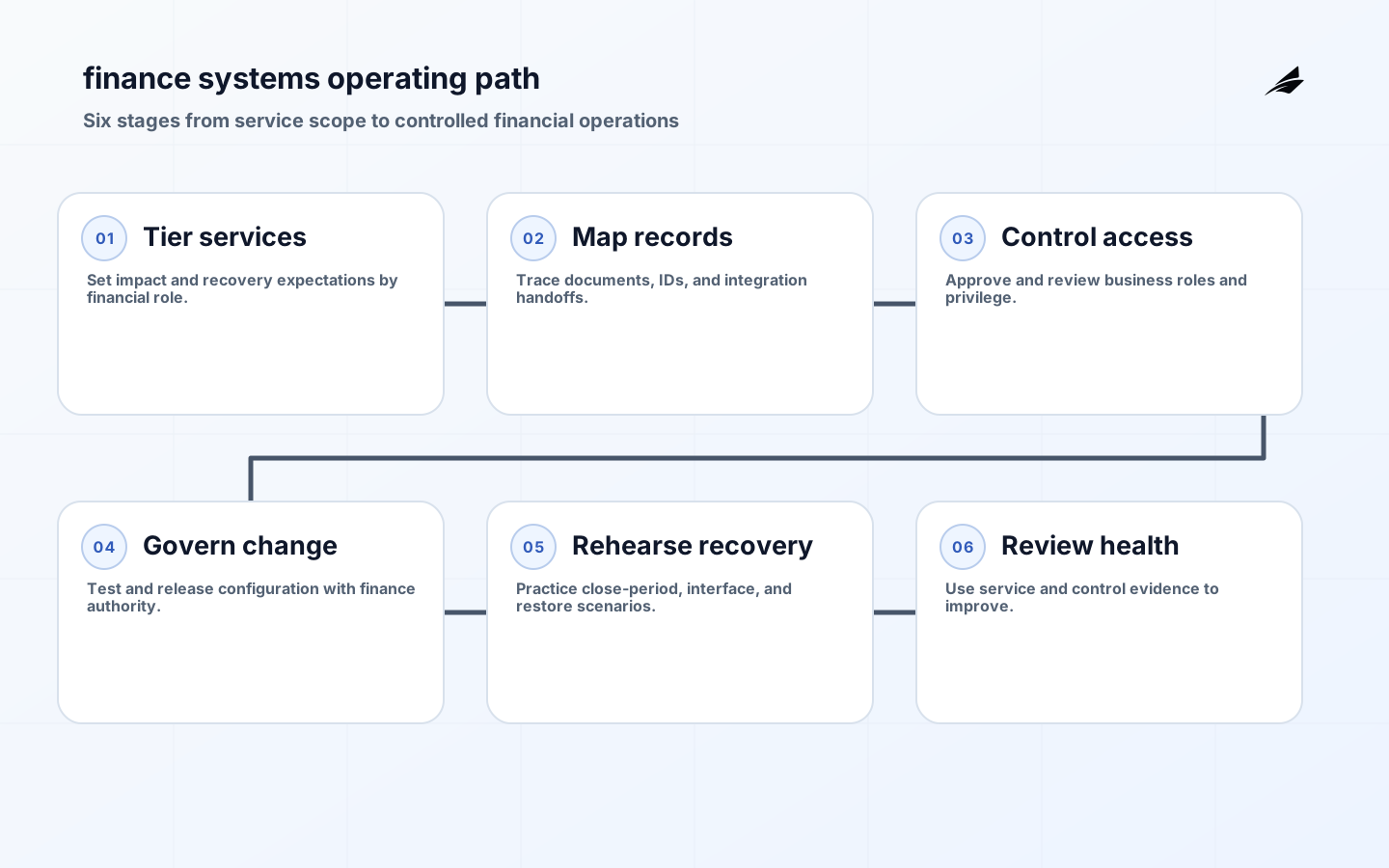
- Tier finance services by the financial consequence of outage or incorrect change.
- Map identity, integrations, and control points for key financial records.
- Separate finance policy approval from IT platform administration.
- Log privileged activity, configuration changes, and manual corrections.
- Schedule releases with close calendars and rehearse recovery scenarios.
- Review control health and service outcomes jointly with finance.
Deliver finance systems in slices and make exceptions visible
Inventory integrations and access before starting a modernization project. Stabilize identity and audit coverage, then test one change path through nonproduction and a controlled release. Rehearse a close-period incident, a failed interface, an unavailable vendor support channel, and a restoration from backup. Include finance users in acceptance testing because technical success may still produce an unusable reconciliation or an incorrect business posting.
Use operating signals that lead to an action
Track availability and recovery alongside control health: privileged access review completion, failed interfaces, reconciliation exceptions, change failure, backup restoration success, and close-period support response. Use a calendar that exposes high-risk business dates so routine maintenance does not collide with critical processing. The measures should help IT and finance decide where to invest, not simply prove that tickets were closed.
| Control area | Signal to review | Accountable role |
|---|---|---|
| Access review | Privileged and conflicting role recertification | Finance system owner |
| Interfaces | Failed delivery and reconciliation exception age | Integration owner |
| Change | Release success and close-window exception | IT service manager |
| Recovery | Restore evidence and recovery exercise outcome | Continuity owner |
Common finance systems failure modes and practical responses
Finance systems have their own failure patterns. A configured tool can still fail because a key record is ambiguous, authority is missing, or an integration hides a rejected change. Treat each repeated exception as a case with evidence, a named owner, and a specific decision about whether policy, data, process, or code must change. That approach preserves operational learning without normalizing a workaround as part of the system.
Use a decision workshop before expanding scope
A useful decision workshop for finance systems starts with a concrete operating case rather than a platform diagram. Put the people who create the record, apply the policy, consume the result, and repair failures in the same discussion. Ask them to trace the first design choice: service tier. The team should agree on the financial consequence, close dependency, and recovery need, and explain why the decision matters: it sets support and continuity expectations. Then repeat the exercise for access. Disagreement is useful evidence; it often reveals that two teams have been using the same term for different business conditions.
Turn the workshop into a short operational rehearsal. First, tier finance services by the financial consequence of outage or incorrect change. Next, map identity, integrations, and control points for key financial records. Then test whether the team can separate finance policy approval from it platform administration. Do this with a representative, non-sensitive record and an ordinary time constraint. A review that only describes the ideal path will miss the handoff, authorization, or missing-data condition that causes the real escalation. The purpose is to make ownership and evidence usable before more users depend on the workflow.
The exception path deserves equal design attention. Use the next steps as a practical test: log privileged activity, configuration changes, and manual corrections. Also, schedule releases with close calendars and rehearse recovery scenarios. Finally, review control health and service outcomes jointly with finance. Record the decision with the relevant source evidence and avoid repairing a symptom in a private message. When an exception returns, compare it with the earlier case; recurrence is a signal to change the input rule, policy, mapping, or service boundary rather than simply closing another ticket.
As scope grows, preserve the second set of design choices. For configuration, the operating definition is mapping, tax, approval, and posting rules; this matters because it treats setup as a controlled change. For continuity, use backup, recovery objective, vendor and interface dependencies so the team can prepare for material disruption. These details are where a pilot becomes a service other teams can rely on. They also give reviewers a stable way to distinguish a legitimate exception from an undocumented bypass.
Review evidence on a regular cadence with the people able to change the system. Look at access review through privileged and conflicting role recertification, owned by finance system owner. Pair that with interfaces: failed delivery and reconciliation exception age. The goal is not a perfect dashboard. It is a short list of decisions: which failure needs an immediate repair, which trend needs a policy change, and which measurement no longer represents the operating outcome the team cares about.
Use a written acceptance test for the next release of finance systems. The test should show that a normal record completes, an invalid record is stopped with a useful reason, and a corrected record can continue without creating a second outcome. It should also prove the policy behind service tier remains visible to the person reviewing the result. These tests create shared confidence between the business owner and the delivery team, especially when a change crosses an integration boundary.
Keep the review practical by sampling a recent case and asking the questions users actually ask: Why are finance systems different from other internal applications? Who should approve access to finance systems? How should IT plan changes during financial close? Then compare the answers with the current evidence in the system. The control view should help the responsible team inspect change through release success and close-window exception, and decide whether the next improvement belongs in policy, data, product behavior, or operations. This small discipline prevents a growing system from accumulating unexplained exceptions.
Key finance systems takeaways
- Finance technology needs business-aware service tiers and change windows.
- Auditability includes configuration and privileged access, not only transactions.
- Joint ownership works when finance and IT have distinct, documented decisions.
Frequently asked questions about finance systems
Why are finance systems different from other internal applications?
They support records and processes with legal, contractual, cash, and reporting consequences. An apparently small access or configuration change can affect many entries, so service ownership, auditability, and recovery need more deliberate treatment.
Who should approve access to finance systems?
The business owner should approve the business need and role, while IT provisions access through controlled identity processes. Elevated or conflicting roles should receive additional review and regular recertification.
How should IT plan changes during financial close?
Maintain a close calendar, identify systems and interfaces in scope, and restrict nonessential high-risk changes. Define an emergency path with finance approval and a rollback or recovery plan for changes that cannot wait.
Conclusion
Finance systems are shared IT and finance responsibilities connected by clear authority. Map the records that matter, protect the control points, and rehearse the failures that would disrupt a close or payment run. Keep the agreed evidence close to the operating record, especially during close. A disciplined support and change model gives finance confidence without turning every improvement into a fragile exception.