For a founder, cloud cost optimization is a product and operating decision, not a hunt for the cheapest invoice. Infrastructure spend follows customer demand, architecture, reliability choices, data retention, and the speed at which a team ships. A useful programme makes those relationships visible so the company can choose where to invest, where to simplify, and where to accept a deliberate cost. The goal is a healthy cost per completed customer outcome while the service remains dependable. Start with ownership, a baseline, and a clear recovery path. Then make changes that can be measured and reversed before they affect the whole business.
Start with the business outcome
A bill is an input to a decision, not the decision itself. Define the outcome that the workload supports: a processed order, an active workspace, a completed export, a served API request, or another event the customer recognizes. Pair that outcome with a service boundary and an owner. A storage job may belong to data engineering, while the customer-facing workflow depends on product, security, and support as well. Without this context, a reduction in compute can look successful even when it increases latency, retries, support work, or abandoned transactions. Founders should ask which cost is necessary for the promise being made and which cost is an accidental consequence of the current design.
Build a baseline that people can use
Choose a time window that includes ordinary traffic and known peaks. Separate fixed platform costs from usage-driven costs, and assign shared services to a transparent allocation rule. Record the release, traffic shape, region, data volume, and reliability state alongside the amount. A baseline should answer why the number moved, not merely display that it moved. When attribution is imperfect, label the uncertainty and improve the next measurement rather than inventing precision. A founder does not need a perfect accounting model on day one. A small, trusted view of the major workloads is more useful than a detailed report that arrives too late to change a decision.

Connect spend to unit economics
Unit economics becomes useful when the unit reflects value and can be observed consistently. Compare infrastructure cost per tenant, workflow, request, or transaction with the revenue or strategic value associated with that unit. Use cohorts when customers have very different usage patterns; an average can hide a small group of unusually expensive accounts. Also separate one-time migration work from the recurring run rate. This distinction keeps a sensible investment from being rejected because its first month includes transition cost. Review the result with product and finance: a cheaper operation that weakens retention is not an improvement, and a higher cost that unlocks a valuable customer segment may be rational.
Choose levers by reversibility
Begin with changes that are easy to contain and explain. Remove unattached resources, right-size idle capacity, tune retention, improve cache behavior, and schedule non-production environments where the workflow permits it. Treat commitments, architecture changes, and data movement as larger decisions because they constrain future choices. For every proposal, write the expected saving, the affected workload, the customer or operator risk, the rollback action, and the person who can stop the change. A low-risk change may need only a short observation period. A database tier change or regional redesign deserves a staged test and an explicit fallback.
| Decision | Working rule | Evidence |
|---|---|---|
| Purpose | Name the completed customer outcome. | Owner and scope. |
| Dependencies | Expose inputs, state, and shared services. | Versioned change record. |
| Authority | Give one person power to pause the change. | Decision log. |
| Recovery | Prove containment before broad rollout. | Runbook and exercise. |
Set guardrails for sustainable savings
Guardrails turn a cost intention into an operating habit. Use budgets and alerts to start a conversation, then connect them to a response owner and a useful context window. Require tags or service ownership where they improve attribution, but do not let tagging become a substitute for understanding the workload. Limit destructive actions, protect production identities, and make exceptions expire. A team should know whether it is allowed to pause a development cluster, change a retention period, or alter a capacity setting without discovering the answer during an incident. The best control is one that fits the delivery path and leaves enough evidence for the next person to make a sound decision.
- Assign every material workload to a named owner and business outcome.
- Separate production, non-production, shared, and one-time costs.
- Pair financial alerts with latency, errors, availability, or queue health.
- Make high-impact changes reversible or stage them behind a narrow scope.
- Give exceptions a reason, approver, expiry, and follow-up decision.
Run a small optimization loop
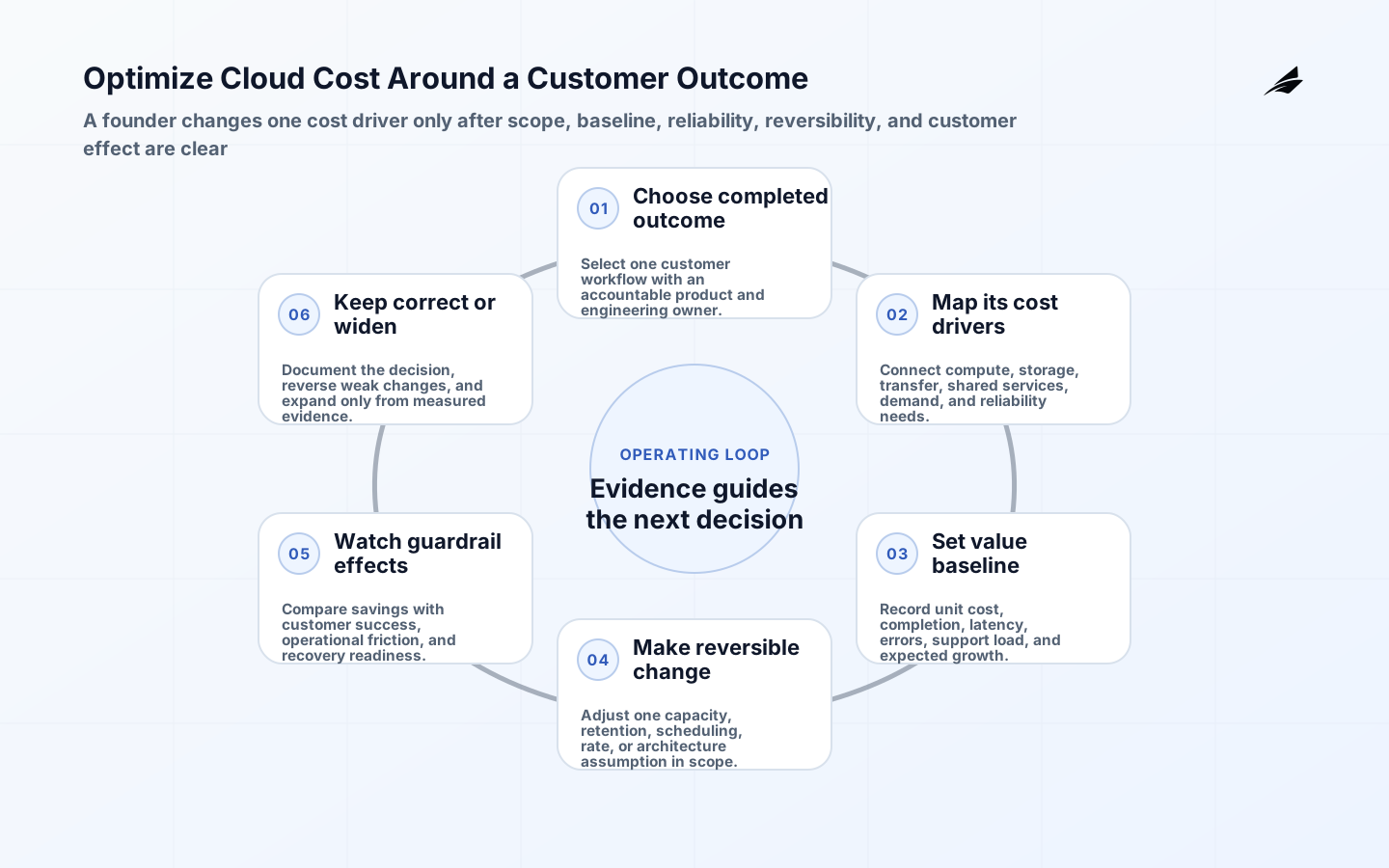
Pick one representative workload and state the hypothesis in plain language: which resource or behavior is driving spend, what change should affect it, and what must remain true for the change to count as successful. Capture a baseline, implement the smallest useful adjustment, and observe enough traffic to avoid confusing a quiet period with an improvement. Compare cost with throughput, customer experience, reliability, and operator effort. If the result is good, document the rule and expand carefully. If the result is mixed, keep the evidence and refine the hypothesis. If the result is harmful, restore the prior state and record what the first measurement missed.
Read signals in context
Cost signals need operational context. A sudden increase may reflect successful growth, a new feature, a retry storm, a poorly bounded query, or a change in collection. A sudden decrease can mean a genuine improvement, failed instrumentation, throttling, or lost customer activity. Use traces, logs, service metrics, and release history to connect the amount to behavior. The deployment rollback guide is useful when a release changes both spend and customer experience. Keep the review focused on the next decision: continue, reverse, investigate, or accept the new cost with a written reason.
Make cost part of leadership cadence
Founders set the tone by asking for decisions rather than punishment. In a regular review, examine the largest drivers, the most uncertain allocations, changes that affected service quality, and the next action with an owner. Let teams explain the product or reliability reason behind a cost. At the same time, require a response when a workload has no owner, a retention rule has no purpose, or an exception has become permanent. Keep the discussion close to roadmaps and architecture reviews so spending is considered when choices are still flexible. A brief record of the decision prevents the same argument from returning without new evidence.
Handle commitments and growth carefully
Discount commitments, reserved capacity, and specialized hardware can be sensible when demand is stable, but they should follow an operating forecast rather than create one. Review the utilization pattern, minimum load, renewal date, region, and exit cost before committing. Keep a portion of capacity flexible when the product is changing quickly or a new architecture is being tested. Growth also changes the shape of waste: a small inefficiency multiplied across new tenants can become material, while a shared platform may become cheaper per unit as adoption rises. Revisit the decision when the customer mix, traffic profile, or service boundary changes instead of treating the original forecast as permanent.
- Compare a commitment with observed utilization, not a hoped-for peak.
- Record renewal dates and an owner for the next capacity decision.
- Keep flexibility where product demand or architecture remains uncertain.
Keep the management view small enough to drive action. Show the largest workload changes, the cost per chosen unit, the reliability boundary, and the owner of the next decision. A founder should be able to ask one useful question of each line: what changed, why did it change, and what will we do next?
Evaluate each cost change beside service outcomes
A cost proposal is useful only when the affected workload, customer outcome, reliability guardrail, and reversal path are visible together. This review prevents a cheaper invoice from concealing a weaker service.
| Decision area | Evidence to inspect | Founder decision |
|---|---|---|
| Baseline | Workload owner, customer unit, traffic shape, service state, region, and current spend. | Agree on a comparable starting point and label uncertain allocation. |
| Cost driver | Compute, storage, transfer, retained data, retries, idle capacity, and shared-service use. | Target a driver the team can explain rather than an undifferentiated total. |
| Safety guardrail | Latency, errors, capacity, recovery objective, support volume, and customer completion. | Stop the change when savings weaken the service promise. |
| Reversal and review | Expected saving, rollout cohort, rollback action, observation window, and accountable owner. | Expand only after both unit cost and service outcomes remain acceptable. |
Key takeaways
- Tie cloud spend to a customer outcome and a named owner.
- Use a modest, trusted baseline before making broad changes.
- Judge savings beside reliability, product value, and operator effort.
- Stage high-impact changes and prove the recovery path first.
- Treat every exception as a decision with an expiry.
Frequently asked questions
What should a founder do first?
Name the main workloads, their owners, and the customer outcomes they support. Then establish a baseline that combines spend with traffic, reliability, and recent releases.
Which metric matters most?
Use cost per meaningful unit, such as a successful transaction or active tenant, alongside service health. The right unit depends on the product and should remain stable enough for comparison.
How much process is enough?
Match the process to the consequence and reversibility of the change. A small idle-resource cleanup needs less ceremony than a stateful migration or a long-term capacity commitment.
For implementation context, consult Kubernetes documentation and Google SRE Book; these references help teams verify platform behavior and operating controls against maintained primary guidance. For adjacent decisions, continue with Edilec's How CTOs Should Think About Deployment Rollbacks and How CTOs Should Think About Service Meshes.
Conclusion
Cloud cost optimization works when a founder can see what the company is buying, why the workload needs it, and what result the spend enables. Establish ownership, measure a useful unit, choose reversible improvements, and protect the reliability promise with guardrails. A disciplined loop gives the business room to grow without turning every bill into a crisis or every saving into a hidden product compromise.