Cloud cost visibility is not a finance dashboard delivered after the invoice closes. For a founder, it is the ability to answer a decision question while there is still time to act: what product, environment, customer segment, or technical choice is creating the spend, and is the outcome worth it? An early system should make ownership and allocation understandable before account structures, shared services, and discounts obscure them. That does not require perfect chargeback; it requires a trusted path from a bill line to an accountable decision maker.
Key takeaways
- Treat cloud cost visibility as an operating decision with a named owner and explicit evidence.
- Separate the normal delivery path from the exception or recovery path before production pressure arrives.
- Use customer, service, and operational signals together so a technically green result does not hide a failed outcome.
- Improve the supported pattern from incidents, exercises, and recurring exceptions rather than relying on informal memory.
Choose allocation boundaries that reflect how the business operates
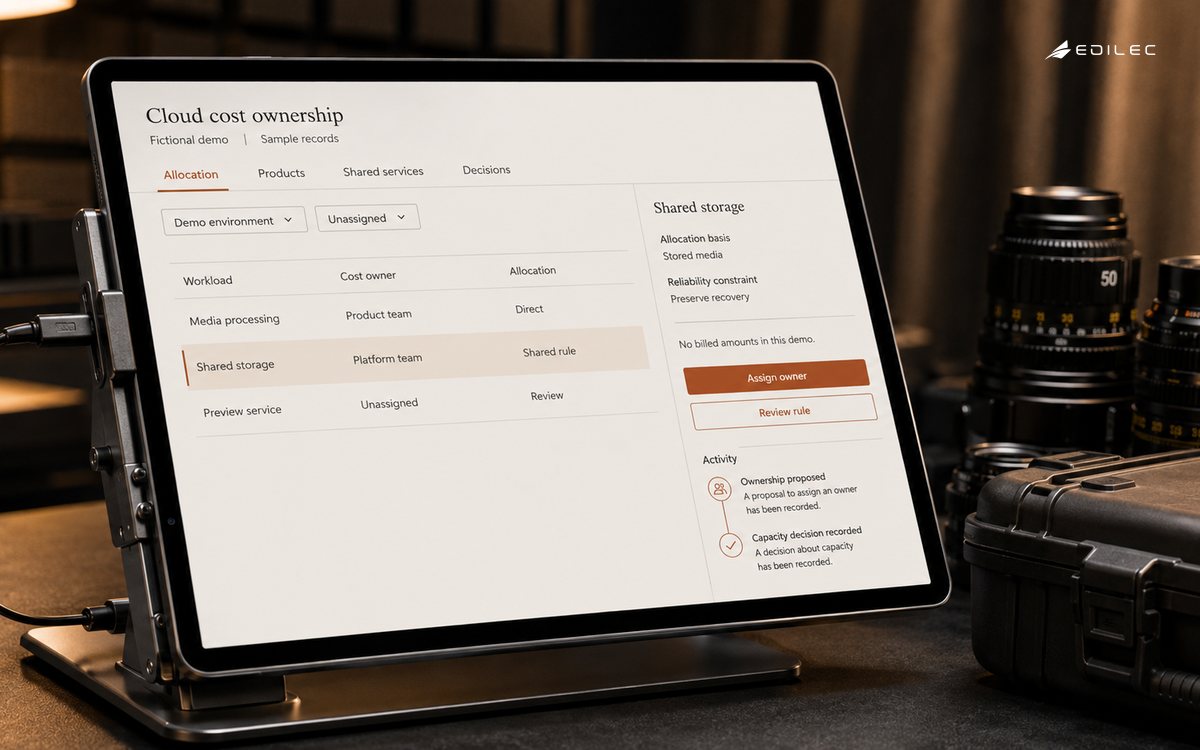
Start with a short allocation taxonomy: product or service, environment, accountable team, and a shared-cost category. Use accounts, projects, subscriptions, labels, or tags according to the provider, but do not make a naming convention the whole design. A tagged resource without a named owner is still an orphan. Define who corrects missing metadata, how shared observability or network costs are apportioned, and how long temporary environments may exist. The FinOps allocation discipline is useful here because it treats direct and shared costs as visible responsibilities.
Founders often wait for the perfect metric and lose the first year of history. Instead, select one technical and one business unit that already has credible data, such as cost per active workspace and cost per processed order. The values need context: an increase can be healthy when demand, reliability, or margin improves. Capture the measurement definition, data freshness, exclusions, and owner beside the number. That prevents a later meeting from becoming an argument about whether two reports count the same activity.
| Cost category | Allocation method | Question it should answer |
|---|---|---|
| Product runtime | Direct account or workload label | Which product is consuming this capacity? |
| Shared platform | Documented weighted allocation | Who benefits from and can influence the shared service? |
| Preview environments | Repository and expiry metadata | Which change created this spend and when should it end? |
| Commitment discounts | Show effective and undiscounted views | Is usage stable enough to justify a commitment? |
Turn the bill into a weekly operating conversation
Establish a weekly review that looks at material variance before it looks at savings ideas. Bring the product lead, engineering owner, and a finance partner when available. For each change, ask what moved in demand, architecture, pricing, deployment behavior, or allocation coverage. A sudden cost increase may be a marketing success, a loop, a forgotten environment, or a new data-retention pattern. The review should end with a decision, an owner, and a date to check the result, not a vague request to make the bill smaller.
Forecast at the same level at which you can act. A seed-stage team may forecast one account and a few large services; a multi-product company needs a product or workload view. Show a range and state assumptions about users, transactions, storage growth, and rate changes. Treat provider billing exports as delayed evidence rather than real-time operational telemetry. For a fast-moving workload, pair cost data with usage and deployment events so a team can distinguish a normal ramp from a defect before the monthly invoice arrives.
Design the cloud cost visibility decision path
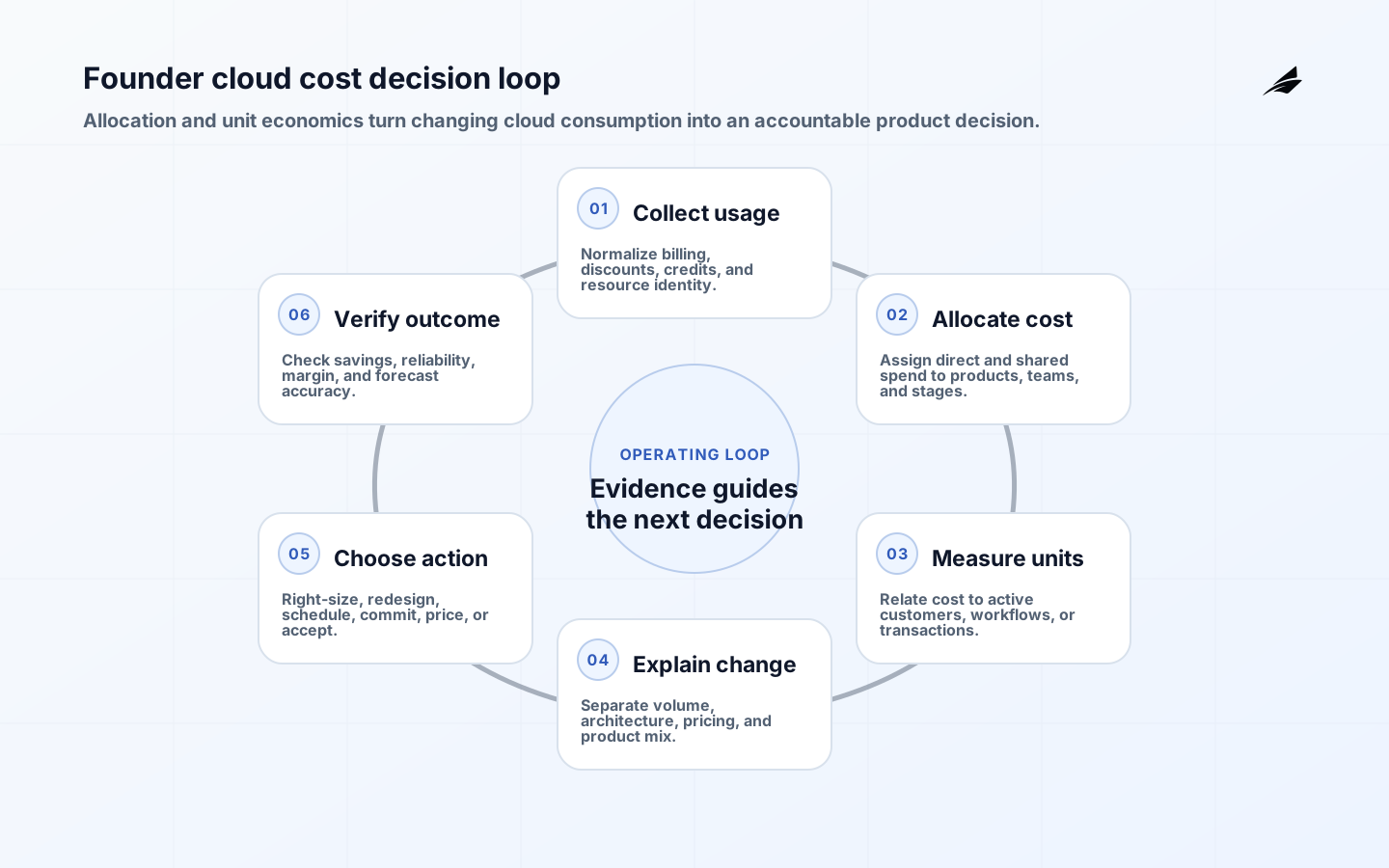
The decision loop begins with allocation design, then joins billed usage to product demand, reviews material variance with an accountable owner, makes a bounded adjustment, and compares cost with the reliability or customer outcome. It prevents a cost report from becoming a passive monthly artifact.
| Review signal | Interpret with | Potential response |
|---|---|---|
| Spend rises with active users | Cost per active user and service level | Accept the growth, adjust forecast, or improve efficiency. |
| Spend rises without demand | Recent releases, tags, and utilization | Investigate a leak, idle resource, or allocation error. |
| Low allocation coverage | Resource inventory and owner directory | Fix templates and set an expiry for exceptions. |
| Discount utilization changes | Forecast and workload stability | Change commitment posture only after checking flexibility. |
Connect cloud cost to a stable business unit
A cost total becomes useful when it is divided by a unit that reflects value or demand: active tenant, processed order, API transaction, analyzed document, inference, or retained gigabyte. The FinOps unit economics capability distinguishes resource-efficiency measures from business-unit measures and emphasizes linking the metric to organizational goals. Define the numerator, denominator, time window, included shared costs, and owner. Then explain changes using volume, architecture, pricing, and product-mix drivers rather than celebrating a lower bill that might simply reflect lower customer activity.
Keep the billing data contract stable enough for month-to-month comparison. Provider accounts, subscriptions or projects establish coarse boundaries; tags and labels add product, environment, team, customer, and lifecycle context; allocation rules distribute shared networking, observability, support, and platform costs. AWS Cloud Financial Management guidance connects transparency, control, forecasting, optimization, and unit metrics. Google’s cost-optimization framework likewise links spending to business value and continuous optimization.
| Founder metric | Definition choice | Decision it supports |
|---|---|---|
| Cost per active customer | Allocated product cost divided by customers completing a defined active event | Pricing, margin, and segment viability |
| Cost per completed workflow | Compute, storage, data, and shared platform cost per successful outcome | Architecture and automation trade-offs |
| Idle non-production cost | Spend when environments have no scheduled use or owner | Shutdown policy and environment design |
| Cost of reliability | Redundancy, backup, observability, and support spend tied to service objectives | Whether risk reduction is proportionate |
| Forecast variance | Actual versus driver-based forecast with change explanation | Hiring, runway, commitments, and release sequencing |
Place cost decisions in the delivery path
Cost is easiest to influence when a team is choosing an architecture, retention period, scaling rule, or environment policy. Add a lightweight cost note to decisions that materially affect consumption: expected driver, maximum plausible load, owner, and signal that would trigger review. The note is not a pre-approval hurdle for every pull request. It is a way to retain intent when a service later doubles its spend and nobody remembers whether the increase was anticipated.
Use guardrails selectively. A budget alert can surface an unexpected trend, while a quota or policy may stop a known destructive pattern. Avoid wiring a billing threshold directly to production shutdown unless the service and escalation policy make that safe. Better controls create a decision window: notify the person who can interpret the usage, provide enough context to investigate, and protect the customer service level while the team acts. Uncontextualized alarms teach people to ignore the channel.
Make the system more precise as the company grows
Improve allocation coverage and cost-to-outcome linkage in small increments. When a resource category repeatedly appears as unallocated, update the provisioning template or account structure. When a shared cost distorts a product view, publish the allocation rule and revisit it when usage changes. Keep historical definitions so trend lines remain explainable. A report that changes its denominator without a note looks accurate but produces bad decisions.
Measure the quality of the operating system itself: percentage of material spend allocated, time to explain an anomaly, forecast variance, and the proportion of agreed actions that are completed and checked. These indicators show whether cloud cost visibility is becoming part of delivery. They also reveal when the team needs a dedicated FinOps role or more automated data handling. The right escalation point is not a bill size alone; it is when important decisions cannot be made from the current evidence.
Worked founder decision
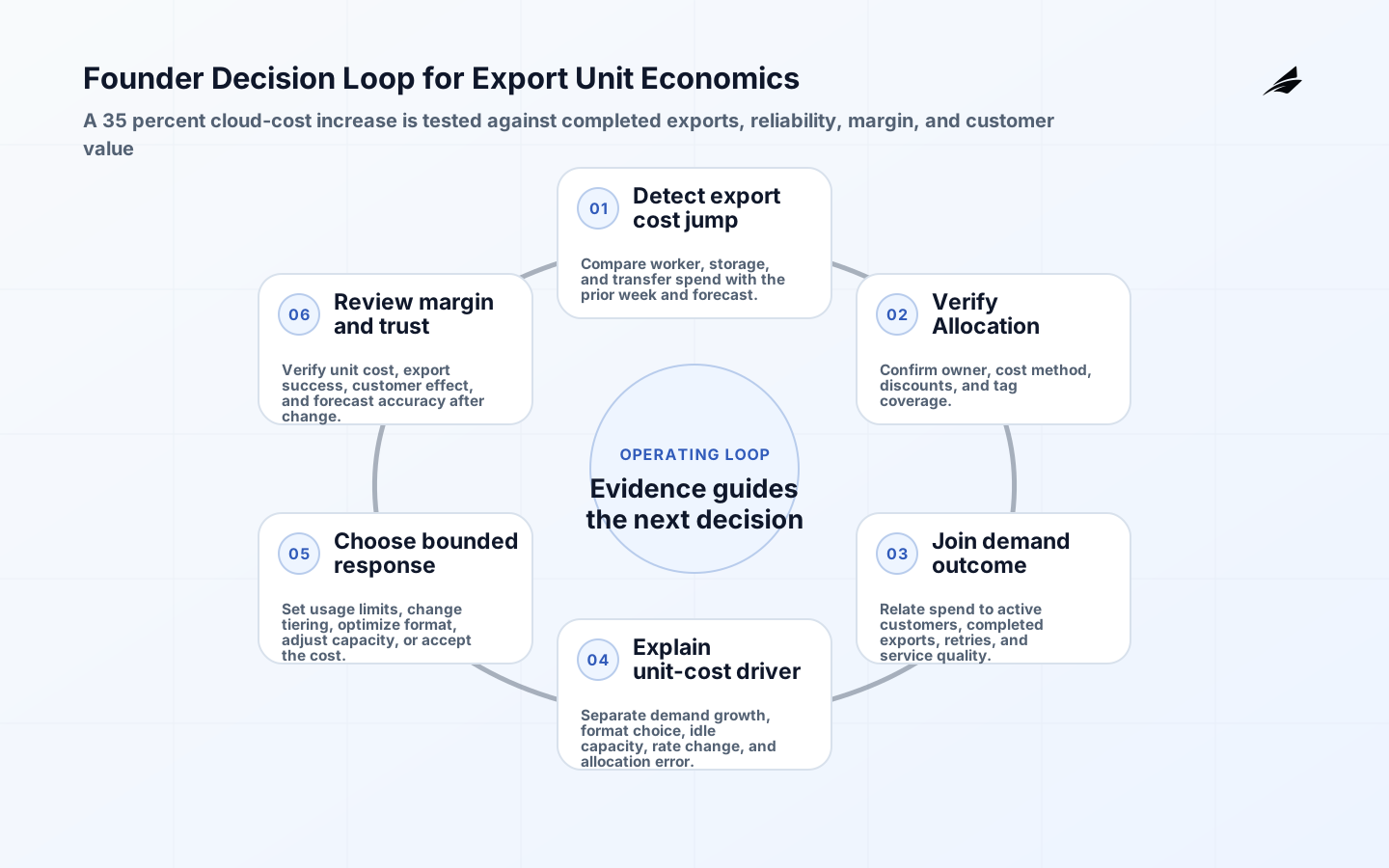
Imagine a product that launches a report-export feature. Total cloud spend rises by 35 percent in the first week, and the instinct is to cap the compute budget. The allocation view shows that export workers, object storage, and network transfer all rose, but completed exports per active customer rose by 70 percent and support contacts stayed flat. The meaningful question is now whether the unit cost is compatible with the feature's price and margin, not whether the total bill rose. The team can inspect large customers, report sizes, cache behavior, and abandoned exports before changing capacity. If a later spike occurs with no matching increase in completed exports, the same model makes a leak or retry loop visible quickly. The metric is useful because it joins cost to a product outcome, not because it produces a lower number.
In the next planning cycle, the founder can use this evidence to make a conscious choice: add usage limits, change the feature tier, optimize the format, or accept the cost as part of customer value. Each option has a different customer consequence. Keeping the underlying allocation rule and demand definition next to the report means the decision can be revisited when pricing, adoption, or provider rates change, instead of becoming an argument based on an unexplained monthly total.
A practical early dashboard can be deliberately plain: a weekly product-and-environment cost table, allocation coverage, a usage denominator, the largest variance, and an action log. Its credibility comes from traceable definitions, not visual complexity. When an owner challenges a number, the team should be able to show the billing period, allocation rule, included resources, and usage feed. That habit is especially important during launches, when incomplete tags and new shared services are normal. Fix the missing ownership while the system is small; retroactively explaining thousands of historical resources is costly and rarely improves a current product decision. The founder's role is to protect the cadence and insist that variance conversations end with an accountable choice.
Frequently asked questions about cloud cost visibility
Do founders need chargeback to get useful cost visibility?
No. Showback with named owners and documented shared-cost rules is enough for many early teams. Chargeback becomes relevant when financial accountability must flow through formal cost centers.
Which cloud cost metric should a new product use?
Use a metric that matches a controllable demand driver, such as cost per completed order or active workspace. Pair it with a service-level or customer-quality measure so efficiency does not hide a degraded experience.
Conclusion
Cloud cost visibility becomes valuable when it gives product, engineering, and finance the same timely evidence for a choice. Build ownership and allocation first, then connect spend to demand and review the decisions that follow.