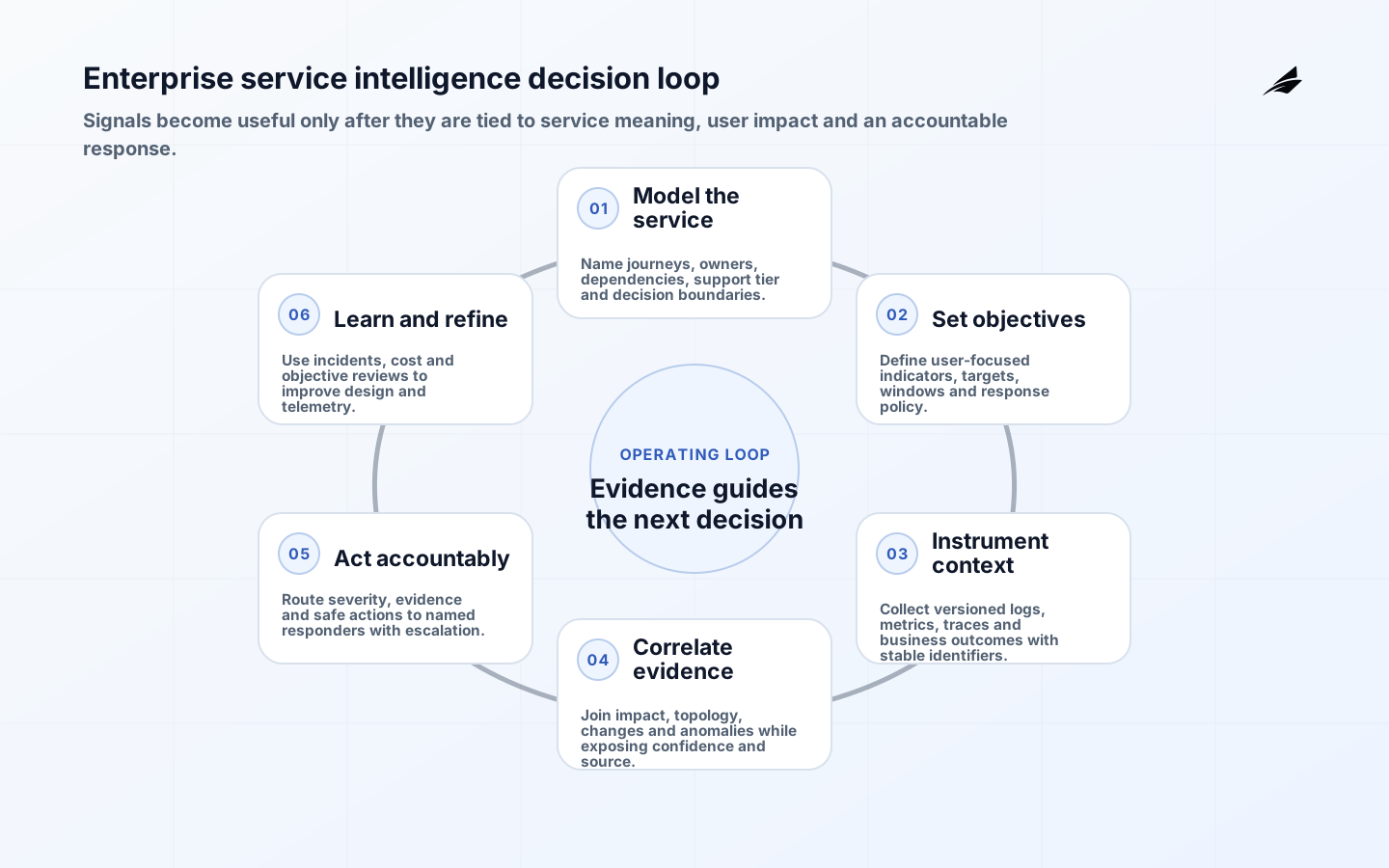
Service intelligence for enterprise operations turns fragmented technical and business signals into decisions about service health, risk and improvement. It is broader than a monitoring dashboard and narrower than an all-purpose data lake. The useful unit is an owned service or user journey: what it does, who depends on it, how its health is measured, what changed and who acts when evidence crosses a threshold. A successful implementation reduces uncertainty and handoff delay without hiding weak data behind automated correlation.
This checklist complements the service intelligence scope and delivery plan and the service intelligence FAQ. Teams standardizing at portfolio scale should also review enterprise service intelligence implementation. Start with one consequential journey and its dependencies; enterprise-wide ingestion before a decision model usually creates cost faster than insight.
Choose a service decision, not a dashboard
Name the recurring decision to improve: release or pause, escalate or observe, add capacity, redirect support, invoke continuity or prioritize engineering work. Record the current decision time, information sources, false alarms, missed failures and accountable role. Define the service from the user’s perspective, including front end, APIs, asynchronous work, identity, data and third parties. Infrastructure components matter, but a green server does not prove that an order, payment or approval completed correctly.
Write a service intelligence charter with scope, users, service owner, reliability owner, data owner, support lead and security contact. Include exclusions and a 90-day outcome such as shortening time to identify the failing dependency while preserving alert quality. The OpenTelemetry observability primer distinguishes logs, metrics and traces and links reliability to what users expect. Use that perspective to prevent a tool rollout from becoming the outcome.
| Question | Required evidence | Owner | Decision enabled |
|---|---|---|---|
| Is the journey working? | Outcome and latency indicators by segment | Service owner | Continue, degrade or communicate |
| Where did it fail? | Trace, dependency and change context | Engineering lead | Route diagnosis |
| Is impact growing? | Affected users, regions and transactions | Incident commander | Escalate and contain |
| What changed? | Deployment, configuration and provider events | Platform owner | Rollback or investigate |
| Did recovery work? | Synthetic journey and reconciliation evidence | Operations owner | Close or continue incident |
Build an owned service and dependency model
Create a lightweight catalog for the pilot service: purpose, critical journeys, owner, support tier, repositories, runtime, data stores, queues, identity, upstream and downstream dependencies, third parties, objectives and runbooks. Discover topology from telemetry where useful, but require owners to confirm meaning. Dynamic maps can show traffic while still missing contractual, batch or manual dependencies. Version the model and capture effective dates so an incident view reflects what existed when the event occurred.
Use stable identifiers across catalog, telemetry, deployment and incident systems. A service name that changes between teams makes correlation brittle. Adopt naming rules for environment, region, tenant and version, and maintain mappings during migration. OpenTelemetry semantic conventions provide common names for resources and operations; extend them deliberately for business context. Do not put unrestricted personal or sensitive values into high-cardinality labels.
Define user-focused indicators and objectives
Select service-level indicators for successful events, acceptable latency, freshness, correctness or durability. Define the population, good-event rule, measurement point, window and exclusions. A login service might measure the proportion of legitimate authentication attempts completed within a threshold, segmented by client and region. Pair technical indicators with business reconciliation where silent errors are possible. Document what happens when the objective is threatened; an objective without a response policy is only a report.
Google’s chapter on service level objectives recommends starting from behavior users care about rather than whatever metric is easiest to collect. Set an initial target from business tolerance and observed baseline, then refine it. Avoid 100 percent targets unless the consequence genuinely demands it and architecture supports it. Error-budget policy can govern release pace, reliability work and escalation, but leadership must agree how exceptions are decided.
Design trustworthy telemetry and collection
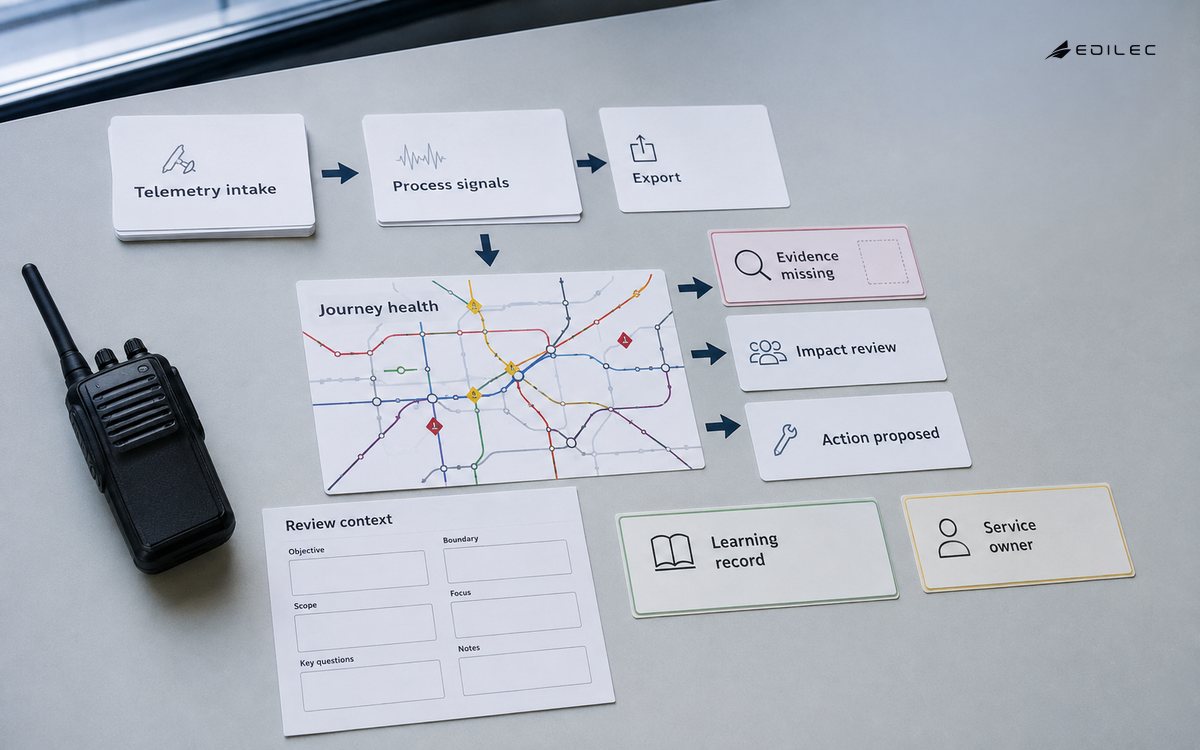
Instrument entry points, critical business steps, dependency calls and asynchronous handoffs. Propagate trace context across services and messages while protecting tenant boundaries. Emit structured events with versioned schemas, consistent clocks and clear success semantics. Collect infrastructure signals that explain resource constraints, but keep them connected to service behavior. Document sampling, aggregation and retention because those choices determine which questions can be answered after an incident.
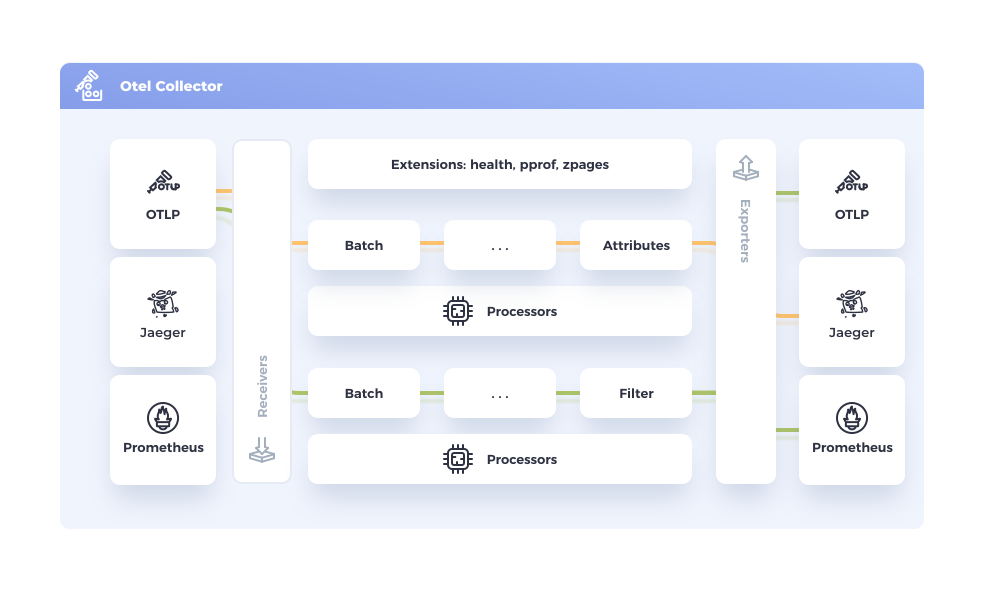
The OpenTelemetry Collector can receive, process and export signals without hard-coding every application to a backend. Treat collector configuration as production code: authenticate endpoints, encrypt transport, limit access, test buffering and backpressure, monitor dropped data and control costs. Keep a route to raw evidence for high-consequence investigations. Redaction should happen as early as practical, with tests that detect sensitive fields before they spread.
Correlate events with changes and impact
Start correlation with deterministic context: shared service identifiers, trace relationships, deployment versions, configuration changes and dependency edges. Statistical or machine-learning methods can rank unusual patterns, but they should expose inputs, confidence and supporting evidence. Do not let a generated root-cause label close an incident. Operators need to see what changed, which users are affected, what alternatives remain and whether evidence contradicts the proposed explanation.
Enrich alerts at query or processing time with owner, runbook, objective status, recent changes and dependency impact. Suppress duplicates only when the grouping logic is tested; over-aggressive suppression can hide simultaneous failures. Google’s monitoring distributed systems guidance highlights latency, traffic, errors and saturation as useful signals, but user and business semantics still determine whether a condition deserves action.
Connect intelligence to accountable action
Define severity from user and business impact rather than vendor event labels. Route actionable alerts to a named team with an acknowledgement expectation, escalation ladder and fallback. Include concise context and a next diagnostic step. Keep informational findings out of interrupt channels. Automation may enrich a case, run a read-only query or execute a reversible pre-approved response; actions that change data, access or customer experience require explicit authority and audit.
Integrate incident, problem, change and support records without forcing every team into one tool. Link records through stable identifiers and preserve the source of truth for each workflow. During an incident, the timeline should capture observations, hypotheses, decisions, actions and results. After recovery, reconcile tickets and service state. Intelligence is valuable only when it shortens a defensible decision or reveals a recurring condition worth removing.
| Measure | Good interpretation | Misleading use | Review action |
|---|---|---|---|
| Objective attainment | User journey reliability over a stated window | Average infrastructure uptime | Prioritize reliability or adjust target with evidence |
| Detection time | Delay from impact onset to actionable signal | Time from first alert in a noisy queue | Improve instrumentation and routing |
| Diagnosis time | Time to isolate a supported cause | Time to accept an automated label | Improve change and dependency context |
| Alert precision | Actionable alerts divided by reviewed alerts | Total alert reduction alone | Tune rules without hiding coverage |
| Telemetry cost | Cost per covered critical journey | Lowest ingest bill | Change sampling and retention deliberately |
Run a measured pilot and improve the model
Baseline one service for two weeks, then instrument the most important blind spots. Run known-event tests, a dependency failure and a release rollback. Observe whether the right owner receives enough evidence to act. Sample false positives and missed conditions. Review privacy, security and access to telemetry. Expand only after the pilot shows better decision time or reliability without uncontrolled cardinality, storage cost or operator burden.
Hold a monthly service review that joins objective performance, incidents, support themes, changes, dependency risks, telemetry gaps and improvement work. Retire unused dashboards and signals. Update the service model when ownership or architecture changes. Use post-incident learning to improve instrumentation, runbooks and design rather than merely adding alerts. This creates a feedback loop in which service intelligence changes the system it observes.
Apply service intelligence to an order journey
For an order journey, define success as a customer receiving an accepted order reference after inventory, payment authorization and persistence complete. Instrument the browser or client, gateway, order service, queue, payment adapter and database with a shared journey identifier that does not expose the customer. Add deployment version and region. The service objective measures successful journeys and latency, while reconciliation compares accepted references with durable order records so silent asynchronous loss is visible.
In a failure exercise, payment remains healthy but a queue consumer slows after a release. Infrastructure averages look normal; trace and backlog context identify the affected version and customer segment. The incident commander pauses exposure, rolls back and watches reconciliation return to baseline. The post-incident action changes the consumer saturation indicator and release gate. Service intelligence has improved a decision because it connected user impact, topology, change and verified recovery.
Key takeaways
- Begin with a recurring service decision and measurable delay or risk.
- Model owned user journeys and dependencies with stable identifiers.
- Define indicators from user outcomes, then instrument supporting signals.
- Prefer explainable correlation and preserve evidence for human decisions.
- Measure operational improvement and telemetry burden together.
Frequently asked questions
How is service intelligence different from monitoring?
Monitoring detects or displays conditions. Service intelligence connects those conditions to an owned service, user impact, changes, dependencies and response decisions. It may use existing monitoring tools rather than replace them.
Does service intelligence require AI?
No. Stable identifiers, service models, objectives and disciplined telemetry often produce the largest gain. Machine learning can help rank patterns at scale, but it should not compensate for missing ownership or inconsistent data.
Conclusion
Service intelligence for enterprise operations works when it closes the distance between user impact and accountable action. Define the decision, model the service, measure meaningful objectives, build trustworthy telemetry, correlate explainably and learn from operation. The result is fewer ambiguous handoffs and a clearer basis for reliability investment.