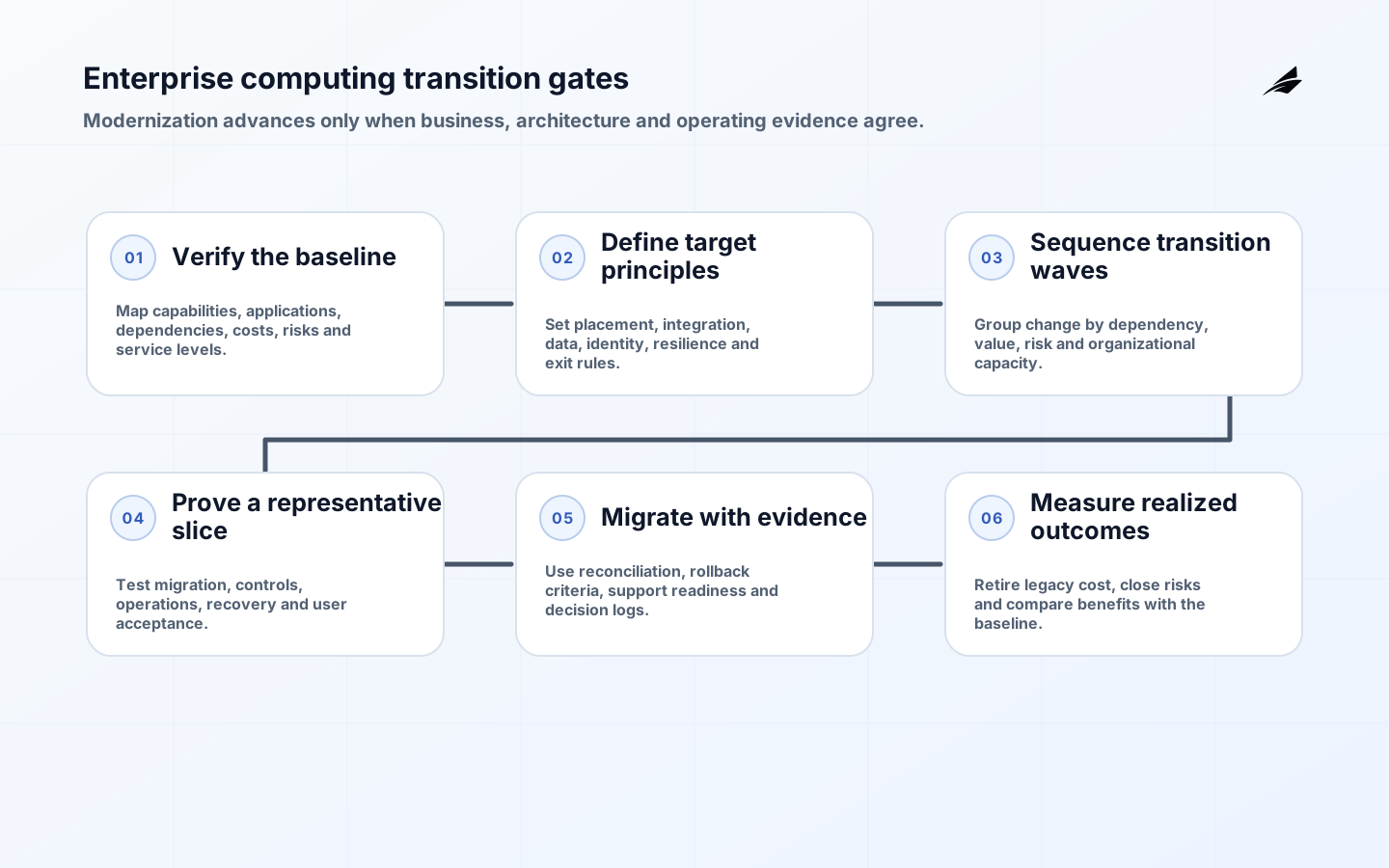
A computing consulting for enterprise implementation checklist should control how an organization moves from a complex current estate to a supportable target state. The work may include data centers, public cloud, end-user computing, networks, platforms, business applications and suppliers. The objective is not modernization for its own sake. It is a measurable improvement in a business capability with security, continuity, cost and ownership preserved during transition.
Use this checklist after the enterprise computing scope and delivery plan and alongside the enterprise computing FAQ. Every stage produces decision evidence: verified baseline, target principles, wave plan, representative pilot, migration reconciliation and realized-value review. A consultancy should make those decisions clearer while leaving authority with accountable enterprise owners.
1. Verify the business and technology baseline
Begin with business capabilities and user journeys, then map the applications, infrastructure, data, integrations, identities, controls, suppliers and support processes that enable them. Reconcile inventories with network, identity, monitoring, billing and contract evidence. Record criticality, lifecycle, service objectives, recovery, skills, cost and known incidents. Do not treat a configuration database as truth without sampling live systems and speaking with operational owners.
Baseline pain in measurable terms: release delay, unavailable service, recovery gap, manual reconciliation, capacity limit, security exposure, licensing burden or unsupported technology. Distinguish root causes from visible symptoms. An old runtime may be risky, but replacing it will not fix unclear product ownership or a brittle business interface. Capture assumptions and confidence so discovery does not present estimates as measured facts.
| Baseline area | Evidence to collect | Decision it supports |
|---|---|---|
| Business capability | Users, outcomes, volume, critical periods and manual fallback | Priority and acceptable disruption |
| Application portfolio | Owners, versions, dependencies, changes, incidents and lifecycle | Retain, retire, replace, rehost, replatform or refactor |
| Data and integration | Systems of record, interfaces, quality, retention and reconciliation | Migration sequence and coexistence |
| Technology estate | Compute, network, platform, identity, capacity and monitoring | Placement and foundation requirements |
| Risk and continuity | Threats, controls, recovery objectives, tests and exceptions | Control target and transition safeguards |
| Economics | Run cost, licenses, supplier commitments, people and change cost | Investment case and benefit baseline |
2. Define target principles and architecture decisions
Set principles for workload placement, identity, network trust, data ownership, integration, resilience, observability, automation, supplier use and exit. The TOGAF Standard provides an adaptable enterprise architecture method; use enough structure to connect business, data, application and technology decisions without producing artifacts that have no decision or owner. Record alternatives considered, constraints, consequences and review triggers.
Workload placement and target-state tests
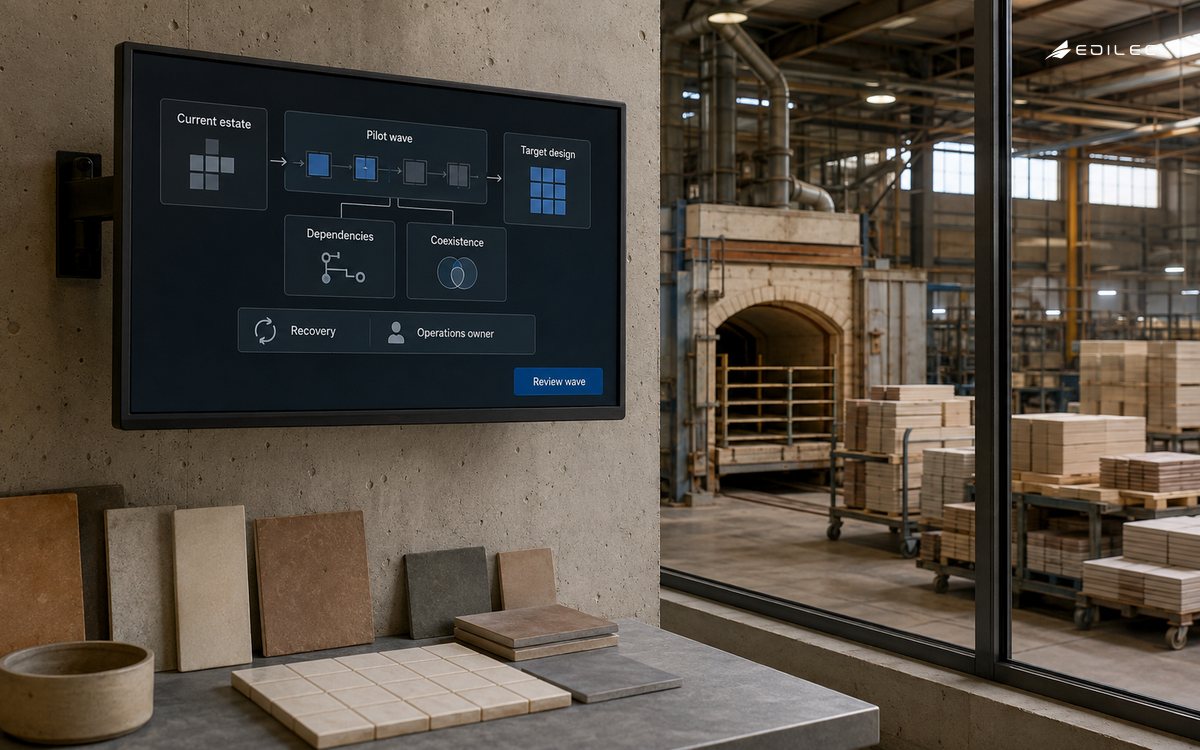
Evaluate public cloud, private cloud, managed service, SaaS and retained infrastructure against the workload's latency, data, licensing, resilience, skills and commercial needs. Avoid a universal placement rule. Define target-state fitness tests such as federated identity, automated provisioning, supported runtime, encrypted interfaces, service telemetry, restore capability, cost ownership and export. A destination is acceptable only when the receiving operating team can prove those capabilities.
3. Sequence transition waves by dependency and risk
Group work into waves that deliver a usable capability and can be accepted independently. Sequence shared identity, network, observability, data and integration foundations before dependent migrations, but avoid building a large platform without a representative consumer. Map hard dependencies, coexistence, freeze periods, supplier lead times, records obligations, training and decommission prerequisites. Each wave needs entry criteria, owner, cutover plan, rollback boundary and exit criteria.
The GAO Agile Assessment Guide supports incremental development, continuous evaluation and program monitoring. Apply that logic at enterprise scale: release smaller capability slices, inspect real evidence and adjust later waves. Architecture governance should make timely decisions and manage justified exceptions. It should not force every change through an annual design sequence that delays learning until commitments are difficult to reverse.
| Transition gate | Required evidence | Decision authority | Stop condition |
|---|---|---|---|
| Wave entry | Dependencies ready, scope frozen, owners and acceptance agreed | Program and business owner | Critical dependency or authority missing |
| Technical rehearsal | Migration duration, compatibility, reconciliation and rollback tested | Technical owner | Unresolved loss, corruption or excessive duration |
| Operational readiness | Monitoring, support, access, backup, incident and supplier routes tested | Service owner | Team cannot detect, recover or escalate |
| Business acceptance | Representative users complete journeys and approve changed process | Capability owner | Material outcome or control fails |
| Cutover | Change window, communications, command and rollback deadline confirmed | Cutover commander | Health threshold or reconciliation breached |
| Legacy exit | Retention, audit, export, contract and dependency closure verified | Records, finance and service owners | Required evidence or consumer remains |
4. Integrate security, resilience and supplier controls
Use risk outcomes to design the transition. NIST Cybersecurity Framework 2.0 organizes Govern, Identify, Protect, Detect, Respond and Recover outcomes. Select the outcomes relevant to the capability and map them to owners and evidence across current, coexistence and target states. NIST SP 800-53 offers a broad control catalog; tailor controls to context rather than copying every item into a project checklist.
Avoid security gaps during coexistence. Old and new identities, interfaces and data stores may all remain active. Define authoritative records, synchronization, privileged paths, logging and incident scope. Test revocation across both estates. Maintain immutable or separately protected evidence where risk requires it. Restore representative services and data into isolation, then have business users validate usability. Infrastructure recovery without application, identity, keys and integration recovery is not service recovery.
For software and managed-service acquisition, use CISA's Secure by Demand Guide to examine secure defaults, authentication, logging, vulnerability response and support. Include data export, configuration portability, subcontractor changes, service termination, deletion evidence and transition assistance in the contract. A migration that reduces technical debt but creates an untested supplier exit path has moved rather than removed risk.
5. Prove a representative migration and cutover
Choose a pilot with realistic integrations, data, access roles, peak behavior and support needs, but with a recoverable business boundary. Rehearse extraction, transformation, load, reconciliation, cutover, rollback and legacy coexistence using production-scale volume. Sample records and complete end-to-end journeys, not only row counts. Inject unavailable identity, failed interface, stale data and capacity pressure. Record actual elapsed time and operator work.
Example: an enterprise moves a regional order-management capability rather than a technical database alone. The pilot includes customer entry, pricing, inventory, fulfillment event, finance posting, support correction and reporting. The team reconciles orders and amounts, removes a user's access across both estates, restores the target, fails an integration and follows the manual queue. Wider rollout waits for business, security, service and records owners to accept evidence and exceptions.
Package the pilot so the next wave can reuse verified assets: migration code, data rules, architecture decisions, environment modules, interface stubs, test cases, operational dashboards, training and cutover records. Separate reusable patterns from workload-specific assumptions. A script that succeeds only for one source version or one administrator's workstation is not a platform asset. Rerun the rehearsal with the next wave's team and production roles to expose permissions and knowledge gaps before the change window.
Control coexistence explicitly. Name which system can create or amend each record, how identifiers map, how conflicts are resolved and when synchronization stops. Monitor backlog and reconciliation while both estates run. Prevent users from choosing whichever interface is convenient if that creates divergent authority. Set a maximum coexistence period with escalation because long dual operation multiplies support, access and control paths and can consume the benefits the migration was meant to realize.
6. Transfer operations and verify realized value
Transfer capability throughout delivery. Enterprise staff should own repositories, configuration, architecture decisions, dashboards, runbooks, supplier contacts and improvement backlog. Use paired implementation and reverse-shadow operations. Before acceptance, the receiving team deploys a change, handles an incident, restores service, reviews privileged access, explains cost and executes a supplier escalation without consultant-held credentials. Close or time-limit every consultant account.
Compare outcomes with the baseline after stabilization. The FinOps Framework emphasizes collaboration and decisions based on accessible technology cost data. Measure run cost and unit cost alongside reliability, delivery, support effort, risk reduction and business process results. Deduct retained legacy and transition costs honestly. Benefits are not realized while duplicate contracts, infrastructure or manual controls remain open.
Feed evidence into later waves. If migration duration, user training, integration remediation or supplier response differs from plan, revise estimates and sequence. Transformation governance should make the next investment decision, not defend the original roadmap. The enterprise transformation checklist and transformation FAQ cover organization-wide adoption and governance questions beyond the computing estate.
Key takeaways
- Verify inventories against live operational, identity, billing and supplier evidence.
- Connect target architecture decisions to business capabilities and testable fitness criteria.
- Sequence waves by dependencies, coexistence risk and organizational capacity.
- Tailor security and resilience outcomes across current, transition and target states.
- Pilot a complete business capability and test failure, reconciliation and rollback.
- Count value only after operating ownership and legacy retirement are demonstrated.
Enterprise computing consulting FAQ
Should every legacy system be modernized? No. Retain, retire, replace, rehost, replatform and refactor are all valid when supported by business value, risk, lifecycle and dependency evidence.
How detailed should the target architecture be? Detailed enough to decide boundaries, controls, migration and operating ownership. Defer component decisions that can safely be made within a later wave, and record the decision criteria.
Who accepts a migration? Technical owners verify implementation, but business, data, security, continuity and service owners accept the outcomes and residual risks within their authority.
When can the old platform be turned off? After consumers, records, audit, integrations, recovery, contracts and access are reconciled and approved. Running both indefinitely is an expensive risk state, not a harmless precaution.
Conclusion: make transition evidence cumulative
Enterprise computing consulting succeeds when each wave leaves a clearer architecture, a proven capability and less legacy exposure. Verify the baseline, set explicit target principles, test representative change, transfer operations and let realized evidence determine the next investment. That approach makes a long modernization program governable one accepted capability at a time.