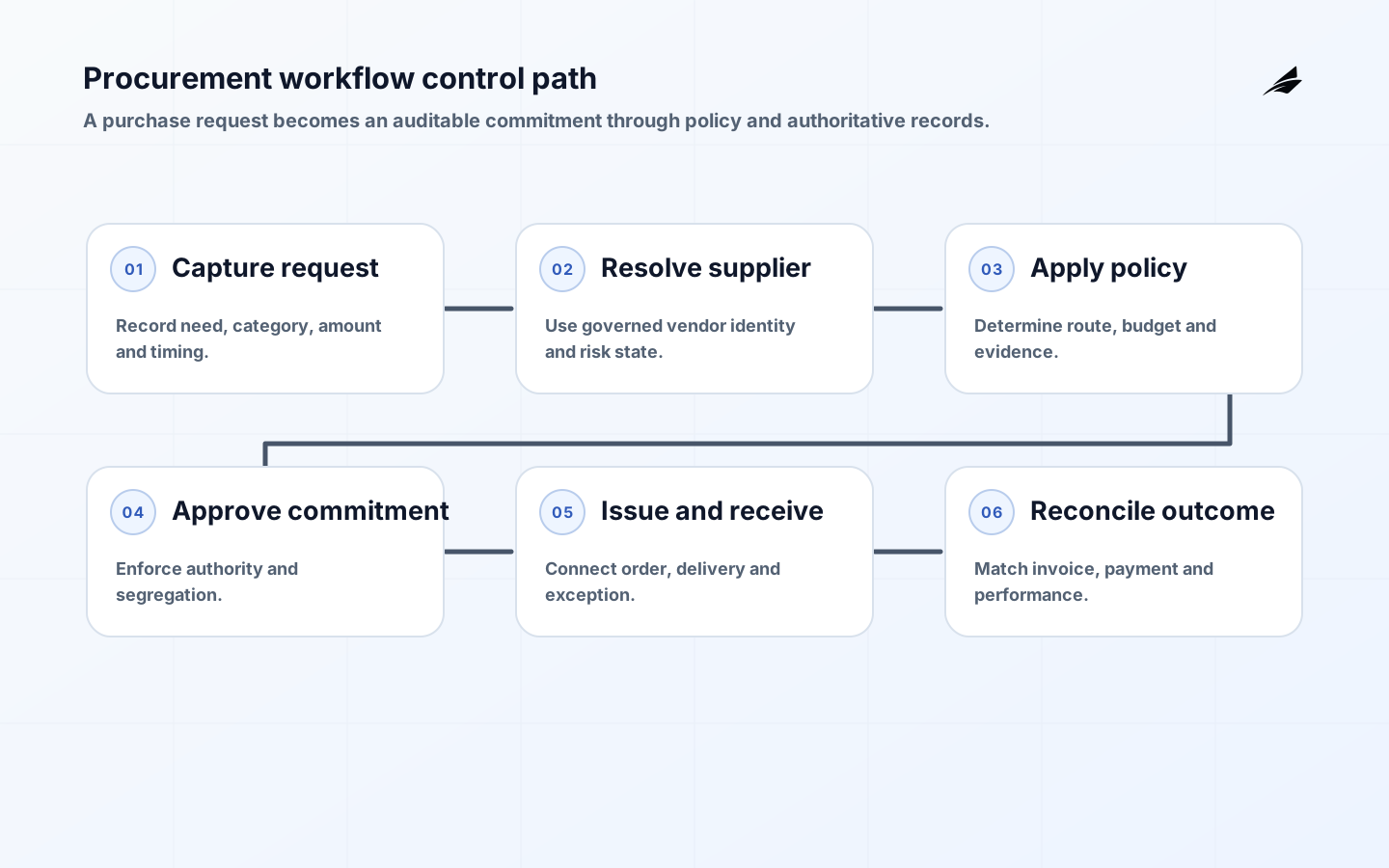
Procurement workflow software connects a business need to an authorized commitment and a reconciled financial outcome. It coordinates requesters, suppliers, budgets, sourcing, risk, approval, purchase orders, receipt and invoices across ERP, finance and supplier systems. The planning challenge is not digitizing a form. It is preserving supplier identity, policy, authority and evidence while reducing waiting and re-keying.
This guide provides a scope and architecture for procurement workflow software. The Open Contracting Data Standard illustrates structured contracting records. Peppol BIS Billing describes interoperable invoice information. GS1's Global Location Number supports location and party identification. NIST SP 800-53 offers relevant access, audit and system controls. Adapt the design to applicable procurement law, tax, accounting and organizational policy.
Define the procurement outcome and boundaries
Choose one spend category, entity or request type and map it from need through payment. Observe urgent, rejected, amended and cancelled cases. Record cycle time, handoffs, missing evidence, duplicate entry, off-contract spend and invoice exceptions. State whether the first release includes sourcing, contract management, ordering, receipt or invoice matching. A broad procure-to-pay replacement is difficult to accept without staged boundaries.
Assign process, finance, supplier-data, security and technical owners. Identify the authoritative system for supplier, budget, contract, purchase order, receipt and invoice. Define when the workflow creates a financial commitment. Exclude emergency purchases only with an explicit alternative and retrospective control; otherwise users will create unofficial channels.
| Record | Authoritative owner | Critical identifier |
|---|---|---|
| Supplier | Vendor master or supplier management | Legal entity, tax identity and location |
| Request | Procurement workflow | Requester, need, category, amount and entity |
| Purchase order | ERP or purchasing system | PO number, version and line |
| Receipt | Receiving or service owner | PO line, quantity and acceptance |
| Invoice | Accounts payable system | Supplier, invoice number, amount and tax |
Govern supplier and location identity
Duplicate or ambiguous suppliers create payment, sanctions and reporting risk. Define onboarding evidence, approval, bank-detail verification, tax attributes and beneficial ownership requirements according to policy. Use stable supplier and location identifiers. GS1 GLNs can identify parties and locations in relevant ecosystems, but internal and legal identifiers still need a governed cross-reference.
Separate supplier profile changes from ordinary purchasing. Bank-detail and legal-entity changes need stronger verification and segregation. Preserve effective dates and prior values. A requester should select an approved supplier record rather than create free text that bypasses controls. Monitor duplicates and dormant records. Supplier status changes must affect open requests and orders through defined rules.
Translate policy into explainable routing
Model category, amount, entity, budget, contract, supplier risk and requester relationship as policy inputs. Produce an explainable route with required evidence and approvers. Avoid hard-coding individual names; resolve current authority from an owned matrix. Support delegation with scope and expiration. Prevent self-approval and conflicting duties. A rejected or returned request should preserve history and explain what must change.
Keep policy version with the decision so audit can reproduce why a request took a path. Test boundary amounts, currency conversion, split requests and amendments. Detect attempts to avoid thresholds without blocking legitimate recurring purchases blindly. Manual override needs reason, authority and review. Policy automation should reduce waiting without turning exceptions into invisible shortcuts.
Design workflow and integration architecture
Use a workflow service to coordinate state while systems of record retain their authority. Commands to ERP should be idempotent and correlated with the request. Events need version, source and time. If budget, contract or supplier service is unavailable, show pending or stale state and prevent ambiguous commitment. Reconciliation should detect a request approved without a purchase order or an ERP order whose workflow record is missing.

Publish narrow contracts and protect service identities. Do not let the browser write directly to finance systems. Store documents in an approved repository with classification, version and retention. Provide an audit timeline that links request, evidence, approvals, order, receipt and invoice. Structured models such as OCDS can inform record design even when the organization is not publishing open contracting data.
Make approval useful rather than ceremonial
An approver needs purpose, amount, entity, budget impact, supplier, alternatives, contract position, risk and prior decisions. Mobile approval should preserve that context rather than offering a blind approve button. Require comments for exceptions. Reauthenticate for high-risk changes where appropriate. Timeouts and escalation should not silently transfer authority to an unqualified person.
Measure queue age and return reasons. Repeated missing evidence indicates a poor request form or unclear policy. Too many approval levels can reduce accountability because each reviewer assumes another will check. Use risk and materiality to design the route. Preserve one accountable commercial decision even when finance, security and legal provide specialist reviews.
| Exception | Workflow response | Evidence |
|---|---|---|
| No approved supplier | Route onboarding or approved alternative | Supplier review and decision |
| Budget unavailable | Hold commitment and notify owner | Budget status and authorization |
| Contract mismatch | Route to sourcing or legal | Contract reference and exception |
| Invoice differs from PO | Create matching exception | PO, receipt, invoice and resolution |
| Urgent purchase | Use bounded emergency route | Reason, authority and retrospective review |
Connect approval to order, receipt and invoice
Generate or request the purchase order only after required approval, and return the authoritative order number to the workflow. Preserve line-level quantity, price, tax and delivery location. Amendments need version and reapproval rules. Send suppliers approved documents through controlled channels. Peppol BIS Billing illustrates structured invoice elements that support automated validation and matching.
Receipt proves that goods or services were accepted. Define who can receive and how partial, rejected or service-based receipt works. Match invoice to purchase order and receipt according to policy, with tolerances and exception ownership. Avoid automatic payment when supplier identity or bank detail changed unexpectedly. Reconcile workflow, ERP and accounts-payable state through control totals and missing-record reports.
Protect access, evidence and sensitive data
Apply least privilege to requester, buyer, approver, supplier-data steward, receiver and accounts-payable roles. NIST SP 800-53 provides control families that can inform access, audit, change and contingency design. Administrative access should not imply purchasing authority. Protect bank, tax, contract and personal data in interfaces, exports and telemetry.
Log consequential changes with actor, reason and policy version. Monitor unusual supplier changes, split purchasing, repeated overrides and bulk export. Test recovery from compromised approver or supplier account. Retain evidence according to legal and accounting requirements, then delete when no longer needed. Vendor and support access should be time-bound and attributable.
Pilot and operate the workflow
Pilot one category or entity with representative requesters and approvers. Migrate only active supplier and contract references needed for scope. Test rejection, amendment, delegation, urgent purchase, partial receipt and invoice mismatch. Reconcile purchase orders and financial commitments before closing the old path. Train users on policy and exceptions, not just screens.
Operate with measures for request cycle, queue age, first-time completeness, off-contract spend, approval override, duplicate supplier, unmatched invoice and integration failure. Review recurring exceptions with procurement and finance. Maintain authority matrices, policy tests and integration contracts. Exercise continuity for ERP outage and approver absence. A workflow is mature when the team can change policy safely without manual database edits.
Design supplier onboarding as a controlled sub-workflow
Supplier onboarding should collect only the evidence needed for category, entity and risk while making responsibility explicit. Separate supplier-provided information from internal verification and approval. Validate legal name, tax identity, location, payment details, sanctions or risk checks as applicable, and ownership of the business relationship. Use secure channels for sensitive documents and bank information. A requester should be able to see progress without gaining access to protected details. Incomplete or expired evidence should prevent the relevant purchasing action through a clear state, not through an informal email reminder.
Bank-detail changes deserve a workflow distinct from ordinary profile edits. Notify an established supplier contact through an independently verified channel, apply segregation of duties and retain the old value and effective date. Do not let an invoice attachment silently update the vendor master. Monitor unusual combinations such as new supplier plus urgent payment, repeated changes or shared bank accounts. When a supplier is suspended, merged or closed, define effects on open requests, purchase orders, receipts and invoices so lifecycle state remains consistent across systems.
Measure onboarding completion time by step and exception category rather than pressuring reviewers to bypass checks. Repeated document rejection may indicate confusing instructions; long internal queues may indicate unclear ownership. Review duplicate-supplier attempts and records that never receive an order. Retain evidence according to policy and remove it when no longer required. A clean supplier master improves routing, matching, spend analysis and payment security, so onboarding quality is part of procurement workflow performance rather than a separate administrative concern.
Key takeaways
Procurement workflow software should connect need, supplier, policy, authority and financial records without hiding exceptions. Plan systems of record and reconciliation before interface design. Treat supplier changes, delegation and emergency purchases as lifecycle controls.
- Scope one complete category or entity path.
- Govern supplier and location identity with effective history.
- Version routing policy and test threshold boundaries.
- Link approval, PO, receipt and invoice through stable identifiers.
- Measure exception quality and reconcile financial state.
Frequently asked questions
Should the workflow live inside the ERP?
It can when ERP capabilities fit users and policy. A separate workflow may improve experience and integration, but it must preserve ERP authority and reconciliation.
Is three-way matching always required?
Not for every purchase. Apply the organization's policy by category and consequence, while preserving equivalent evidence for services and approved exceptions.
Where can AI assist procurement?
It can extract documents, suggest categories or summarize contracts, but critical supplier, policy and payment decisions require verified data, bounded authority and review.
Conclusion
Procurement workflow software planning succeeds when the system creates an unbroken, explainable path from business need to authorized and reconciled outcome. Build around governed supplier identity, versioned policy, meaningful approval and authoritative finance records. Pilot narrowly, reconcile every commitment and improve recurring exceptions. That approach reduces cycle time without trading away commercial and financial control.