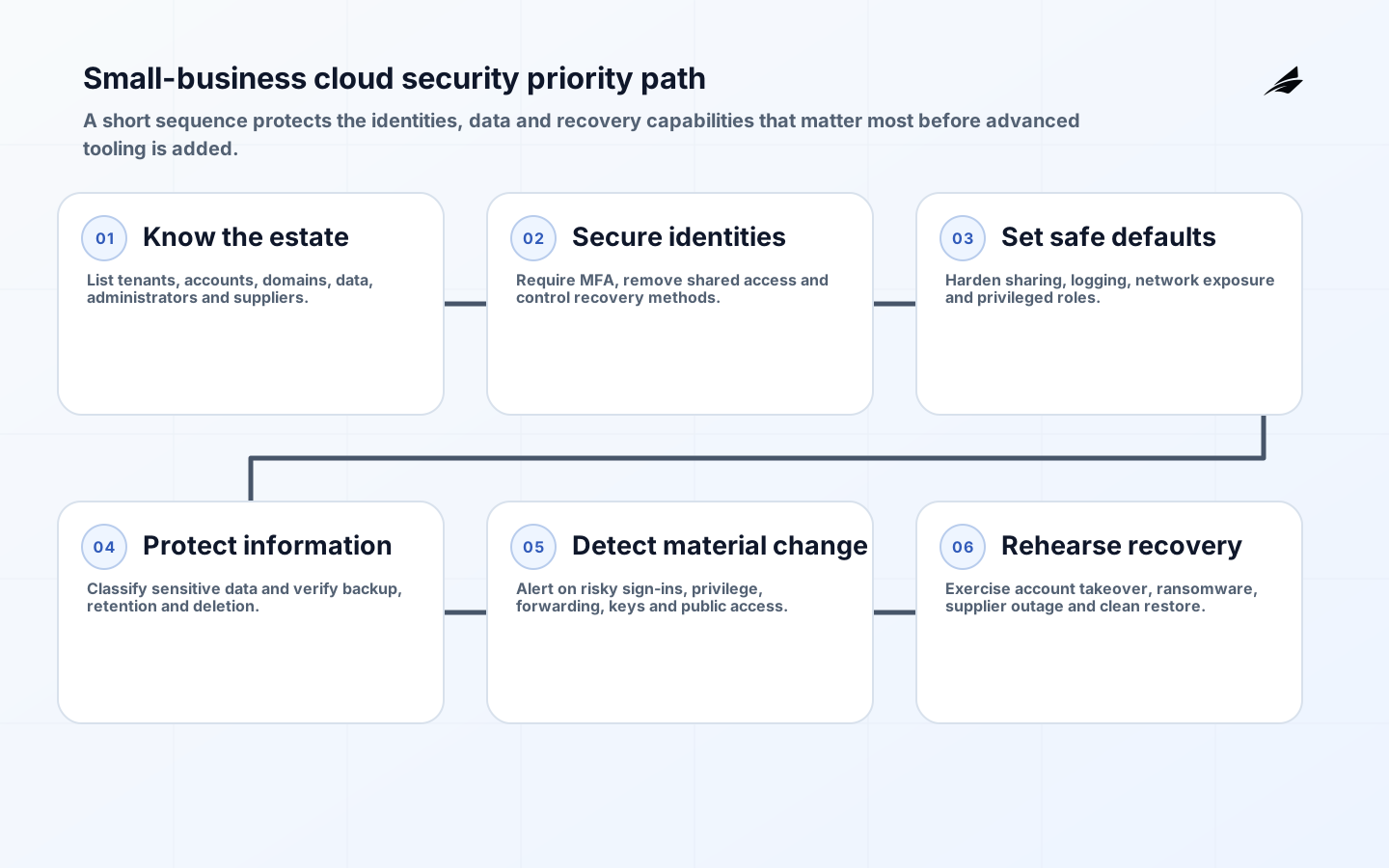
Cloud cybersecurity consulting for small business should turn limited time and money into a short list of risk reductions that the owner can verify. It should not begin with a large tool catalogue or a compliance badge. For many small organizations, the most consequential systems are email, identity, file sharing, finance, customer records, backups, domains and a handful of specialist SaaS products. If an attacker controls the administrator account, recovery email, payment mailbox or backup console, an expensive security dashboard may not prevent serious harm.
This FAQ explains what a useful engagement should cover, what evidence to request and how to keep the result maintainable after the consultant leaves. The small-business cloud security delivery plan helps shape scope and cost, while the implementation checklist turns the recommendations into owned work.
Which cloud security priorities should come first?
Start with an inventory that a non-specialist owner can understand: cloud tenants, domains, administrator accounts, users, devices, critical applications, sensitive data, integrations, backup locations and suppliers. Record who pays for each service and who can recover or close it. Orphaned subscriptions and personal administrator accounts create hidden dependence. CISA’s small and medium business resources emphasize practical baseline protections; NIST CSF 2.0 adds a useful structure across Govern, Identify, Protect, Detect, Respond and Recover.
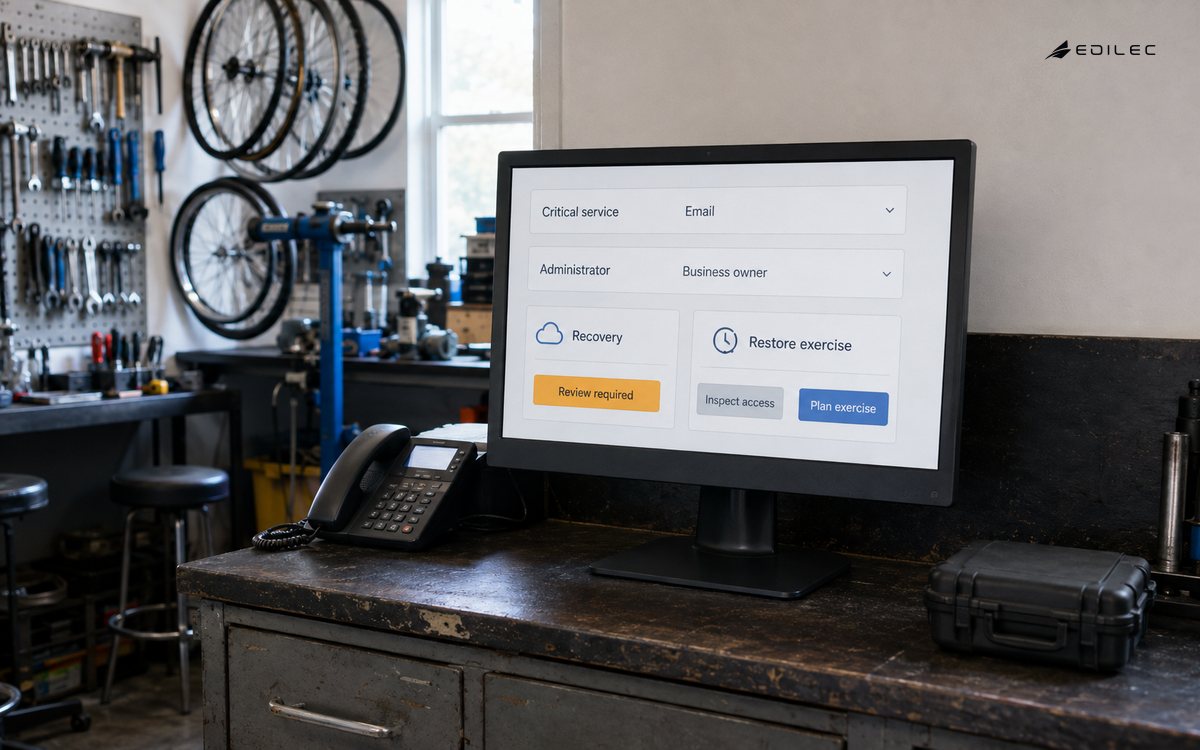
Close identity gaps before tuning advanced controls. Require multifactor authentication for administrators, email, finance, remote access and backup. Prefer phishing-resistant methods for the highest-impact accounts. Remove shared sign-ins, disable former staff promptly, keep at least two controlled emergency administrators and protect account-recovery channels. Separate daily work from privileged administration. Review OAuth applications, API keys, forwarding rules and service accounts because persistent access can survive a password change.
| Priority | Minimum outcome | Evidence to retain |
|---|---|---|
| Identity | Every critical account has a named owner and strong MFA | Administrator list and authentication report |
| Email and domains | Forwarding, DNS and recovery changes are controlled | Rules, registrar roles and change alerts |
| Data sharing | External and public access is intentional | Sharing review and exception owner |
| Backup | Critical records can be restored independently | Restore test with date and result |
| Incident response | People know who can contain and communicate | One-page plan and exercise notes |
Does moving to cloud services make the provider responsible for security?
No. Cloud providers secure the facilities and managed infrastructure they operate, while the customer retains responsibilities that vary by service model. A SaaS provider may patch the application, but the customer still controls users, roles, sharing, integrations, retention and much of the data use. Infrastructure services leave more network, operating-system and application work with the customer. A consultant should document this allocation for each critical service rather than presenting one generic shared-responsibility chart.
Configuration is where many affordable improvements live. Establish secure baselines for administrator roles, external sharing, mailbox forwarding, public storage, remote access, logs, retention and device enrollment. Test the effect on actual work with a small group before broad enforcement. Export the settings and decision record so a future provider can understand them. The business should own its primary tenant, billing account, domain and recovery contacts; a supplier should receive delegated access, not become the only party able to administer the service.
What should a cloud security assessment include?
A useful assessment combines interviews, configuration evidence and a small number of technical tests. It traces the organization’s most damaging scenarios: business-email compromise, fraudulent payment change, ransomware, exposed customer data, lost device, malicious former employee and supplier outage. For each scenario, document the assets involved, preventive controls, detection signal, containment authority, recovery method and customer or legal communication. Risk ratings should include business consequence and current evidence, not only generic vulnerability severity.
The deliverable should distinguish immediate fixes, planned improvements, accepted risks and items requiring specialist advice. Every recommendation needs an owner, cost range, dependency, acceptance test and maintenance cadence. Avoid reports that merely list hundreds of settings. A five-item plan that protects email, finance, customer records and restore capability is more valuable than a long maturity score with no funded action. Ask the consultant to demonstrate the most important changes and leave reproducible instructions.
Are cloud backups and retention the same thing?
No. Retention keeps versions or deleted items according to a rule; backup creates a recoverable copy with a defined failure boundary. Native recycle bins help with accidental deletion but may not protect against tenant compromise, malicious administrators, mass encryption or provider-account loss. Decide which records the business cannot recreate, then define recovery point, recovery time, copy isolation, encryption, ownership and deletion. Verify that the backup account and notifications do not depend solely on the identity system being protected.
Run a restore test using representative email, files, finance exports or application data. Check permissions, metadata and application usability, not just file existence. Record how long the restore took, who approved it and what failed. Small businesses often discover that they can recover a database dump but not the credentials, configuration or integration needed to use it. Include domain, DNS, SaaS configuration and emergency contacts in the continuity record.
| Scenario | First containment action | Recovery proof |
|---|---|---|
| Email account takeover | Revoke sessions, reset methods and inspect forwarding | Clean administrator access and reviewed messages |
| Public file exposure | Remove sharing and preserve access evidence | Confirmed scope and corrected policy |
| Ransomware | Isolate affected identities and devices | Clean restore from protected copy |
| Supplier outage | Invoke manual path and status communication | Export or alternate process works |
| Administrator departure | Remove all roles, tokens and recovery paths | Access review shows no residual privilege |
How much monitoring and incident response does a small business need?
Monitor events that change control or indicate likely compromise: new administrators, MFA removal, risky sign-ins, impossible travel, mass downloads, mailbox forwarding, public links, new API credentials, domain changes, backup failure and disabled logging. Route alerts to a channel that remains available if email is compromised. Each alert needs an owner and a first action. Collecting logs without someone able to interpret and act on them creates cost without protection.
Create a one-page incident plan with internal decision-makers, technical contacts, insurer, legal or privacy advice, critical suppliers and communication authority. Exercise one plausible scenario for 60 to 90 minutes. Test whether the team can revoke sessions, preserve evidence, contact the provider and restore a record. Do not promise that every incident can be prevented. The goal is to notice material events quickly, contain them with minimal improvisation and recover the business service safely.
How should a small business choose and govern a consultant?
Choose demonstrated experience with the specific platforms and business risks, not fear-based sales language. Ask who will perform the work, how privileged access is granted, what data leaves the tenant, which subcontractors are involved and how evidence is returned. The agreement should define confidentiality, incident notification, access removal, deliverables and ownership of scripts or configuration. CISA’s SMB supply-chain guidance is a useful reminder that technology suppliers are part of the risk picture.
Keep governance proportionate. Review administrators and critical sharing monthly, restore capability quarterly, and the full inventory at least annually or after major change. Track a few meaningful measures: critical accounts with strong MFA, former-user removal time, unresolved high-risk exposure, backup success, restore time and overdue actions. A consultant can provide expertise, but a named person inside the business must own risk decisions and verify that recurring work continues.
What should the first 90 days produce?
In the first 30 days, establish ownership and regain control: verify domains and billing, list administrators, enable strong authentication, remove former access, secure recovery methods and identify critical records. Record immediate risks that cannot be fixed safely. Do not change every setting at once; preserve evidence and test business workflows so security work does not lock the company out of essential services.
During days 31 to 60, apply documented baselines for sharing, email, devices, logging and backups. Test restore, alert routing and one account-compromise scenario. Review suppliers with privileged access and remove unused applications or tokens. Train staff on payment-change verification and reporting suspicious activity using examples from their real work rather than generic annual slides.
During days 61 to 90, resolve the highest remaining risks, confirm recurring owners and set review cadence. Produce a short architecture and responsibility record, current administrator export, backup result, incident contact sheet and prioritized backlog. The owner should be able to explain what improved, what remains accepted and which evidence will be checked next quarter without depending on the consultant’s private tools.
Key takeaways
- Inventory critical tenants, identities, domains, data and suppliers before buying tools.
- Protect administrators, email, finance and backup with strong authentication and recovery controls.
- Document customer and provider responsibilities for every critical cloud service.
- Require recommendations with owners, acceptance tests and maintenance cadence.
- Exercise containment and restore instead of assuming provider defaults are sufficient.
Frequently asked questions
How much should a small business spend?
Spend should follow exposure and consequence. Begin with a fixed assessment and remediation plan, then fund identity, backup and critical configuration before optional platforms. Separate one-time cleanup from ongoing monitoring, support and licenses so the commitment remains affordable.
Will a security assessment make the business compliant?
Not by itself. Compliance depends on the organization, data, contracts and applicable law. An assessment can produce technical evidence and identify gaps, but accountable leaders and qualified advisers must determine obligations and maintain the operating controls.
Is a managed service provider enough?
An MSP can operate defined controls, but the business still needs to approve risk, own core accounts and verify performance. Make the scope explicit: patching, identity, backups, monitoring and incident response are separate services unless the agreement says otherwise.
Conclusion
Effective small-business cloud security is disciplined and understandable. A verified inventory, protected identities, safe configuration, independent recovery and a rehearsed response close the failures most likely to threaten operations. Consulting adds value when it leaves those controls working, documented and owned rather than leaving a score that nobody can maintain.