Kubernetes cost allocation OpenCost data becomes useful only after an organization decides what ownership means. Namespace, controller, pod, label, and annotation are technical dimensions; a business needs product, team, environment, customer, cost center, and lifecycle responsibility. Shared platform services and idle nodes do not disappear because a dashboard groups workload costs. They need explicit, versioned allocation rules that users can understand and finance can reconcile.
OpenCost is a vendor-neutral open-source project for Kubernetes cost measurement and allocation, supporting real-time monitoring, showback, and chargeback as described in its official overview. Treat its outputs as modeled operational data. Provider invoices remain the financial record, and differences can arise from commitments, credits, taxes, support, marketplace charges, delayed usage, network pricing, unobserved services, and rate configuration. Reconciliation is a product feature of the allocation system, not an occasional spreadsheet exercise.
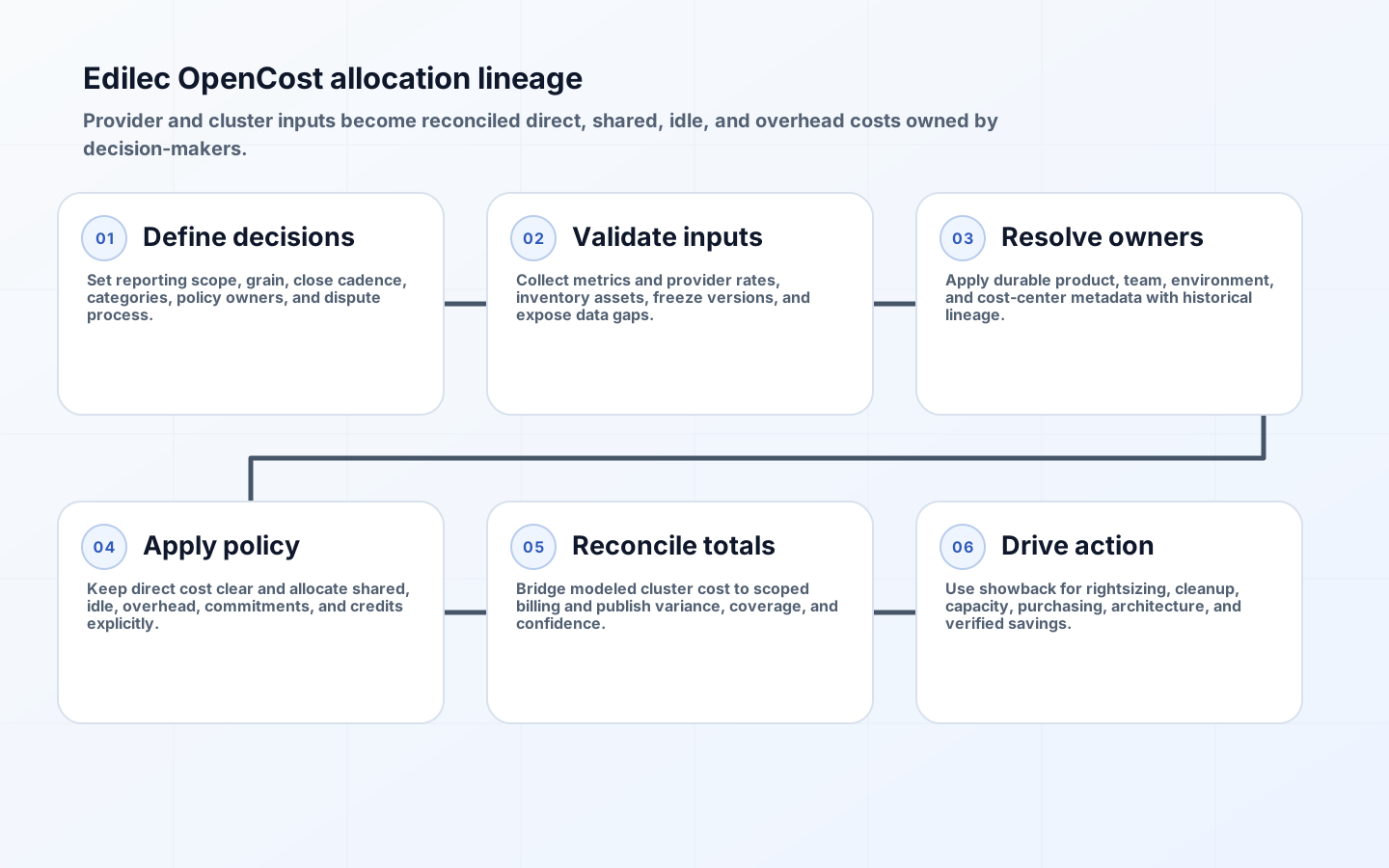
Define the allocation contract through six stages
Name the decisions the data should support: rightsizing, idle reduction, product margin, team accountability, budgeting, anomaly response, or chargeback. Define the reporting grain and close calendar. Then publish direct-cost, shared-cost, idle-cost, overhead, credit, commitment, and unallocated policies with effective dates. Assign owners for billing inputs, cluster inventory, metadata, platform services, reporting logic, and disputes. A stable contract prevents each dashboard viewer from inventing a different denominator.
| Cost category | Default treatment | Alternative | Decision owner |
|---|---|---|---|
| Workload CPU, memory and GPU | Attribute to workload owner from allocation model | Use actual-use view for optimization alongside allocated view | FinOps and platform |
| Persistent volume and load balancer | Attribute to owning resource metadata | Share only when genuinely common | Service owner |
| Shared platform workloads | Allocate by consumption or transparent proportional rule | Keep as platform cost center | Platform product owner |
| Idle node capacity | Show separately first | Distribute by non-idle cost or reserved capacity | Capacity council |
| Cluster management and external overhead | Reconcile and allocate by approved driver | Report centrally | Finance |
Deploy and validate the OpenCost data path
Deploy OpenCost with its required metrics source and the provider integration appropriate to the environment. Limit access to cost and metadata endpoints, retain enough history for the reporting cycle, and monitor scrape completeness, cardinality, query latency, and gaps. Compare node, disk, load-balancer, and network inventory with cloud resources. Unmapped clusters, stale nodes, missing volumes, or duplicate collectors can create plausible but incomplete totals. Version configuration and price inputs alongside reports.
The OpenCost Specification separates asset, workload, idle, shared, and overhead concepts and defines workload cost using the greater of request or usage for allocation-priced resources such as CPU and memory. That model exposes the reservation imposed on shared capacity while still allowing usage analysis. Keep both allocation and usage views: allocation supports accountability for scheduled capacity, while usage helps engineers see rightsizing opportunities. Neither should be mislabeled as the provider invoice.
Establish durable ownership metadata
Choose mandatory labels or annotations such as owner, product, environment, cost-center, and managed-by, with controlled values from authoritative catalogs. Apply them at controller or namespace admission, not manually to ephemeral pods. Define precedence when namespace and workload metadata disagree. Preserve historical ownership because a team rename must not rewrite prior reporting. Validate coverage by allocated cost as well as object count; one unlabeled high-cost training job matters more than hundreds of tiny labeled pods.
Create an unallocated bucket rather than guessing ownership. Route its largest items to remediation with a deadline and escalation. Handle shared namespaces explicitly; namespace-only aggregation often assigns platform components to the platform team without showing who consumes them. Multi-dimensional aggregation can retain cluster, namespace, controller, and owner lineage. Keep raw identifiers behind summarized reports so disputes can be traced to a specific workload and interval.
Allocate shared services with a defensible driver
Classify each shared service by causality. DNS, ingress, service mesh, logging, monitoring, security agents, CI runners, and control components have different demand drivers. Consumption metrics such as queries, bytes, series, or build minutes may be fair when reliable. Proportional workload cost is simpler and often adequate for low-materiality services. Equal allocation is understandable but can penalize small tenants. Keeping a service in a central platform cost center is valid when internal charging would cost more to operate than it informs.
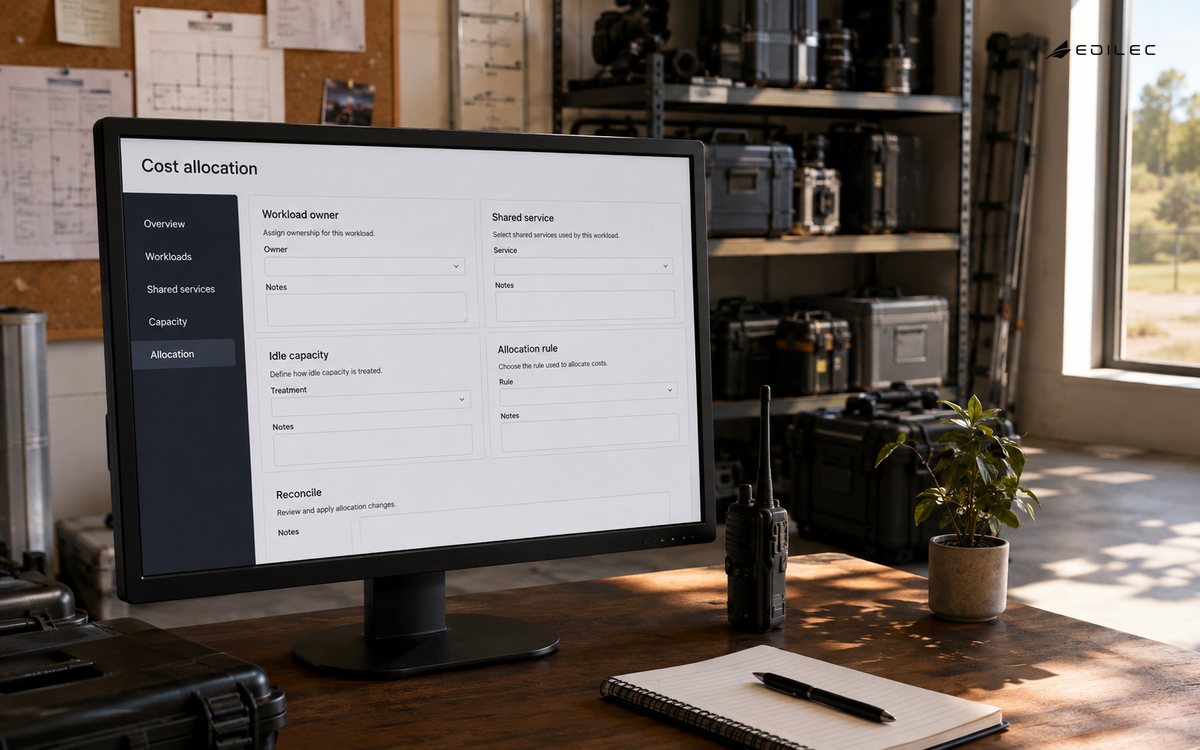
Document inclusions, driver, source, cadence, minimum materiality, treatment of missing data, and examples. Avoid circularity where a shared service's cost is allocated using totals that already include that same redistributed cost. Provide both pre-allocation and post-allocation views. Consumers should see the direct cost they control separately from platform charges they influence indirectly. The FinOps Foundation's Allocation capability frames allocation as apportioning cost to responsible parties, including shared elements; responsibility must remain understandable to produce behavior change.
Treat idle spend as a capacity decision
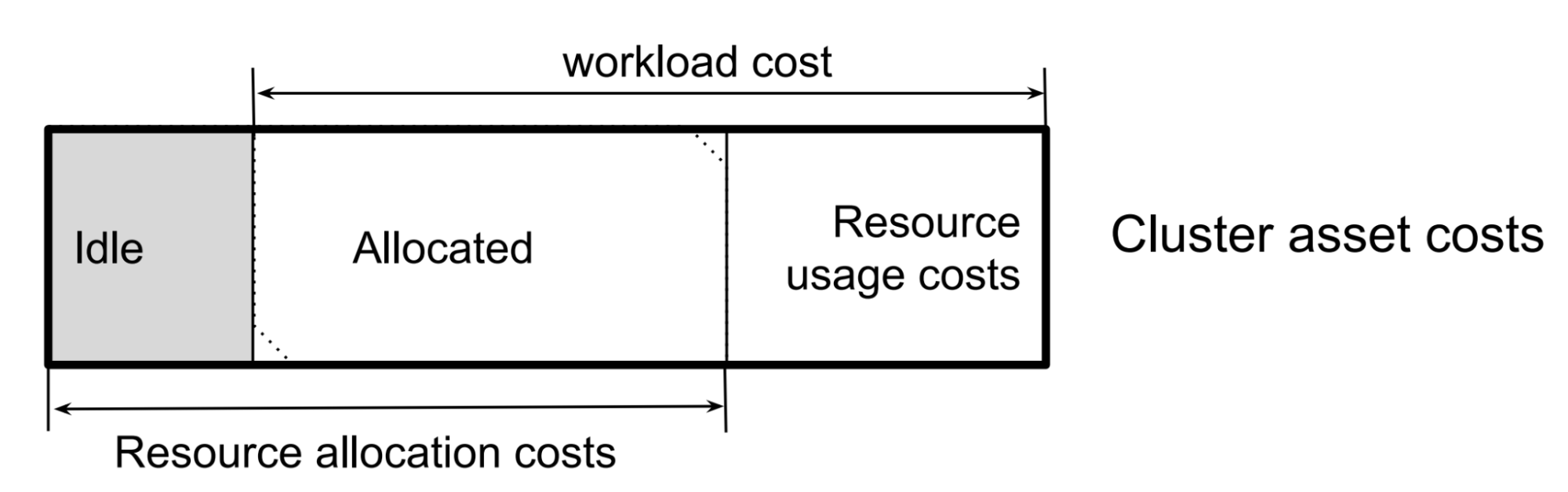
OpenCost's Allocation API can return idle separately, distribute it across non-idle allocations, and calculate idle by node. Begin with separate idle reporting by cluster, node pool, purchase option, zone, and resource. Ask why it exists: resilience headroom, node launch latency, fragmentation, minimum managed-group size, DaemonSet overhead, fixed GPU shape, failed scale-down, or forgotten capacity. These causes belong to different owners and should not be flattened into one efficiency percentage.
When distributing idle, choose a rule that supports the intended decision. Proportional non-idle cost is simple but can charge efficient teams for another workload's fragmentation. Node-level distribution improves locality but may reinforce accidental placement. Reserved-capacity allocation can reflect explicit service guarantees. Preserve a separate idle metric after distribution so total cost reconciles without hiding opportunity. Set reliability headroom targets before labeling all unused capacity waste.
| Control | Test | Failure signal | Correction |
|---|---|---|---|
| Billing reconciliation | Compare modeled cluster total with scoped provider charges | Variance exceeds approved threshold | Fix rates, scope, credits or missing assets |
| Metadata coverage | Measure allocated cost with valid owner fields | Large unallocated bucket | Admission control and owner remediation |
| Shared-cost lineage | Recompute driver from source metric | Report cannot explain redistribution | Version formula and retain inputs |
| Idle transparency | Reconcile direct plus shared plus idle plus overhead | Distributed view hides residual | Publish pre- and post-allocation totals |
| Report stability | Rerun closed period from frozen inputs | Historical total changes unexpectedly | Snapshot data and logic version |
Operate review, reconciliation, and action
Reconcile monthly or at the organization's close cadence by account, cluster, service, and cost category. Explain known exclusions and timing differences. Publish confidence and coverage next to totals. Use showback before chargeback so owners can correct metadata and challenge rules. A dispute workflow should identify report version, object lineage, time window, requested correction, approver, and whether the change is prospective or historical. Silent manual overrides destroy trust.
Connect reports to actions: resize requests, remove abandoned volumes, repair node autoscaling, schedule batch work, choose purchase commitments, or redesign expensive network paths. Track action acceptance, verified savings, and reliability effects. Cost allocation is successful when accountable teams can change an architectural or operational driver, not when every currency unit has merely been colored on a chart. Review the contract after platform, pricing, organizational, or workload changes.
Normalize rates without hiding commitments and credits
Choose whether operational allocation uses list, negotiated, amortized commitment, or effective rates, and label the view. List rates can support architecture comparisons; effective rates better reconcile realized spend; commitment allocation shows who consumes purchased coverage. Do not assign every commitment benefit to whichever workload happened to run at close. Preserve commitment utilization and uncovered usage separately so procurement and engineering can see whether portfolio shape matches the purchase.
Credits and discounts need policy too. Material service-specific credits may follow the affected service, while broad commercial credits may remain at an account or finance level. Negative adjustments can make a team's period appear artificially efficient if distributed without context. Version rate tables, currency conversion, and adjustment logic, and show both gross modeled cost and net allocated cost where stakeholders need to understand the bridge.
Close each reporting period from frozen source windows. Late provider adjustments should enter a named subsequent correction rather than silently changing a report that teams already acted on. This preserves reproducibility and gives finance, platform, and owners one audit trail from rate input through allocation rule to final showback.
Key takeaways
- Define decisions, categories, owners, and effective dates before producing chargeback.
- Treat OpenCost as a modeled allocation system and reconcile it to provider billing scope.
- Enforce durable ownership metadata at controller or namespace admission.
- Allocate shared services by a documented causal or proportional driver and keep lineage.
- Show idle separately, explain its operational cause, and preserve reliability headroom targets.
Frequently asked questions
Should OpenCost exactly match the cloud invoice?
Not automatically. Invoice scope includes pricing and adjustments beyond Kubernetes allocation. Define the reconciled scope and explain timing, credits, commitments, and excluded services.
Should all idle cost be distributed to teams?
No. Show it separately first and distinguish resilience headroom, platform minimums, fragmentation, and avoidable waste. Distribution should follow an approved decision purpose.
Is namespace a sufficient cost owner?
Sometimes, but shared namespaces and changing teams often require product, owner, environment, and cost-center metadata with historical lineage.
Conclusion
OpenCost provides the technical allocation model; the organization supplies ownership, shared-cost, idle, and reconciliation policy. Build a traceable path from bill and cluster asset to workload and accountable owner, expose uncertainty, and preserve pre-allocation totals. When reports lead to verified engineering action without hiding reliability choices, Kubernetes cost allocation becomes an operating system for decisions rather than another dashboard.