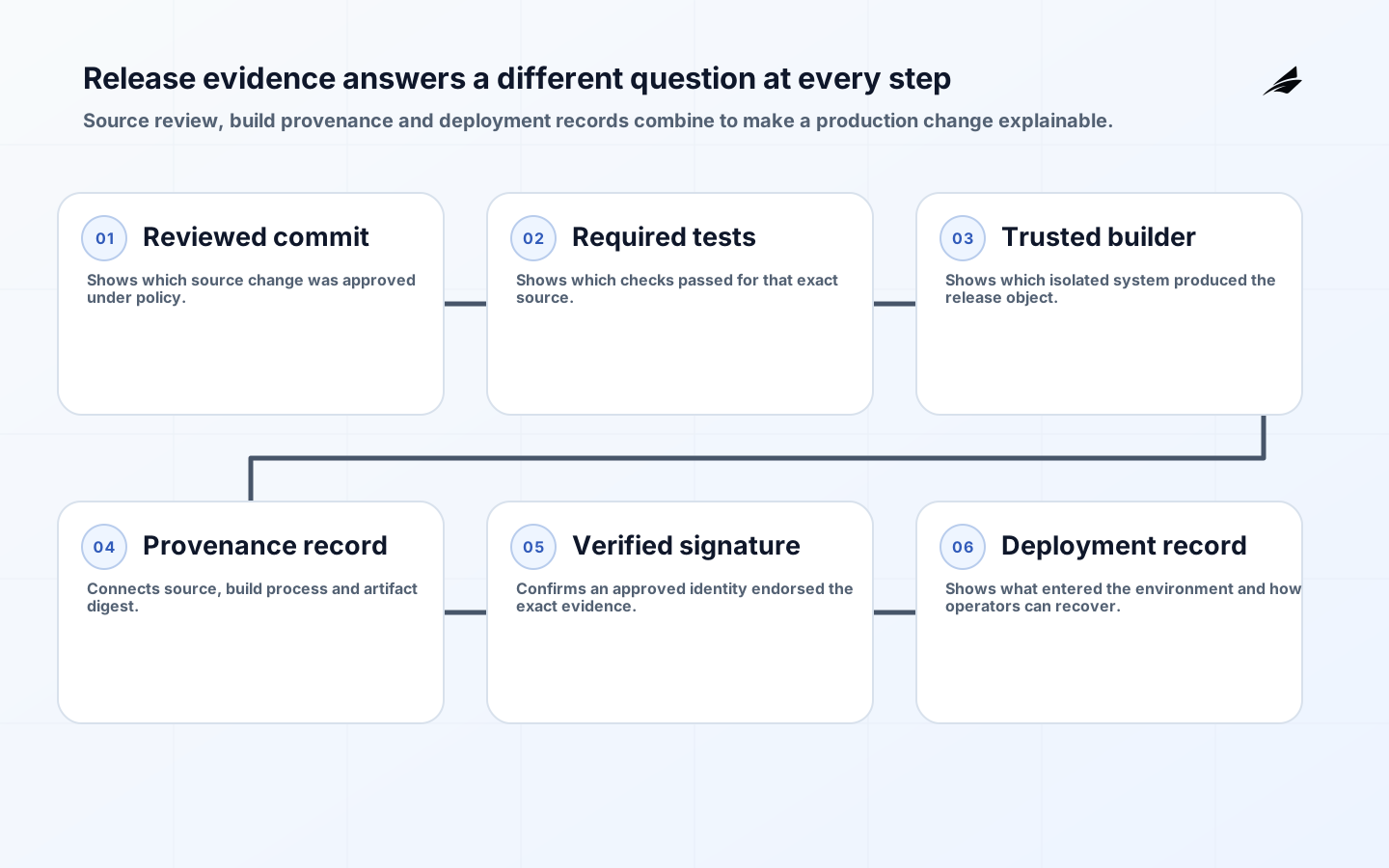
CI/CD modernization questions often sound like tool questions, but the consequential decisions concern trust, ownership and operating behavior. A platform can run jobs quickly while still exposing production credentials, rebuilding untraceable artifacts or failing without a recovery path. This FAQ helps enterprise teams define a useful target before migrating repositories or buying another delivery product.
What does CI/CD modernization actually mean?
It means improving the system that turns reviewed source into a verified production change. Work can include source protections, reusable workflows, runner isolation, short-lived identity, test feedback, artifact registries, provenance, policy checks, environment promotion, deployment telemetry and recovery. Replacing a server without changing unsafe identities or manual production steps is a hosting change, not necessarily modernization.
Do we need to replace our current platform?
Not automatically. First compare requirements with current capabilities and operating constraints: support status, identity, runner architecture, policy enforcement, artifact evidence, integrations, data location, availability, cost and team skills. Configuration and a stronger operating model may close the gap. Replace the platform when material requirements cannot be met responsibly, then validate the target with representative workloads before portfolio commitment.
| Decision | Keep and improve when | Replace or consolidate when |
|---|---|---|
| Platform | Supported capabilities meet target with manageable change | Material control, support or integration gaps remain |
| Runner model | Isolation and lifecycle can be hardened | Architecture cannot separate trust levels |
| Templates | Reusable components can be versioned centrally | Copies and plugins cannot be governed |
| Registry | Artifacts can be immutable, retained and verified | Promotion and evidence cannot be trusted |
| Deployment | Identity, policy and recovery can be automated | Manual path remains opaque or unbounded |
Should every repository use the same pipeline?
Use common control interfaces and maintained components, not one rigid file. Different languages and deployment targets need different steps. A paved path can standardize identity, approved runners, artifact publishing, provenance, deployment verification and telemetry while exposing documented extension points. Exceptions need owners, expiry and compensating controls. Forked copies should not become the default distribution model for policy.
Why are runners a major security concern?
Runners execute repository code, build scripts and dependencies. If a worker is persistent, privileged or connected to sensitive networks, hostile code may steal credentials, alter caches or move laterally. Separate trust zones, reset or destroy workers after jobs, minimize installed tools, restrict egress and avoid mounting powerful host interfaces. Platform-specific guidance matters because token and fork behavior differs.
How should pipelines access cloud and deployment systems?
Prefer short-lived, workload-bound credentials issued through federated identity when supported. Scope them to a repository, workflow, environment and action; separate build from deployment authority. Protect environment approvals and audit token issuance. Where static secrets remain necessary, store them in an approved secret system, minimize scope, rotate them and prevent exposure to logs, artifacts or untrusted pull requests.
What are provenance and signing for?
Provenance records how an artifact was produced, including source and builder information defined by the chosen framework. Signing binds an identity to an artifact or attestation. Neither helps if deployment never verifies it. Define the threat being addressed, protect issuing identity, retain evidence and enforce a policy that rejects unexpected source, builder or integrity. SLSA provides graduated supply-chain assurance; Sigstore documents mechanisms for signing and verification.
| Evidence | Question it answers | Operational requirement |
|---|---|---|
| Source review | Was the change approved under policy? | Protected history and exception audit |
| Test result | Did required checks pass for this source? | Tamper-resistant link to release |
| Provenance | Which builder and process produced the artifact? | Generated by trusted system and verified |
| Signature | Which identity endorsed this object? | Protected identity and verification policy |
| Deployment record | What version changed which environment? | Correlated with service telemetry |
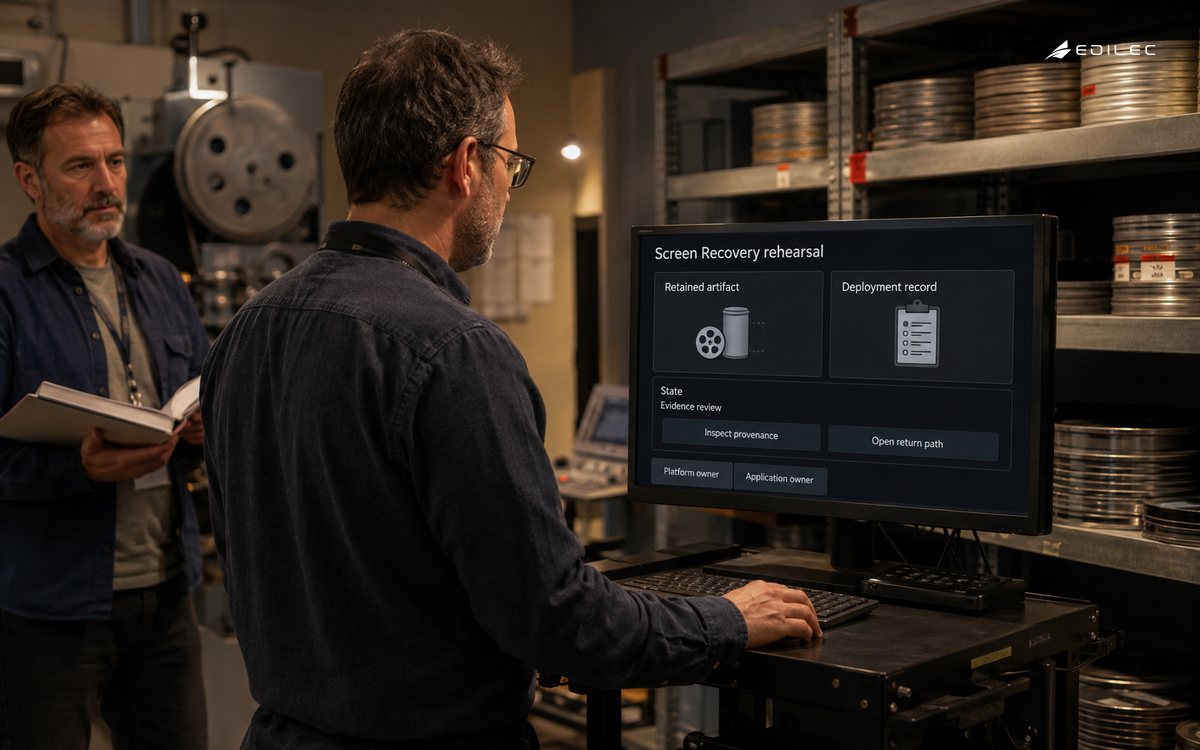
| Recovery record | Can operators restore acceptable service? | Rehearsed procedure and retained artifact |
Are manual approvals always safer?
No. A person approving a change without evidence can become a delay with little risk reduction. Use approvals when accountable judgment is needed, and present the reviewer with source, tests, policy results, artifact identity, change risk and rollout plan. Automate deterministic checks. For lower-risk changes with strong controls, progressive delivery and automated rollback may provide better protection than a routine click.
How much testing belongs in CI?
Put fast, deterministic feedback close to the change and move expensive or environment-dependent checks to later controlled stages when appropriate. Test selection should follow failure risk, not a target count. Track flaky tests separately because retries hide instability and consume capacity. Production verification should check user-visible behavior, while pre-production tests cover code, contracts, security and state changes at suitable levels.
Which repositories should migrate first?
Select a representative but manageable service, not the easiest toy or most critical system. It should exercise common build, artifact and deployment patterns and have an engaged owner. Follow with cohorts grouped by archetype. The pilot should expose platform gaps and produce realistic migration effort before a fixed enterprise schedule is announced.
- Inventory and classify the current portfolio and trust boundaries.
- Build the minimum paved path and threat model.
- Run old and new builds in parallel for a representative service.
- Prove non-production deployment, evidence and recovery.
- Pilot production with staffed monitoring and a return path.
- Migrate similar cohorts and refine templates from observed exceptions.
- Revoke old credentials and retire runners, jobs, registries and licenses.
Which metrics should leaders use?
DORA describes deployment frequency, lead time for changes, change fail rate, failed deployment recovery time and reliability. Use them at application or service level with consistent definitions and context. Add platform queue time, time to first feedback, flaky-test rate, policy exceptions, provenance verification, platform availability and developer feedback. Never use a single metric to rank individuals; teams can game local numbers while system outcomes deteriorate.
How should cost and timeline be estimated?
Estimate by repository archetype and platform foundation. Include discovery, identity, runners, network, registry, templates, evidence, application changes, testing, enablement, dual operation, support and decommissioning. Recurring cost includes compute, storage, licenses and platform ownership. Run a representative pilot to replace assumptions with measured effort and usage; no universal repository rate accounts for custom release behavior.
What happens when the CI/CD platform is unavailable?
Define the answer before an urgent release. For many services, pausing change is safer than bypassing controls. Where emergency deployment is necessary, create a narrow break-glass path with strong authentication, limited scope, independent approval, immutable logging and mandatory review. Keep required runbooks and recovery credentials accessible through an appropriately protected system outside the failed platform. Test restoration of the platform itself, including runners, templates, registries, identity connections and audit evidence.
Also distinguish platform recovery from application release recovery. A functioning CI service does not guarantee that a failed database change can be reversed, and an application rollback should not depend on rebuilding an old artifact. Retain approved artifacts and deployment metadata for the recovery window. Exercise scenarios such as provider outage, corrupted cache, unavailable registry and compromised signing identity, then assign remediation from observed gaps.
Who owns shared pipelines and application releases?
The platform team owns the paved path as a product: reliability, runner images, reusable components, security updates, documentation and support. Application teams own service-specific build logic, tests, deployment readiness and operational outcomes. Security defines and tests common controls with both groups. Make boundaries explicit in a service catalog and incident model. Shared ownership should mean coordinated decisions, not an assumption that another team will repair failures.
What risks deserve an explicit owner?
| Risk | Primary owner | Control |
|---|---|---|
| Untrusted code reaches secrets | Platform security | Trust-zone isolation and scoped identity |
| Central template breaks many builds | Platform product owner | Versioning, compatibility tests and canary rollout |
| Artifact cannot be traced | Release engineering | Immutable registry and verified provenance |
| Migration stalls | Program and application owners | Cohort criteria, support and exception process |
| Release harms service | Application and operations | Progressive exposure, telemetry and recovery |
| Legacy cost persists | Platform and finance owner | Explicit decommission evidence |
Key takeaways
- Modernization improves the trusted source-to-production system, not just the CI server.
- Standardize controls and reusable components while preserving workload-specific steps.
- Separate untrusted execution from deployment authority and prefer short-lived identity.
- Make provenance, signatures and inventories useful through verification and response.
- Measure service outcomes, developer feedback and completed decommissioning together.
Additional frequently asked questions
Do we need a platform team?
Someone must own shared components, reliability, security updates, documentation and adoption. The organizational form can vary, but treating the platform as an unowned project creates drift. Product management and user feedback are as important as infrastructure skills.
Will a new tool improve delivery metrics?
Not by itself. Improvement depends on smaller changes, test quality, architecture, review flow, environment availability and recovery practices. A platform can remove friction and expose data, but teams must address the constraints the evidence reveals.
Is rollback always the best recovery?
No. Data migrations and external effects may make rollback unsafe. Define roll-forward, feature disablement, traffic shifting and data recovery options per service. Rehearse the selected path and align it with service objectives.
What should implementation teams use next?
Use the CI/CD modernization implementation checklist to collect evidence for architecture, pilot and retirement gates. Tailor it to the platform and workload risk tier.
Conclusion
A modern CI/CD capability makes trust decisions explicit. It limits what untrusted code can reach, preserves the identity of built artifacts, automates repeatable checks and gives operators a tested recovery path. Choose technology after defining those behaviors. Then migrate by representative cohort, measure the complete service and remove the old path so promised simplicity and risk reduction are real.