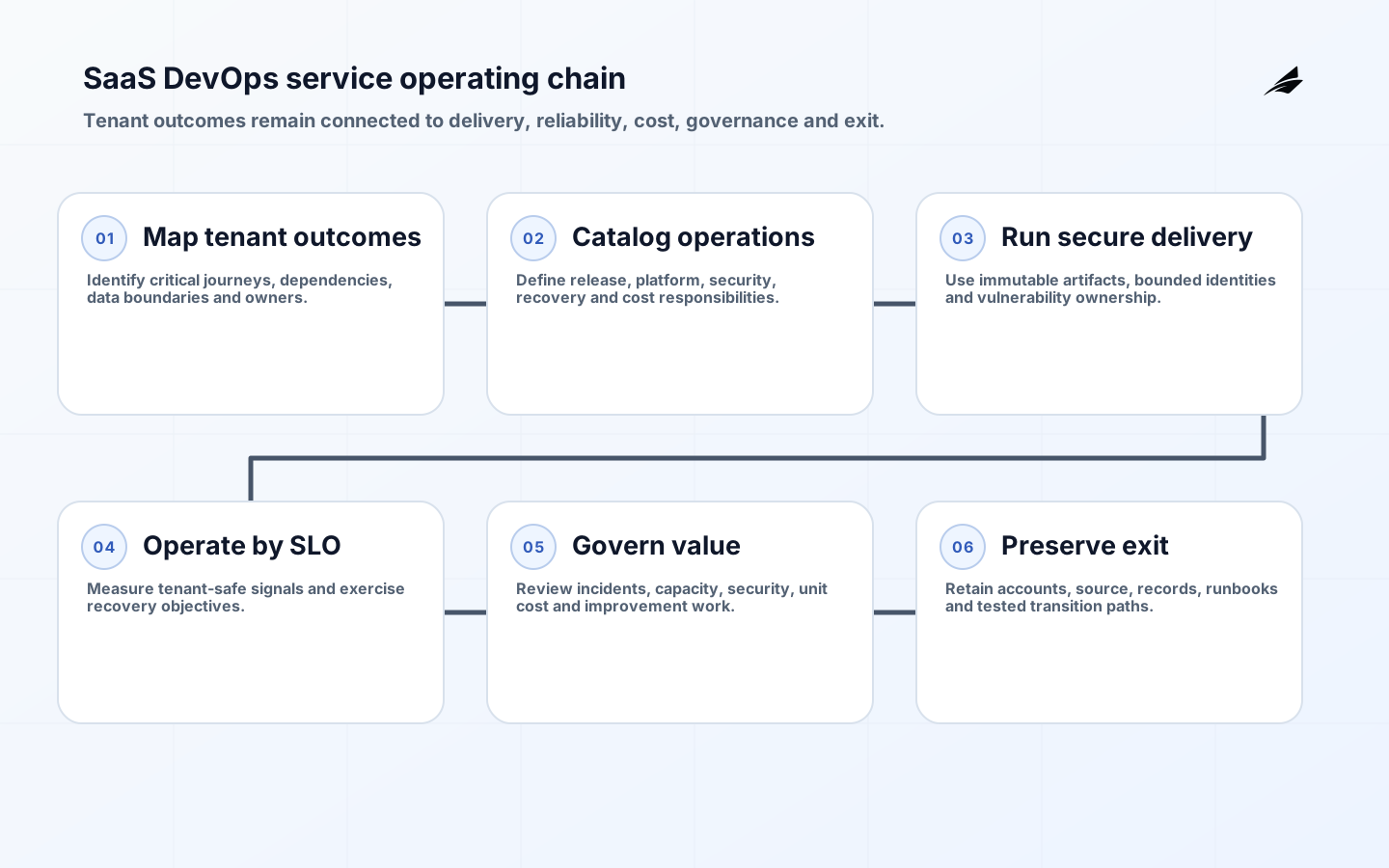
Cloud DevOps services for SaaS companies should protect the product’s ability to release, serve tenants, recover and control unit cost. A generic bundle of pipelines, dashboards and support hours is not a scope. SaaS operations cross application code, shared platforms, tenant data, identity, billing, integrations and customer commitments. The service agreement must state which layer the provider operates, which decisions stay with the product company and what evidence proves a safe handoff. Otherwise, every incident becomes a negotiation about whether the problem is “application” or “infrastructure.”
This plan helps founders, product leaders and engineering teams turn a proposal into a delivery model. It covers discovery, architecture, secure delivery, observability, reliability, cost and transition. DORA metrics help assess delivery flow and instability; cloud architecture frameworks organize operational and reliability concerns; FinOps connects engineering decisions to value; and NIST SSDF adds secure-development practices. None of these replaces a product-specific threat model, tenant model or recovery exercise.
Define the SaaS operating scope before the tool list
Inventory the customer journeys and services that generate revenue or contractual obligation: sign-in, tenant provisioning, core transactions, data export, billing, notifications and support administration. Map each to repositories, runtimes, stores, queues, third parties and owners. Mark tenant isolation boundaries and data residency. The first deliverable is a service map with accountable owners, not a new cloud account. It reveals where the provider needs access and where product knowledge must remain internal.
Write a catalog of recurring outcomes. Examples include provisioning an environment, releasing an artifact, rotating a secret, responding to an alert, restoring tenant data and investigating a cost anomaly. For each, define request or trigger, eligible resources, response target, evidence, exclusions and escalation. Separate routine operations from projects and product development. If a provider is expected to change application code, that work needs its own backlog, acceptance and intellectual-property terms rather than being hidden inside “DevOps support.”
| Service area | Provider can own | SaaS company must retain |
|---|---|---|
| Delivery | Pipeline and deployment operation | Release intent and product acceptance |
| Platform | Cloud modules, clusters and shared runtime | Architecture and tenant-risk decisions |
| Reliability | Monitoring, triage and recovery execution | SLOs, incident command and customer impact |
| Security | Control operation and evidence | Data classification and risk acceptance |
| Cost | Allocation, anomaly review and recommendations | Budgets, pricing and commitments |
Design for tenant isolation and operable change
Document tenancy at every layer. A pooled application may use shared compute and data partitions; a siloed model may dedicate resources per tenant; many products mix both. State how tenant identity flows into authorization, storage keys, telemetry and support tools. Test cross-tenant access and noisy-neighbor behavior. Infrastructure automation should encode the intended model so a new environment or tenant does not depend on an operator remembering security-sensitive steps.
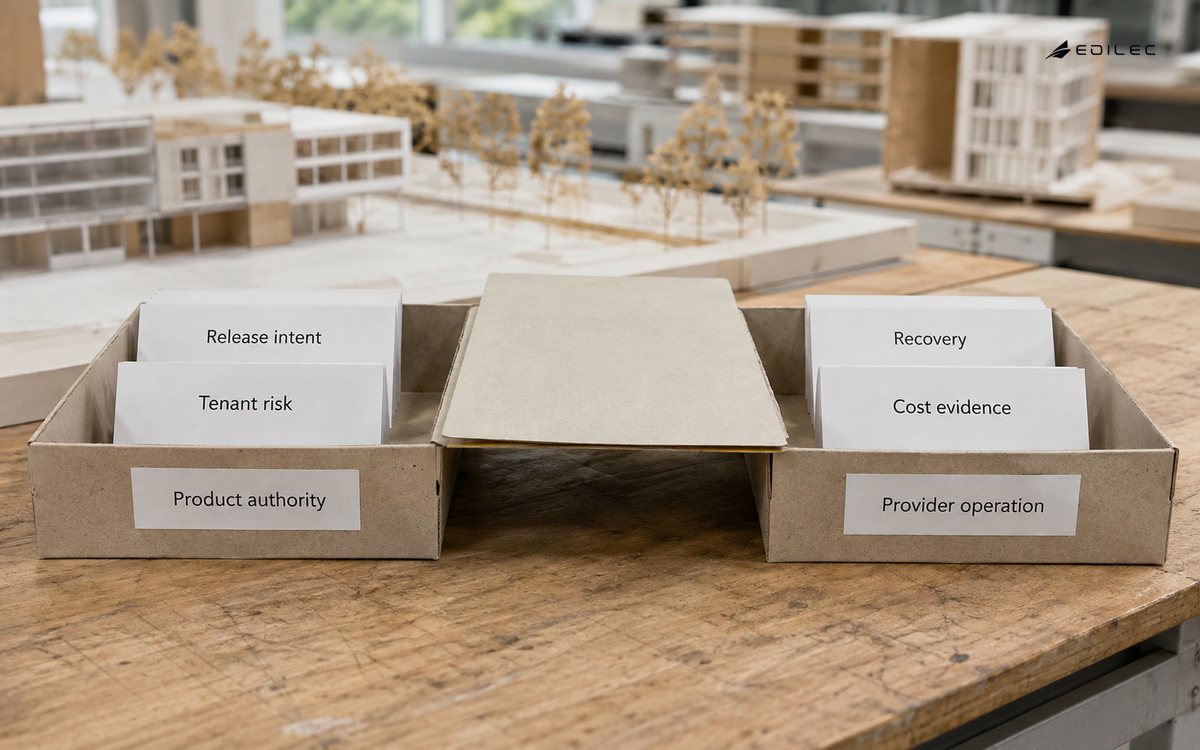
Choose deployment units that limit consequence. Separate control-plane changes from tenant-facing data-plane changes where practical. Use progressive delivery, health checks and rollback or roll-forward procedures appropriate to schema and event changes. Backward-compatible database migrations and versioned events matter more than a sophisticated deployment controller if old and new application versions overlap. Maintain an architecture decision record for material tradeoffs such as multi-region writes, regional tenancy and provider-native dependencies.
Make secure delivery and evidence part of normal work
Protect repositories, build identities, artifacts and deployment credentials. Builds should be repeatable and isolated from untrusted jobs; production releases should use immutable artifacts and short-lived identities. Generate dependency and provenance records and preserve the artifact digest deployed to each environment. Apply NIST SSDF practices through the workflow: define requirements, protect code, verify releases and maintain a vulnerability response path. Manual approvals should be reserved for consequential decisions, not used to compensate for missing tests.
Define vulnerability ownership across base images, managed services, open-source components and application code. A scanner finding is not remediation. Set triage times by exploitability and product consequence, document accepted risk with expiry, and test emergency release procedures. Provider staff access should be individual, least privileged, time bounded and logged. Include support tools and copied production data in the threat model; they often bypass the product’s normal authorization controls.
Operate from tenant-aware signals and recovery objectives
Define service-level indicators from customer experience: successful sign-ins, completed transactions, data freshness or notification delay. Aggregate platform metrics alone can look healthy while one tenant or region fails. Add tenant-safe dimensions to traces, metrics and logs without exposing sensitive identifiers. OpenTelemetry offers common signal models, but teams still need naming, sampling, retention and access rules. Alerts need an owner, response action and link to a runbook; unowned alerts become noise.
Set recovery time and recovery point objectives from business impact and tenant commitments. Backups are inputs, not proof. Test restoration into an isolated environment, reconcile asynchronous state and verify that identity, keys, integrations and DNS can be recovered. Exercise region loss, queue backlog, expired certificate, compromised credential and a bad schema change. Record actual recovery capability and remediation. Decide who commands an incident, who can isolate a tenant and who communicates with customers before an outage.
Model cost as product economics, not only cloud spend
Separate cloud consumption, licenses, provider fees, support tiers and project work. Allocate shared cost using an agreed method and expose unallocated spend. Track unit measures such as cost per active tenant, transaction, stored gigabyte or workflow where they reflect value. The FinOps Framework emphasizes collaboration among engineering, finance and business roles; a provider can surface and execute recommendations, but the SaaS company decides performance, resilience and margin tradeoffs.
Estimate the operating model under normal growth and stress. Include data transfer, observability ingestion, backups, idle regional capacity, premium support and incident labor. Commitments can reduce rates but create lock-in and forecast risk. Give the provider bounded authority for safe scheduling or rightsizing and require approval for production capacity, retention or long commitments. Validate realized savings after reliability and labor effects rather than presenting a list of theoretical opportunities.
| Delivery phase | Acceptance evidence | Commercial checkpoint |
|---|---|---|
| Discovery | Service, tenant, dependency and access map | Confirmed scope and assumptions |
| Foundation | Accounts, identity, network, logging and modules tested | Platform setup cost accepted |
| Pilot | Release, rollback, alert and restore exercised | Run-rate forecast updated |
| Migration | Cohort exit criteria and risk register | Project versus recurring fees reconciled |
| Operate | SLO, security, cost and improvement reports | Service value reviewed quarterly |
| Exit | Exports, access return and transition rehearsal | Termination assistance defined |
Plan onboarding, governance and exit together
Onboard through a bounded pilot. Give the provider current runbooks and access only after inventory reconciliation. Run shadow operations, then reverse shadowing where the provider leads and the internal team observes. Acceptance should include one normal release, rollback, alert investigation, secret rotation, restore and cost review. Move workloads in cohorts. A calendar date is not readiness if teams still depend on undocumented access or individual memory.
Use weekly operational reviews for incidents, changes and immediate risk; monthly service reviews for objectives, capacity, security and cost; and quarterly reviews for roadmap, dependency and commercial fit. Design exit at contract start. Retain customer ownership of cloud accounts, source, infrastructure definitions and authoritative telemetry where possible. Specify export formats for tickets, configurations, asset history and runbooks. Rehearse replacing one service component so portability is tested rather than asserted.
Worked example: handing over a multi-tenant API
A growing SaaS company asks a provider to operate its API, background workers and managed database. Discovery shows that tenant provisioning and billing webhooks are business-critical, while analytics can recover later. The contract assigns pipeline and cloud operation to the provider, application behavior and customer communication to the SaaS company, and incident command to a named internal service owner. Tenant-aware SLIs cover transaction success and queue delay. Recovery testing includes database restoration plus replay and deduplication of billing events.
During reverse shadowing, the provider deploys a backward-compatible schema change, responds to a failed worker, rotates a workload credential and explains a cost anomaly. The customer verifies every action from evidence without relying on an individual’s memory. One alert lacks a useful tenant dimension and one runbook assumes permanent administrator access, so production handover pauses until both are corrected. That gate prevents a nominal transfer from becoming hidden operational debt.
After correction, a second operator repeats both scenarios using ordinary support access. The repeated result confirms that the service depends on an operating system, not on the provider’s original project specialists.
Key takeaways
- Scope services around tenant-facing outcomes and named ownership.
- Make tenant isolation, deployment and recovery behavior explicit in architecture.
- Generate secure-delivery evidence as part of the pipeline.
- Use tenant-aware SLOs and tested recovery, not infrastructure uptime alone.
- Retain product, risk, customer and commercial decisions inside the SaaS company.
Frequently asked questions
Does a managed service replace the internal engineering team?
No. The product company still needs architecture, service ownership, security authority, product development and supplier governance. A provider can reduce repeated operational load and add specialist capacity.
What determines the price?
Workload count and complexity, support hours, incident targets, environments, cloud providers, telemetry volume, compliance evidence, migration effort and retained responsibilities drive cost more reliably than cloud spend alone.
Is an uptime SLA enough?
No. Include acknowledgement, restoration, backup success, tested recovery, security response and change quality. Connect contractual measures to customer-facing service objectives and corrective work.
Conclusion
A good SaaS DevOps service makes product operations easier to explain and verify. The agreement should let any leader trace a tenant-facing service to its architecture, owner, delivery evidence, reliability objective, recovery path and unit cost. When those elements are tested during a pilot and governed after launch, external operations can add leverage without transferring away the decisions the SaaS company must own.