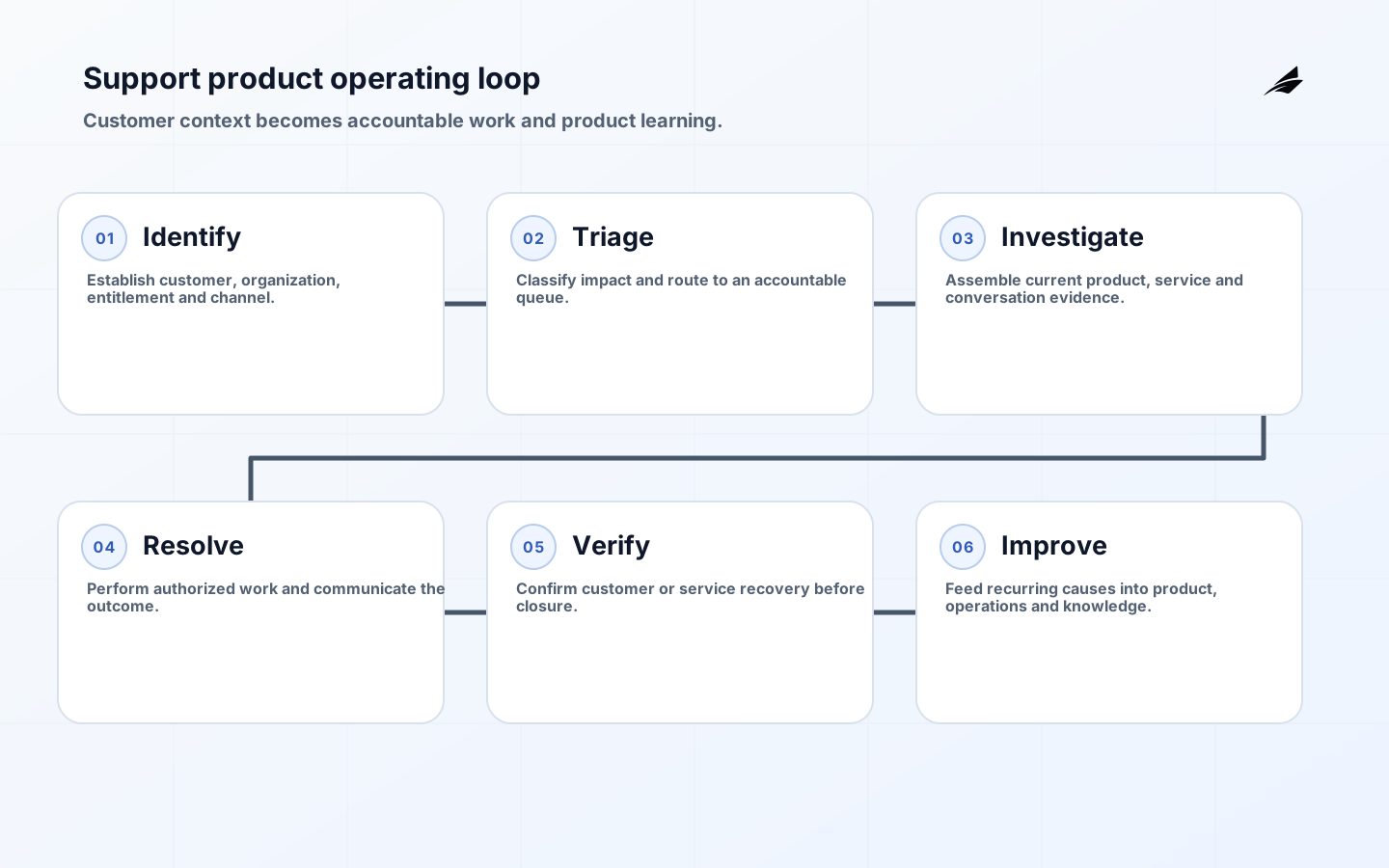
SaaS product development for support teams is the work of turning customer questions, incidents and requests into an accountable operating system. The product must bring together identity, conversation history, entitlement, service state, internal ownership, knowledge, approvals and resolution evidence without forcing agents to search several disconnected tools. Its quality is measured by whether customers receive accurate, safe and timely outcomes, not by how many channels or dashboard cards the software contains.
This FAQ addresses the design decisions that determine whether support software helps or hinders daily work. It complements the detailed scope and delivery plan and implementation checklist. Begin with the service promise and operating constraints, then select features and integrations that make that promise observable.
What should the first product scope include?
The first scope should support one complete request class from intake to verified closure. Include customer and organization identification, entitlement check, structured classification, assignment, conversation, internal notes, status, ownership, due dates, attachments, resolution reason and audit history. Add the minimum integrations required to understand and act: perhaps account data, product telemetry and a notification channel. Defer broad channel coverage, elaborate forecasting and autonomous actions until the core record and handoffs are trusted.
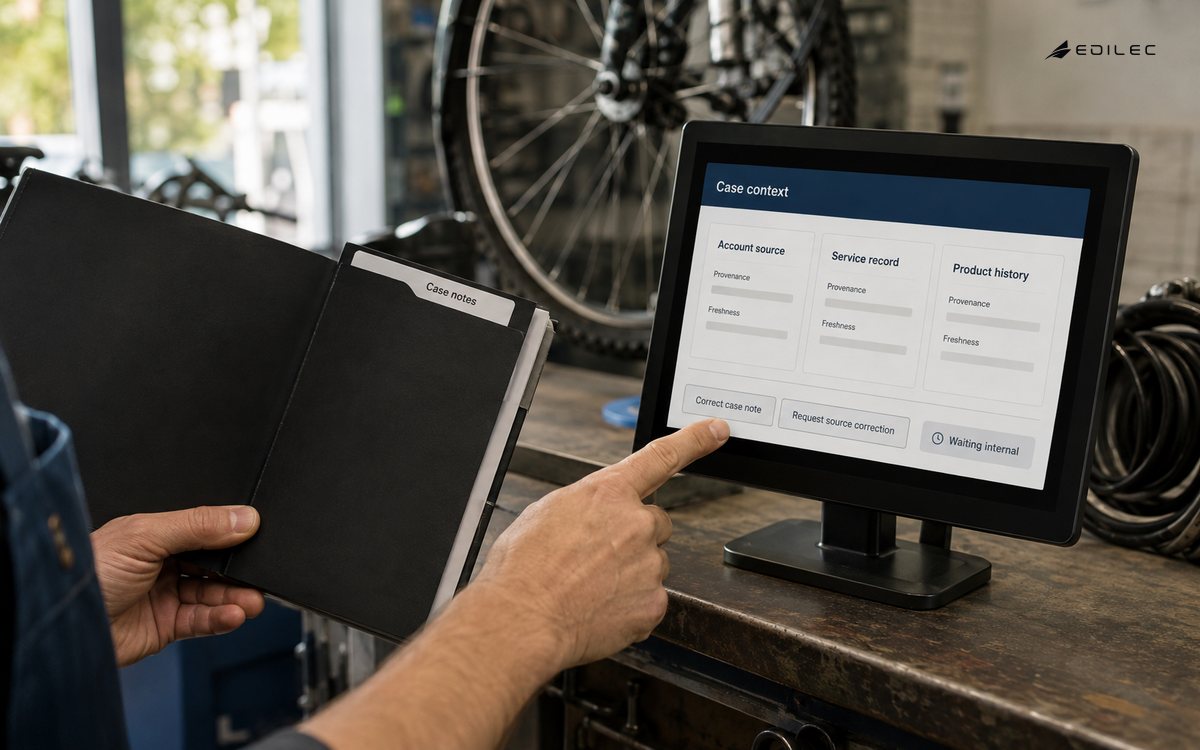
Describe each record's owner and source. A support case may reference customer identity from the account system, subscription from billing, service health from monitoring and commitments from a contract. The support product should present these facts with freshness and provenance instead of copying them into fields that drift. Define what an agent may correct locally and what must be fixed in the source system. This prevents the help desk from becoming an unofficial duplicate CRM.
| Capability | First-release outcome | Common scope trap |
|---|---|---|
| Intake | Consistent record with customer and request context | Launching every channel before identity is reliable |
| Routing | Named owner and visible queue | Complex rules nobody can explain |
| Resolution | Reusable steps and verified result | Closing on agent activity instead of customer outcome |
| Knowledge | Relevant, maintained guidance | Importing a large stale document library |
| Reporting | Queue health and quality evidence | Optimizing headline response time alone |
How should support workflow states be designed?
States should explain who is expected to act and what condition is true. Useful examples include new, awaiting triage, assigned, awaiting customer, awaiting internal team, change scheduled, monitoring resolution and closed. Avoid generic in-progress states that hide responsibility. Every transition needs an actor, required fields, notification rule, clock behavior and reversal path. Separate priority from status: a critical case can still be awaiting a customer, while a low-priority case can be actively worked.
Model exceptions explicitly. A case can be merged, split, reopened, escalated, linked to an incident, placed under legal hold or transferred between organizations. Preserve history and customer-visible commitments. Do not let agents rewrite timestamps or delete material conversation without a governed correction record. For high-impact actions such as refunds, access changes or data exports, require object authorization and approval outside the ordinary case status.
How should identity and security work?
Customer authentication, agent authentication and authorization are separate concerns. Confirm the customer through an approved channel before disclosing account-specific information or changing access. Agents should receive least-privilege permissions by queue, customer segment and action. Sensitive fields can be masked until needed. Administrative tools need stronger authentication, short sessions for consequential actions and complete audit events. Support pressure must never become a reason to bypass identity controls.
Design data minimization into the interface. Do not copy secrets, full payment data or unrelated personal records into tickets. Scan attachments according to risk and restrict download. Define retention by record type and legal requirement, not an indefinite default. Redact credentials from logs and observability. NIST SSDF and CISA secure-by-design guidance are useful procurement and engineering baselines because support products often carry unusually broad customer context.
Where do automation and AI belong?
Automate deterministic work first: required-field checks, entitlement lookup, duplicate detection, routing by documented rules, due-date calculation, notification and evidence collection. Keep a visible explanation and allow correction by an authorized person. Automation should produce fewer handoffs and errors, not merely move a case faster between queues. Measure manual overrides and rule misses so the workflow can improve.
AI can suggest classification, summaries, knowledge and draft replies, but the product needs a defined review boundary. Ground suggestions in approved sources, show relevant evidence, prevent cross-customer retrieval and record model and prompt versions. Never let a generated summary replace the original conversation. High-impact advice, account changes, refunds and safety-related responses need human judgment. Evaluate accuracy by case type and language, and give agents a simple way to reject or correct suggestions.
| Automation | Safe starting boundary | Required control |
|---|---|---|
| Classification | Suggest category and priority | Agent confirms; disagreements are measured |
| Knowledge retrieval | Recommend approved articles | Show source and revision date |
| Reply drafting | Draft from case context | Human review before send |
| Routine update | Execute documented reversible action | Authorization, idempotency and audit log |
| Account or financial change | Collect evidence and route approval | Independent authorization; no autonomous execution |
Which integrations and signals matter most?
Integrate around decisions, not vendor availability. An account lookup may need customer, plan, region and service status; it rarely needs every CRM field. Define contract ownership, timeouts, retries, rate limits and stale-data behavior. Use stable identifiers and preserve links to source records. If an integration fails, agents should see which facts are unavailable and the approved fallback. Silent blanks create incorrect decisions.
Measure demand, age, handoffs, reopen rate, escalation, backlog by owner, resolution verification and customer effort. Segment carefully so averages do not conceal a failing product area or customer group. Connect support themes to product defects and documentation changes through stable taxonomy and review, but allow emerging issues to be recorded without forcing a wrong category. Technical traces should connect the agent action to downstream services without exposing customer content.
How should the product be rolled out and owned?
Pilot with one queue that represents real complexity and has engaged supervisors. Migrate open cases deliberately, reconcile counts and preserve old links. Train on exceptions and recovery rather than only the happy path. Run the old and new process in parallel only long enough to prove records and commitments, because indefinite dual entry damages data quality. Define rollback criteria before launch and monitor case age, missed notifications and access errors by cohort.
Give product, support operations, engineering, security, data and knowledge owners explicit responsibilities. Support leadership owns service policy; product owns workflow outcomes; engineering owns reliability; security owns control standards; data owners govern metrics; knowledge owners maintain approved guidance. A regular operating review should examine customer harm, queue health, automation overrides, control exceptions and product changes, then assign action rather than merely display charts.
What evidence should be required before launch?
Require a representative case portfolio that includes ordinary requests, identity uncertainty, entitlement conflict, sensitive attachments, cross-team escalation, customer waiting, automation failure and reopened closure. For each case, verify state, owner, due-date behavior, customer communication, authorization, audit history and reporting. Reconcile migrated cases and test that links, attachments and commitments survived. Run accessibility checks with keyboard and screen-reader workflows, and confirm that errors explain correction instead of discarding work.
Operational acceptance should also prove backup restoration, queue and integration monitoring, after-hours escalation, release rollback and permission revocation. Measure notification delivery and stale integration behavior. Supervisors need a view of unowned and aging work, while agents need a safe way to report incorrect routing or knowledge. Publish known limitations and name owners with dates. A feature-complete demonstration is not launch evidence unless the team can also support failure and change.
Review the pilot with frontline agents and a sample of customers after enough cases have completed. Compare actual handoffs, time waiting by owner, correction work and access exceptions with the assumptions used in design. Turn findings into workflow changes with accountable dates. This closes the gap between a technically functioning case system and a service product that people can trust under pressure.
Key takeaways
- Deliver one complete request class before adding every channel.
- Make states express responsibility and preserve exception history.
- Keep support access least-privileged and recovery procedures governed.
- Use AI for reviewed assistance before consequential execution.
- Measure verified resolution, handoffs and customer effort, not activity alone.
Frequently asked questions
Should a team build or buy support software?
Buy when standard case management and channel features fit the service. Build or extend when the advantage lies in proprietary workflow, product telemetry, regulated controls or deep operational integration. Compare lifecycle cost, integration ownership, portability and control evidence rather than license price alone.
Should the product calculate SLA timers?
Yes, when commitments are explicit. Define calendars, pauses, priority changes, customer waiting and linked-incident behavior. Keep the calculation inspectable and versioned. A timer without the contractual and operating context can create misleading escalations.
Is a customer portal required in the first release?
Not always. A portal adds identity, authorization, accessibility and notification scope. First prove the internal record and service workflow. Add a portal when customers need secure status, evidence or structured action that email cannot provide reliably.
Conclusion
Support software succeeds when it makes the service relationship clearer. It should establish identity, assemble trustworthy context, route work to an accountable owner, support safe action and preserve evidence of resolution. That requires product discipline across workflow, security, integration and operations rather than a collection of support features.
Start with a difficult request class and define its complete state model, authorities, records and success evidence. A focused, measurable slice gives the team a foundation that can expand without turning the support product into another source of uncertainty.