Zero trust is an architectural approach in which access is evaluated explicitly for a requested resource instead of being assumed safe because a user or device is inside a familiar network. For engineering teams, it is not a product purchase or a demand to authenticate constantly. It is a way to reduce implicit trust by combining identity, device or workload context, resource sensitivity, authorization policy, and continuous signals. The practical payoff is a system that can limit lateral movement and make access decisions easier to inspect.
Set the zero trust scope — zero trust for cybersecurity teams
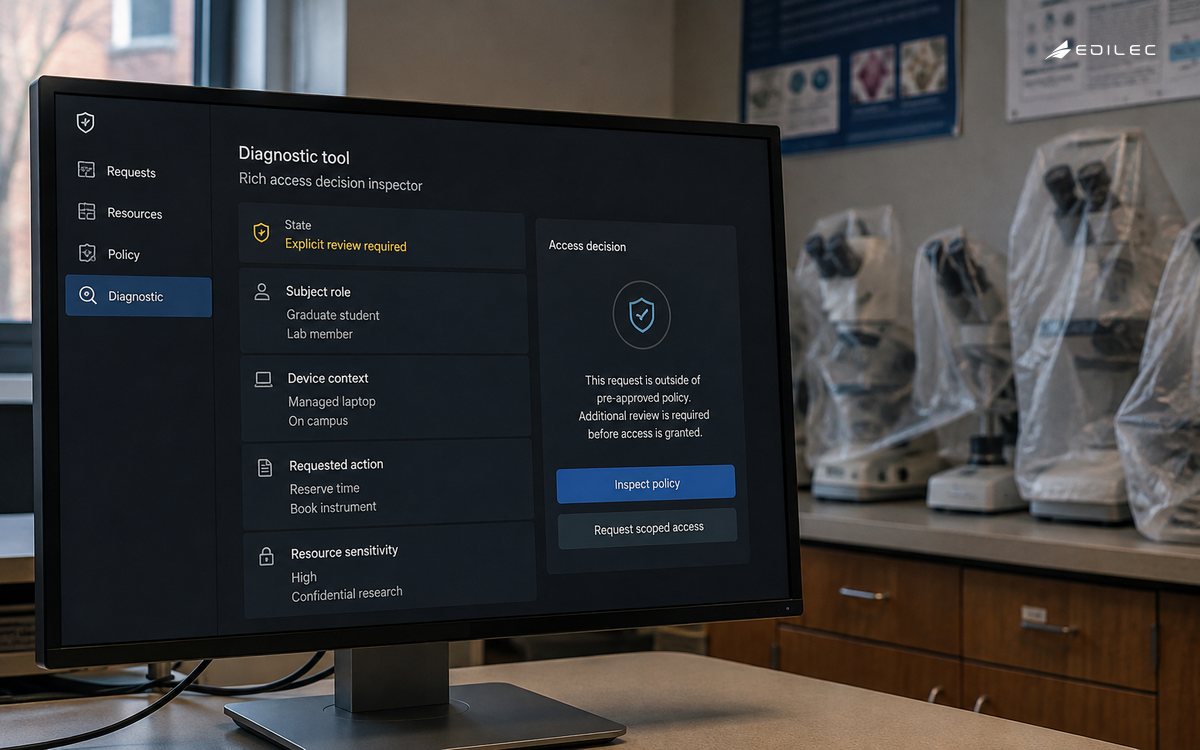
Begin with a protected resource and a real request path. For example, an engineer opens a production diagnostic tool, a service calls a customer-data API, or a contractor accesses a source repository. Identify the subject, device or workload identity, resource, action, policy decision point, enforcement point, and telemetry needed for review. NIST’s zero trust architecture stresses protecting resources rather than relying on network location. That does not mean every legacy system changes at once; it means the team stops treating location as enough evidence.
| Decision area | Question to answer | Accountable evidence |
|---|---|---|
| Request element | Question | Example signal |
| Subject | Who or what is acting? | Workforce or workload identity |
| Resource | What is being requested? | Production diagnostic endpoint |
| Context | What conditions influence policy? | Elevation approval or device state |
Design controls that fit the workflow — zero trust for cybersecurity teams
Prioritize high-value paths where identity and authorization can be made more explicit. Use strong authentication, separate administrator accounts, short-lived or scoped credentials, resource-level access checks, and device posture only where the organization can operate it reliably. Keep policies understandable: an opaque risk score that nobody can override or explain may create its own outage risk. Zero trust should improve the quality of access decisions, not create a maze that operators bypass during delivery pressure.
Build and test the failure paths — zero trust for cybersecurity teams
Pilot one workflow, such as administrative access to a production service. Establish individual identity, require a bounded elevation path, enforce authorization at the resource, and record the decision. Test ordinary work, a denied request, an offboarded user, and a device that no longer meets policy. This provides concrete feedback about latency, support burden, and unanticipated dependencies. Expand only when the owners can support the policy and explain what happens when its signals are unavailable.
| Scenario | Expected response | Review evidence |
|---|---|---|
| Migration step | Value | Operational guardrail |
| Separate admin identity | Reduces routine credential exposure | Support recovery process |
| Resource-level authorization | Limits lateral movement | Expected-deny tests |
| Short-lived elevation | Reduces standing privilege | Emergency path with review |
Make operations accountable — zero trust for cybersecurity teams
Zero trust is sustained by identity lifecycle, asset knowledge, and policy change management. It complements least privilege and OAuth security: narrow authorization and secure token handling are often the practical mechanisms behind the architectural model. Establish an emergency path that is limited, observable, and subject to review, so urgent response does not normalize permanent bypasses.
Use authoritative guidance with local evidence — zero trust for cybersecurity teams
For zero trust for cybersecurity teams, use primary guidance to anchor technical choices: NIST Cybersecurity Framework 2.0 describes a governance-oriented risk framework; CISA Cybersecurity Performance Goals supplies practical baseline outcomes; the OWASP Cheat Sheet Series offers implementation-oriented guidance; and RFC 9700 records current OAuth security practice. These references inform the controls here, but the accountable owner must still apply them to zero trust in the organization’s actual architecture and threat model.
Measure the operating outcome — zero trust for cybersecurity teams
Monitor the percentage of high-value resources with explicit resource-level checks, age of standing privileged access, policy denial reasons, device or workload signal failures, and time to remove access after role change. Do not count identity-product deployment as adoption. The measure of progress is whether a request for a sensitive resource can be tied to a current subject, policy, and evidence trail.
Address architecture and dependency tradeoffs — zero trust for cybersecurity teams
Network segmentation remains valuable, but it should reinforce rather than substitute for identity-aware controls. A service reachable only from a private network still needs to know which workload is calling and which action is allowed. Conversely, an identity policy cannot compensate for an unnecessary public endpoint. Review resource boundaries, service-to-service authentication, and egress paths together. The objective is to reduce the number of places from which a compromised identity can move, while retaining enough observability to diagnose a legitimate production request.
Policy engines and context signals introduce availability dependencies. Decide what happens when device posture is stale, a directory is unavailable, a risk signal cannot be fetched, or a policy update is in progress. A high-consequence action may fail closed, while a lower-consequence read path may have a carefully bounded fallback. Write these choices down and exercise them. Undefined fail-open behavior is a security risk; indiscriminate fail-closed behavior can become an outage that responders bypass with broad access.
Review change without losing the operating model — zero trust for cybersecurity teams
Adoption is a product-management exercise as much as an architecture exercise. Explain why a new elevation step exists, make it fast for routine legitimate work, and provide support for lost devices or travel constraints. Collect feedback from engineers and administrators before expanding the policy to more resources. Where controls add measurable friction, decide whether to improve the authentication experience, reduce standing access, or alter the workflow. Success is a safer access model that people can still use under normal operational pressure.
Turn the design into durable governance — zero trust for cybersecurity teams
A practical roadmap orders work by consequence and feasibility. First improve the identity and authorization of a small number of valuable resources, then use what is learned to standardize workload identity, policy distribution, logging, and device practices. Avoid declaring every internal system a zero-trust migration at once; that can produce a costly overlay without changing the access decisions that matter. Architecture reviews should identify implicit trust such as shared networks, shared administrator credentials, unverified service calls, or broad cloud roles, then choose a reduction path with an owner. Include third parties and support tooling in this review because they often bridge otherwise separated environments. When a policy is changed, capture a before-and-after decision example and test that the intended user can still complete legitimate work. This evidence helps teams distinguish a real security boundary from an extra login screen. The long-term benefit is not a perfect score; it is an organization that can add or remove access based on current identity, resource context, and observable policy rather than inherited network privilege.
Run a practical review — zero trust for cybersecurity teams
For each new protected resource, write one allow example and one deny example in plain language before coding the policy. Include the subject, resource, action, context, and expected evidence. Engineers can use these cases to test integration, while reviewers can see whether the policy expresses the business decision intended. This simple discipline prevents broad architectural claims from masking an authorization rule that is either too permissive or too hard for legitimate users to satisfy.
Keep verification close to the work — zero trust for cybersecurity teams
Document policy ownership beside the resource, not in an abstract architecture deck. When a service is transferred, renamed, or decomposed, its access decisions must transfer too. This makes zero trust resilient to normal organizational change and keeps stale policies from becoming unexplained barriers or overlooked grants.
Keep policy exceptions small enough to observe. A broad permanent exemption restores the implicit trust the architecture is trying to remove and makes later migration harder to measure.
Review machine-to-machine paths separately from human sign-in. Workload identity and service authorization are where broad network trust often persists unnoticed after workforce controls improve.
Repeat this review after acquisitions, major cloud changes, and any new privileged support workflow.
Key takeaways
- Define zero trust around a real high-consequence workflow, not a generic tool setting.
- Give every exception an owner, compensating control, and expiry date.
- Test the denial, change, recovery, and evidence paths before calling the control complete in the zero trust for cybersecurity teams context.
- Use measurement to remove operational blockers and revise the control deliberately.
Frequently asked questions
Does zero trust mean trusting nothing? No. It means trust is earned through context and policy for each access decision, not granted broadly by network position. Must every application be rewritten? No. Start with important paths and integrate controls as systems are modernized. Is a VPN incompatible? No, but a VPN should not be the only basis for access to sensitive resources.
Conclusion
Zero trust becomes useful when it turns broad, inherited access into explicit, reviewable decisions around resources. Start with a consequential path, make policies operable, and expand from observed evidence. The architecture is a discipline of reducing unexamined trust.
Convert principles into protected actions — zero trust for cybersecurity teams
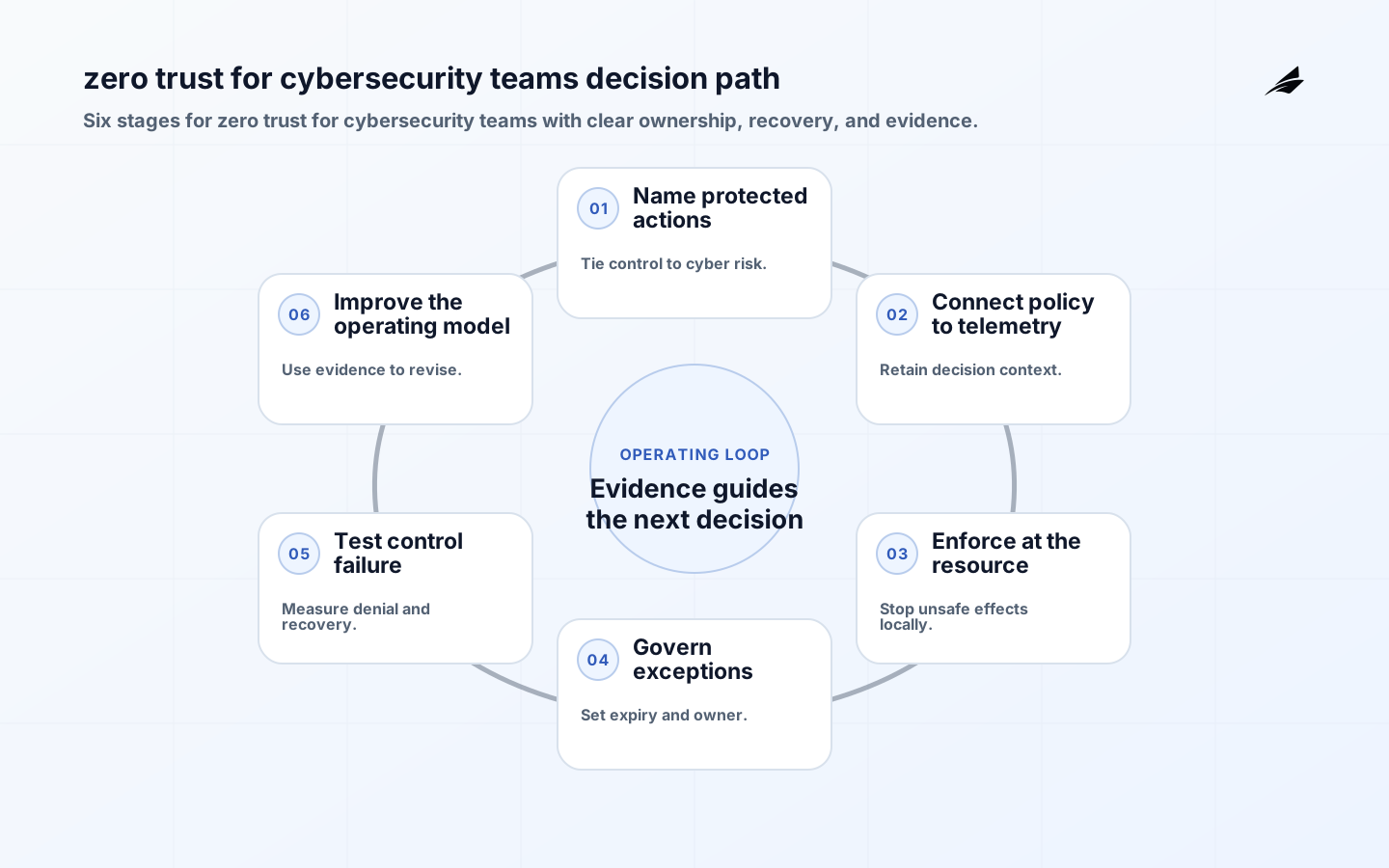
Cybersecurity teams can make zero trust practical by naming the protected actions that matter: reading regulated data, changing production configuration, or administering an identity system. Each action needs an owner, policy inputs, enforcement point, and evidence of the result.
Connect policy to telemetry — zero trust for cybersecurity teams
Telemetry should help explain a decision, not merely create a larger log stream. Retain the relevant identity, device, workload, resource, policy version, and outcome while respecting retention and privacy requirements.
Govern the exception lifecycle — zero trust for cybersecurity teams
Exceptions need an expiry, a compensating control, and a review owner. Measure exception age, repeated denials, policy drift, and recovery after control failure so governance reflects how the environment actually behaves.
Questions for the zero trust for cybersecurity teams review — zero trust for cybersecurity teams
Which cyber action should be protected? — zero trust for cybersecurity teams
Retain the inputs, decision, owner, outcome, and recovery record that matter for zero trust for cybersecurity teams. Make the record useful to the next operator, not just to the person who designed the control in the zero trust for cybersecurity teams context.
How should success be measured?
Choose one outcome measure for zero trust for cybersecurity teams and pair it with failure, exception, and recovery measures. Review segments that expose a blocked role, dependency, or workload.
When should an exception be redesigned? — zero trust for cybersecurity teams
For cybersecurity governance, redesign the exception when its age, compensating control, or telemetry is no longer credible; approve and test the revised boundary.
Conclusion: operate zero trust for cybersecurity teams with evidence
Reliable zero trust for cybersecurity teams is a maintained operating practice. Keep the boundary explicit, make the difficult path recoverable, and give every material exception an owner and a review date in the zero trust for cybersecurity teams context.
For adjacent Edilec guidance on zero trust for cybersecurity teams, compare API rate limiting engineering notes, the zero-trust operations checklist, and the production secrets-rotation guide. This comparison is selected for A Practical Zero Trust Guide for Cybersecurity Teams.
Source context: NIST Cybersecurity Framework 2.0; CISA Cybersecurity Performance Goals; OWASP Authorization Cheat Sheet; RFC 9700: OAuth 2.0 Security Best Current Practice; NIST Digital Identity Guidelines.