RBAC Checklist for Reliable Digital Operations
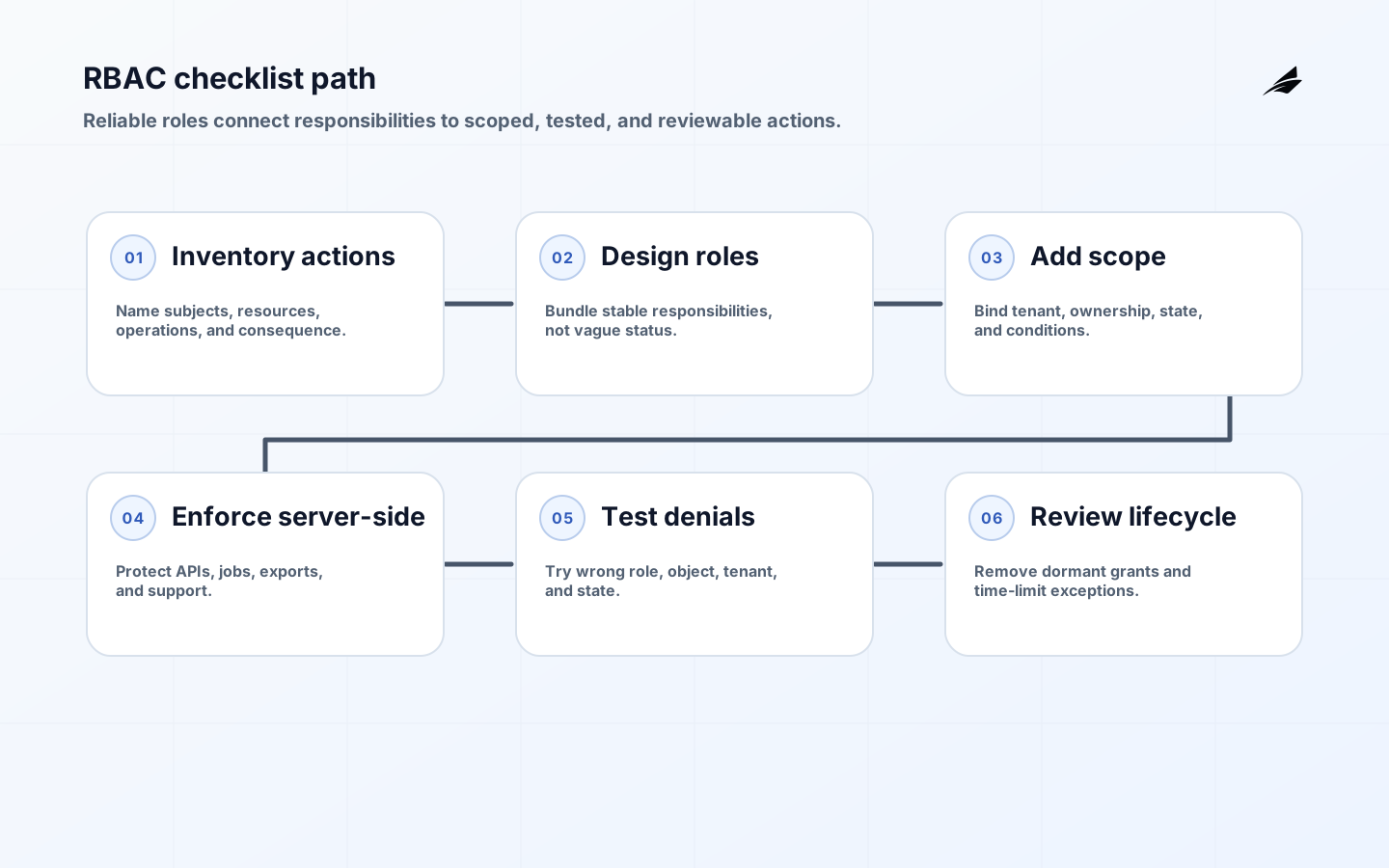
Role-based access control works when a role is a reviewable bundle of job actions, not a convenient synonym for seniority. The checklist begins with the operation: identify the resource, action, owner, consequence, and evidence. Then decide which stable responsibilities deserve a role and which facts must remain contextual. OWASP recommends deny-by-default, least privilege, and server-side authorization; those principles are more useful when translated into named tests and review dates.
Inventory subjects, resources, and actions
List human users, service identities, groups, tenants, projects, records, jobs, exports, and support tools separately. For each resource, enumerate actions such as view, create, approve, publish, refund, delete, impersonate, or restore. Avoid the vague verb ‘manage’. A person may manage a ticket but should not necessarily export every ticket or change billing. Give each action an owner and consequence so the role design has something concrete to protect.
| Checklist item | Decision | Proof |
|---|---|---|
| Subject | Which identity receives the role? | Stable actor ID and owner |
| Resource | What is the narrow target? | Tenant, project, or record scope |
| Action | What exact operation is allowed? | Endpoint and policy name |
| Condition | What must also be true? | Approval, state, or device test |
| Review | Who rechecks it and when? | Review record and expiry |
Design roles around responsibilities
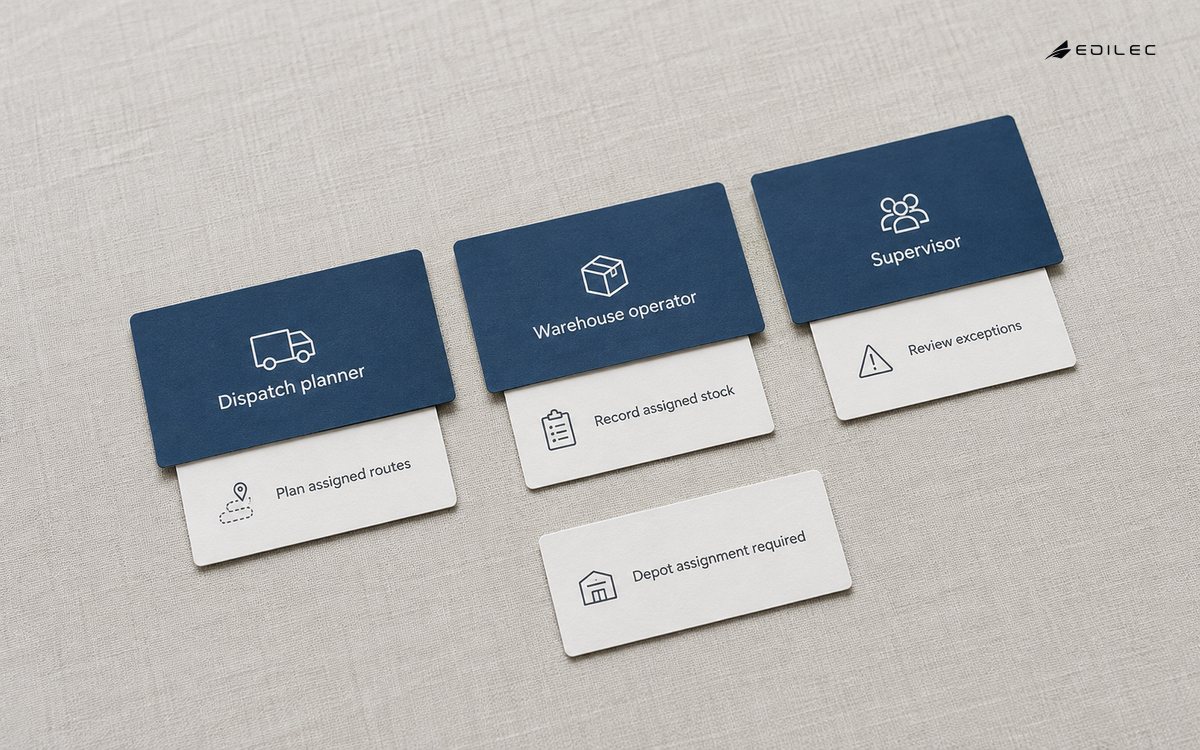
A role should describe work that a manager can recognize and a system can enforce. ‘Billing approver’ is easier to review than ‘Level 3 user’. Keep roles small enough that a change in one duty does not silently expand unrelated authority. Separate read, propose, approve, execute, and administer where the consequence warrants it. Use groups for assignment and roles for permission meaning; do not make a group name carry undocumented policy logic.
NIST SP 800-162 is a useful reminder that contextual attributes can become necessary when role labels cannot express tenant, region, record ownership, time, or risk. Use RBAC for stable responsibilities and add conditions for facts that change. Do not force every exception into a new role; that creates role explosion and makes reviews meaningless.
Enforce at every server boundary
Choose a policy source of truth
Production teams often have permissions in several places: an identity provider, an application database, a policy service, a queue worker, and an administrator spreadsheet. Decide which system is authoritative for assignment and which system evaluates the resource decision. Replicate only the facts needed by consumers, record their freshness, and make reconciliation visible. If an application cache says a user is a member after the source has removed them, the system needs a bounded failure behavior rather than an assumption that the cache will eventually become correct.
Keep policy changes reviewable. A role diff should show added and removed actions, affected scopes, owners, expected users, and the tests that will run. High-consequence grants deserve staged rollout or dual approval. A policy version belongs in the authorization event so an incident reviewer can distinguish a bad decision from a later policy repair. This does not require a large governance process; it requires treating authority as a production dependency rather than as incidental configuration.
Trace the data paths that roles can reach
For each sensitive role, draw the path from request to data and back. Include API gateways, object stores, search indexes, caches, message queues, notifications, exports, metrics, and administrative consoles. A role that cannot read a record through the API may still receive it in a report or an event subscription. Check whether a deleted or transferred resource remains in a cache or downloadable file. The useful question is not ‘does the endpoint check the role?’ but ‘can this actor cause or receive this consequence through any supported path?’
| Path | Decision to verify | Representative negative test |
|---|---|---|
| Search | Are results filtered by current scope? | Query another tenant's unique term |
| Files | Does download recheck resource authority? | Reuse a URL after membership removal |
| Events | Can a subscriber receive another scope? | Subscribe with a neighboring tenant ID |
| Jobs | Is queued authority fresh enough? | Replay after role removal |
| Analytics | Are exports and aggregates bounded? | Request a cross-customer report |
Make access reviews answerable
An access review should give a manager a useful question for every grant: does this person still perform this action on this scope, and is the consequence still appropriate? Show the role's last use, last review, owner, assignment source, and any emergency activation. Do not make reviewers approve a role whose contents they cannot see. If a role is never used, ask whether it is needed; if a role is used constantly for a rare high-risk action, ask whether the duties should be separated.
Use review outcomes as engineering input. A reviewer who cannot understand a role indicates poor naming or excessive bundling. A reviewer who repeatedly requests the same temporary exception indicates a missing workflow. A reviewer who removes a permission that a job still needs reveals an ownership or service-identity problem. Capture those patterns instead of treating review as a yearly administrative event.
Prepare for a bad grant
Write the first ten minutes of response for an over-broad role: who can disable the assignment, how dependent services learn about the change, which sessions or tokens need revocation, how affected resources are identified, and who communicates with the owner. Preserve decision logs before changing them. After containment, compare the policy version, assignment event, resource access, and support actions. Recovery should remove authority and restore understanding, not merely make the next request fail.
Check authorization in the API, job runner, file service, search path, export worker, and administrative tool. A hidden button is not an access control. Resolve the actor, current tenant, target resource, action, and relevant state on the server. Deny when policy data is missing or stale. Treat object identifiers supplied by a client as untrusted input and test that changing an identifier cannot cross a tenant or project boundary.
| Path | Common gap | Test |
|---|---|---|
| API | UI hides an action only | Call endpoint directly as another role |
| Background job | Worker trusts queued tenant | Change job scope and replay |
| Export | Report bypasses record policy | Export mixed-scope fixture |
| Support | Impersonation has no expiry | Test approval, expiry, and audit |
Control lifecycle and emergency access
Provision roles from an authoritative source, remove them when employment or assignment changes, and review dormant grants. For emergency access, define who may activate it, what scope it receives, how long it lasts, and what evidence is required afterward. A break-glass account that is never tested is not a recovery control. Keep emergency access separate from everyday administrator roles so its use is visible.
Test allowed and denied paths
Create a matrix with actors, resources, actions, conditions, expected decisions, and reason codes. Include a member of the wrong tenant, a removed role, an expired approval, a stale session, a direct object request, and a replayed job. Test policy changes against existing workflows. Review authorization logs for unexpected denials and unexpected successes; the latter deserve immediate attention because they may indicate over-broad grants or an enforcement gap.
Key takeaways
Keep authorization fast without making it vague
Performance pressure often produces a dangerous shortcut: resolve a broad role once and reuse it for every resource. Prefer caching stable identity facts while evaluating resource scope and high-consequence conditions at the boundary that can cause the effect. Measure policy latency, cache age, denial rate, and invalidation time separately. If an authorization dependency is slow, reduce the amount of policy data it needs, precompute safe read scopes, or move a workflow to an explicit queue; do not silently turn a failed decision into allow.
Document the operational contract for policy failures. A read-only dashboard may tolerate a short stale window; a delete, export, or role grant should not. Return a reason that helps the operator choose a safe next step, and retain the detailed event for investigation. Reliability and security reinforce one another when the system fails visibly instead of allowing an ambiguous action to continue.
- Name exact actions and consequences; avoid vague permissions such as manage.
- Use roles for stable responsibilities and conditions for changing context.
- Enforce authorization on the server across APIs, jobs, exports, search, and support.
- Deny when policy facts are missing, stale, or ambiguous.
- Review grants, remove dormant access, and time-limit emergency authority.
- Keep a decision matrix that includes negative and cross-boundary tests.
Frequently asked questions
Keep the final decision matrix with the release record. It should show the actor, scope, action, expected result, policy version, and the evidence produced. That makes later review faster and prevents a passing test from becoming an unrepeatable demonstration.
Before signing off, ask an operator who did not design the policy to trace one allowed action and one denied action from request to audit event. That small exercise catches missing scope, confusing reason codes, and support paths that bypass the intended control.
The checklist is complete only when the role's business owner, technical enforcement, and review evidence agree.
Keep the checklist close to the code and the operating runbook. A permission that cannot be traced from business responsibility to server enforcement and review evidence is not ready for a production grant.
When should RBAC be combined with attributes?
Use attributes when tenant, ownership, geography, device, approval, or resource state changes the decision. Keep the role understandable and let the condition express the fact that varies.
Who should own an RBAC review?
The business owner of the protected resource should own the responsibility, while engineering owns enforcement and security or operations verifies the evidence. Separating those perspectives makes an access review more than a code inspection.
How often should roles be reviewed?
Review high-consequence roles and emergency access more frequently than low-risk read access, and review immediately after ownership, product, or organizational changes. The right interval is a risk decision, not a universal calendar value.
Conclusion
Reliable RBAC is an operating discipline: precise actions, narrow scope, server-side enforcement, tested denials, lifecycle ownership, and evidence. Treat each role as a decision the business can explain, and access reviews become useful engineering work instead of a checkbox.
See Edilec's plain-language RBAC guide, RBAC mistakes and fixes, and RBAC in production. For the underlying model, consult NIST's role-based access-control publication, Microsoft's RBAC documentation, Google Cloud's role guidance, and Kubernetes' RBAC good practices.