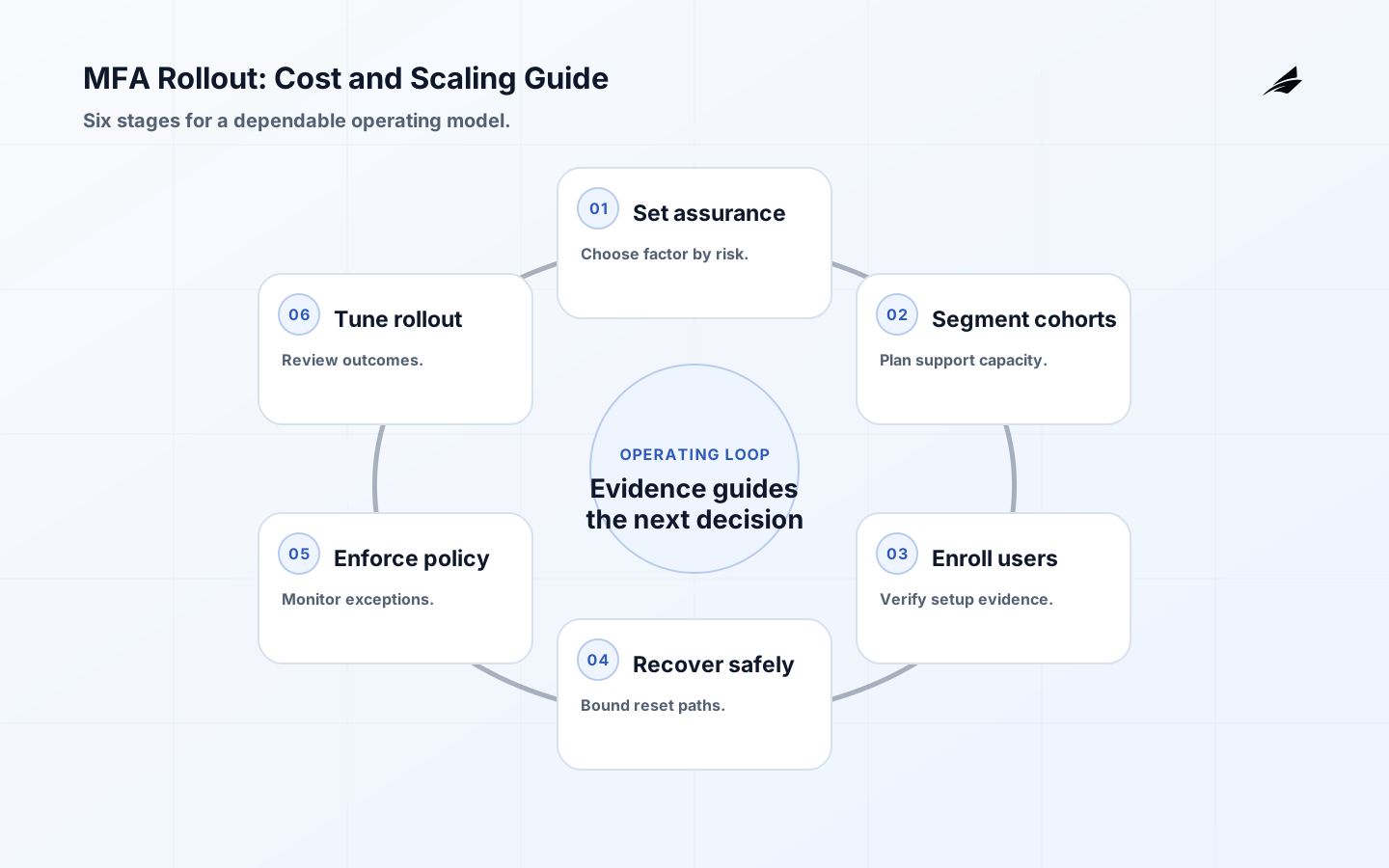
An MFA rollout cost and scaling guide should begin with the operating cost of a sign-in, not a license comparison. Multi-factor authentication changes enrollment, device replacement, recovery, help-desk work, application compatibility, and emergency access. It also reduces the chance that a stolen password alone is enough to enter an account. The right rollout distinguishes administrators, workforce users, customers, service accounts, and recovery staff because their risk and usable options differ. Map the applications, authentication methods, identity provider, support routes, and business deadlines before enforcing a policy. SSO and MFA rollout planning provides adjacent product guidance.
Set an assurance goal for each population
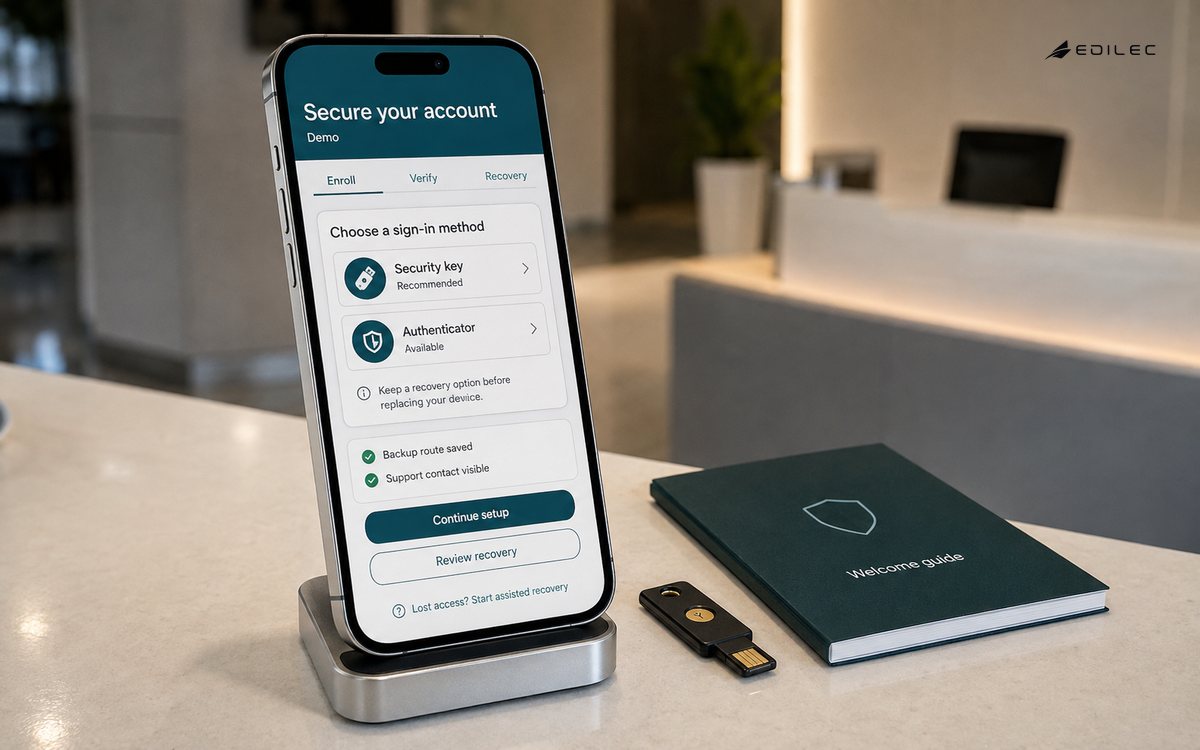
Do not apply one generic rule to every account. Privileged administrators, finance approvers, developers with production access, and identity administrators usually need the strongest phishing-resistant option the environment supports. A regular workforce cohort may begin with a compatible method while moving toward stronger factors. Customer and partner flows require careful accessibility, recovery, and abuse considerations. Service accounts generally should not use an interactive human factor; use workload identity, scoped credentials, and rotation instead. Record why each policy exists, what threats it addresses, and which applications or edge cases require a different path.
| Population | Primary design concern | Planning evidence |
|---|---|---|
| Privileged users | Resistance to phishing and account takeover. | Strong factor support, separate admin account plan, and emergency procedure. |
| Workforce | Enrollment completion and low-friction day-to-day sign-in. | Device availability, communications, help-desk forecast, and pilot feedback. |
| Customers and partners | Usability, fraud, privacy, and account recovery. | Journey tests, accessibility review, abuse monitoring, and support guidance. |
| Services | Nonhuman authentication and credential lifecycle. | Workload identity inventory, scopes, owners, and rotation plan. |
Plan the rollout journey before enforcement
A practical journey includes discovery, enrollment, verification, policy enforcement, recovery, and retirement of weaker methods. Pilot with a representative group that includes remote staff, people using managed and unmanaged devices where appropriate, administrators, and support. Measure enrollment completion, failed sign-ins, recovery requests, and application incompatibilities. Provide a clear deadline and a staffed support route, but do not make support the permanent bypass. Decide how to handle a lost device, changed phone number, travel, accessibility need, and an unavailable identity provider. Test each route with a real account and make the security level of recovery proportionate to the account's power.
- Inventory every application and protocol before retiring password-only or legacy sign-in paths.
- Choose factors based on threat resistance, availability, accessibility, device policy, and supportability.
- Enroll more than one recovery-capable method where appropriate, without creating an easier takeover route.
- Use staged enforcement and measured rollback criteria instead of an untested organization-wide cutover.
- Track exceptions by owner, reason, compensating control, expiry, and migration plan.
Treat recovery as an authentication ceremony
Recovery is often the highest-risk part of an MFA rollout because an attacker may know enough personal information to imitate a legitimate user. Separate low-impact self-service recovery from privileged or high-value account recovery. Verify the request using evidence and channels that are not controlled by the lost factor, limit what a recovered session can do until assurance is restored, and leave an auditable record. Help-desk staff need scripts, escalation authority, and a way to detect social engineering rather than an instruction to 'be helpful'. Review recovery outcomes and complaints; an unusually smooth recovery process can be a warning sign, not a success metric.
Budget for the whole system
License cost is visible, but rollout cost also includes identity integration, factor distribution, support training, communications, testing, application remediation, and recovery handling. The return is not a single percentage reduction; it is a stronger boundary against common credential attacks and a clearer account lifecycle. Create a simple cost model by population and application: enrollment effort, ongoing support, replacement rate, compatibility work, and residual risk. Avoid making a weaker factor permanent solely because it was cheapest to launch. The long-lived cost of fraud, recovery abuse, or fragmented exceptions can exceed a disciplined first implementation.
| Operating signal | What it indicates | Decision to make |
|---|---|---|
| Enrollment completion | Whether users can obtain and activate the required factor. | Improve instructions, hardware availability, or support coverage. |
| Recovery volume | Whether users can maintain factors through normal change. | Investigate device policy, factor choice, and possible abuse. |
| Legacy usage | Whether old protocols remain an unprotected entry point. | Set retirement dates and remediate owners or applications. |
| Exception age | Whether temporary risk is becoming permanent. | Remove, renew with authority, or replace the incompatible path. |
Operate MFA after launch
After enforcement, review authentication logs, recovery events, policy changes, and exceptions as part of normal identity operations. Test a lost-factor event and a privileged-account recovery periodically. Remove outdated methods and accounts as applications change. MFA is strongest when combined with clear authorization, device and session controls where appropriate, and timely deprovisioning. The rollout is complete only when the normal and exceptional journeys both work under pressure.
Run a practical operating exercise — MFA rollout
For an MFA rollout cost and scaling guide, run a support-and-recovery simulation before expanding enforcement. Give the support team a lost device, a user who changed phone numbers, a traveler with no normal factor, an accessibility accommodation, and a privileged administrator with a suspected takeover attempt. Have them follow the written journey without using informal chat approval or a shared bypass group. Measure the time, evidence, escalation, permissions restored, and communications produced by each case. Also test an application that still uses a legacy protocol and a service account incorrectly configured for interactive sign-in. The point is not to make recovery slow; it is to ensure that recovery restores the right person to the right assurance level without granting an attacker a convenient alternate route. Use results to improve factor choice, training, automation, and exception expiry.
Add a short review session whenever a privileged user who must replace a lost factor changes the assumptions behind the MFA rollout. Bring identity operations, help-desk staff, and security leadership together and start with the actual request rather than a control label. Trace the request from the authoritative record through identity, configuration, policy, implementation, and the evidence an investigator would use. Ask whether recovery gives the account only the assurance justified by evidence. Then introduce one realistic failure: a delayed directory update, unavailable dependency, stale configuration, unexpected retry, or departure of the person who normally knows the workaround. The group should choose a safe response before the next urgent event forces improvisation. Capture only concrete outcomes: a missing owner, an unclear approval limit, a test that does not reach the enforcement point, a recovery step that is too broad, or an evidence record that cannot be retrieved. Assign each outcome to a person and date, and rerun the same scenario after the change lands. This practice keeps the MFA rollout connected to daily operations. It also reveals when a process appears complete because a document exists, while the service itself still depends on unwritten knowledge or standing privilege. Over time, retain a small decision history so new team members can understand why the boundary exists and which assumptions must be revisited as the product, vendors, and workforce change.
Finally, publish the ownership model for enrollment, policy changes, recovery, and incident escalation. A rollout remains fragile when users do not know where to get help or when administrators cannot quickly distinguish a usability problem from a possible account takeover. Treat those routes as part of the authentication service, review them after material change, and keep their authority limits current.
For factor selection and recovery, consult NIST SP 800-63B, NIST SP 800-63C, and the NIST authenticator guidance; use CISA’s MFA guidance to frame adoption and support. Compare the rollout with SSO and MFA planning, zero trust for business applications, and the plain-language RBAC guide before expanding enforcement.
Key takeaways
- MFA rollout cost and scaling includes support, recovery, integration, and legacy retirement, not just licensing.
- Set stronger, phishing-resistant requirements for privileged and high-impact accounts.
- Pilot real journeys and test loss, travel, accessibility, and dependency failure before broad enforcement.
- Protect recovery with controls proportionate to the account and leave a durable record.
- Keep exceptions narrow, visible, and temporary.
Frequently asked questions
Conclusion
A scalable MFA rollout is a set of deliberate authentication journeys, not a checkbox. Segment risk, choose methods that users can sustain, make recovery resistant to impersonation, and keep exceptions under control. That work makes strong authentication dependable when the organization is busiest.
MFA scale-readiness questions
Estimate enrollment, recovery, support, policy, and exception capacity together. Start with high-impact cohorts, rehearse lost-device recovery, and pause expansion when evidence shows user harm or unsafe bypasses. Measure assurance outcomes, not enrollment alone. Capture the accountable owner, acceptance evidence, exception rule, and review date before widening the rollout.
| Decision | Evidence before release | Review signal |
|---|---|---|
| Scope and owner | Named boundary, accountable role, and expected outcome | Unowned or ambiguous work |
| Failure path | Rehearsed fallback, retry, and escalation | Aged or repeated exceptions |
| Change control | Versioned policy and rollback condition | Unexpected outcome after change |
| Recovery | Test result and correction authority | Time to restore and unresolved impact |
For identity architecture context, compare this rollout with the zero trust for business applications guide and the plain-language RBAC guide. Those connections matter when factor enrollment, role change, and recovery authority meet.
A rollout plan should also state what the team will not do. Do not make a help-desk agent the unrecorded owner of identity proof, do not let a temporary bypass outlive its reason, and do not count a successful prompt as proof that recovery is safe. A short exception register with expiry, approver, population, and compensating control lets leadership see the real cost of the program and lets operators close exceptions instead of inheriting them.
Make the business case with a baseline: current recovery contacts, enrollment completion, privileged-account coverage, and the age of exceptions. Estimate the effect of each cohort on those measures before the next enforcement date. That lets the program explain both security benefit and operating cost, and it gives the team a rational trigger for changing factor choice or support design.
Frequently asked questions
What should be decided first? Set the assurance target by population and role. Which failure deserves an early rehearsal? Lost-device recovery under support pressure. What proves the rollout is ready? Cohort evidence showing stronger authentication without an unsafe bypass or unbounded recovery queue.