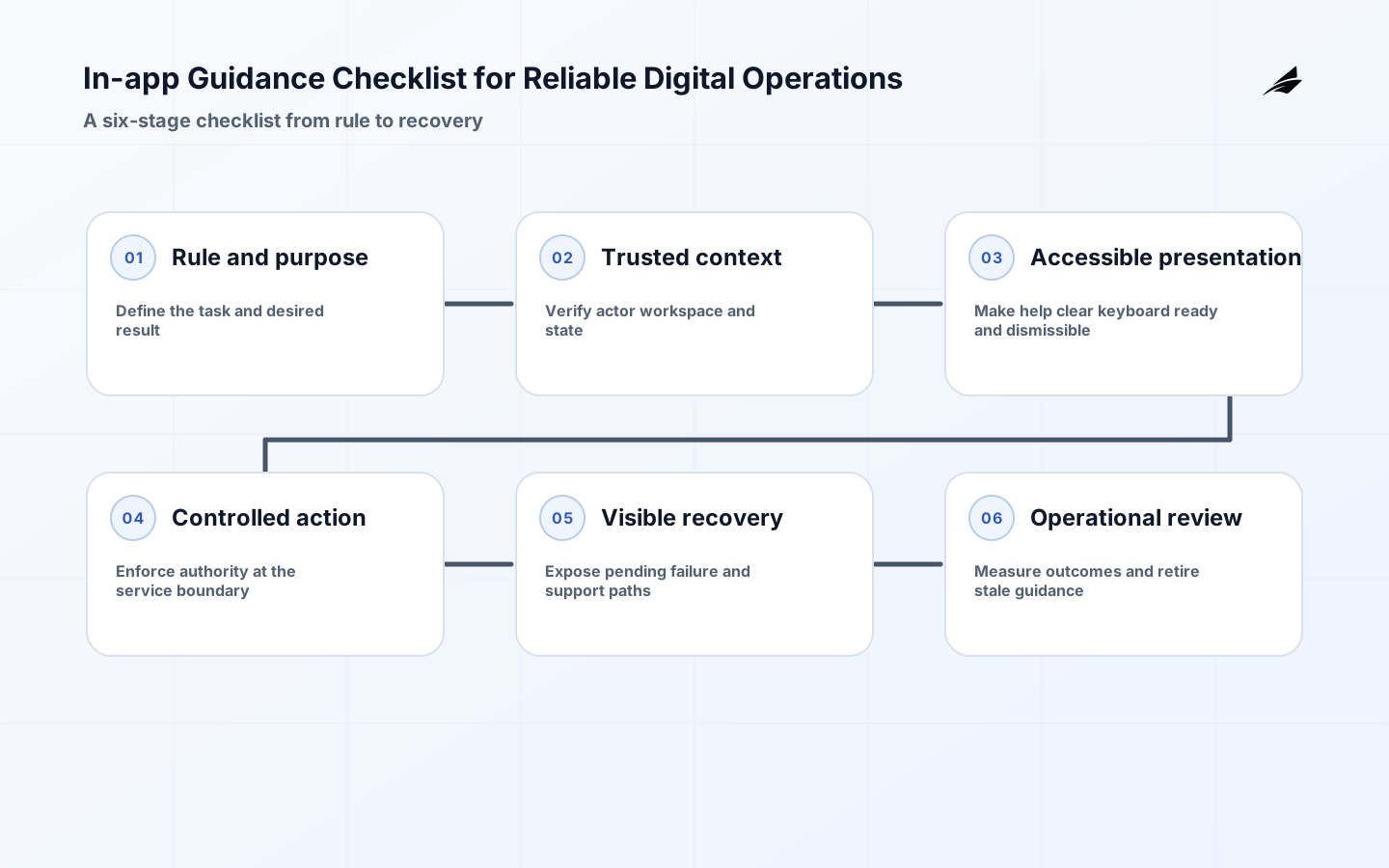
In-app guidance becomes an operations concern when customers, support staff, and automated services must rely on the same explanation of product state. A checklist is useful only if it changes what a team builds and reviews. Start with the decision the guidance supports, the evidence that makes that decision trustworthy, and the recovery route when the evidence is late or contradictory. Then check presentation, permissions, observability, ownership, and retirement. This sequence keeps a helpful explanation from becoming a second, ungoverned workflow.
State the operating rule
Write the rule in ordinary language before writing the prompt. For example: “When a workspace administrator has not connected an approved data source, show the setup steps and offer a safe way to verify the connection. ” That sentence names actor, state, source, action, and boundary. It does not promise that a click completes the connection. Add the evidence fields—workspace, role, source version, evaluation time, guidance version, and outcome—so the same decision can be reconstructed by a support professional.
| Checklist area | Minimum decision | Review evidence |
|---|---|---|
| Purpose | Customer task and desired outcome | Task contract and owner |
| Context | Actor, workspace, role, and state | Server-evaluated inputs |
| Action | Allowed next step and prohibited mutation | Policy result and reason |
| Recovery | Pending, retry, support, or safe stop | Queue state and follow-up |
| Lifecycle | Review date and retirement trigger | Version history and outcome trend |
Separate help from authority
A prompt can explain a decision, but it must not make a security or entitlement decision merely because the UI can display a button. The OWASP Authorization Cheat Sheet recommends deny-by-default behavior, server-side checks, and permission validation on every request. Put those controls at the API or service boundary. Let the interface hide irrelevant options for clarity, but treat that as experience—not enforcement. On failure, return a stable explanation and a next safe action without leaking sensitive records.
Make states visible and consistent
Reliable guidance depends on a small, shared state vocabulary. “Not started,” “in progress,” “waiting for provider,” “complete,” and “blocked” should each have a clear meaning, owner, and transition. Avoid using “complete” for a button click when the durable backend outcome is still pending. If a dependency cannot meet the freshness rule, show the pending state and give the user a way to return or contact support. Operators should see the same state and reason that the customer sees, with additional diagnostic evidence where appropriate.
Check accessibility and content
The W3C WCAG 2. 2 standard gives a practical test set for guidance: keyboard access, visible focus, predictable help, meaningful labels, status messages, error identification, and prevention of harmful submissions. Apply the checklist to the content itself. Use short headings, explain unfamiliar terms, do not encode meaning in color alone, and keep help available without forcing a person to replay a tour. Test the complete workflow, not just the component, because focus and announcements often fail when several overlays interact.
| Test case | Expected user experience | Expected operator evidence |
|---|---|---|
| Normal setup | One next step and a durable confirmation | State transition and source version |
| Missing prerequisite | Plain explanation and safe route to add it | Reason code and owner |
| Stale permission | No protected action; predictable denial | Denied request with actor and scope |
| Provider delay | Visible pending state without duplicate work | Correlation ID and retry status |
| Accessibility path | Keyboard and assistive technology can finish | Same outcome event as visual path |
Instrument transitions
Instrument the points that explain the task: rule evaluated, guidance shown, action accepted, action denied, dependency waiting, outcome committed, and support handoff. The OpenTelemetry observability primer describes how traces, metrics, and logs answer different questions. Use a trace or correlation identifier to follow a distributed setup, a metric for completion and delay rates, and a structured log for a specific decision. Keep sensitive content out of broad telemetry and define retention with the data owner.
Operate the checklist
A checklist should have a cadence and a named decision owner. Review it at release, after a permission or navigation change, and after an incident involving customer confusion. The Google SRE monitoring guidance is a useful reminder that monitoring exists to judge service health and diagnose problems. Ask whether the guidance improved the intended task, increased support demand, or hid a deeper design problem. Use a small sample of real traces and user feedback, not a dashboard snapshot alone.
Prepare support and recovery
Give support a constrained view
Support needs enough context to explain a result without unrestricted production access. Provide account or workspace scope, actor role, guidance version, evaluated state, relevant event identifiers, and the documented correction or escalation route. A manual correction should be narrow, attributable, and expiring. Keep the original result and the correction linked so later investigation can distinguish a bad rule from a legitimate exception.
Recovery is part of the product contract. Define what happens when the guidance provider is unavailable, the customer closes the browser during an action, the dependency sends a duplicate event, or the state changes between display and submit. Prefer a safe pending state over an optimistic success message. Make retries idempotent and give the operator a way to stop further effects before investigating a disputed result.
Release in small cohorts
Start in observation mode or with an internal cohort. Compare task completion, rework, denial reasons, support contacts, and accessibility defects with the existing path. Expand only when the team can pause the feature, identify the decision owner, and restore a correct product state. A broad rollout without a disable path turns a stale prompt or bad targeting rule into a customer-wide support event.
Key takeaways
- Write the in-app guidance rule and its evidence before choosing a component or vendor.
- Keep permissions and irreversible mutations at a server-side boundary.
- Use a shared state model so customers and operators see consistent reasons.
- Test keyboard, assistive technology, interrupted sessions, duplicates, and stale state.
- Review guidance as an operational change with a pause, recovery, and retirement path.
Frequently asked questions
How large should an in-app guidance checklist be?
Keep the first checklist short enough to use during a release: purpose, context, authority, accessibility, failure, telemetry, owner, and retirement. Link to deeper runbooks for implementation detail. A checklist that cannot be completed consistently is an inventory, not a control.
Which -app Guidance signal matters most?
Use the outcome metric for the task the guidance is meant to improve, then pair it with guardrails such as support demand, reversals, denials, and accessibility defects. A prompt engagement number is not enough to show that the workflow became clearer or safer.
What is a good fallback when guidance cannot evaluate state?
Show a clear pending or unavailable state, avoid the protected action, preserve the user’s work, and route the case to a named owner when the task is time-sensitive. Do not guess a positive result or let a client-side flag become an authority decision.
Walk through a setup failure
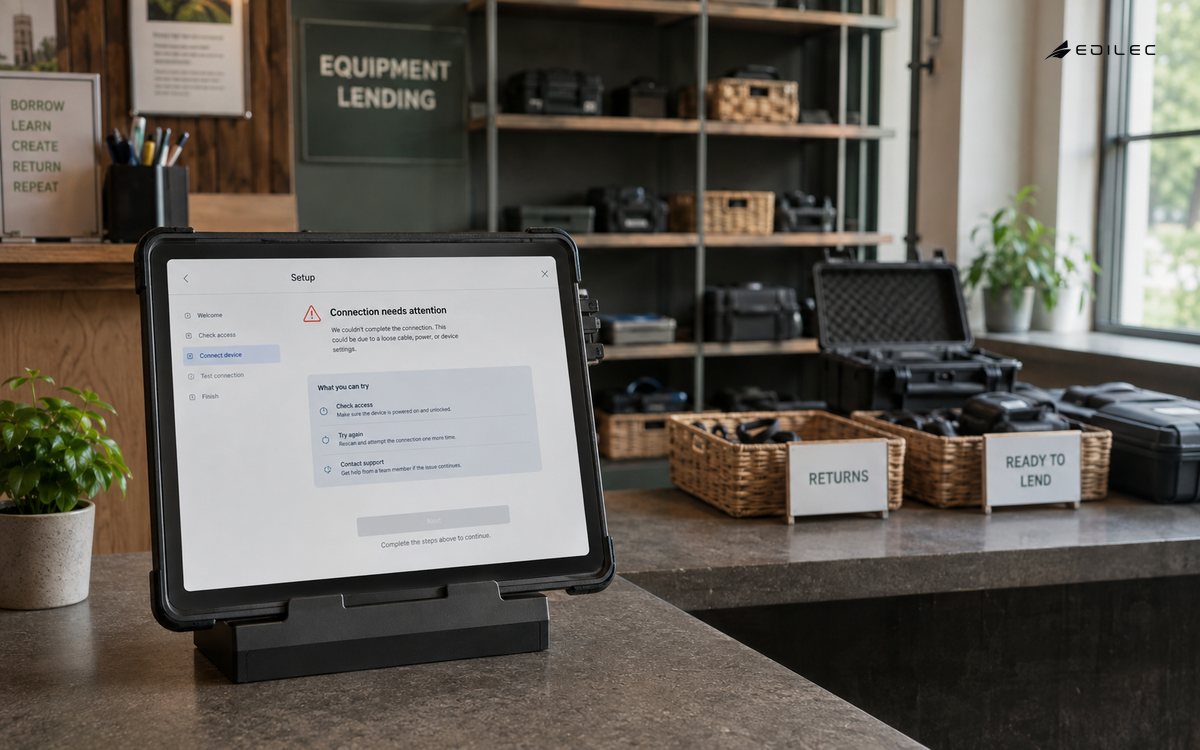
Imagine an administrator is guided through connecting a data provider. The rule should evaluate workspace, role, integration state, and the current policy version before presenting the setup action. After submission, the service should record a correlation identifier and show a pending state until the provider callback is verified. If the administrator loses the role during that interval, the final mutation must be denied and the customer should receive a useful explanation rather than a generic error. If the callback arrives twice, the integration should become active once and the guidance should not restart. If the provider never responds, the customer needs a rediscovery path and support needs the event age, source status, and safe correction route. This scenario tests the checklist across interface, API, queue, callback, telemetry, and support instead of treating the prompt as the whole feature.
| Scenario | Customer-facing behavior | Review evidence |
|---|---|---|
| Ready to connect | One clear action and expected result | Verified role and integration state |
| Role changed | Safe denial with next step | Decision, actor, and effective time |
| Callback delayed | Pending state and return path | Correlation ID and retry age |
| Duplicate callback | One durable result | Event ID and idempotency record |
Use the scenario to decide whether a release is ready. A second operator should be able to reconstruct what the customer saw, which rule fired, and why the system allowed or stopped the action. Review it after navigation, permission, integration, or policy changes. When the product becomes clear enough that the prompt adds interruption without improving completion, retire the prompt while preserving the durable explanation in accessible documentation.
Add one final ownership check: the person who can change the guidance rule should be able to see its last review, affected cohort, and current support burden. If a rule is producing repeated denials, reopenings, or accessibility complaints, pause it while the underlying workflow is examined. This keeps the checklist connected to product quality rather than turning it into a release form that is completed once and forgotten. Recheck the owner after every material workflow change.
The checklist also connects to adjacent delivery work. SaaS Reliability Checklist for Reliable Digital Operations helps frame ownership and recovery; The Plain-language Guide to Product Analytics helps choose evidence; and The Plain-language Guide to Self-serve Onboarding helps place guidance inside a complete first-value path. Use those connections to review the same customer state across product, operations, and support rather than making the guidance layer a detached experiment.
Before widening in-app guidance checklist for reliable digital operations, run a small rehearsal with normal, denied, delayed, and corrected cases. For in-app guidance checklist for reliable digital operations, name the decision boundary and its owner.
For in-app guidance checklist for reliable digital operations, review the for reliable digital operations scope during normal handling.
A durable operating note for in-app guidance checklist for reliable digital operations records the assumptions that made the decision safe: the authoritative source, effective time, permitted actor, protected resource, and recovery route.
For in-app guidance checklist for reliable digital operations, a good handoff ends with observable evidence rather than a verbal promise.
The smallest useful improvement to in-app guidance checklist for reliable digital operations is often a sharper boundary, not another feature. For in-app guidance checklist for reliable digital operations, record the state, evidence, and recovery path.
Azure's multitenant guidance is a useful reference for reviewing the guidance boundary: tenant context, state transitions, support visibility, and recovery should remain explicit before rollout.
Before widening in-app guidance checklist for reliable digital operations, rehearse normal, denied, delayed, and corrected cases with realistic identifiers. For in-app guidance checklist for reliable digital operations, review the for reliable digital operations control during normal handling.
A durable operating note for in-app guidance checklist for reliable digital operations records the authoritative source, effective time, permitted actor, protected resource, and recovery route.
For in-app guidance checklist for reliable digital operations, test a revoked permission before treating the first release as complete.
Before expanding the guidance cohort, test a normal setup alongside a revoked-permission case and confirm that the interface, API, and support record show the same outcome. Review the control at the tenant, role, and integration boundary.
The review discipline for in-app guidance checklist for reliable digital operations is simple but specific: name the protected outcome, set an owner, preserve the reason behind each exception, and measure the cost of correction. For in-app guidance checklist for reliable digital operations, review the for reliable digital operations scope during normal handling For in-app guidance checklist for reliable digital operations, review the for reliable digital operations control during normal handling
A concrete operating test for in-app guidance checklist for reliable digital operations is to rehearse for reliable digital operations during a recovery drill. For in-app guidance checklist for reliable digital operations, review the for reliable digital operations control during normal handling For in-app guidance checklist for reliable digital operations, review the for reliable digital operations control during normal handling For in-app guidance checklist for reliable digital operations, review the for reliable digital operations control during normal handling
Evidence for “In-app Guidance Checklist for Reliable Digital Operations” is grounded in Web Content Accessibility Guidelines (WCAG) 2.2, Authorization Cheat Sheet, Observability primer, Monitoring Systems with Advanced Analytics, Multitenancy Checklist on Azure; each source informs a specific decision, test, or operating trade-off described in this guide.
Conclusion
An in-app guidance checklist is valuable when it connects product language to reliable state, accessible interaction, server-side authority, measurable outcomes, and humane recovery. Use it alongside SaaS Reliability Checklist for Reliable Digital Operations, The Plain-language Guide to Product Analytics, and The Plain-language Guide to Self-serve Onboarding. The operational standard is simple: a customer should understand the next safe step, and a teammate should be able to explain why the product offered it.