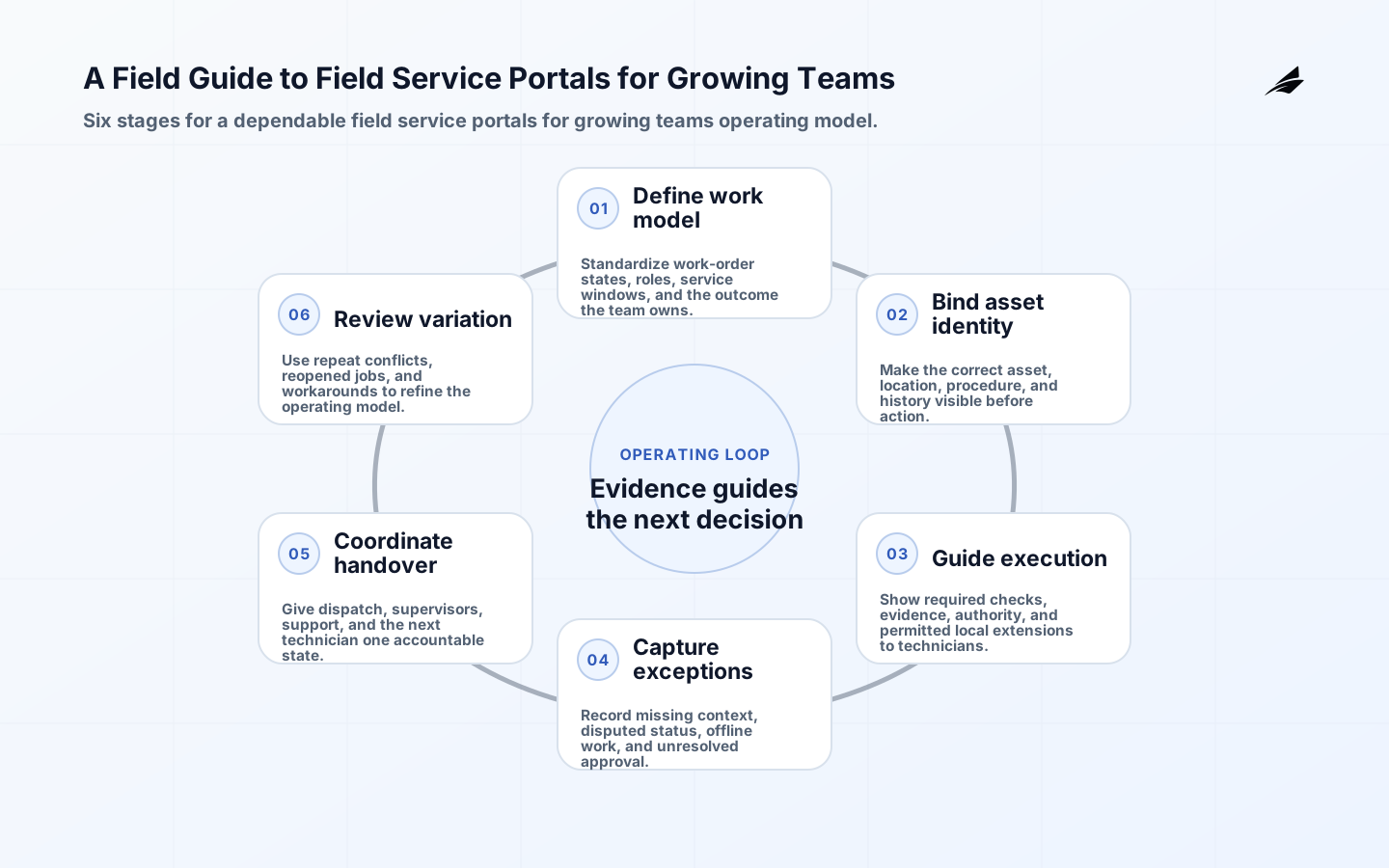
Growing field teams do not need a portal that merely handles more rows; they need one that keeps decisions consistent as technicians, sites, asset classes, procedures, and exceptions multiply. Scaling means standardizing job state, identity, permissions, offline behavior, procedure version, asset history, accessibility, and handover—not removing every local judgment.
Define the field service portals decision
Design around the field journey, beginning with assignment and ending with a verified service outcome. Identify what must be available before arrival: asset identity, site instructions, safety notes, history, parts, drawings, and the reason for the visit. Then distinguish facts a technician can attest from data the system should calculate. Web Content Accessibility Guidelines 2.2 are relevant because technicians may be working in glare, gloves, noise, or time pressure; accessible interaction is a reliability concern, not a cosmetic one.

| Control area | Field-service-growth what to specify | Field-service-growth evidence to review |
|---|---|---|
| Purpose | In field-service growth, state the operational decision, user, completion evidence, and cost of a wrong result. For this portal, spell out the job boundary instead of inheriting a default. | In field-service growth, a named owner, an example record, and a repeatable test that shows the purpose rule works in production conditions. |
| Authority | In field-service growth, name the system, role, or device that may create or correct this record. Keep authority attached to an identified actor rather than an implicit default. | In field-service growth, a named owner, an example record, and a repeatable test that shows the authority rule works in production conditions. |
| Time | In field-service growth, keep observation time, processing time, and review deadline distinct and visible. Make time boundaries explicit so each state has a known owner. | In field-service growth, a named owner, an example record, and a repeatable test that shows the time rule works in production conditions. |
| Change | In field-service growth, version the contract or rule and publish a migration and rollback decision. Give each changed rule an explicit boundary and rollback owner. | In field-service growth, a named owner, an example record, and a repeatable test that shows the change rule works in production conditions. |
Define the field-service record and authority
Treat the portal as a client of durable work-order and asset records, not as the authority for every field. Cache a bounded offline package with version markers, let the technician create evidence and actions locally, and synchronize through an idempotent operation log. Conflicts need a visible policy: for example, a photo and observation can append, while a safety status change may require review. Offline sync offers a useful companion perspective on reconciliation.
Test field permissions and evidence
Authorize by assignment, role, and asset scope rather than relying on a hidden URL or a broad field-user account. Require asset verification before recording consequential work, preserve timestamps and authorship, and store attachments with their relationship to the task. Use controlled task states so an incomplete visit cannot masquerade as completed service. The OWASP Authorization Cheat Sheet is a sound reference for enforcing authorization at every request, including synchronization endpoints.
| Control area | Field-service-growth what to specify | Field-service-growth evidence to review |
|---|---|---|
| Failure | In field-service growth, describe the safe response to loss, delay, duplication, malformed input, and access denial. Define what the portal may do during failure instead of inheriting a permission default. | In field-service growth, a named owner, an example record, and a repeatable test that shows the failure rule works in production conditions. |
| Evidence | In field-service growth, retain identity, correlation, configuration, result, and accountable owner for investigation. State where evidence begins and ends so review does not depend on assumption. | In field-service growth, a named owner, an example record, and a repeatable test that shows the evidence rule works in production conditions. |
| Release | In field-service growth, test representative field conditions, permissions, degraded connectivity, and recovery before scale. Set release boundaries around those conditions before expanding. | In field-service growth, a named owner, an example record, and a repeatable test that shows the release rule works in production conditions. |
| Review | In field-service growth, measure decision impact, exception burden, and unresolved work; assign the next improvement. Make the review boundary explicit by naming the decision, measure, and next action. | In field-service growth, a named owner, an example record, and a repeatable test that shows the review rule works in production conditions. |
Use field evidence to guide support
Measure whether the portal improves the work, not just logins. Watch time to locate an asset, offline completion rate, synchronization conflicts, reopened work orders, missing evidence, and time from field completion to dispatcher visibility. Review a sample of completed jobs with technicians and supervisors; the mismatch between a recorded status and the reality of a site often reveals a poor task model. Release changes gradually to a representative mix of devices, network conditions, and service roles.
Expand the portal from observed field work
For a growing field team, use a limited rollout that includes representative assets, roles, connectivity, and exception cases. For field service portals, publish the success measure, a containment trigger, and the person allowed to pause the change. For a growing field team, review observed behavior with the people who perform the work, then update the operating record, test fixtures, and recovery guidance. For a growing field team, a feature is not mature because it is deployed; it is mature when a new operator can understand the boundary and a support owner can resolve a failure without guessing.
A deeper field service portals review should connect technician evidence, offline work, and dispatcher handoff. Walk a representative visit with a technician who has limited connectivity and an unexpected asset condition. Observe where the portal supplies context, where it asks for duplicate data, and how it distinguishes a queued update from a confirmed record. Then ask a dispatcher to resolve the same exception from the office. The two views should preserve the same facts while making each person's next action clear. For a growing field team, keep the review concrete by naming the records, people, assets, and time windows involved. For a growing field team, it is tempting to call an architecture sound because its normal path is tidy, but operational confidence comes from explaining an incomplete path: a message that arrived after a decision, a device that was replaced, a technician who worked offline, or a credential that should no longer work. For field service portals, record the observed result, the expected result, the owner who decides the difference, and the smallest corrective action. For a growing field team, that creates a reusable acceptance test for the next release and prevents a local workaround from quietly becoming a permanent rule. For a growing field team, review this evidence with engineering and the people who carry the operational consequence. For a growing field team, when their accounts disagree, preserve both facts and resolve the authority rather than smoothing the difference in a dashboard or export. For field-service growth, define the goal is not perfect data. For a growing field team, it is a system that tells people when its evidence is incomplete, states which record remains authoritative, and gives them a safe accountable way to respond.
A field-service operating model that can grow
For a growing field-service team, standardize the work-order identity, asset context, authority for status changes, evidence requirements, offline package, and handover record before adding another workflow. A team should know which data may be extended locally, which changes need current authorization, and how a supervisor sees disputed work. Use MQTT Version 5.0, TLS 1.3, RFC 3339, and NISTIR 8259A for transport, timestamp, and device-identity concerns. Related Edilec reading includes the field-service planning guide, offline-sync planning guide, and network-segmentation checklist.
Let a small team run representative dispatches across strong and weak connectivity, mixed asset types, role changes, incomplete evidence, and a supervisor handoff. Review the work with technicians and dispatchers, then turn recurring confusion into a clearer state or permission rule. Track asset-match errors, evidence completeness, sync-conflict age, support effort, and the number of local workarounds that still need explanation.
| Decision area | Field-service-growth question | Field-service-growth evidence |
|---|---|---|
| Purpose | For field-service growth, answer this question: Which real decision does the system change? | For field-service growth, record the scenario, owner, and acceptance example. |
| Boundary | For field-service growth, identify what is allowed, and what is deliberately excluded? | For field-service growth, retain policy, identity, and version details. |
| Failure | For field-service growth, identify what happens when data, network or dependency fails? | For field-service growth, retain a contingency test and visible status. |
| Change | For field-service growth, answer this question: Who can alter rules, mappings or access? | For field-service growth, retain approval, diff and rollback point. |
| Review | For field-service growth, answer this question: What shows the design remains useful? | For field-service growth, retain outcome, exception and correction record. |
Takeaways a growing field team should preserve
- Design the portal around a technician's end-to-end visit, including handoff and exception paths.
- Make asset context and offline status obvious before a task is changed.
- Use appendable field evidence and explicit review policies for conflicting updates.
- Authorize each action by assignment, role, and asset scope.
- Judge success by cleaner service outcomes and less rework, not screen adoption alone.
FAQ: field-service questions for growing teams
Which field-service actions belong offline?
The tasks needed to complete a safe visit should work with a bounded local package: assigned work, required instructions, asset identification, evidence capture, and a clear queued state. Do not promise offline access to data the device cannot protect or reconcile.
How should a growing portal expose sync conflicts?
Show the conflict and preserve both relevant facts. Automatically merge only changes with a well-understood rule; route safety, ownership, or completion-state conflicts to a named reviewer.
Keep a compact decision record for field service portals changes. It should capture work-order state, technician evidence, offline queue status, conflict decision, and dispatcher acknowledgement. For a growing field team, this record is not bureaucracy for its own sake: it lets the next engineer, operator, or support owner understand what changed, what evidence was reviewed, and which question remains open. For a growing field team, during an incident, it also prevents the team from relying on a screenshot or an unverified recollection when deciding whether to contain, correct, or continue the service.
Conclusion: scale the field workflow without hiding state
Field service portals are operational tools, not miniature desktop applications. Give technicians trustworthy context, make offline work explicit, protect consequential actions, and preserve the evidence behind a completed visit. The result is a service record that helps the next person act with less uncertainty.