Data lineage in production
Data lineage stops being a one-off analysis when it informs a recurring decision, controls a workflow, or reaches people outside the team that built it. For IT managers, the production question is not whether a prototype can produce a number. It is whether the organisation can explain the number, detect when it is wrong, correct it without improvisation, and keep that discipline while systems and people change. The practical starting point is a regulated reporting path from operational systems through transformations to a published measure. For this data handoff, name the accountable owner, supporting evidence, exception route, and next measurable check.
That shift changes the work. A useful prototype optimises for learning; a production data lineage capability needs explicit ownership, a known operating cadence, controls proportionate to the risk, and evidence that the result still represents reality. The design should make it easy to answer four questions: what decision uses this output, what inputs can change it, who can approve a change, and how will the team know that the answer is no longer trustworthy? Within this data handoff, name the accountable owner, supporting evidence, exception route, and next measurable check.
Why data lineage changes in production
Production exposes dependencies that a demo can hide. A failure may begin when a source column is renamed and a report continues to refresh, but its business meaning has quietly changed. If the system silently continues, a polished dashboard or automated action can spread the mistake faster than a spreadsheet ever did. Treating the pipeline, definitions, permissions, and review routine as one service keeps the discussion focused on decisions rather than on a preferred tool. When implementing this data handoff, name the accountable owner, supporting evidence, exception route, and next measurable check.
The best scope is a named decision and a bounded workflow. Put the person who acts on the result, the expected cadence, acceptable delay, and consequence of error on one page. This approach also creates a sensible bridge to Data Lineage Architecture Guide for Trusted Analytics, where the adjacent design problem can be handled without pretending every data initiative needs a wholesale platform rebuild. Before releasing this data handoff, name the accountable owner, supporting evidence, exception route, and next measurable check.
| Production concern | Useful design choice | Evidence of control |
|---|---|---|
| Decision context | Name the user, action, and cadence | A review agenda or workflow references the output |
| Data contract | Record fields, keys, timing, and allowed changes | Automated checks and a dated contract |
| Ownership | Assign business and technical responsibility | An escalation reaches a named person |
| Recovery | Define correction, replay, or restatement steps | A rehearsal or incident record proves it works |
The operating model: ownership, contracts, and change
Every production data lineage system needs two kinds of ownership. A business owner decides whether the measure or output remains fit for its purpose; a technical owner maintains the implementation and raises change impact. Neither role can substitute for the other. A data steward or delivery lead often coordinates the definition, access, documentation, and exception queue, particularly when multiple teams supply inputs. While operating this part of the system, name the accountable owner, supporting evidence, exception route, and next measurable check.
For delivery teams working on data lineage, this integration boundary should connect business rules, system state, operating evidence, accountable ownership, and recovery to evidence an accountable owner can inspect. A contract does not need legal language to be useful. It should identify the record or metric, its grain, identifier, timing, permitted values, quality expectations, privacy or access classification, and consumer impact. When an upstream team proposes a change, the contract supplies the review questions. This is much more reliable than discovering downstream dependencies only after a report has moved. In this operating review, move beyond the integration boundary only after the owner can show the accepted result, the exception path, and the signal for another review.
- Name one accountable business owner and one technical owner for the first production workflow.
- Publish the definition, source boundary, and refresh expectation where consumers can find it.
- Require a change record for changes that affect meaning, access, history, or operational use.
- Keep an exception route that captures what happened, who decided, and how recurrence will be prevented.
A production architecture for data lineage
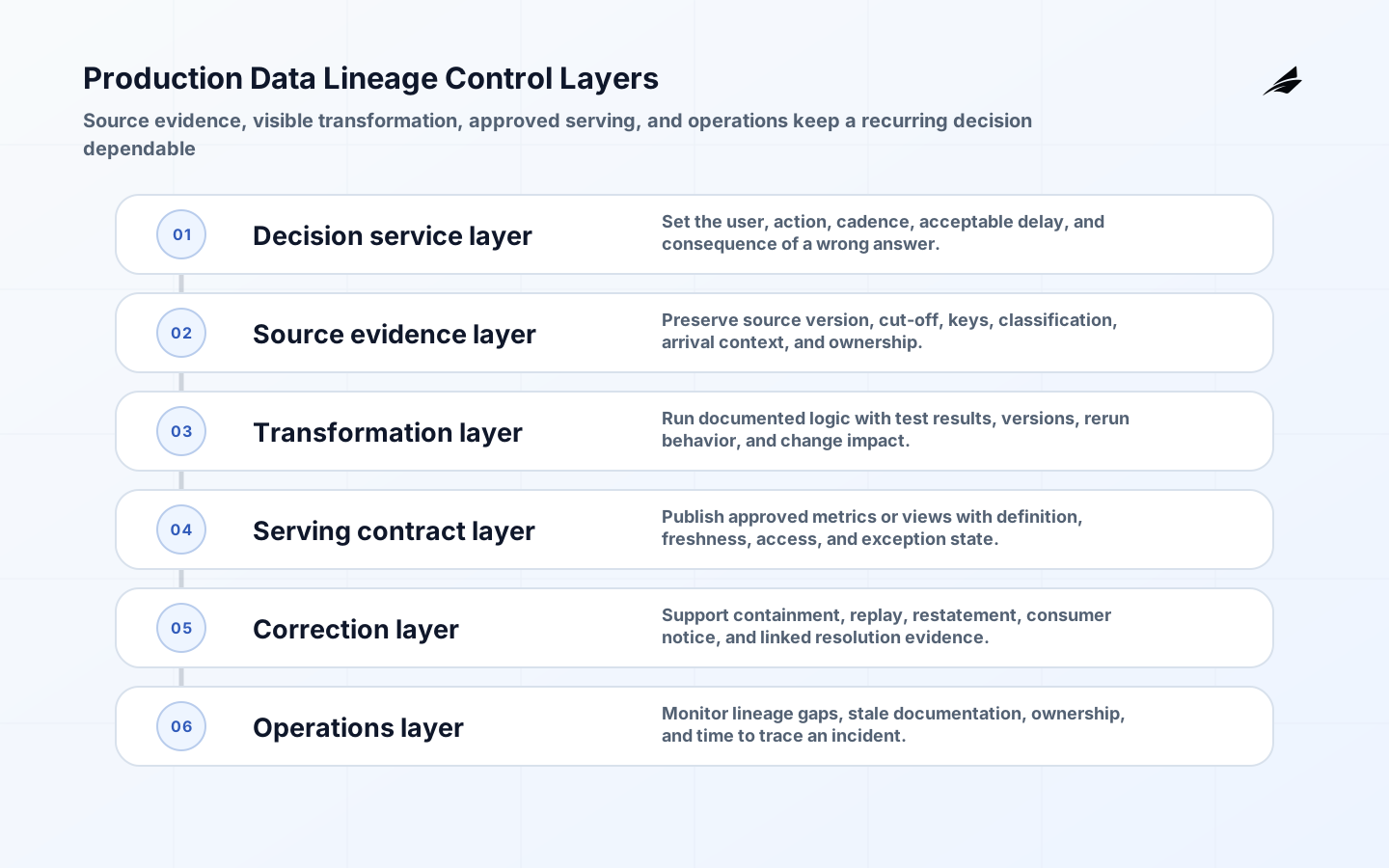
In data lineage, delivery teams should make the relationship between business rules, system state, operating evidence, accountable ownership, and recovery explicit and reviewable. The architecture should preserve enough context to diagnose a disagreement. Keep raw or source-aligned evidence, perform transformations in visible layers, expose a controlled consumption surface, and collect operational telemetry around each boundary. A single repository or platform is not mandatory; traceability is. The architecture is working when a reviewer can follow a surprising result back through logic and inputs without relying on personal memory. This operating review should close the information boundary only when the result, unresolved exception, and next review condition are recorded.
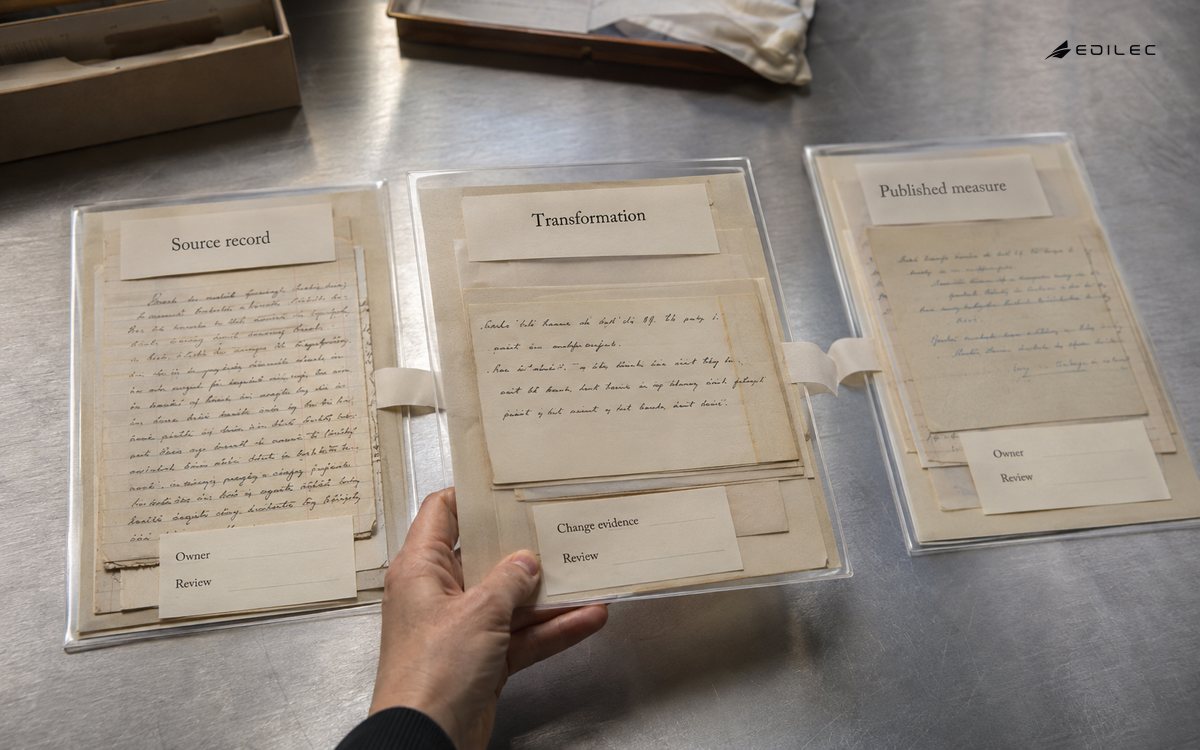
Use the smallest set of controls that matches the harm of a wrong answer. A low-risk internal view may need freshness checks and owner review. A decision with financial, customer, safety, or regulatory consequences may need approvals, immutable evidence, access controls, reconciliation, and a documented correction policy. Analytics Documentation: Operations Playbook offers a related lens on how these shared analytics components should be planned. To validate this data handoff, name the accountable owner, supporting evidence, exception route, and next measurable check.
| Layer | Purpose | Production question |
|---|---|---|
| Source evidence | Capture the factual input and its arrival context | Can the team identify the source version and cut-off? |
| Transformation | Apply documented logic and quality controls | Can logic be tested and rerun predictably? |
| Serving surface | Provide approved metrics, data sets, or views | Can consumers see definitions and access only what they need? |
| Operations | Monitor, alert, document, and improve | Can an on-call owner detect and resolve a material issue? |
A practical rollout path
A dependable data lineage design makes business rules, system state, operating evidence, accountable ownership, and recovery visible to the owner responsible for this release decision. Start with one path that contains a real decision, not a showcase. Baseline the current method, including manual workarounds and the time required to resolve a discrepancy. Then deliver the minimum controlled version: a definition, a reproducible data path, a small consumer group, and a way to collect exceptions. Expanding before this path is stable usually spreads uncertainty into more reports, users, and integrations. The next step in this operating review is justified when the team can trace the accepted outcome, the fallback route, and the owner of follow-up.
This release decision for data lineage is strongest when business rules, system state, operating evidence, accountable ownership, and recovery can be reviewed as one operating record. Before broad release, test normal flow and failure flow. Test delayed inputs, malformed records, access changes, duplicate messages, a corrected historical value, and the absence of a critical source. Ask the users to make a real decision with the output and observe where they leave the system for a spreadsheet or verbal confirmation. Those exits are design feedback, not user error. Acceptance in this operating review requires a visible outcome, a bounded exception path, and a measurable reason to revisit the decision.
Signals that show whether it is operating
Monitor signals that reveal both data health and service health: coverage of critical assets, unresolved lineage gaps, change impact reviews, stale documentation, and time to trace an incident. These should have an owner and a response expectation. A red indicator with no decision attached becomes background noise; a missed condition with no alert becomes a retrospective surprise. Use thresholds to direct investigation, then record the root cause and the corrective control rather than simply resetting the alert. For this part of the system, test one expected case, one ambiguous case, and one failure with a documented recovery action.
Avoid judging success only by dashboard views, rows processed, or model runtime. A mature data lineage capability shortens the time from disagreement to evidence, improves the confidence of a specific decision, and makes changes less hazardous. Compare outcomes with the prior manual workflow and review the exceptions that matter to users. The related guide Finance Reporting Mistakes and Practical Fixes is useful when the next question is how to extend the operating practice. Within this part of the system, test one expected case, one ambiguous case, and one failure with a documented recovery action.
Assurance work should be planned as part of delivery. For data lineage, keep a small evidence pack for each release or review: the definition in force, source and transformation version, control results, material exceptions, approver or owner acknowledgement, and the final output cut-off. This makes review faster because a new person can understand why the result was trusted at that point in time. It also makes corrections safer: the team can distinguish a changed fact, a late arrival, a defect in logic, and a legitimate change in business policy instead of applying an unexplained overwrite. When implementing this part of the system, test one expected case, one ambiguous case, and one failure with a documented recovery action.
Build the improvement loop around observed use. When a user disputes an output, record the question, impact, evidence trail, resolution, and the guardrail that would have found the issue sooner. Look for repeated questions such as “which version is this?”, “why did this number move?”, or “who owns this field?”; they point directly to missing provenance, change communication, or ownership. Over time, this record lets data lineage evolve through tested controls rather than through accumulating exceptions and tribal knowledge. Before releasing this part of the system, test one expected case, one ambiguous case, and one failure with a documented recovery action.
Key takeaways
- Data lineage becomes production work when a real decision depends on it repeatedly.
- Start with a bounded workflow, explicit owners, and a written contract before scaling scope.
- Make evidence, monitoring, and recovery part of the design rather than an afterthought.
- Use observed exceptions and decision outcomes to decide what to improve next.
Frequently asked questions about data lineage
What is the first production milestone for data lineage?
Delivery teams can keep data lineage accountable by recording how business rules, system state, operating evidence, accountable ownership, and recovery shape this information boundary. The first milestone is a controlled end-to-end path for one decision: named owners, known source boundary, documented output, a visible health check, and a tested correction route. It is deliberately smaller than an enterprise rollout, but it is real enough to reveal ambiguity in definitions, handoffs, and accountability. While operating this data handoff, test one expected case, one ambiguous case, and one failure with a documented recovery action. For this operating review, the responsible owner should be able to explain what passed, what remains exceptional, and which signal reopens review.
Do we need a new platform before putting data lineage into production?
For data lineage, the evidence behind this information boundary should cover business rules, system state, operating evidence, accountable ownership, and recovery. Usually no. First clarify the decision, data contract, and operating responsibilities. Existing warehouse, orchestration, observability, or reporting tools may support the first path well. Introduce new technology when it removes a demonstrated control, scale, latency, or usability constraint, not because the current landscape looks untidy on a diagram. When changing this data handoff, test one expected case, one ambiguous case, and one failure with a documented recovery action. Do not widen the scope from this operating review until the evidence supports the result, the recovery route, and the next operating check.
How often should the team review it?
The team responsible for data lineage should examine business rules, system state, operating evidence, accountable ownership, and recovery together before accepting this operating decision. Review operational health at the cadence required by the decision and risk: daily for a fast operational loop, weekly for a management rhythm, and after any material change or incident. Review definitions and ownership when the product, process, source system, or consumer use changes. The goal is timely stewardship, not meetings for their own sake. During support for this part of the system, test one expected case, one ambiguous case, and one failure with a documented recovery action. A reviewer using this operating review should be able to reconstruct the decision, route an exception, and identify the next trigger without relying on private context.
Conclusion: make data lineage dependable before making it broad
A dependable data lineage capability is a managed decision service. It connects a defined use case to evidence, documented logic, appropriate controls, accountable people, and a recovery path. Build one such path, let real use expose the weak assumptions, and turn each material exception into a clearer contract or guardrail. That is how a useful analysis becomes an asset the organisation can rely on. To validate this data handoff, test one expected case, one ambiguous case, and one failure with a documented recovery action.