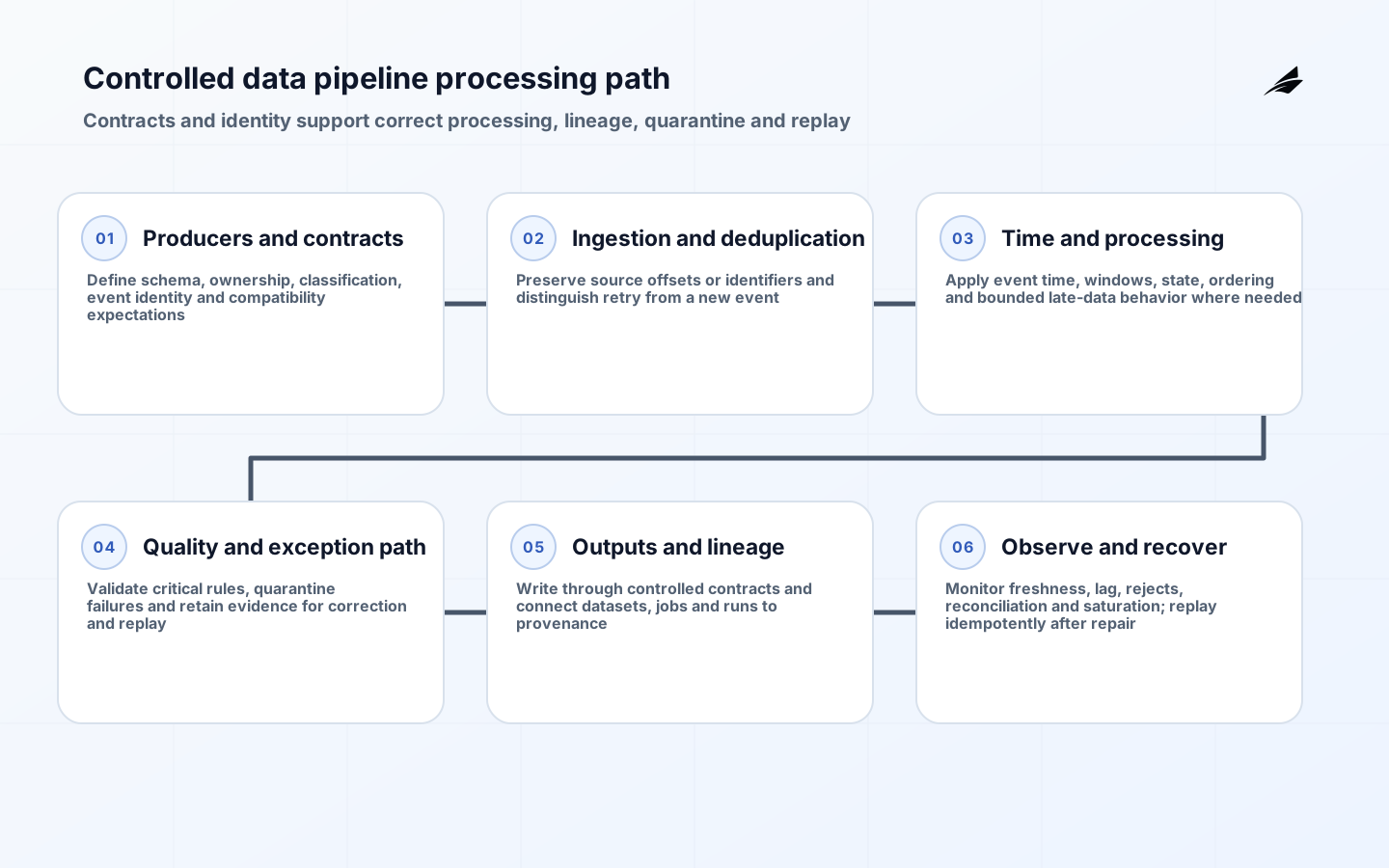
Data pipeline architecture decisions directly impact the reliability, scalability, and compliance of analytics systems. Unlike theoretical frameworks, this guide focuses on implementation choices that address real-world constraints such as data volume spikes, regulatory requirements, and team capacity. We avoid generic advice by examining specific trade-offs in pipeline design, including when to use batch versus stream processing, how to handle data lineage, and what tools provide the best balance of performance and maintainability.
Core Architecture Patterns for Production Pipelines
The most effective data pipelines combine batch and stream processing with careful consideration of data lineage. Apache Beam's unified model allows developers to write pipelines that handle both batch and streaming data using the same codebase, reducing maintenance overhead. However, this approach requires careful handling of windowing strategies to avoid data loss during high-velocity events. For example, when processing financial transactions, a sliding window of 5 seconds provides real-time insights while minimizing latency. The key is to match windowing parameters to business requirements rather than adopting a one-size-fits-all approach.
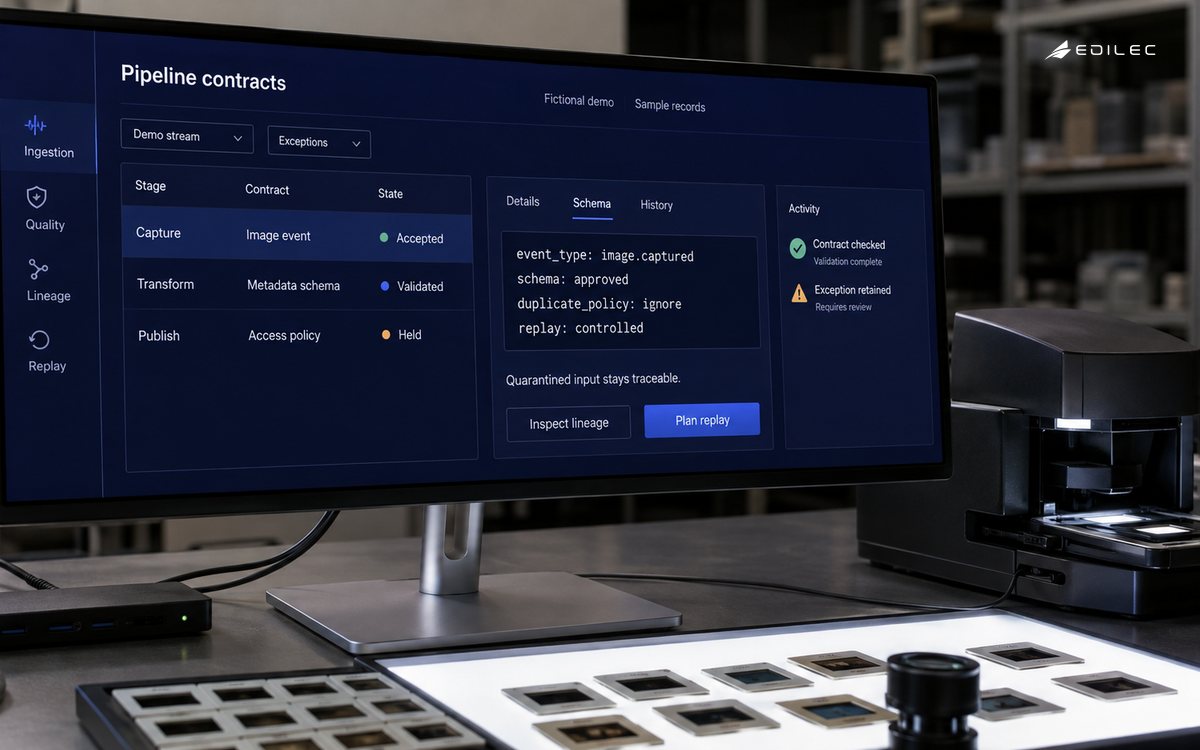
- Use Apache Beam's windowing API to define custom time windows for event processing
- Implement stateful processing for session-based analytics where user behavior patterns are critical
- Apply backpressure mechanisms to prevent pipeline overload during data spikes
| Processing pattern | Good fit | Design questions |
|---|---|---|
| Batch | Bounded data, scheduled reporting and replayable transformations | Completion window, partitioning, late input and rerun semantics |
| Streaming | Continuously arriving events and low-latency decisions | Event time, watermarks, ordering, state, backpressure and duplicates |
| Hybrid | Historical recomputation plus current event processing | How batch and streaming paths share logic, identity and reconciliation |
Data Lineage and Traceability in Practice
Tracking data lineage is critical for understanding how transformations affect downstream analytics. OpenLineage provides a standardized way to document pipeline metadata, but its implementation varies across tools. In practice, teams often struggle with incomplete lineage records when using cloud-native solutions. For example, when migrating from a legacy system to a cloud data warehouse, many teams lose traceability for data transformations that occurred during the migration process. This highlights the need for a phased approach to lineage implementation, starting with high-impact pipelines before expanding to the entire data ecosystem.
A major bank faced compliance issues after a pipeline failure because they couldn't trace which transformation step caused the data anomaly. The root cause was incomplete lineage records for the data transformation layer. This case demonstrates that even with OpenLineage in place, teams must actively maintain lineage records rather than relying on automated tools alone.
Data Quality Metrics for Pipeline Validation
Data quality is not just about error rates but also about contextual metrics that align with business objectives. The UK Government Data Quality Framework provides specific metrics like completeness, consistency, and timeliness that can be adapted to pipeline contexts. For instance, a retail analytics pipeline might prioritize timeliness for inventory reports, while a financial pipeline focuses on consistency for transaction validation. Implementing these metrics requires defining clear thresholds and monitoring them continuously without overwhelming the pipeline with unnecessary checks.
- Define quality metrics aligned with specific business processes
- Use automated validation checks at critical pipeline stages
- Integrate quality metrics into pipeline performance monitoring
Privacy Compliance in Data Pipeline Design
Data pipelines must comply with privacy applicable privacy obligations, which may require purpose limitation, access controls, minimization, or other safeguards. The NIST Privacy Framework provides guidance on implementing these controls without compromising pipeline performance. For example, when processing personal data, pipelines should use differential privacy techniques to protect individual identities while still providing useful aggregate insights. This requires careful balancing between privacy requirements and the need for high-precision analytics.
- Implement data anonymization at the pipeline level for sensitive fields
- Use role-based access controls to limit pipeline visibility
- Apply data masking for non-critical fields during processing
Scalability Strategies for Growing Data Volumes
As data volumes grow, pipelines must scale efficiently without introducing significant latency. Kafka's distributed architecture provides a robust foundation for handling high-throughput data streams, but scaling requires careful planning. For example, when processing IoT data from 10,000 devices, teams must configure Kafka partitions to match the expected data rate to avoid bottlenecks. This involves monitoring partition utilization and adjusting the number of partitions based on real-time data loads.
| Scaling Challenge | Recommended Action | Implementation Detail | Expected Outcome |
|---|---|---|---|
| High data volume spikes | Dynamic partitioning | Adjust Kafka partitions based on real-time data rate | Reduced latency during peak loads |
| Cross-region data processing | Regional data replication | Replicate data to regional data centers | Lower network latency for regional users |
| High-latency data sources | Buffering mechanisms | Use Kafka's in-memory buffers for slow sources | Improved pipeline stability during source delays |
Error Handling and Recovery Mechanisms
Robust error handling ensures pipelines remain operational during failures. Apache Beam provides built-in error recovery mechanisms, but teams must configure them to match their specific failure scenarios. For example, when processing a large dataset, a single failure might cause the entire pipeline to halt, so implementing checkpointing at regular intervals allows for faster recovery. This requires balancing recovery speed with data consistency, as overly frequent checkpoints can increase processing time.
- Implement checkpointing at strategic intervals
- Use retries with exponential backoff for transient errors
- Define failure thresholds to prevent cascading failures
Monitoring and Observability for Pipeline Health
Effective monitoring requires tracking both pipeline performance and data quality. Tools like Prometheus and Grafana can provide real-time metrics, but they must be configured to avoid alert fatigue. For instance, monitoring pipeline latency without considering data volume can lead to false positives. Instead, teams should track metrics like pipeline throughput per second and error rates relative to data volume to get meaningful insights.
- Track pipeline throughput per second
- Monitor error rates relative to data volume
- Set alerts for critical failure modes
Key Implementation Considerations for Data Pipelines
When implementing pipelines, teams must balance technical complexity with business needs. For example, using Apache Beam for complex transformations might introduce unnecessary overhead for simple pipelines. The decision should be based on the specific requirements of the pipeline rather than the tool itself. This requires a clear understanding of the pipeline's purpose and the trade-offs between different implementation options.
Many teams over-engineer pipelines by implementing full-scale solutions for simple use cases. For instance, a small retail analytics pipeline might benefit from a simple CSV processing approach rather than a complex stream processing system. This highlights the importance of starting with minimal viable pipelines and scaling up only when necessary.
Data Pipeline Observability Implementation
Implementing real-time monitoring for pipeline health requires integrating metrics from Apache Beam's execution metrics API with Kafka's consumer group metrics. This enables immediate detection of pipeline failures by tracking metrics like 'beam:execution:failed-operations' and 'kafka:consumer:lag'. The integration must handle metric aggregation across multiple pipelines using OpenLineage's event schema to avoid data overload in monitoring dashboards.
Derive alert thresholds from the pipeline service objective and the downstream decision, not a generic failure percentage. Monitor input age, completion, rejected records, duplicates, watermark or consumer lag, retries, output reconciliation, and resource saturation. A retry should occur only when the operation is safe to repeat and the failure is plausibly transient. Route exhausted or non-retryable events to an owned exception path with source identifiers and enough provenance to replay after correction.
Data Pipeline Robustness Verification
Implement a multi-stage validation framework using Apache Beam's built-in validation operators to ensure data integrity at each transformation layer. This includes schema validation against the OpenLineage Specification's metadata schema, data type consistency checks, and range validation for numerical fields. The framework must trigger immediate alerts when schema mismatches occur, preventing downstream failures in analytics workloads. This approach aligns with the Government Data Quality Framework's requirement for real-time error detection and correction in public sector data pipelines.
- Use Apache Beam's
Validatetransform with OpenLineage metadata schema to verify structural consistency - Apply range constraints for numerical fields using Beam's
Rangeoperator to prevent outliers - Integrate with NIST Privacy Framework's data validation rules to ensure compliance with sensitive attribute constraints
Key takeaways
- Use Apache Beam's unified model for batch and stream processing when appropriate
- Implement data lineage incrementally, starting with high-impact pipelines
- Define data quality metrics that align with specific business processes
- Apply privacy controls at the pipeline level rather than after processing
- Scale Kafka partitions based on real-time data rates to avoid bottlenecks
Frequently asked questions
How do I choose between batch and stream processing for my pipeline?
The choice depends on your business requirements. For daily reporting and historical analysis, batch processing is sufficient. For real-time monitoring and alerting, stream processing is ideal. In hybrid scenarios, such as financial transactions, use Apache Beam's windowing capabilities to balance both needs without over-engineering.
What are the most common data quality issues in production pipelines?
The most common issues include incomplete data, inconsistent formats, and timing discrepancies. For example, inventory reports might show missing stock levels due to delayed data ingestion. The UK Government Data Quality Framework provides specific metrics to address these issues by focusing on completeness, consistency, and timeliness.
How can I ensure privacy compliance in my data pipeline?
Implement data anonymization at the pipeline level for sensitive fields, use role-based access controls to limit pipeline visibility, and apply data masking for non-critical fields during processing. The NIST Privacy Framework provides specific guidance on these practices to ensure compliance without compromising pipeline performance.
What are the best practices for scaling data pipelines?
For high data volumes, configure Kafka partitions based on real-time data rates. Implement dynamic partitioning to handle spikes, use regional data replication for cross-region processing, and buffer slow data sources to improve pipeline stability during delays.
Conclusion
Data pipeline architecture is a critical decision point for analytics teams. By focusing on practical implementation choices rather than theoretical frameworks, teams can build pipelines that meet business needs while maintaining compliance and scalability. The key is to start with minimal viable pipelines and scale incrementally based on real-world performance and requirements. This approach ensures that pipelines remain robust and adaptable as data needs evolve.