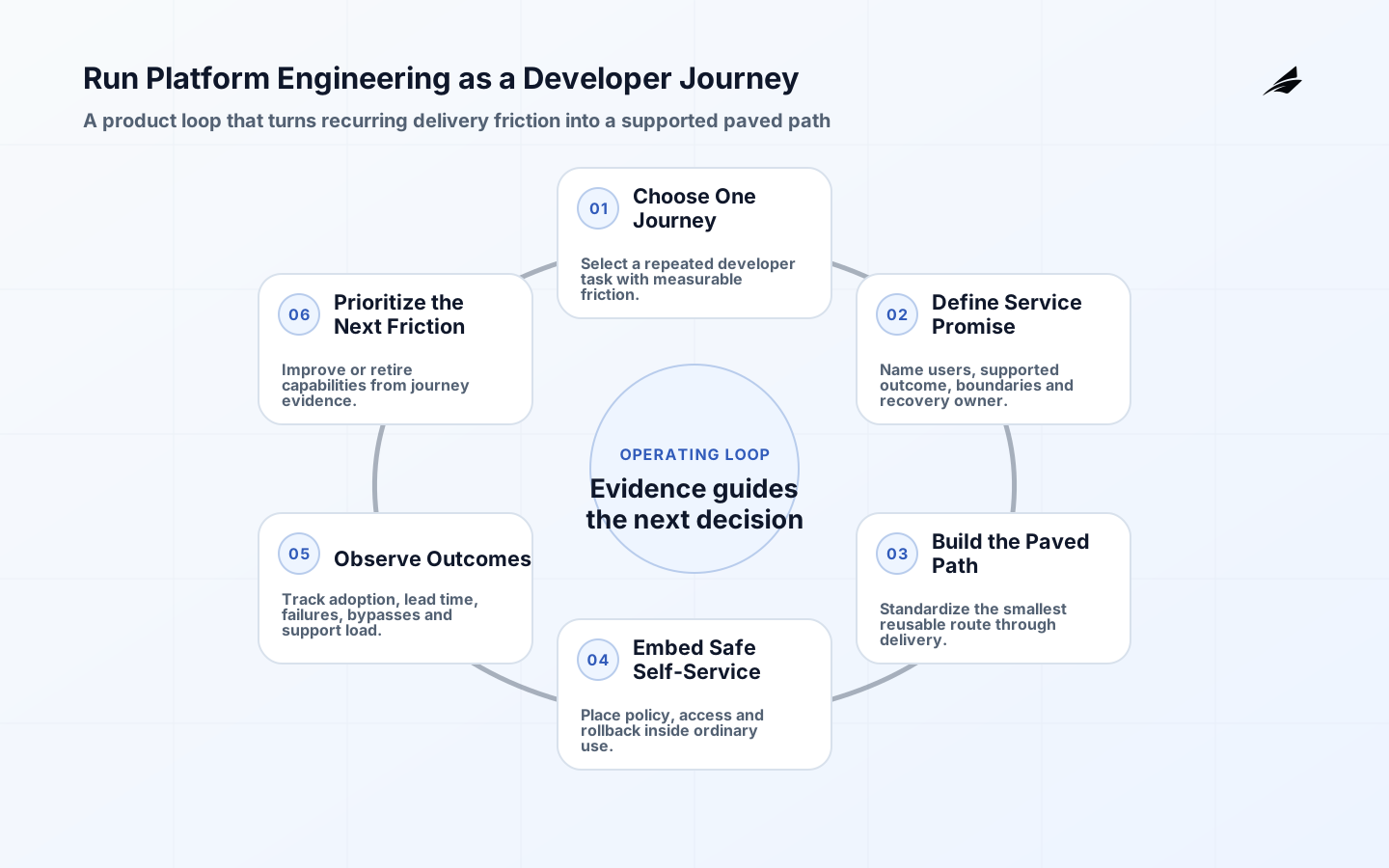
Platform engineering is the deliberate design of the tools, services, guardrails, and support model that help software teams deliver and operate applications. For an IT manager, the central question is not whether the platform team can provide another portal. It is whether a repeatable developer journey becomes faster, clearer, and less risky without hiding important decisions. A useful platform has a defined customer, a service boundary, a sustainable owner, and evidence that developers can complete valuable work with less accidental complexity. Treat the platform as an internal product with users, reliability expectations, security obligations, and a roadmap shaped by observed friction.
Define the platform outcome before selecting tools
Start with one journey such as creating a service, promoting a release, requesting an environment, or responding to an operational alert. Document the steps, handoffs, permissions, waiting time, and decisions that make the journey difficult today. The platform team can then remove a specific source of delay rather than collect disconnected capabilities. Define the outcome in terms a business and engineering leader can recognize: a team can create a service with approved defaults, deploy it with a known rollback path, and find the owner when the path fails. A broad promise such as developer experience is too vague to guide investment or expose an unacceptable trade-off.

Map the platform boundary and its customers
A platform is easier to govern when it states what it owns and what application teams, security, networking, or vendors still own. List the supported workload types, environments, deployment routes, identity providers, data stores, and external dependencies. Record the assumptions behind each supported path. If the platform provisions infrastructure but does not own application data, say so. If it offers a standard deployment route but permits an exception, explain who approves the exception and what evidence is required. This boundary prevents the platform team from becoming a general queue for every engineering problem and gives leaders a fair way to evaluate service quality.
| Decision area | Working rule | Evidence to retain |
|---|---|---|
| Customer | Name the developer journey and supported workload. | Journey map and owner. |
| Self-service | Automate repeatable work with safe defaults. | Successful and denied requests. |
| Exception | Permit a documented alternative with an expiry. | Approver, reason, and review date. |
| Recovery | Keep rollback and human escalation usable. | Runbook and exercise result. |
Build golden paths that remain optional but supported
A golden path is a maintained route through a common task, not a mandatory architecture for every team. It should include a service contract, repository or project setup, build and deployment configuration, identity choices, telemetry, security checks, and a clear support handoff. Make the default easy to understand and inspect. Developers need to know what the path creates, which settings they may change, and which settings are protected. An escape hatch is healthy when it has a named owner and a review point. An undocumented escape hatch is simply a second platform that grows outside the operating model.
Design controls into the developer workflow
Controls work best when they appear where a decision is made. Use identity-based access, least privilege, protected production actions, and policy checks that return an actionable explanation. A failed request should tell the developer which requirement is missing, whether a supported fix exists, and who can review an exceptional case. Separate permission to create a resource from permission to approve a production change. Keep platform configuration versioned and connect a release to the exact policies and dependencies it used. This creates a durable trail without forcing every developer to understand the platform internals.
| Risk | Control | Operational check |
|---|---|---|
| Hidden dependency | Publish service contracts and ownership. | Trace a request across handoffs. |
| Excess privilege | Use narrow roles and time-limited elevation. | Review access events and expiry. |
| Unsafe change | Use staged rollout and reversible defaults. | Verify rollback in a real path. |
| Unclear failure | Return status, context, and escalation route. | Ask a new operator to recover it. |
Measure adoption as an outcome, not a count
Enrollment alone does not prove that a platform is useful. Pair usage data with the result of the journey: time to create a service, time to restore a failed deployment, percentage of releases using a supported rollback, or the number of manual handoffs removed. Interpret each measure with its cohort and context. A drop in self-service requests may indicate a better path, a broken portal, or teams moving to an untracked alternative. Ask developers where they leave the path, what they work around, and which explanation they need during an incident. The qualitative evidence often points to the next improvement faster than a dashboard of aggregate activity.
Operate the platform as a service
Give the platform a service owner, support hours, incident route, change policy, and a published status view. The team should know which failures it handles directly and which belong with a cloud provider, network group, or application owner. Define what happens when the platform control plane is unavailable: can existing workloads continue, can teams deploy through a limited route, and how are queued requests reconciled? Practice the answer with the people who will be on call. The exercise should include stale configuration, a denied request that should succeed, and a production change that needs to stop.
Scale in increments and preserve an exit path
Choose a representative team and one workflow for the first release. Include application, security, operations, and platform participants in the review. Expand only when the path is understandable, the support burden is known, and the evidence shows a meaningful improvement. Budget for documentation, training, upgrade work, telemetry, and exception handling as part of the platform rather than as an afterthought. Reassess managed services and simpler application-level options as the organization changes. A platform capability that no longer solves a meaningful problem should be reduced or retired deliberately, with migration guidance for its remaining users.
Review platform service quality with its users
Hold a short review around a real developer journey rather than around a catalog of platform features. Ask where the team waited, which decision was hard to interpret, what access was requested, and whether the final output could be supported by someone outside the original implementation group. Compare the intended journey with the path a developer actually took. A manual workaround is important evidence even when the platform completed successfully, because it shows where trust or usability is incomplete. Invite an application owner and an on-call engineer to the review so the result includes both delivery and recovery experience.
Record one decision after each review: improve the default, document a supported variation, remove an obsolete step, or stop expanding the capability. Give that decision an owner and a date for checking the result. Keep platform changes small enough that teams can identify which change affected the journey. This discipline helps an IT manager distinguish a platform that is genuinely reducing cognitive load from one that is merely moving complexity into a central team. It also gives leadership a concrete basis for funding, staffing, or retiring a path.
- Choose one repeatable developer journey.
- Name platform and application ownership separately.
- Make default controls visible and reversible.
- Test degraded operation with the support team.
- Expand only after evidence and a cost review.
Key takeaways for IT managers
- Treat the internal developer platform as a product with a defined customer.
- A golden path needs ownership, guardrails, documentation, and a supported escape route.
- Measure completed developer outcomes and recovery quality, not enrollment alone.
- Put access, change, and exception decisions in the workflow where they can be understood.
- Retain an exit path so the platform remains proportionate to the problem it solves.
Frequently asked questions
What should an IT manager own?
Own the service boundary, funding, decision rights, risk posture, and outcome review. Technical platform leaders can choose implementation details, but the manager should make sure the supported journey has a customer, an accountable owner, and a sustainable operating model.
Are golden paths mandatory?
They should be the easiest supported route for common work, but not an excuse to conceal legitimate differences. Require an explanation and owner for exceptions, then use repeated exceptions as evidence that the default needs improvement.
Which first measure is most useful?
Start with one journey and measure completion time, failure rate, manual handoffs, and recovery quality. Combine the numbers with interviews so the team can distinguish genuine improvement from reduced usage or missing instrumentation.
Further reading and adjacent practice
For foundational context, compare the Kubernetes documentation, Google SRE Book, AWS Well-Architected Framework, and OpenTelemetry documentation. Container boundaries are discussed in the related guide on how founders should think about container security.
For adjacent decisions, continue with Edilec's How Founders Should Think About Container Security and Kubernetes Deployments: A Practical Guide to Safe Rollouts.
Conclusion: make the platform an accountable product
Platform engineering earns trust when it turns a real developer journey into a supported service with clear defaults, visible controls, useful signals, and practiced recovery. Give the platform a narrow starting boundary, listen to the teams using it, and let evidence determine what expands. The strongest result is not a larger platform catalog. It is a calmer delivery path that teams understand, can operate, and can leave safely when their needs differ.