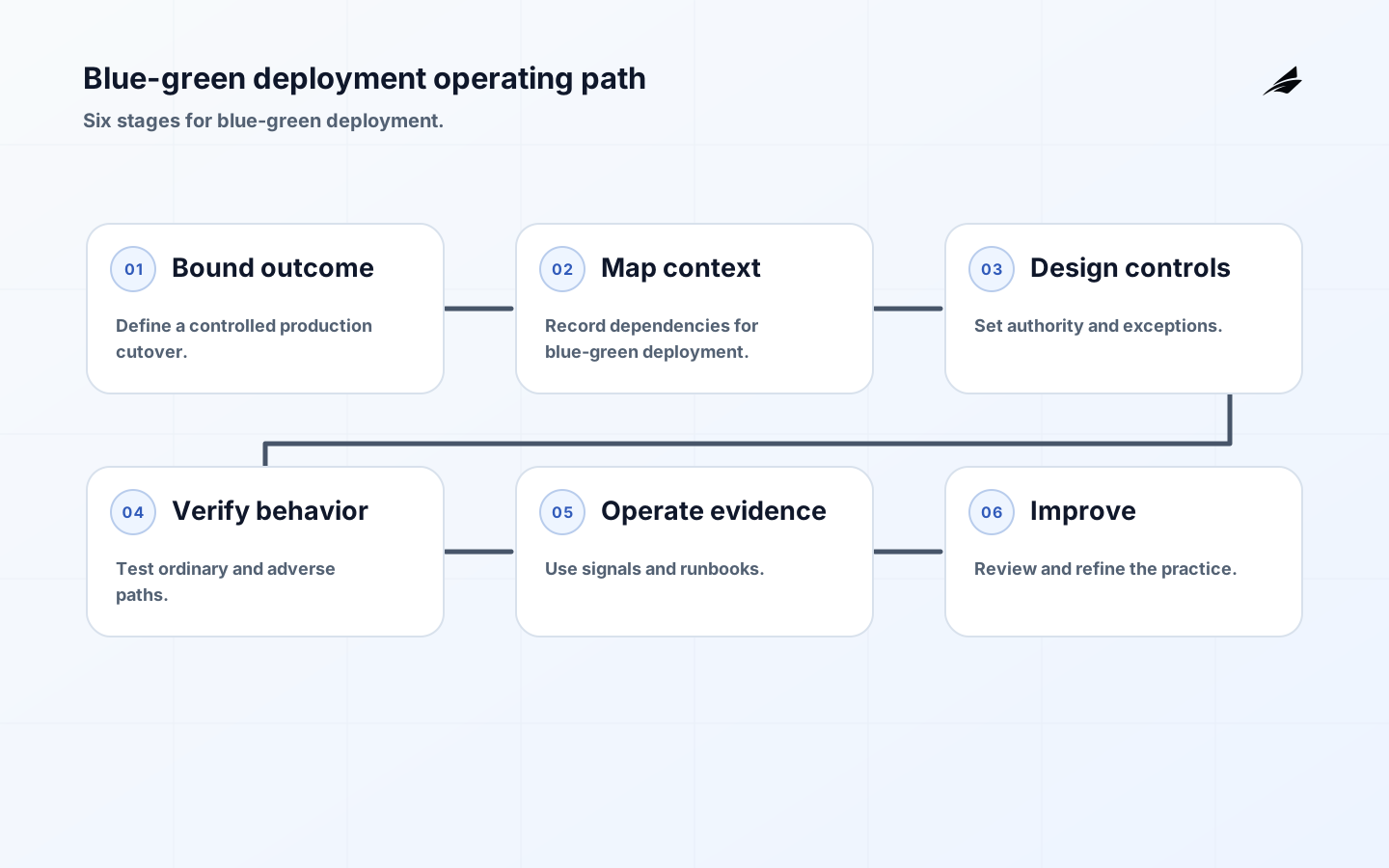
Blue-green deployment gives an operations team two production-capable environments and a controlled way to move traffic between them. Its value comes from reducing the size of the change users experience at one time, while preserving a credible place to send traffic if the new environment is unhealthy. The model is not automatically safe. Data compatibility, background work, configuration drift, cache state, identity, and external side effects can make the old environment less ready than it appears. Operations leaders should define parity, cutover authority, verification, and retirement before the release begins.
Define the cutover boundary
State which traffic moves, which services are included, and what remains shared. A web tier may switch cleanly while workers, schedulers, databases, and third-party callbacks continue across both environments. Name the customer journey that must remain usable and the actions that must not be duplicated. Clarify whether the old environment is a rollback target, a diagnostic comparison, or only a temporary drain point. This boundary gives the change lead a meaningful success condition: a controlled production cutover with known side effects, not merely a routing update that returns healthy probes.
Prove environment parity
Compare the environments on the parts that affect behavior: artifact and configuration versions, runtime settings, network routes, certificates, identity permissions, feature state, dependency endpoints, capacity, and observability. Keep intentional differences visible rather than allowing them to hide in deployment scripts. Test representative requests and failure paths against the green environment before directing live traffic. Parity does not mean identical hardware or identical scale. It means the differences are understood, owned, and acceptable for the workload being moved.

Protect shared state and side effects
The hardest blue-green problems usually live outside the web process. Use additive database changes and compatible event contracts so both environments can operate during the transition. Decide which environment owns scheduled jobs, queue consumption, email, billing, and other external effects. If both sides can process the same message, use idempotency and explicit ownership. Prepare cache warming and connection behavior before cutover, and make the drain period long enough for in-flight work to settle. A routing switch cannot undo a duplicate charge or an event written in an incompatible shape.
| Decision | Working rule | Evidence |
|---|---|---|
| Purpose | Define a controlled production cutover. | Owner and scope. |
| Dependencies | Expose shared state, jobs, and external effects. | Versioned change record. |
| Authority | Name the person who can stop traffic movement. | Decision log. |
| Recovery | Keep a verified traffic destination available. | Runbook and exercise. |
Plan the traffic cutover
Choose the routing control and know its propagation behavior. Lower the exposure by moving a narrow, representative slice first when the platform permits it, or use a deliberate full switch when partial traffic would create inconsistent state. Freeze unrelated changes during the window. The cutover lead should have a checklist for preconditions, the person authorized to proceed, the signals that pause the move, and the point at which rollback becomes harder because state has diverged. Keep customer support informed about the expected window and the symptoms that should be escalated.
- Record artifact, configuration, identity, and dependency versions for both sides.
- Choose one owner for traffic movement and one for incident coordination.
- Make job, queue, cache, and external-effect ownership explicit.
- Define pause and return conditions before exposing production traffic.
- Keep verification steps available to operators during the window.
Verify after traffic moves
Watch the new environment at the level users experience it. Check successful transactions, latency by route, error classes, queue behavior, dependency health, authentication, and important side effects. Use a safe synthetic transaction, then compare real cohorts with the pre-cutover baseline. Health checks should include readiness for the actual dependency chain; a process can answer a probe while the customer cannot complete an order. Continue to watch the old environment during drain because it may reveal in-flight work or unexpected callbacks that still need handling.
Watch capacity during the transition
The green environment may receive a different load profile after cutover, even when total traffic is unchanged. Monitor connection pools, autoscaling delay, cache hit behavior, queue consumers, rate limits, and dependency quotas. Check that the old side can still receive traffic if the return decision is made. A capacity problem that appears only after the switch should trigger a pause or a controlled scale action, not an assumption that parity was proven by a quiet pre-cutover test. Record the observed headroom so the next release begins with a more realistic capacity boundary.
Coordinate support and dependencies
Operations should name contacts for the identity provider, database, queue, network, and external partners that influence the switch. Give support a short description of the customer-visible change and a route for reporting unusual behavior. If the cutover exposes a dependency problem, the team can then distinguish a green defect from an upstream constraint. Keep a single timeline for routing changes, verification results, and decisions. That record is especially valuable when the switch crosses time zones or when a return to blue and a forward repair are both plausible options.
Rehearse the full operating path
A cutover exercise should begin before traffic moves and end after the old environment is drained. Ask operators to compare the two environments, validate a representative journey, switch a narrow route, inspect side effects, and decide whether to continue or return. Include a deliberate failure in a dependency or health signal so the team must use its pause rule. Check that access, dashboards, runbooks, and communication contacts work for the people on call. Record the time taken to make each decision and the evidence that was missing. A rehearsal that exposes confusion before production is a useful capacity check for the operating model.
Make return traffic credible
A return to blue is only safe when blue still has compatible code, state access, capacity, credentials, and current operational knowledge. Keep it available for the agreed period, but do not assume that idle means ready. Rehearse the return path, including routing propagation, worker ownership, cache behavior, and reconciliation of writes made by green. If the failure is caused by shared state or an external dependency, moving traffic back may not solve it. In that case, contain the affected action and use the forward repair plan.
Set the return criteria in advance. A rising error rate, failed journey check, exhausted dependency quota, or unsafe state mismatch may justify immediate return, while a small latency change may call for a pause and investigation. The decision record should state what was observed, what traffic was moved, and which customer effects still need checking.
Keep the routing control separate from the application release where practical. This gives the incident lead an independent action when the new process cannot accept a configuration change. Verify permissions for that action before the window, and test propagation from the operator's real console or command path rather than relying on a diagram.
During drain, watch active connections and work that began before the switch. Give long-running requests a defined completion or cancellation policy, and confirm that retries do not send the same action to both environments. These details make the return path and the final retirement decision much easier to trust.
Drain and retire deliberately
Once green is stable, drain blue according to the workload rather than deleting it immediately. Confirm that connections close, queues settle, scheduled jobs have one owner, and no external callback still points at the retired side. Remove temporary access and capacity after the decision is recorded. Keep the release context and verification result so the next rotation begins with a known baseline. The canary releases guide can help when the team wants to gather evidence from a smaller cohort before a full environment switch.
Review the blue-green switch as a state transition
Blue-green deployment reduces release risk only when both environments, shared state, traffic control, and cleanup responsibilities are explicit. Use this review before directing customer traffic to the new environment.
| Switch decision | Evidence to inspect | Acceptance rule |
|---|---|---|
| Environment parity | Artifact, configuration, dependencies, certificates, capacity, and observability. | Resolve material differences or document why they are safe. |
| Traffic switch | Routing rule, connection behavior, session handling, health signal, and accountable operator. | Move a bounded share first when the switch can affect active work. |
| Shared state | Schema compatibility, queued jobs, caches, file writes, and external side effects. | Keep both versions safe against the state they may encounter during transition. |
| Rollback and cleanup | Return route, verification journey, retained environment, expiry time, and cleanup owner. | Preserve reversal until the new environment and business state are proven. |
Key takeaways
- Define what moves, what stays shared, and what must not duplicate.
- Prove behavioral parity across code, state, identity, and dependencies.
- Assign one authority for traffic and one for incident coordination.
- Verify real customer journeys after the switch.
- Retire the old environment only after drain and state checks.
Frequently asked questions
How is blue-green different from a simple restart?
Blue-green keeps a separate production-capable environment available for verification and traffic control. A restart changes the running process without providing the same isolation or return option.
Can blue and green share a database?
They can when both versions use compatible schemas, writes are safe, and ownership of jobs and side effects is explicit. Shared state increases the need for careful migration design.
When should the old environment be removed?
Remove it after the agreed observation period, successful drain, state reconciliation, and confirmation that no callback or scheduled action still depends on it.
For implementation context, consult Kubernetes documentation and Google SRE Book; these references help teams verify platform behavior and operating controls against maintained primary guidance. For adjacent decisions, continue with Edilec's How Product Teams Should Think About Canary Releases and CI/CD Pipeline Best Practices for Reliable Cloud Delivery.
Conclusion
Blue-green deployment gives operations leaders a controlled transition only when both environments are genuinely understood. Define the boundary, prove parity, protect shared state, assign cutover authority, and verify the customer journey after traffic moves. The routing mechanism is useful, but the real capability is the team's ability to make a measured switch and return or repair the service with its state intact.