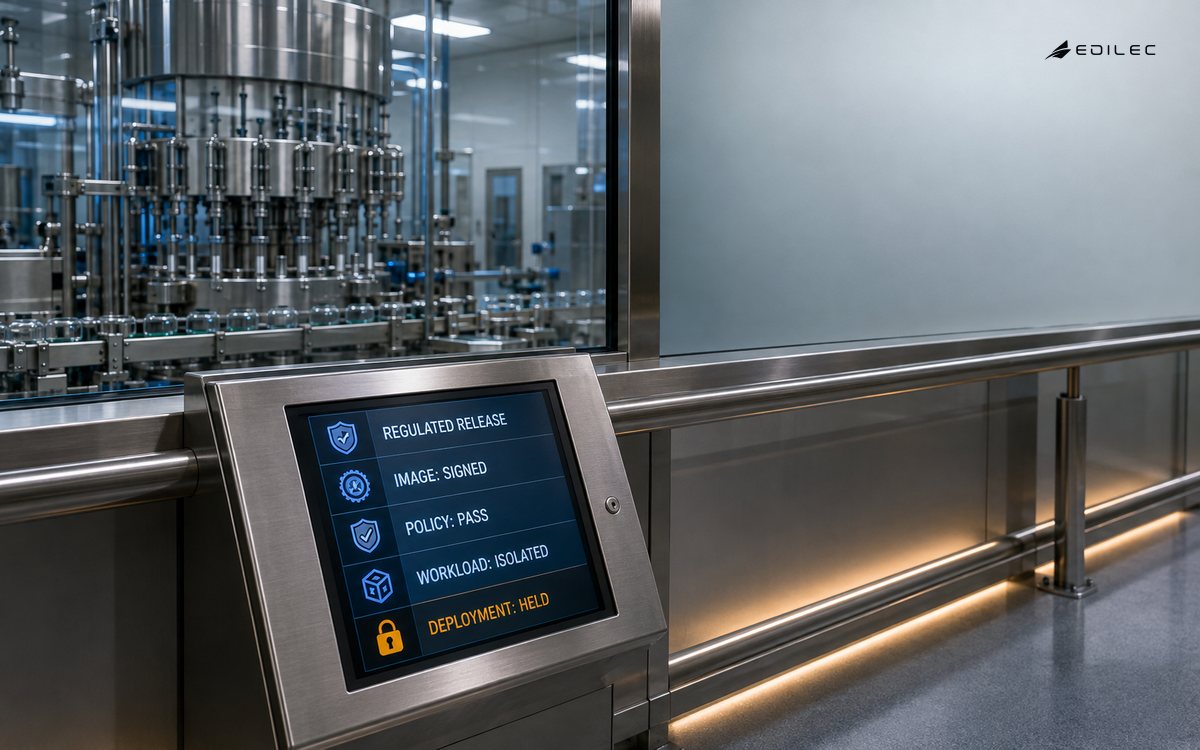
Kubernetes decision making is most useful when it gives a named team a safer, clearer way to make a recurring production decision. A regulated service needs more than a place to run containers. It needs attributable access, retained change evidence, predictable upgrades, and recovery work that the accountable organization can actually perform. This checklist starts from the service and its failure consequences, then turns that context into a bounded design, an operating test, and evidence for the next decision.
Key takeaways
- Start Kubernetes decision making with a specific customer or business outcome and an accountable owner.
- Define the operational boundary before selecting tools, environments, or automation.
- Treat access, change history, and recovery evidence as part of the design, not audit paperwork added later.
- Run a realistic pilot with the people who will operate the service under pressure.
- Use results to improve a supported path instead of standardizing untested local practice.
What Kubernetes decision making needs to solve
Kubernetes can standardize workload controls, but it also introduces a control plane, admission policy, cluster access, and version lifecycle that must be governed. Choosing it because another team uses it can move rather than remove risk.
| Decision area | Checklist question | Evidence that makes it real |
|---|---|---|
| Business outcome | Which customer action or control depends on Kubernetes decision making? | A named service owner agrees on what healthy and harmful look like. |
| Operating boundary | What is included in the first Kubernetes decision making implementation, and what is deliberately excluded? | Dependencies, data, identities, and exceptions are recorded. |
| Decision authority | Who can approve, pause, contain, and validate a material change? | Roles and escalation routes are usable outside normal office hours. |
| Recovery proof | How will the team know the business outcome is restored? | A rehearsal reaches customer or record validation, not only a green technical check. |
Set the first operating boundary
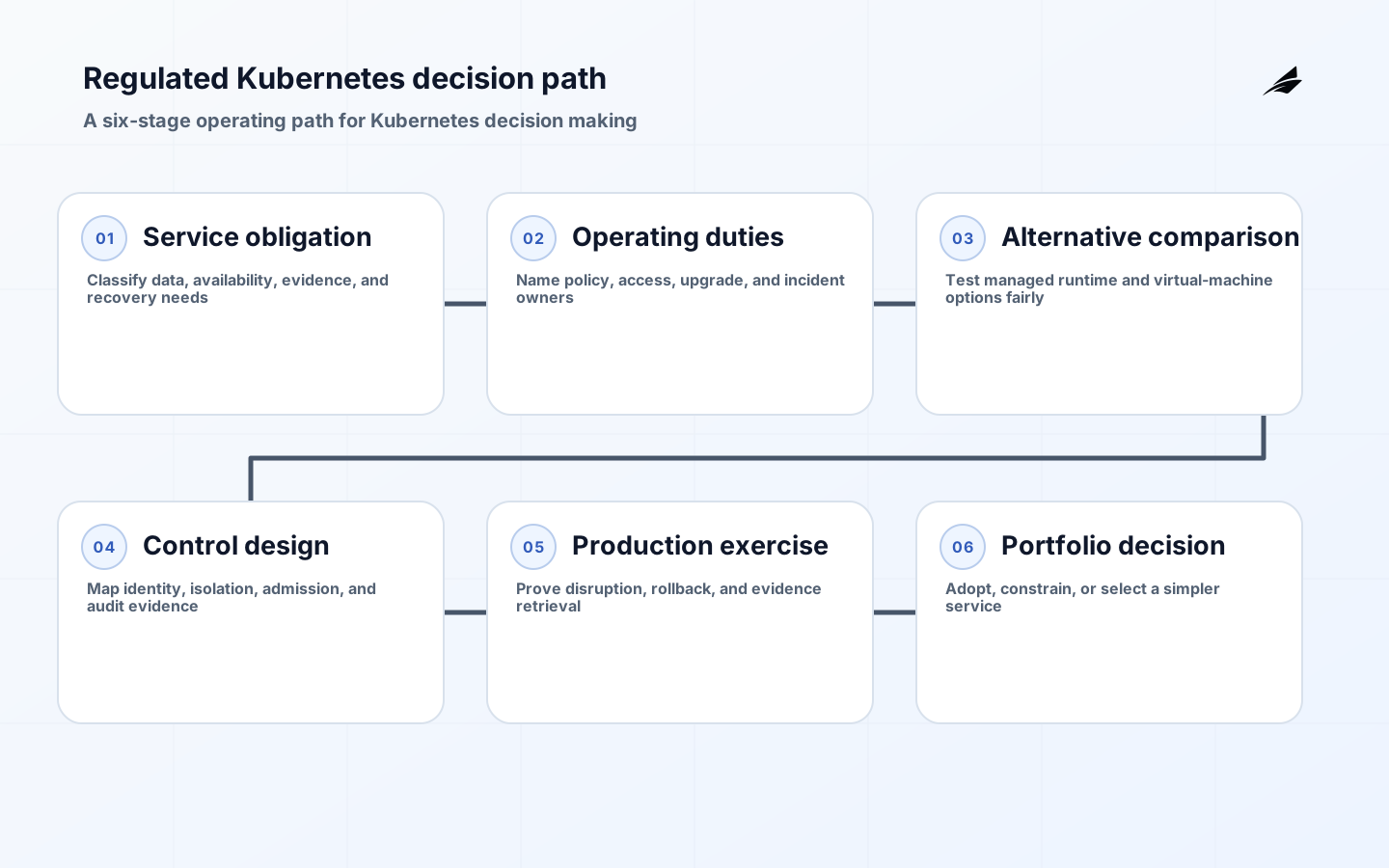
Do not begin Kubernetes decision making as an organization-wide replacement program. Assess one representative service, including its data classification, integrations, availability target, operator skills, and audit obligations. Compare a managed container runtime or a virtual-machine deployment against the same acceptance criteria. Write down the assumptions that would invalidate the choice, including volume, availability, data handling, dependency behavior, and skills. This keeps the first implementation reviewable and prevents a useful control from becoming an open-ended platform promise.
Make the boundary usable by writing a short decision record. It should say why this scope was selected, which alternatives were considered, what evidence is still missing, and the date or event that will trigger reconsideration. For Kubernetes decision making, a decision record is most valuable when it exposes a trade-off before it becomes an incident: a service may accept slower change in return for stronger evidence, or accept a narrower pilot in return for a faster learning cycle. The record should also identify the owner who can accept that trade-off; technical feasibility alone does not settle a customer or control consequence.
Design the Kubernetes decision making operating path
Write an operating model before selecting cluster features. It should cover tenant separation, workload identity, secrets, network boundaries, image admission, audit retention, patch ownership, and how an application owner requests an exception. A managed control plane changes responsibilities; it does not erase them.
| Design element | Practical decision | Failure to prevent |
|---|---|---|
| Ownership | Name the service, platform, product, and control owners that have a decision to make. | A material issue waits while teams debate responsibility. |
| Change evidence | Keep the intent, reviewed revision, validation result, and exception decision together. | A responder cannot explain what changed or restore a known state. |
| Health evidence | Use customer and service signals with a stated observation window. | A technical success masks a damaged workflow. |
| Recovery boundary | State what can be reversed, what must be reconciled, and who confirms completion. | Traffic recovers while records, access, or downstream work remain wrong. |
Put Kubernetes decision making controls in the normal workflow
Use least-privilege roles, workload identities, namespaces or stronger isolation where justified, and policies that are tested before enforcement. Record which controls apply at the provider, cluster, and application layers so an assessor can trace a requirement to evidence.
Design an exception path alongside the ordinary Kubernetes decision making workflow. An exception request should identify the operational reason, the temporary control, the approving authority, the expiry date, and the work needed to return to the supported path. This is more useful than an informal emergency channel because it preserves speed while making accumulated risk visible. When the same exception recurs, ask whether the standard is too narrow, the service has an unaddressed dependency, or the team needs a distinct operating model. Do not normalize a workaround merely because it is familiar.
- Give routine work a documented self-service path and make exceptions visible to the owner of Kubernetes decision making.
- Use scoped identity and short-lived access wherever the underlying platform supports it.
- Record meaningful approvals, overrides, and production changes with enough context for a later review.
- Keep a current runbook that names the signal, first action, escalation route, and business validation step.
- Review recurring friction as a design problem before adding another manual gate.
Build an assurance case around the service and platform boundary
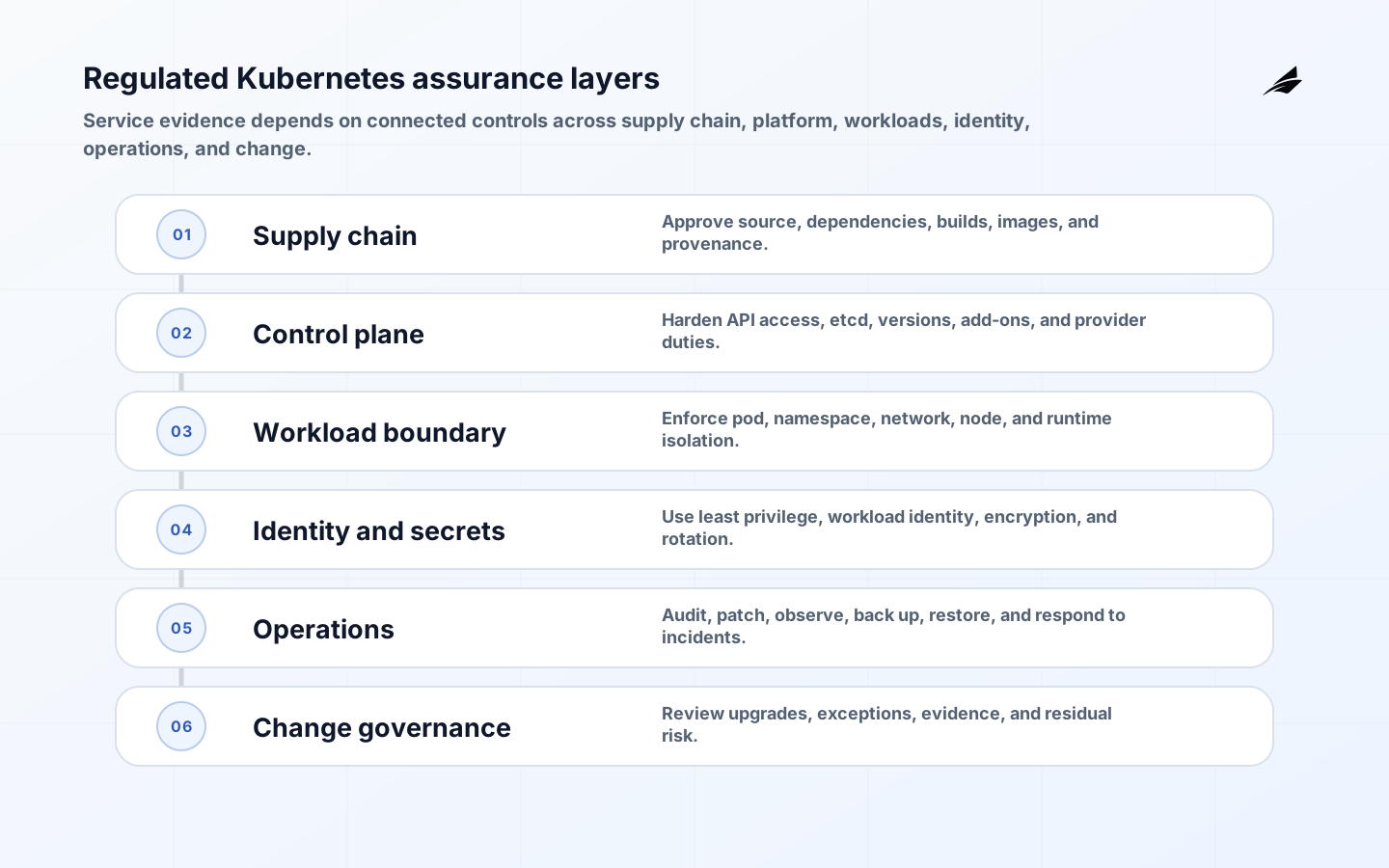
A regulated Kubernetes design should connect obligations to observable controls instead of declaring the cluster “compliant.” NIST SP 800-190 separates container risks across images, registries, orchestrators, containers, and host operating systems. Map those layers to the service’s threat model, data classification, recovery requirements, and supplier responsibilities. For a managed control plane, document which security, availability, logging, backup, vulnerability, and incident duties belong to the provider and which remain with the customer.
Use the Kubernetes project’s security checklist as a baseline, then tailor and test it. Enforce appropriate Pod Security Standards, namespace and network boundaries, least-privilege RBAC, service-account restrictions, secret encryption and access, admission policies, signed or otherwise verified images, resource limits, and audit logging. Kubernetes audit records can answer who did what, when, and to which API resource, but only when policy, retention, clock synchronization, access, and alerting are designed before an incident.
| Assurance layer | Control decision | Evidence for review |
|---|---|---|
| Software supply chain | Approved sources, reproducible build, scan, signature or provenance check | Artifact identity and policy result at admission |
| Control plane | Supported version, hardened access, protected etcd, managed responsibility | Configuration baseline and provider evidence |
| Workload boundary | Restricted pod posture, namespace, network, node, and runtime isolation | Admission tests and attempted-boundary results |
| Identity and secrets | Federated human access, workload identity, least privilege, rotation | RBAC review, access tests, secret-use records |
| Operations | Auditing, patching, backup, restore, incident response, capacity | Exercises, timelines, retained audit events |
| Change governance | Version skew policy, add-on lifecycle, exception expiry | Upgrade rehearsal and approved exception register |
Pilot Kubernetes decision making under realistic conditions
Run a production-like pilot with a service whose failure modes are understood. Test a denied deployment, an expired credential, a node disruption, a rollback, and retrieval of the audit record; do not count a successful demo as operational proof.
| Pilot question | How to exercise it | Decision enabled |
|---|---|---|
| Can the service be operated? | Have the nominated owners use the normal path without private administrator help. | Clarify ownership or reduce complexity before wider use. |
| Can a harmful change be contained? | Introduce a bounded failure or rejected condition and follow the stated response. | Improve stop conditions, access, or automation. |
| Can recovery be proven? | Restore the needed state and verify the actual customer or business workflow. | Accept the recovery objective or redesign the path. |
| Can the evidence be explained? | Ask a reviewer to reconstruct the decision from retained records and telemetry. | Fix gaps in traceability, monitoring, or documentation. |
Measure whether Kubernetes decision making supports better decisions
Review unresolved policy exceptions, patch and version currency, privileged-access use, failed admissions, recovery exercise results, and the time required to assemble an evidence package. Each metric should direct a control owner to a decision.
Set a review cadence that matches the rate and consequence of change. During an initial rollout, review evidence after meaningful releases, exercises, or exceptions while details are still available. Once the path is stable, use a regular service review to inspect trends, decisions that were deferred, and controls that no longer match the work. Keep the review small and action-oriented: each material signal should end with an owner, a due date where appropriate, or a recorded decision to accept the current risk. This turns Kubernetes decision making into an operating practice rather than a checklist completed once and forgotten.
Frequently asked questions about Kubernetes decision making
Does a managed Kubernetes service remove compliance duties?
No. The provider may operate selected infrastructure components, but the customer still owns application configuration, identities, workloads, data treatment, and the evidence required for its own obligations.
When is a simpler container runtime the better choice?
Use a simpler runtime when the workload does not need Kubernetes capabilities and the team cannot assign durable ownership for cluster policy, upgrades, access, and incident response.
Keep Kubernetes decision making current after the first rollout
The first accepted implementation is a baseline, not a permanent answer. Revisit Kubernetes decision making when the service gains a new customer journey, regulated data class, region, integration, runtime, or dependency that changes the original assumptions. The review should begin with the evidence already collected: what operators had to do manually, which alerts did not lead to action, which approvals delayed an urgent decision, and whether recovery produced the intended business outcome. Update the owned service record, runbook, templates, and training materials together so that the documented path remains the path people can use. Where a change creates a new risk, repeat a focused exercise rather than relying on an old successful test. Confirm that replacement owners can perform the required actions and find the same evidence without oral handover. This maintenance work is deliberately modest: it preserves the value of Kubernetes decision making by making operational knowledge durable as teams, systems, and responsibilities change.
Conclusion
Sound Kubernetes decision making starts with an accountable operating model and a fair alternative comparison. Adopt the platform only when its standardization benefits outweigh the continuing control and maintenance work.