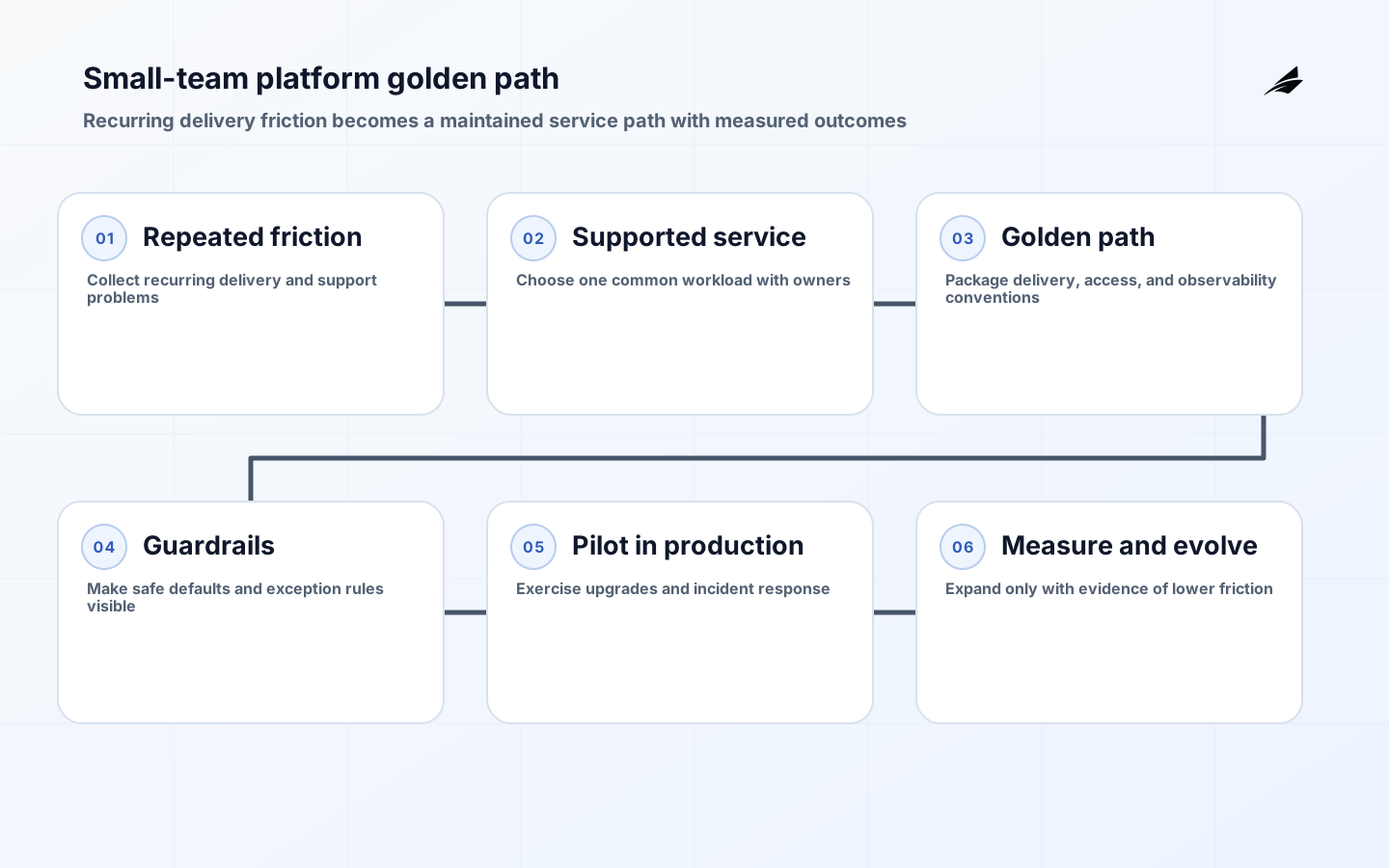
Platform engineering for small teams is a planning and operating capability, not a tool purchase. Remove recurring delivery friction with a narrow maintained golden path rather than a separate product empire. The useful first step is to connect a real client or customer outcome to an owner, a technical boundary, and evidence that the team can use when normal delivery is interrupted.
Key takeaways
- Start platform engineering for small teams from the business or customer outcome that can be harmed, then select controls proportionate to that consequence.
- Name the service owner, operating authority, and fallback decision before automation obscures the handoffs.
- Pilot a narrow real path, including controlled failure and recovery, before standardizing it for every team.
- Measure the evidence that changes the next decision rather than collecting activity metrics for their own sake.
What platform engineering for small teams needs to solve
A small team can waste more time maintaining abstractions than it saves, yet independent identity, delivery, and telemetry choices compound risk. Standardize observed recurring work.
| Decision area | What to decide | Why it matters |
|---|---|---|
| Outcome and owner | Identify the critical journey, accountable service owner, and consequence of failure for platform engineering for small teams. | Technical choices need a customer and operational context. |
| Scope boundary | Interview service teams, choose one common workload, define the supported delivery and observability path, and state the exception process before building a catalog. | A bounded first release can be tested and supported. |
| Evidence | Choose the health, change, access, and recovery record required for platform engineering for small teams. | Teams should not reconstruct important facts during an incident. |
| Authority | Set who can approve, pause, contain, and verify a material change. | Fast action depends on clear decision rights. |
Set a practical scope and architecture
Interview service teams, choose one common workload, define the supported delivery and observability path, and state the exception process before building a catalog. Build the first version around one meaningful service path and document its dependencies, access model, data handling, and expected failure behavior. A concise service brief should describe what healthy looks like to a customer, where the important state lives, and which assumption would require the design to change. This keeps architecture choices anchored to a supportable result rather than a broad platform promise.
| Planning artifact | Minimum content | Evidence of readiness |
|---|---|---|
| Service brief | Customer outcome, owner, critical journey, and consequence of interruption | Product and service owners agree what healthy means. |
| Dependency map | Data, identity, integrations, limits, and likely failure paths | The team can describe expected behavior when a critical dependency is slow or absent. |
| Operating contract | Routine changes, access, alerts, escalation, and recovery authority | A responder can act without first discovering ownership. |
| Change record | Intent, risk, validation, stop conditions, and recovery option | Review distinguishes a known trade-off from an unknown risk. |
Design the operating path for platform engineering for small teams
Platform engineering for small teams earns its keep by removing a repeated, consequential delay, not by reproducing a large enterprise platform. Consider a four-person product team that spends a day per release arranging secrets, deployment configuration, logs, and access. A maintained starter service that creates those defaults and publishes one support route is a useful first platform product. Do not begin with a catalog, portal, or broad abstraction unless the team can name the recurring task, its current cost, the supported workflow, and the person who will maintain it after the pilot.

Fund a small-team platform path with evidence
| Decision | Acceptance check | Operating risk |
|---|---|---|
| Problem selection | At least two teams report the same delivery or support friction with examples. | A platform solves one vocal team's preference rather than a shared constraint. |
| Golden path | A new service reaches deployment, logging, access, and an owner through documented defaults. | A template creates a hidden second path that support cannot maintain. |
| Exception policy | Teams can request a deviation with a recorded reason, owner, and review date. | Rigid defaults drive unsupported workarounds or stalled delivery. |
| Maintenance | An owner budgets upgrade, incident, and documentation time before wider adoption. | The platform becomes abandoned shared infrastructure with unclear failure responsibility. |
Put controls where the work happens
Publish the platform contract, version templates, and preserve reviewable configuration. Do not hide reliability, security, or cost consequences from service owners.
- Give every material alert, approval, exception, or recovery decision a named owner and escalation route.
- Keep changes to access, configuration, and production state reviewable and traceable.
- Document pause and fallback conditions in the normal workflow, not only in an incident binder.
- Exercise recovery and access paths with the people who will use them in production.
- Treat repeated exceptions as feedback on the supported operating contract.
Pilot the path before scaling it
Pilot with a volunteer service; measure setup, deployment, and incident diagnosis; exercise upgrade and failure paths; expand only once the first path is maintained.
| Pilot question | How to test it | Decision enabled |
|---|---|---|
| Can customers complete the critical path? | Use a representative workflow and service signal. | Proceed, redesign, or narrow scope based on outcome evidence. |
| Can the team operate it? | Have actual service and support owners perform routine work. | Clarify ownership, improve documentation, or reduce complexity. |
| Can the team recover it? | Introduce a controlled fault or failed change and follow the runbook. | Fix recovery gaps before wider exposure. |
| Can the team govern it? | Review access, audit history, cost or capacity, and exceptions. | Accept the operating model or add focused controls. |
Measure decisions, not activity
Metrics for platform engineering for small teams should reveal whether the intended service outcome is holding and whether the team can make a timely operating decision. Establish a baseline before the pilot and attach context to material changes. Do not use a single number as a verdict on people; use it to locate the next improvement while the evidence is fresh.
| Metric | What it reveals | Review use |
|---|---|---|
| Customer outcome | Completion, success, or timeliness for the critical journey | Compare against the agreed service objective. |
| Detection and response | Time to recognize, own, contain, and verify a material problem | Improve routes, authority, and runbooks. |
| Control adherence | Changes using the supported, evidenced path | Investigate exceptions and friction. |
| Recovery confidence | Recent exercises that reached business validation | Prioritize untested or unreliable services. |
Frequently asked questions about platform engineering for small teams
Do we need a platform team?
Not necessarily. A part-time named owner can maintain a shared path; what matters is ownership of developer experience and production consequences.
What is a golden path?
It is a supported route for a common task, such as deploying a web service with standard identity and telemetry, not a mandate to erase justified variation.
When should we stop?
Stop when a request serves one exception without shared value or when maintenance, documentation, and support cannot be sustained.
A practical checklist for platform engineering for small teams
- Confirm the service owner, support contact, and authority to pause or contain a material issue.
- Keep the decision record, current configuration, dependency map, and verification evidence discoverable to the people on call.
- Run a controlled exercise before wider rollout and record the actual time to detect, act, and verify recovery.
- Review exceptions and repeated manual steps; they identify where the operating contract needs improvement.
- Set a review date after significant product, dependency, staffing, or compliance change.
For a small platform, write a service blueprint that answers the ordinary developer questions without a meeting: where source lives, how a build runs, how a deployment is requested, where health is visible, who owns a production incident, and what an exception costs. Keep the blueprint readable by the service owner; a platform that requires specialists to interpret every action has not reduced cognitive load.
Keep the plan alive after launch
Schedule a lightweight product review for the platform path. Look at adoption, escape hatches, unresolved support requests, upgrade debt, and the work the platform owner is quietly performing for teams. Remove capabilities that do not solve a recurring problem. Small teams gain leverage by maintaining a few trusted defaults, not by accumulating integrations that require their own operating model.
Make platform engineering for small teams survive real handoffs
The enduring test for platform engineering for small teams is whether a capable person who was not present for the original design can make the next safe decision. Keep the supported service contract, exception handling, and maintenance ownership in a concise operating record that is linked from the normal delivery and support path. The record should distinguish facts from assumptions, name the current owner, and say what evidence is needed before an exception becomes a permanent change. During a staff change, vendor incident, or urgent customer request, this clarity is more valuable than a polished architecture diagram because it shows who may act and how success will be verified. Review the record after every meaningful release or incident. Remove instructions that are no longer true, add the context that responders had to discover, and turn recurring verbal advice into a visible control or supported workflow. This review habit prevents the service from quietly depending on a few people who remember why an old decision was made.
| Handoff item | Question to answer | Owner check |
|---|---|---|
| Current state | What version, configuration, and operating condition is in effect for platform engineering for small teams? | A named owner can locate the evidence quickly. |
| Decision boundary | Which action can proceed routinely, and which needs escalation? | Authority matches the service consequence. |
| Verification | What customer, technical, and operational signals confirm the action worked? | The result is recorded before work is declared complete. |
| Review trigger | Which change, incident, or date requires the plan to be revisited? | The operating record remains current. |
Conclusion
Platform engineering for small teams creates value when it becomes a dependable operating capability rather than another layer of tooling. Start with one accountable service path, make failure and recovery concrete, and use pilot evidence to decide what deserves standardization. That is a plan clients can fund, operate, and improve without relying on untested assumptions.