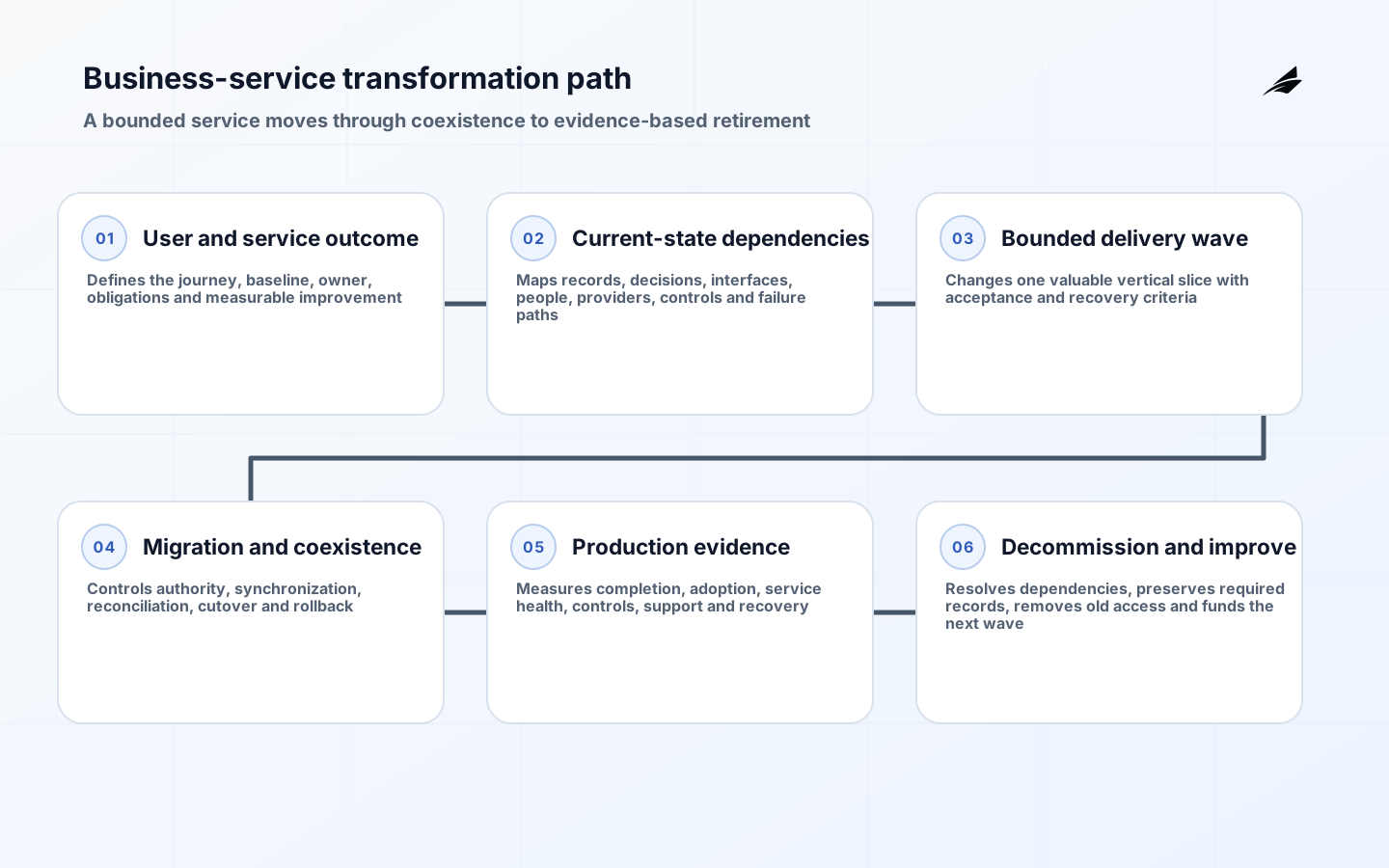
Enterprise system transformations are increasingly complex undertakings that demand careful consideration of scope, risk, and implementation strategy. Unlike traditional IT projects, these initiatives often involve cross-functional teams, legacy system integration, and evolving business requirements. The key challenge lies in establishing realistic boundaries that prevent scope creep while ensuring sufficient flexibility to address emerging needs. This article provides a practical framework for defining transformation scope without overpromising, identifying critical risks that could derail implementation, and establishing phased delivery approaches that align with organizational maturity rather than theoretical best practices.
Defining Scope Realistically Without Overpromising
The first step in any successful enterprise system transformation is establishing clear scope boundaries. Many organizations mistakenly define scope based on technological capabilities rather than business outcomes. For instance, a healthcare provider might include patient record systems in their transformation scope without considering the regulatory requirements for medical data. This approach risks significant delays and cost overruns. The Service Standard provides a useful starting point by emphasizing that digital services should deliver specific user outcomes rather than technical features. Organizations should conduct a thorough assessment of their current system capabilities and business needs to determine what can be realistically transformed within the initial phase.
- Identify core business processes that directly impact customer experience
- Exclude non-critical systems that do not contribute to primary revenue streams
- Establish clear acceptance criteria for each transformation phase
- Regularly review scope boundaries against evolving business needs
Practical Risk Assessment for Transformation Projects
Risk assessment in enterprise system transformations is often superficial, focusing on technical vulnerabilities rather than organizational and process risks. The Technology Modernization Fund Program Management Guide highlights that the most significant risks in transformation projects typically stem from poor stakeholder alignment and inadequate change management. Organizations should develop a risk register that includes both technical and human factors, such as resistance to new processes or insufficient training. The Cybersecurity Framework 2.0 provides critical guidance on identifying security risks that could compromise transformation efforts, particularly when integrating legacy systems with modern architectures.
| Risk Category | Example | Mitigation Strategy | Ownership |
|---|---|---|---|
| Technical Integration | Legacy system compatibility issues | Conduct phased integration testing | IT Operations Team |
| Process Change | Resistance to new workflows | Pilot testing with small teams | Change Management Office |
| Regulatory Compliance | Data privacy violations | Implement data classification protocols | Compliance Officer |
Phased Delivery Strategy for Sustainable Transformation
Rather than attempting to transform the entire enterprise system at once, organizations should adopt a phased delivery approach that builds momentum and reduces risk. The Digital Government Index shows that phased delivery can reduce the amount of simultaneous change and create evidence before broader commitment. Each phase should focus on a specific business capability or system component that delivers measurable value quickly. For example, a financial services company might first transform their customer onboarding process before addressing more complex areas like transaction processing. This approach allows organizations to validate their transformation strategy with real-world results before scaling up.

| Phase | Focus Area | Timeline | Expected Outcome |
|---|---|---|---|
| Phase 1 | Core customer interaction systems | 3-4 months | Improved customer satisfaction metrics |
| Phase 2 | Internal process automation | 4-6 months | Reduction in manual processing time |
| Phase 3 | Advanced analytics integration | 6-8 months | Enhanced decision-making capabilities |
Aligning Transformation Strategy with Organizational Maturity
The success of enterprise system transformations is heavily dependent on the organization's current maturity level. Organizations that are highly mature in their processes and culture can implement transformations more efficiently than those that are less mature. The Service Standard provides a useful framework for assessing organizational maturity through service delivery metrics. By understanding where they stand on this maturity spectrum, organizations can tailor their transformation approach to avoid common pitfalls. For example, a highly mature organization might focus on optimizing existing systems rather than rebuilding them entirely, while a less mature organization might need to establish foundational processes before implementing advanced features.
Scope creep remains one of the most common causes of failure in enterprise system transformations. Organizations often include additional features or systems in their scope that were not originally planned, leading to significant delays and cost overruns. The Technology Modernization Fund Program Management Guide emphasizes that scope creep should be managed through strict change control processes that require formal approval from stakeholders. Any new requirements must be evaluated against the project's original scope, timeline, and budget constraints before being incorporated.
Implementation Realities: What Works in Practice
The implementation phase of enterprise system transformations is where many projects face their greatest challenges. Technical debt, legacy system dependencies, and changing business requirements can all derail progress. Organizations should establish clear implementation milestones that are tied to specific business outcomes rather than technical deliverables. The Cybersecurity Framework 2.0 provides critical guidance on maintaining security throughout the implementation process, particularly when integrating new systems with existing infrastructure. This framework helps organizations identify potential security gaps before they become critical issues.
Practical Cost Estimation Without Theoretical Overpromising
Cost estimation for enterprise system transformations is often based on theoretical models that do not account for real-world constraints. Organizations should use a combination of historical data, current system capabilities, and business requirements to create realistic cost estimates. The Technology Modernization Fund Program Management Guide provides a methodology for estimating costs based on the complexity of the transformation and the organization's current maturity level. This approach helps avoid the common pitfall of overestimating costs by focusing on what can be achieved within the current constraints rather than what could be achieved in an ideal scenario.
Strategic Scope Definition for Enterprise System Transformation
Enterprise system transformation must explicitly define the strategic scope to avoid scope creep and ensure alignment with business objectives. This includes identifying critical business processes, data flows, and system dependencies that will be transformed, as well as determining the boundaries of the transformation effort. The strategic scope should be validated through stakeholder workshops to ensure that the transformation addresses the most impactful areas while excluding non-essential components. This definition is critical for resource allocation and change management success.
The strategic scope must be dynamically updated during the transformation to reflect evolving business needs and technological capabilities. For instance, if a new regulatory requirement emerges that impacts the transformed system, the scope should be adjusted to include necessary changes without derailing the overall project timeline. This adaptability ensures that the transformation remains relevant and effective in a rapidly changing business environment.
Require evidence before migration and decommission
Transformation risk concentrates where old and new services coexist. Define which record and workflow is authoritative during each wave, how changes are synchronized, how exceptions are reconciled, and who may pause the migration. Rehearse cutover with representative volume, permissions, integrations, support staff, and recovery access. Acceptance should include business completion, data reconciliation, security and control evidence, service performance, incident readiness, and a current rollback or forward-recovery decision.
Do not decommission a legacy path because the replacement has launched. Confirm that required history is accessible, dependent reports and partners have moved, retention and disposal decisions are approved, open transactions are resolved, support demand is stable, and recovery has been exercised. Remove credentials, interfaces, jobs, licenses, and infrastructure through controlled change, then update service maps and ownership records. This final work is part of transformation value: leaving duplicate authority and shadow integrations in place preserves cost and risk.
Key takeaways
- Define scope based on business outcomes rather than technical capabilities
- Conduct a thorough risk assessment that includes both technical and human factors
- Implement phased delivery to build momentum and reduce risk
- Align transformation strategy with organizational maturity level
- Establish clear change control processes to prevent scope creep
Frequently asked questions
How do I determine the right scope for my transformation project?
Start by identifying core business processes that directly impact customer experience or revenue generation. Exclude non-critical systems that do not contribute to primary revenue streams. Focus on systems that have the highest potential for immediate improvement in service delivery or operational efficiency. The Service Standard provides a useful framework for defining scope based on user outcomes rather than technical features.
What are the most common risks in enterprise system transformations?
The most common risks include scope creep, poor stakeholder alignment, inadequate change management, and security vulnerabilities. The Technology Modernization Fund Program Management Guide identifies that technical integration issues are often the most significant risk when transforming legacy systems. Organizations should develop a risk register that includes both technical and human factors, and implement mitigation strategies before the transformation begins.
How can I ensure my transformation strategy aligns with organizational maturity?
Assess your organization's maturity using metrics like service delivery quality, process efficiency, and stakeholder engagement. The Service Standard provides a framework for evaluating maturity through service delivery metrics. Organizations that are highly mature can focus on optimizing existing systems, while less mature organizations should prioritize establishing foundational processes before implementing advanced features.
What are the practical steps for implementing phased delivery?
Start by identifying a single business capability that can be transformed quickly and delivers measurable value. Implement this capability in a controlled environment, then evaluate the results before scaling up. The Digital Government Index shows that organizations that implement in phases achieve higher success rates than those that attempt full-scale transformation. Each phase should have clear acceptance criteria and be tied to specific business outcomes.
Conclusion
Enterprise system transformations are complex but achievable when approached with realistic scope, thorough risk assessment, and phased implementation strategies. By focusing on business outcomes rather than technical capabilities, organizations can avoid common pitfalls and achieve sustainable transformation. The key is to maintain a pragmatic approach that aligns with organizational maturity and business realities rather than theoretical best practices. This article provides a practical framework for implementing enterprise system transformations that deliver real value without overpromising or underestimating complexity.