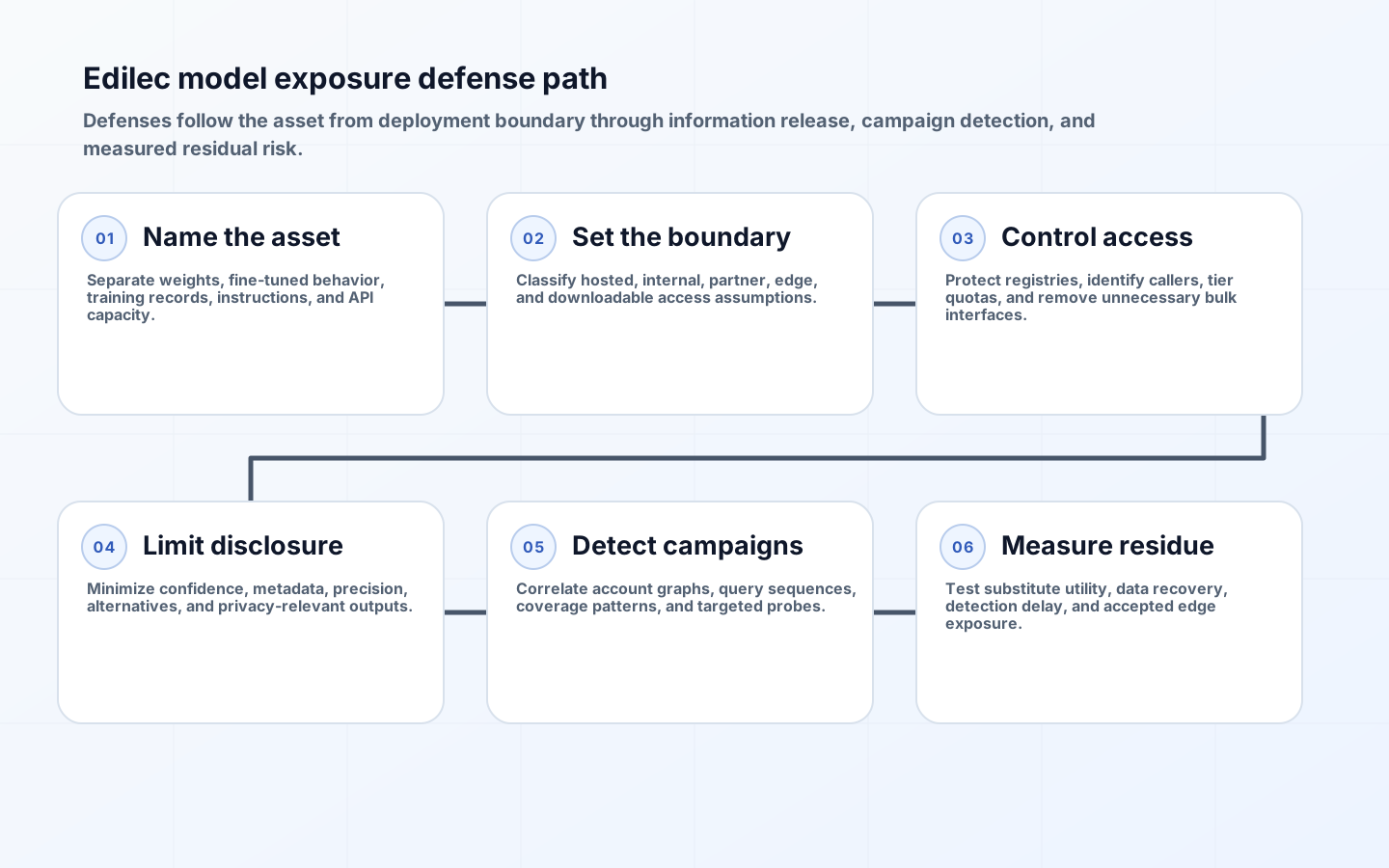
Model extraction defenses should protect a defined asset against a defined attacker, not promise that an externally queryable model can never be approximated. Extraction may mean copying an artifact, learning a substitute model through queries, discovering architecture or parameters, or recovering distinctive behavior. Model inversion instead seeks information about training features or representatives, while training-data extraction attempts to elicit particular records or memorized sequences. Those objectives require different evidence and controls.
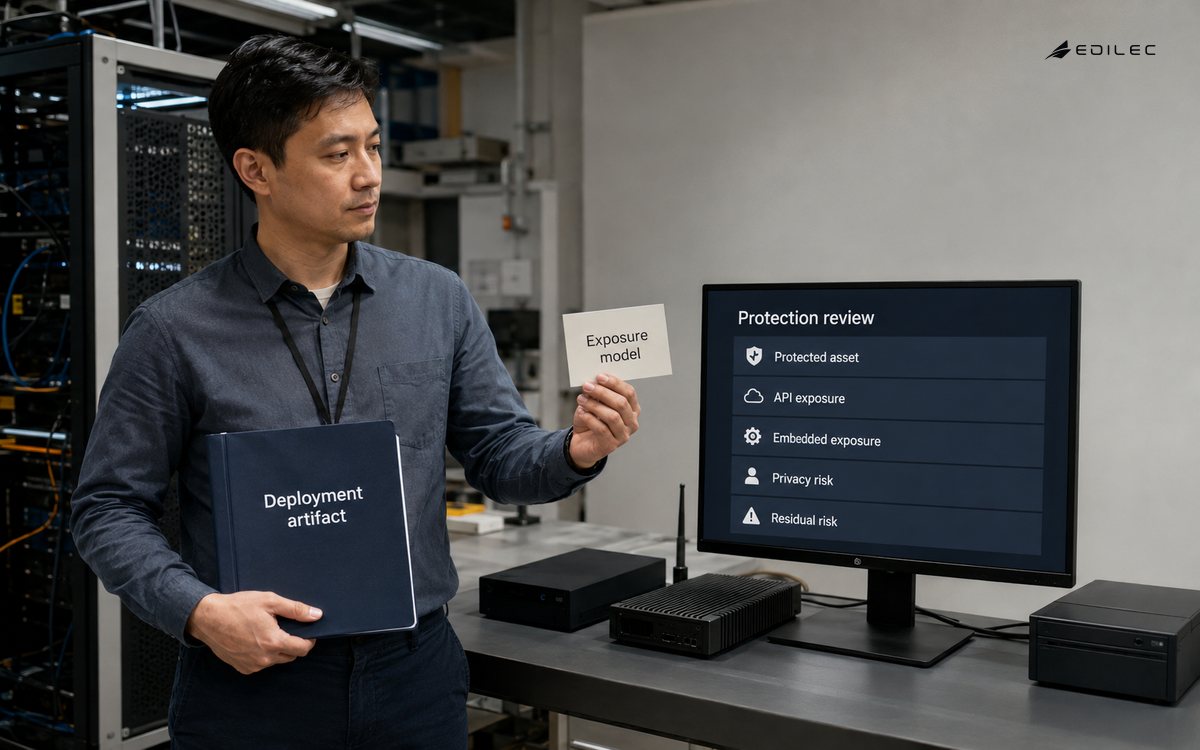
Enterprise teams should first ask what is valuable: weights, a fine-tuned capability, confidential training examples, proprietary instructions, decision boundaries, or paid API capacity. Then map how the model is exposed. A downloadable edge model cannot be protected like a remote API; an internal endpoint shared by thousands of employees is not truly private; a third-party foundation-model API creates contractual and telemetry dependencies. This guide focuses on practical reduction, detection and response.
Separate extraction, inversion, and data recovery objectives
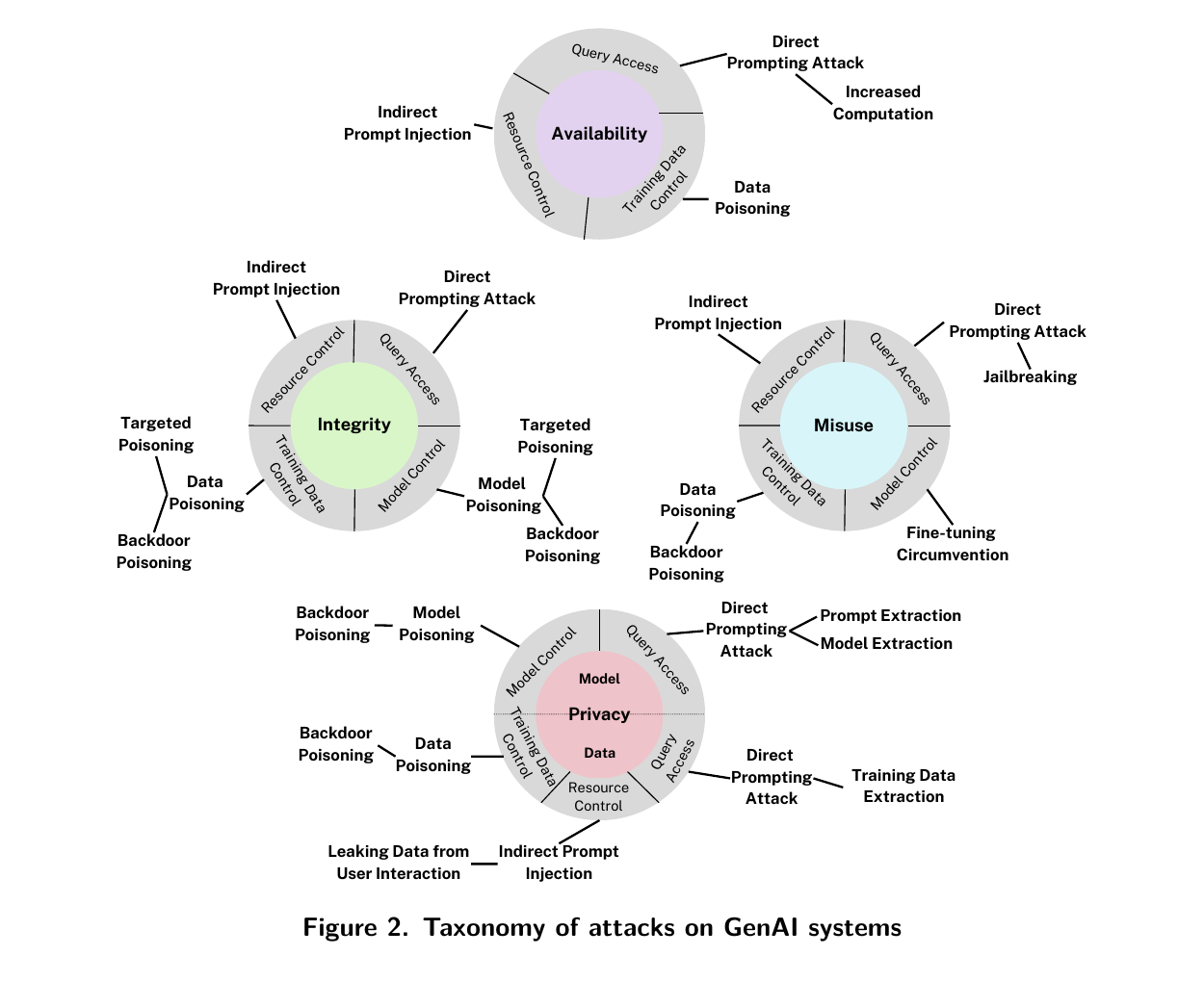
The NIST adversarial machine learning taxonomy organizes attacks by lifecycle stage, goals, objectives, capabilities and knowledge. Apply that discipline to triage. A high-volume query campaign that trains a substitute is model extraction. Requests crafted to reveal whether a person was represented, reconstruct sensitive attributes, or recover training samples concern privacy. Direct theft of a model file is conventional access and supply-chain compromise. Calling all three 'model theft' obscures the enforcement point.
| Objective | Attacker output | Primary exposure | Useful detection evidence |
|---|---|---|---|
| Artifact theft | Weights, adapter or packaged model | Registry, build store, endpoint, device | Artifact access, unusual download, device extraction and digest mismatch |
| Functional extraction | Substitute that imitates decisions or responses | Prediction or generation API | Distributed query sequences, coverage patterns and account linkage |
| Architecture discovery | Model family, parameters or system behavior | Errors, metadata, timing, outputs | Probe diversity, repeated boundary tests and metadata access |
| Membership inference | Confidence that a record influenced training | Scores, probabilities, repeated outputs | Targeted records, confidence probing and privacy-test results |
| Model inversion | Representative features or sensitive attributes | Rich outputs or gradients | Class-focused optimization patterns and repeated refinement |
| Training-data extraction | Specific memorized sequence or record | Generative interface and context controls | Rare-prefix probing, repeated sampling and sensitive-output matches |
Choose defenses by exposure model
For a remote API, the provider controls weights while callers observe inputs, outputs, timing, errors and any exposed confidence values. Authentication, quotas, pricing, response shaping and query-sequence analysis are available. For an embedded or downloadable model, assume a determined user can inspect files, runtime memory and execution. Encryption and obfuscation may delay extraction but cannot create a durable secret when decryption and inference occur on an attacker-controlled device. Keep crown-jewel logic or data behind a server boundary when confidentiality is essential.
Private cloud and internal deployments sit between those cases. Network location helps, but identities, service accounts, notebooks, model registries, backups, accelerators and deployment pipelines create access paths. Apply the resource-level decisions in NIST's Zero Trust Architecture: authenticate and authorize subjects to specific resources, minimize implicit trust, and collect telemetry. Edilec's zero-trust application guide translates that posture into application design.
Raise the cost of query-based extraction
Require attributable access, tier privileges, cap request rate and concurrency, limit bulk interfaces, and price high-volume use appropriately. Aggregate behavior across accounts, API keys, organizations, devices, payment instruments and network signals where policy permits. Attackers can distribute queries, so a per-key threshold alone is easy to route around. Examine sequence shape: broad class coverage, systematic boundary searches, repeated paraphrases, synthetic input sweeps, and high output retention may be more informative than raw volume.
Reduce unnecessary output precision and metadata. A classification product may not need full probability vectors, logits, gradients or detailed error distinctions. A generation service may cap alternatives or sampling controls for untrusted tiers. These changes can impair legitimate evaluation, accessibility and integration, so test utility rather than applying them reflexively. The objective is to remove information the product does not need to disclose, not to degrade results until extraction becomes inconvenient for everyone.
Protect weights, adapters, and deployment artifacts
Store models and adapters in a registry with immutable digests, narrow read roles, short-lived workload credentials, approval for export, and alerts on unusual access. Separate the ability to deploy an artifact from the ability to download it. Protect build caches, backups, experiment stores and crash dumps, which often receive less scrutiny than the production registry. Record provenance from source model through fine-tuning, evaluation, approval and deployment so a copied file and an unauthorized replacement can both be investigated.
For edge delivery, decide explicitly that the artifact will leave the trust boundary. Use license enforcement, signing, secure update, hardware-backed key storage where available, and tamper signals as defense-in-depth, but base risk acceptance on the possibility of recovery. Distill only the capability needed on the device, remove confidential data from packaging, and keep sensitive decision services remote. Marketing language should not promise protection that endpoint control cannot support.
Reduce inversion and training-data leakage
Start upstream with data minimization, lawful purpose, deduplication, sensitive-data review and training-set governance. Use privacy-preserving training or aggregation techniques when supported by the use case, and test their utility and privacy parameters. Avoid presenting differential privacy as a label without the mechanism, unit of protection and budget. At inference, detect secrets and regulated identifiers, constrain contexts, restrict confidence outputs, and prevent one user's supplied data from silently becoming another user's training material.
The NIST Generative AI Profile emphasizes privacy risk, data provenance, measurement and ongoing monitoring. Turn that into release evidence: canary records that must not be emitted, rare-prefix extraction tests, membership and inversion assessments appropriate to the model, and output scanning. Edilec's model evaluation engineering guide provides the surrounding release-gate discipline.
Detect campaigns without criminalizing normal research
Build detections around combinations of behavior, asset sensitivity and policy. High volume can be a legitimate batch workload; boundary probing can be quality assurance; repeated rare strings can be incident validation. Use customer tier, declared use, query diversity, output volume, time pattern, account relationships and prior alerts. Provide an escalation path that can throttle, challenge, contact, suspend or investigate proportionately. Preserve request and account evidence under a documented retention and privacy policy.
MITRE ATLAS can help analysts connect reconnaissance, model access, collection and exfiltration behaviors, while the OWASP GenAI Security Project covers application risks surrounding the interface. Neither replaces a product-specific baseline. Instrument expected bulk users and approved evaluators, then look for deviations that indicate systematic learning or targeted data recovery. Human review remains important before adverse account action.
| Control | Best fit | Tradeoff | How to verify |
|---|---|---|---|
| Strong artifact access control | Hosted and internal models | Operational friction for researchers | Attempt unauthorized registry, cache and backup access |
| Rate and quota tiers | Public or partner APIs | Can constrain legitimate batch use | Simulate distributed extraction and approved bulk workloads |
| Output minimization | Scoring and metadata-rich APIs | May reduce explainability or integration value | Compare extraction resistance and user-task accuracy |
| Privacy-preserving training | Sensitive training populations | Accuracy, compute and governance complexity | Document parameters and run privacy plus utility evaluations |
| Behavioral campaign analytics | Attributable multi-user services | False positives and privacy concerns | Replay known campaigns and normal evaluator traffic |
| Edge artifact reduction | Downloadable or on-device models | Less offline capability | Inspect package contents and test remote-dependency failure |
Respond with evidence and measure residual risk
When extraction is suspected, preserve the query sequence, responses, account graph, entitlements, model version, keys, payment and network indicators permitted by policy. Determine whether the actor obtained an artifact, approximated behavior, recovered data, or merely violated volume terms. Rotate credentials and suspend access where justified, but avoid changing every output before investigators capture the served configuration. Search for related identities and downstream publication without claiming certainty from similarity alone.
Measure residual risk with concrete exercises: time and queries needed to reach a useful substitute, performance of the substitute on protected business cases, success of rare-data recovery, coverage of artifact access paths, detection delay and analyst precision. Edilec's AI guardrails review is useful for layering inference controls, but guardrails cannot compensate for publicly shipped weights or broadly downloadable registry objects. State which risks are accepted, transferred, reduced or avoided.
Key takeaways
- Distinguish artifact theft, functional extraction, inversion, membership inference and training-data extraction.
- Assume downloadable models can be recovered; keep essential secrets behind controlled service boundaries.
- Combine attributable access, query economics, output minimization and campaign-level analytics for hosted APIs.
- Reduce privacy risk upstream in data and training, then verify it with targeted release evaluations.
- Measure the attacker's achieved capability and defender response rather than claiming absolute prevention.
Frequently asked questions
Can rate limiting prevent model extraction?
Not by itself. It increases time and cost, but attackers can distribute queries and legitimate high-volume access may remain. Combine quotas with identity linkage, output minimization, behavioral analysis, commercial controls and incident response.
Does watermarking stop model theft?
Watermarks or behavioral fingerprints may support attribution or later testing, but they do not stop artifact access or substitute training. Evaluate robustness, false attribution and legal use before relying on them, and retain preventive controls around the asset.
Is model inversion the same as memorization?
No. Memorization can enable extraction of particular training content, while inversion seeks information about features or representatives associated with outputs. The mechanisms and evidence can overlap, but privacy testing should state the precise target and attacker knowledge.
Conclusion
Enterprises can defend model artifacts strongly inside controlled infrastructure, raise the cost and improve detection of API-based imitation, and reduce privacy leakage through disciplined data, training and inference controls. They cannot make an artifact permanently secret after placing it on an adversary-controlled device, nor can they guarantee that a useful public interface reveals no learnable behavior.
Inventory the model asset, deployment boundary, exposed information and plausible attacker first. Then choose controls whose cost and evidence match that exposure. A modest, measured claim about reduced queries, protected records or faster detection is more useful than a sweeping promise of extraction-proof AI.