A Chinese Services Group chairman implementation checklist is best understood as a governance playbook for a cross-border client-service network, not as a software installation. Public descriptions of such roles emphasize coordinating service to Chinese enterprises operating internationally and multinational organizations working with China. The chairman’s job is to create accountable sponsorship, consistent quality, appropriate local judgment and escalation across member firms, countries and professional disciplines.
This article does not evaluate any named person or firm. The cited public leadership profile establishes the query context and describes experience spanning audit, listings, mergers and acquisitions, business formation and risk. The checklist generalizes governance practices for comparable cross-border service leadership. The companion scope and risk guide and role FAQ provide related context.
1. Approve the mandate and decision rights
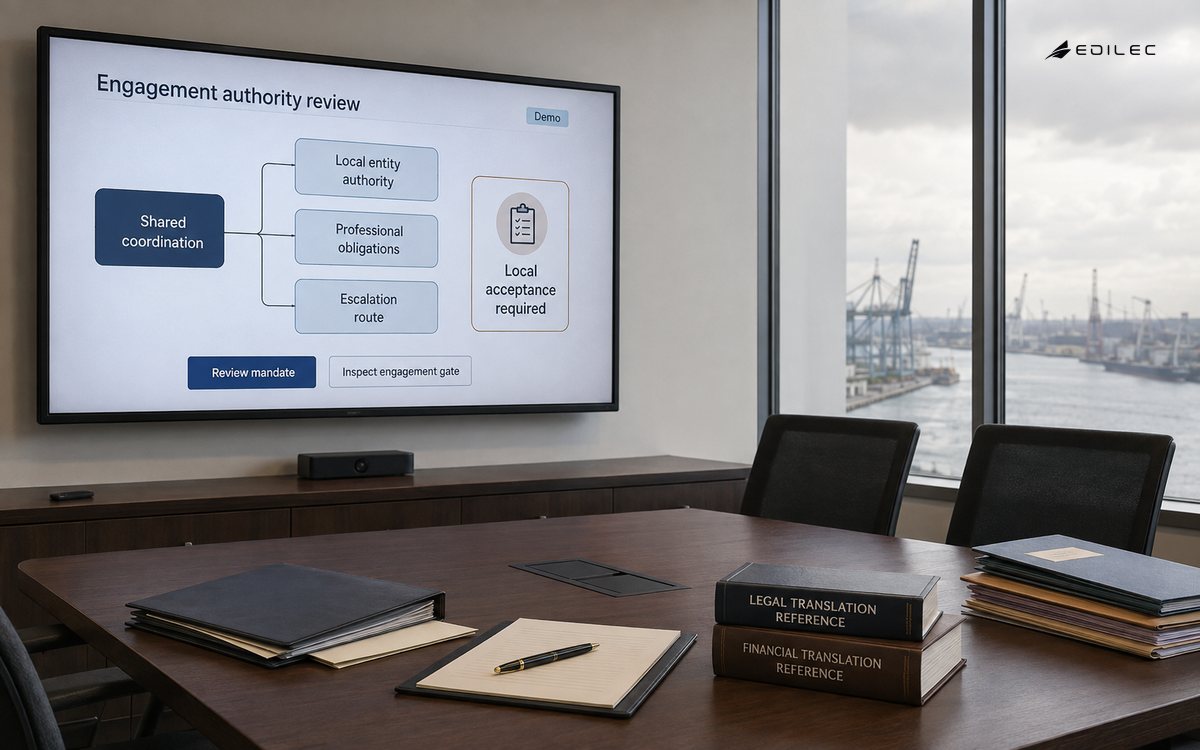
Write a charter covering client segments, countries, service lines, strategic outcomes, exclusions, term, budget and reporting. Distinguish network coordination from the legal authority of local entities and engagement partners. Name who can accept clients, commit scope, set price, resolve quality disputes, approve exceptions and stop work. A global title without explicit decision rights can create expectations that no single office can lawfully or operationally meet.
Set measures around client outcomes, quality, issue resolution, responsible conduct, team capability and sustainable economics. Avoid rewarding revenue alone because it can encourage weak acceptance or cross-selling. Require an annual mandate review and event-driven review after regulatory change, material incident or reorganization. Publish escalation routes in the working languages used by teams. Preserve evidence of decisions and recusals.
2. Map corridors, obligations and service capacity
Create a corridor map for outbound Chinese clients and inbound multinational work. For each country and sector, record client demand, licensed services, entity restrictions, independence rules, data-transfer constraints, language capability, time zones, geopolitical exposure, local leadership and specialist capacity. Validate it with local legal, compliance and risk owners. Marketing coverage is not the same as permission or delivery readiness.
Maintain a skills directory with named experience, availability and conflicts, but minimize personal data. Identify succession for critical relationships and technical specialties. Review whether the network can deliver at the client’s operating locations rather than only headquarters. Use demand forecasts to fund capability, translation and knowledge transfer. When the required competence is unavailable, decline, narrow or partner transparently rather than improvising.
| Governance area | Chair-level decision | Evidence |
|---|---|---|
| Mandate | Which clients, corridors and services the network coordinates | Approved charter and entity map |
| Acceptance | Which risks or conflicts require escalation or refusal | Documented gate and authorized decision |
| Delivery | How one accountable lead coordinates local teams | Named plan, milestones and quality reviews |
| Data and technology | Which processing, transfer and AI uses are permitted | Purpose map, controls and approval |
| Responsible conduct | How concerns are prevented, raised and remedied | Due diligence, reporting and closure records |
3. Implement client and engagement acceptance
Before pursuit becomes commitment, identify the client and beneficial ownership as required, service purpose, countries, public-sector touchpoints, intermediaries, conflicts, independence, sanctions and export concerns, data, reputation, competence and payment terms. Route specialist questions to qualified functions. Use enhanced review for elevated scenarios and record rationale. Commercial urgency should not bypass acceptance.
Re-screen at material changes: acquisition, listing, new jurisdiction, government interaction, scope expansion, adverse information or ownership change. Separate relationship sponsorship from formal risk approval. Define who can reject or condition work and protect that independence. A checklist response should link to evidence and expiry rather than becoming a permanent “yes.” Retain records according to policy and applicable obligations.
4. Embed responsible business conduct
The UN Guiding Principles on Business and Human Rights establish a protect, respect and remedy framework for business-related human-rights impacts. Use risk-based due diligence to identify potential adverse impacts connected to operations and services, involve relevant stakeholders, act on findings, track response and communicate appropriately. Cross-border leadership should ensure local commercial goals do not erase network commitments or access to appropriate remedy.
Implement anti-bribery controls proportionate to corridor and engagement risk. ISO 37001 describes policies, due diligence, financial and non-financial controls, training, reporting and improvement. Review agents, gifts, hospitality, sponsorship, charitable contributions, referral fees and public-official interactions. Provide confidential speak-up channels, prohibit retaliation and define independent investigation. The chairman should receive trend and severe-case reporting without interfering in fact finding.
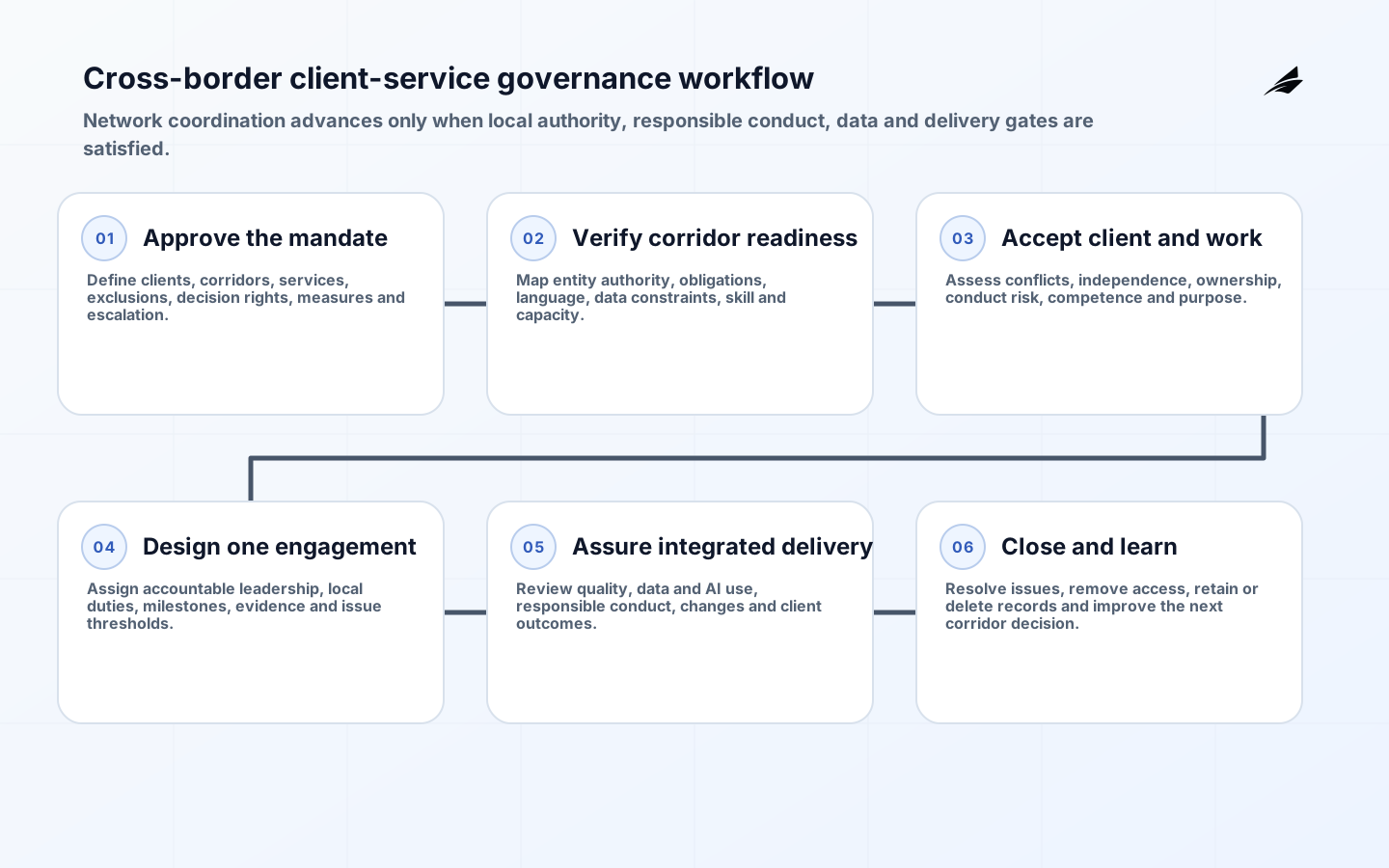
5. Run a six-stage cross-border governance workflow
The workflow proceeds through mandate, corridor readiness, client acceptance, integrated engagement design, delivery assurance and closure learning. Every stage has a stop or escalation gate. One accountable engagement leader coordinates scope and client communication while local leaders retain entity and professional obligations. Use a shared plan for milestones, dependencies, language, evidence, quality review and issue authority. Avoid parallel promises from multiple offices.
At closure, confirm deliverables, open issues, billing, record retention, data return or deletion, access removal and lessons. Review whether handoffs, translation, conflict checks and escalation worked. Feed improvements into corridor readiness and training. For recurring clients, closure can lead to a new accepted phase, not an indefinite extension of the original approval. Material scope changes require refreshed terms and controls.
6. Govern cross-border data and confidentiality
Map information by purpose, owner, sensitivity, source, location, recipient, transfer mechanism, retention and deletion. Determine applicable restrictions with qualified privacy, secrecy, cybersecurity, employment and sector experts in each jurisdiction. Do not assume that access from another country is not a transfer. Minimize client data in collaboration tools, use approved environments and restrict access by engagement role.
Apply the NIST Privacy Framework to identify and manage privacy risk in processing. Establish secure exchange, classification, encryption where appropriate, logging, data-loss controls, incident notice and verified deletion. Test offboarding across mail, chat, virtual data rooms, analytics workspaces and local copies. Translation vendors and other subprocessors need explicit purpose, security and deletion terms.
7. Control analytics and AI-assisted service delivery
Approve use cases before teams place client information into AI systems. Define purpose, permitted data, model or service, hosting, training use, output ownership, retention, user disclosure, human review and prohibited decisions. Client consent or contractual authority may be necessary depending on context. Consumer AI accounts should not become unofficial engagement infrastructure. Maintain a registry of approved tools and versions.
Use the NIST AI Risk Management Framework to govern, map, measure and manage risks. Evaluate language and jurisdiction-specific performance, citations, severe errors, bias, confidentiality leakage and adversarial input. Require professionals to verify outputs against authoritative evidence and remain accountable. Do not use automated summaries as the sole basis for audit, transaction, employment or legal conclusions.
| Risk scenario | Preventive gate | Escalation or response |
|---|---|---|
| Conflict or independence breach | Entity checks before proposal and scope change | Stop work and refer to independent risk authority |
| Improper intermediary | Risk-based due diligence and payment controls | Suspend transaction and investigate |
| Restricted data transfer | Purpose and jurisdiction review before access | Contain, preserve evidence and assess notification |
| AI-generated material error | Approved tool, evaluation and professional verification | Withdraw output, assess impact and correct client record |
| Fragmented cross-border delivery | One plan, accountable lead and milestone reviews | Chair-level coordination without overriding local duties |
8. Assure integrated delivery and quality
Create one engagement architecture: client outcomes, scope by entity, deliverables, dependencies, standards, reviewers, language, timetable, data flows, issue thresholds and acceptance. Confirm that local teams understand both global context and local requirements. Use milestone quality reviews by people with appropriate independence and expertise. Track evidence, unresolved assumptions, changes and client decisions in controlled repositories.
Measure outcome, timeliness, rework, severe quality findings, escalation age, client complaints, staff continuity and budget. Interpret metrics across service type and complexity. Encourage early issue reporting; punishing escalation causes concealment. The chairman’s role is to remove coordination barriers and ensure accountable resolution, not to substitute for engagement partners or technical reviewers.
9. Build leadership, culture and succession
Appoint corridor and service leaders with explicit objectives and enough time. Provide bilingual or multilingual support, cultural competence, professional training and safe channels for dissent. Rotate opportunities so relationships and knowledge do not concentrate in one person. Identify deputies for the chairman and critical client leads. Exercise transition during leave rather than discovering dependence in a crisis.
Review incentives for cooperation, quality and responsible conduct. Revenue credit should not make offices compete for control of one client. Recognize knowledge contribution and issue prevention. Survey team members about pressure, inclusion and escalation, then act on patterns. Leadership communications should explain difficult refusals and lessons without disclosing protected details, demonstrating that values govern real decisions.
Chinese Services Group chairman checklist takeaways
- Define network coordination and local entity authority in a written mandate.
- Gate clients and engagements on conflicts, responsible conduct, competence and data.
- Use one accountable cross-border plan while preserving local professional duties.
- Approve AI and data processing by purpose, jurisdiction, evidence and human accountability.
- Close every engagement with access, records, issue and learning controls.
Frequently asked questions
Is a Chinese Services Group a separate legal entity? Structures vary; document the actual member-firm and contracting relationships. Does the chairman approve every engagement? Usually not; define thresholds and preserve local acceptance authority. What is the highest governance risk? Ambiguous authority across entities, especially when commercial pressure, conflicts, data or public-sector interactions are involved.
Can one global policy cover every country? It can set minimum commitments, but local obligations and professional rules still require qualified interpretation. Should AI be banned? A risk-based approved-use process is more precise; prohibit uses that cannot protect data or support accountable review. How is success measured? Through responsible growth, service quality, timely escalation, client outcomes, capability and closure of material risks.
Conclusion
Cross-border service leadership depends on clear authority, local accountability and evidence-backed escalation. Establish the mandate, map corridors, accept work responsibly, govern data and AI, coordinate one delivery plan and learn at closure. The chairman adds value by making the network behave coherently while respecting the professional and legal duties that remain with each engagement and entity.