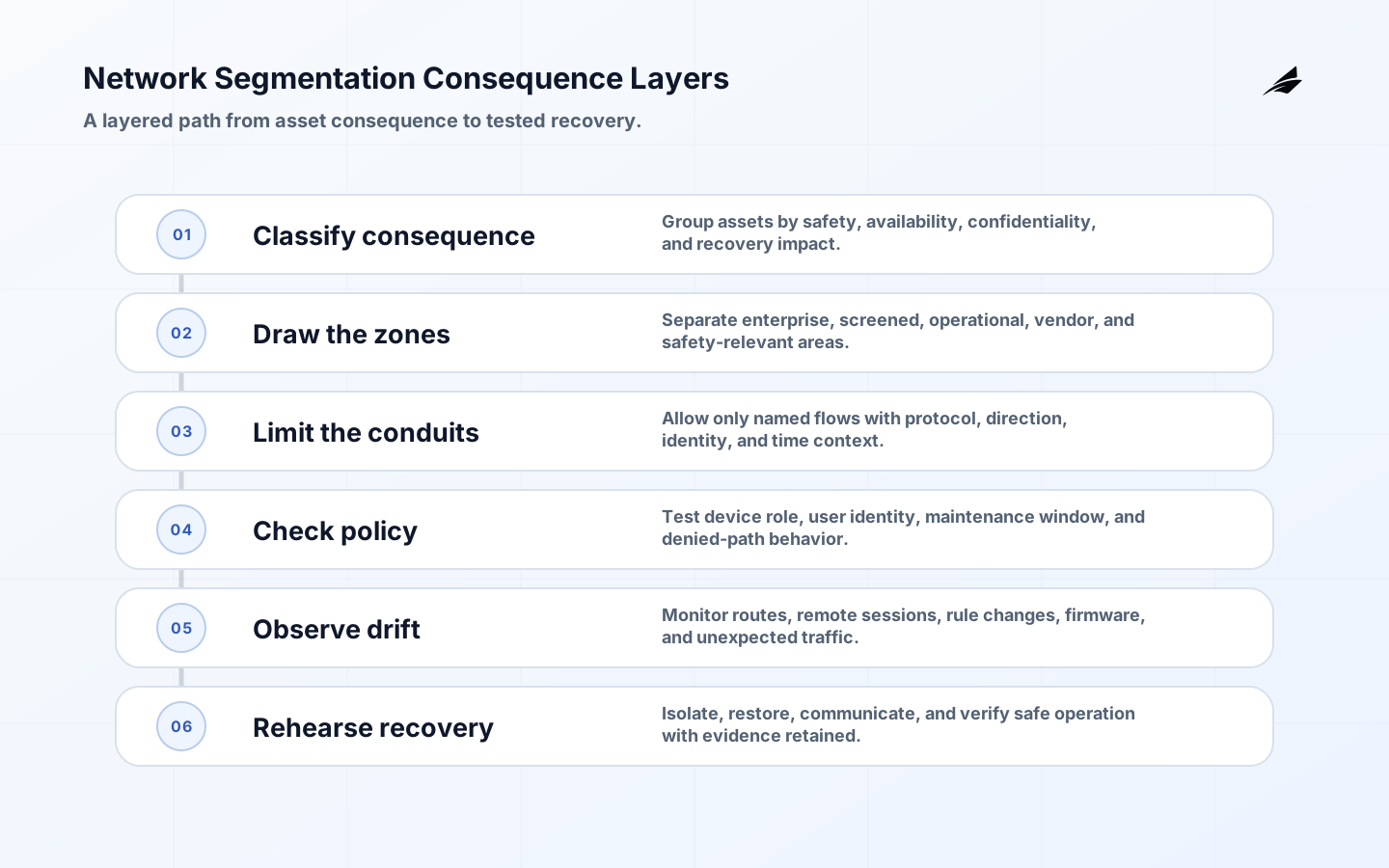
For network segmentation, network segmentation is the deliberate separation of network paths, identities, and policies so a compromise or mistake in one zone cannot automatically reach every other zone. At the zone boundary, for CTOs, the useful question is whether the design changes a real operating decision, not whether it adds another component to an architecture diagram. During a segmentation review, a controller in a packaging cell may need an engineering workstation and a narrowly defined gateway, while neither should route to payroll, source control, or every device in another cell. On the recovery path, in this review, the team needs an agreed boundary, people authorized to act, evidence they can interpret, and a safe degraded state. For network operators, at this checkpoint, connected systems join physical and digital failure modes; a design that ignores either side produces a brittle service.
Within this boundary workflow, for network segmentation, pair MQTT broker guide, network segmentation checklist, and network segmentation scaling guide when zone design needs protocol, operating, and scaling context.
For network segmentation, this guide uses NIST SP 800-82 Rev. 3: Guide to Operational Technology Security, NIST SP 800-207: Zero Trust Architecture, NIST SP 800-193: Platform Firmware Resiliency Guidelines, MQTT Version 5.0 specification, OpenTelemetry Logs Data Model, RFC 7252: The Constrained Application Protocol to connect the implementation boundary with authoritative evidence, operating checks, and a visible correction path. For network segmentation, during the handoff, the references are applied to the concrete decisions, records, and failure cases discussed below.
Network segmentation: what network segmentation must accomplish
At the zone boundary, begin with asset inventory, traffic baselines, and operational dependencies that make a route legitimate. That keeps network segmentation close to the workflow it must support. During a segmentation review, at this checkpoint, speak with the operator, the person who supports the service at an inconvenient hour, and the person accountable for risk. On the recovery path, for the operating decision, record ordinary use, maintenance, a disrupted connection, replacement hardware, late information, and unavailable dependencies. For network operators, during the handoff, a sound scope says what remains possible, what must stop, and who receives a clear status when an assumption is no longer true.
Network segmentation: a working model for network segmentation
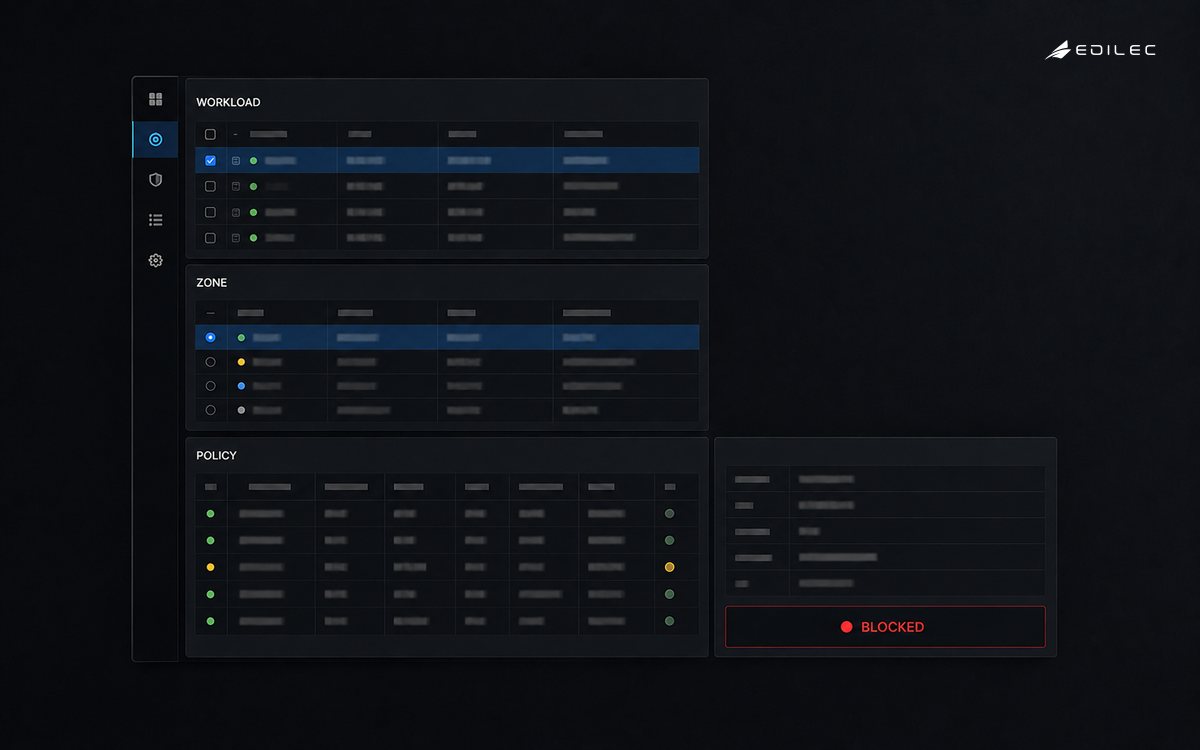
Within this boundary workflow, a workable model combines zones based on function and consequence, conduits between zones, explicit allow rules, and a reviewable exception process. None of these pieces is ornamental. For network segmentation, at this checkpoint, a feature can look successful while it has no named owner, no freshness rule, no clear authority, or no recovery path. At the zone boundary, for the operating decision, write the choices as testable statements: what enters the boundary, what leaves it, which party may change it, and what evidence proves the intended result. During a segmentation review, during the handoff, those statements become acceptance checks, support guidance, and a way to settle disagreements without relying on memory.
| Element | Decision to make | Evidence to keep |
|---|---|---|
| Operational purpose | Which decision network segmentation changes | Named user and expected action |
| Boundary | What may cross and under what authority | Versioned policy or contract |
| Recovery | What happens when a dependency fails | Test record and owner |
Network segmentation: architecture and boundaries
Architecture should express responsibility rather than merely list components. On the recovery path, in practice, separate enterprise IT, a screened boundary, and operational zones; enforce policy with firewalls, identity-aware access, and host controls. For network operators, for the operating decision, make the normal path easy to trace and state the identity, authorization rule, failure behavior, and observation method at every boundary. NIST guidance for operational technology is useful because it treats availability and safety context as essential, not incidental. Within this boundary workflow, on the release path, the equipment and regulations differ by site, but a hidden trust boundary is never a durable simplification.
Network segmentation: an implementation path that reduces risk
Build in measured stages. At the zone boundary, start with passive mapping, name the owner of each connection, then introduce deny rules in monitored stages. During a segmentation review, in this review, treat each stage as a hypothesis about an outcome and an acceptable side effect. Instrument it before broadening the scope. On the recovery path, at this checkpoint, a pilot that includes real operators and imperfect conditions teaches more than a clean demonstration, because it exposes missing permissions, misleading timing, and recovery work. For network operators, for the operating decision, the early goal is not maximum coverage; it is reliable evidence to decide whether the model should be expanded, changed, or stopped.
Network segmentation: choices and trade-offs
Legacy broadcast traffic belongs in a bounded operational zone. Vendor troubleshooting needs named, approved, time-limited access. Unknown devices belong in quarantine until identity and role are known. These are operating decisions, not implementation trivia. Within this boundary workflow, in this review, capture them in a concise contract that a developer, operator, and reviewer can test. For network segmentation, at this checkpoint, the contract should distinguish observed time from received time where data moves asynchronously, distinguish an accepted request from a completed physical action, and identify what happens when a prerequisite is unavailable. At the zone boundary, for the operating decision, those distinctions prevent a polished interface from overstating what the underlying system knows.
| Situation | Safer response | Shortcut to avoid |
|---|---|---|
| Normal operation | Document expected network segmentation behavior | Depend on unstated knowledge |
| Disrupted dependency | Show status, preserve context, and follow a bounded recovery rule | Keep acting as if upstream evidence is current |
| Change or exception | Use approved ownership and an auditable path | Create permanent broad access or silent overrides |
Network segmentation: operating signals to review
Operating signals keep the design honest. During a segmentation review, review blocked connections, unapproved routes, remote sessions, configuration drift, and time to revoke supplier access. On the recovery path, at this checkpoint, put each signal beside an objective and an owner able to act on it. For network operators, for the operating decision, metrics without a decision create noise; a compact set tied to user impact makes diagnosis faster. OpenTelemetry documentation is helpful background for combining traces, metrics, and logs, but it cannot choose the right operational question for a team. Within this boundary workflow, on the release path, retention and access should be explicit when observations expose site behavior or customer activity.
Network segmentation: failure modes and recovery
For network segmentation, the dangerous shortcut is a flat network behind one VPN, broad any-to-any rules, or a diagram never checked against device traffic. At the zone boundary, for the operating decision, it often begins as a deadline concession and becomes difficult to remove after other teams depend on accidental behavior. During a segmentation review, during the handoff, design the exception path deliberately: fail closed when an unsafe action must not occur, retain enough context to investigate, and show a visible status when automatic recovery is uncertain. On the recovery path, on the release path, a resilience claim is credible only after the team has exercised loss, restart, and recovery at the boundary that matters.
Network segmentation: security and governance
For network operators, network segmentation security is about making an allowed identity insufficient for unlimited reach. Within this boundary workflow, restrict remote administration to named staff, require a separate approval for sensitive zones, and log changes to rules as carefully as code changes. NIST zero trust architecture supports evaluating each request in context; in an operational network, that context includes the zone, device role, and maintenance window. For network segmentation, firmware trust also matters because a compromised gateway can become an unexpected path across the boundary.
Network segmentation: standards and practical testing
At the zone boundary, for segmentation, standards are most useful when they turn a vague promise of isolation into test cases. NIST operational technology guidance helps frame zones and conduits around operational consequence. During a segmentation review, test an approved engineer session, an expired vendor session, a denied route, and incident containment. On the recovery path, packet delivery alone is not proof that the policy is sound; the evidence must show that only the intended flows remained possible.
Network segmentation: operating review before expansion
For network operators, at this checkpoint, before expanding, conduct an operational review with the people who will carry the system. Can they identify current state and freshness? Can they find the owner of an exception? Can they reverse a material change? Can they explain what evidence proves recovery? Within this boundary workflow, the answers reveal whether network segmentation has become an accountable service or only a successful integration test. For network segmentation, for the operating decision, improving these answers often has more value than adding more data, devices, or screens.
Network segmentation: keep a decision record
At the zone boundary, for network segmentation, keep a short decision record that names the use case, accountable owner, boundary, assumed operating conditions, evidence reviewed, and the next review date. Record the rejected alternative as well as the chosen approach. During a segmentation review, in this review, this prevents a later maintenance change from quietly undoing a safety, reliability, or access decision that made sense in the original context. On the recovery path, at this checkpoint, when a real incident contradicts an assumption, update the record and the relevant test rather than only patching the immediate symptom.
Segment devices according to consequence
For network operators, network segmentation for connected devices should follow what could happen if a device, credential, or protocol path were compromised. Within this boundary workflow, separate safety-relevant controllers, building systems, cameras, guest devices, and administrative tools; then define the narrow flows each zone needs. For network segmentation, a sensor that only publishes telemetry should not have the same reach as a device that receives control commands. At the zone boundary, test the design with a device replacement, a firmware update, a vendor support session, and a suspected compromise so that emergency access does not become a permanent shortcut.
NIST SP 800-82 and SP 800-207 support combining operational context with explicit trust decisions. Firmware resilience also matters; NIST SP 800-193 helps frame recovery expectations for platform components. During a segmentation review, use identity, device posture, destination, command type, and time window as inputs to access policy where feasible. MQTT 5.0 and CoAP still need authorization, logging, and a clear failure mode; protocol choice alone is not segmentation. On the recovery path, keep a current map of zones and allowed flows, alert on unexpected paths, and rehearse isolation without losing the minimum telemetry needed to keep people safe.
Network segmentation: segmentation checks to carry forward
- Define the decision before selecting a network segmentation implementation.
- Make boundaries, authority, and degraded behavior explicit.
- Pilot with real users and failure conditions before broad rollout.
- For network operators, for the operating decision, use evidence tied to an owner to improve the service after launch.
Network segmentation: questions before opening a route
Within this boundary workflow, When should a team invest in network segmentation? A segmentation review is warranted when a route makes a consequential operating decision slow, unsafe, unreliable, or impossible to audit. For network segmentation, in this review, What is the smallest useful first release? One workflow with named users, measurable behavior, and a recovery path. At the zone boundary, at this checkpoint, How should success be measured? Compare blocked-flow evidence and operator recovery time before and after the boundary change, including exceptions and approved workarounds. During a segmentation review, for the operating decision, Who owns it after launch? The site owner sets the safety outcome, while engineering, security, and support each own a named part of policy, evidence, and recovery.
Conclusion: keep every boundary recoverable
On the recovery path, network segmentation delivers value when it makes the next decision clearer and safer. For network operators, in this review, keep the first scope bounded, preserve the context needed to interpret evidence, and refuse shortcuts that bury ownership. The durable result is not a vendor setting or a diagram. Within this boundary workflow, at this checkpoint, it is a service whose boundaries, recovery behavior, and accountable decisions remain understandable as the fleet, site, or product changes.
Network segmentation: reference checks before expansion
- Confirm the documented boundary matches observed production behavior.
- Rehearse the most consequential interruption and verify recovery evidence.
- Review access, configuration, and ownership changes on a defined cadence.
- For network segmentation, on the release path, keep the design readable enough that a new on-call engineer can find the next safe action.