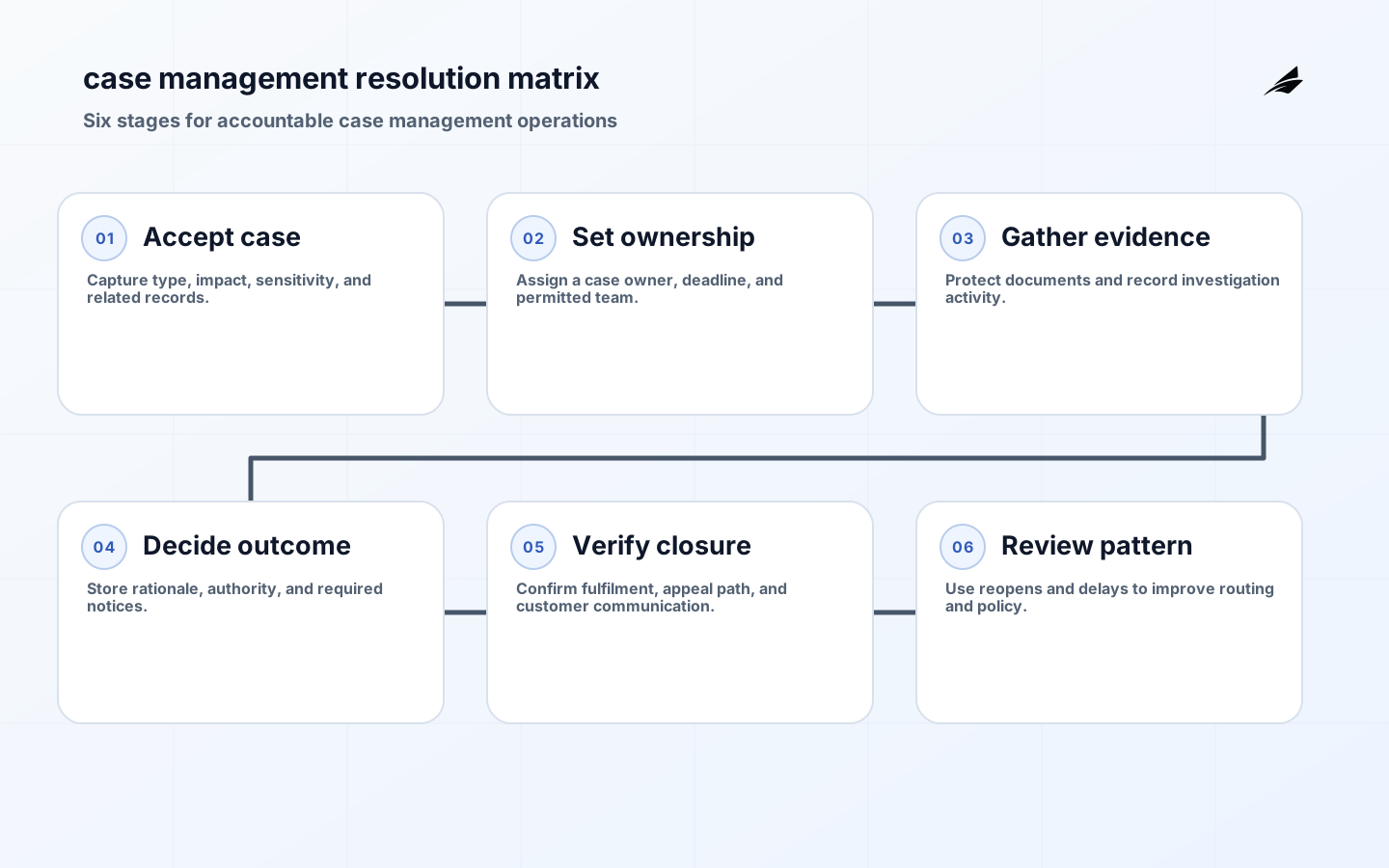
Case management is useful only when it makes a fair, traceable resolution across uncertain and human work easier to see, govern, and improve. For product teams and service operations, the design question is not which screen appears first; it is whether a case file carries the facts needed to make a defensible decision. Start by tracing the case lifecycle from intake through investigation, decision, communication, and review. Name the accountable owner, the system that records each transition, the evidence that proves it happened, and the route for correcting it. NIST Privacy Framework is a useful reference because it treats a control as an operating capability, not a document created after the implementation. That framing keeps the work tied to real decisions and prevents a polished interface from masking an unowned process.
Define a case as a decision record, not an inbox item
Define the case file as a sequence of business states rather than a collection of fields. At a minimum, distinguish an intent to act, a decision to proceed, work in progress, a completed outcome, and a correction or cancellation. The people responsible for those states should be able to answer what changed, who made the decision, and which rule applied. Capture case type, requester, impact, sensitivity, and related business records; without those facts, the next team must infer context from messages or spreadsheets. The OWASP Authorization Cheat Sheet guidance reinforces the value of explicit governance and controlled responsibility. This is also where document routing becomes practical: its handoffs should consume a stated business state, not guess from a display label.
| State or decision | Rule to make explicit | Evidence retained |
|---|---|---|
| Create or accept | Who may create a case file, and which minimum facts are required. | case type, requester, impact, sensitivity, and related business records |
| Authorize or assign | How the case owner with authority to coordinate the resolution decides that work may continue. | assignment, deadline, permitted disclosures, and investigation evidence |
| Complete or correct | What proves a fair, traceable resolution across uncertain and human work, and who may change it later. | decision rationale, notices, appeal or correction route, and closure reason |
Capture sensitivity, relationships, and the next accountable action
A durable model exposes the dependencies that make a state true. A case file should point to the governing policy, the identity or service that acted, the current owner, and the related records needed to understand impact. Avoid storing only a final status: it cannot explain an interrupted handoff or an exception. The W3C describes provenance as information about entities, activities, and responsible agents that helps people assess trustworthiness; that is a strong design lens for case management. W3C PROV-DM: The PROV Data Model supports modelling those relationships explicitly. Make each state transition idempotent where integration calls can be retried, and use a correlation identifier across the system boundary so a recovery does not invent a second business event.
- Give the case owner with authority to coordinate the resolution a visible queue and a limit on the decisions that may sit unowned.
- Store assignment, deadline, permitted disclosures, and investigation evidence with the decision rather than reconstructing it from configuration history.
- Represent a changed rule or version as a fact that can be inspected later.
- Use a stable identifier for the case file, even when names, channels, or display labels change.
- Link dependent work so a downstream completion cannot conceal an upstream hold.
Protect case evidence at the object level
Integration should preserve business meaning, not merely move payloads. Write a contract for each exchange: the producer, consumer, authoritative field, allowed transition, retry behaviour, and acknowledgement that makes delivery complete. A timeout is not proof that the action failed, so the receiving system needs a way to recognise a replay. Likewise, a successful transport response is not proof that the business state is valid. OWASP Insecure Direct Object Reference Prevention Cheat Sheet emphasizes that important transaction data and state transitions require server-side control. Apply that principle to every interface that can produce the case may be resolved or reopened. Design the contract alongside CRM automation in production, because the operational team needs a controlled recovery path as much as the engineering team needs an API schema.
| Failure mode | System response | Owner signal |
|---|---|---|
| routing sensitive material to a broad operational queue | Hold the affected record, preserve its correlation ID, and prevent an unsafe repeat. | A queue item with impact, next action, and deadline. |
| closing a case because a timer elapsed rather than because the outcome is verified | Require the named authority and record the policy basis for the decision. | A reviewable approval or access event. |
| losing the reason a discretionary decision was made | Show the real state and route correction before publishing a final outcome. | A freshness, reconciliation, or verification alert. |
Keep discretionary work visible through escalation and review
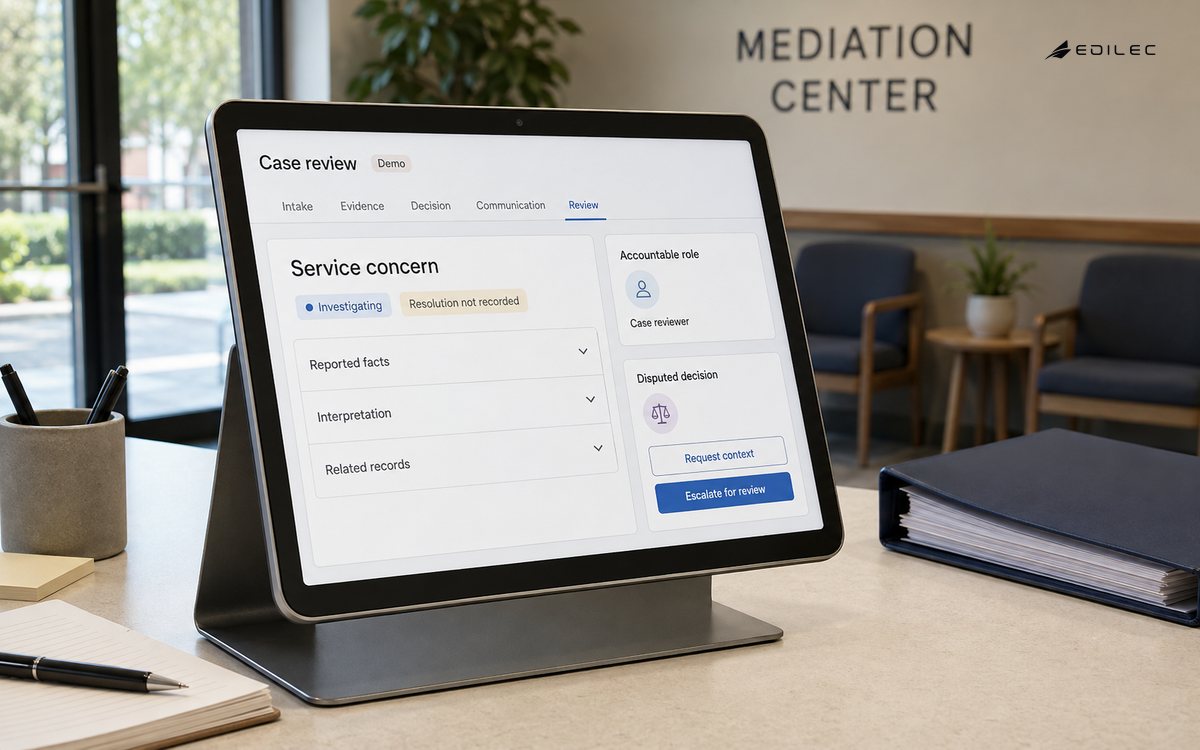
Exceptions deserve a first-class state because they carry policy and customer risk. Do not call every failure a retry. Separate a transient dependency problem from a data defect, an authorization refusal, a disputed business decision, and a suspected misuse case. For each category, define a safe automated action, the person who may override it, and the evidence required before closure. Audit records should be protected from casual alteration and retained according to the organisation's policy; OWASP Authorization Cheat Sheet is relevant here when it addresses governance, while OWASP Insecure Direct Object Reference Prevention Cheat Sheet is relevant when an exceptional action still changes a protected state. A visible exception is work; a hidden exception is deferred liability.
Measure resolution quality alongside speed
Operational measures should help a team choose what to fix, not decorate a dashboard. Track time to meaningful first response, reopen rate by resolution type, and overdue cases with customer-impacting severity. Segment them by business type, owner, and rule version so a local improvement does not hide harm elsewhere. Purposeful monitoring begins with the service or outcome that matters and then connects it to diagnostic signals; OWASP Insecure Direct Object Reference Prevention Cheat Sheet makes the same distinction for production systems. Pair performance measures with evidence-quality checks: missing ownership, stale state, and unexplained corrections are often early warnings that the process has stopped being trustworthy.
Pilot the case type where coordination currently breaks down
A credible case management rollout starts small enough to observe. Compare resolution rationale, reopen rates, and sensitive-access events for one case type before expanding the case taxonomy. Map the current states and agree the accountable owner and success measure before configuring more automation or integration. Run old and new views in parallel long enough to compare counts, timings, and exception reasons. Move one boundary at a time: capture, decision, execution, confirmation, and correction. This sequencing makes defects legible and produces a change record showing which policy or contract changed, when it took effect, and which records may need follow-up. Do not expand scope until the team can explain the exceptions in the first path.
- Test a case may be opened with missing, late, and contradictory inputs.
- Rehearse a person may view this evidence with an expired delegation or unavailable approver.
- Replay an integration message and prove it cannot create a second outcome.
- Ask a support or operations user to trace one completed record from decision to evidence.
- Review the oldest unresolved exception with the owner who can change the rule.
Key takeaways
- Case management should model accountable business states, not just tasks or forms.
- The case file needs a visible owner, an explicit authority boundary, and durable evidence.
- Integration contracts must define business acknowledgement and safe replay behaviour.
- Exceptions need categories, decision rights, and an observable path to resolution.
- Measures should connect customer or business outcomes to diagnostic operating signals.
Frequently asked questions
What is the first design artifact for case management?
For case management, begin with a state-and-authority map for the case file. It should show the case type, sensitivity, related records, accountable owner, and resolution authority. A vendor configuration workbook or API catalogue is useful only after that map exists, because it cannot settle who is accountable for the business decision.
How should a team handle exceptions?
For case management, protect the evidence, preserve the investigation trail, and escalate the case when the owner cannot safely decide. Give the exception its own category, owner, deadline, and permitted actions, and leave an auditable reason for the outcome.
Conclusion
The strongest case management implementation makes a fair, traceable resolution across uncertain and human work understandable under ordinary use and under stress. It tells a requester or operator what happened, tells the case owner with authority to coordinate the resolution what decision is waiting, and tells a reviewer which facts and rule produced the result. Build the boundary first, keep evidence attached to the work, and use recurring exceptions and outcome measures to improve the operating rule. That is how an enterprise system becomes a dependable part of the organisation rather than another place where the real process must be reconstructed.