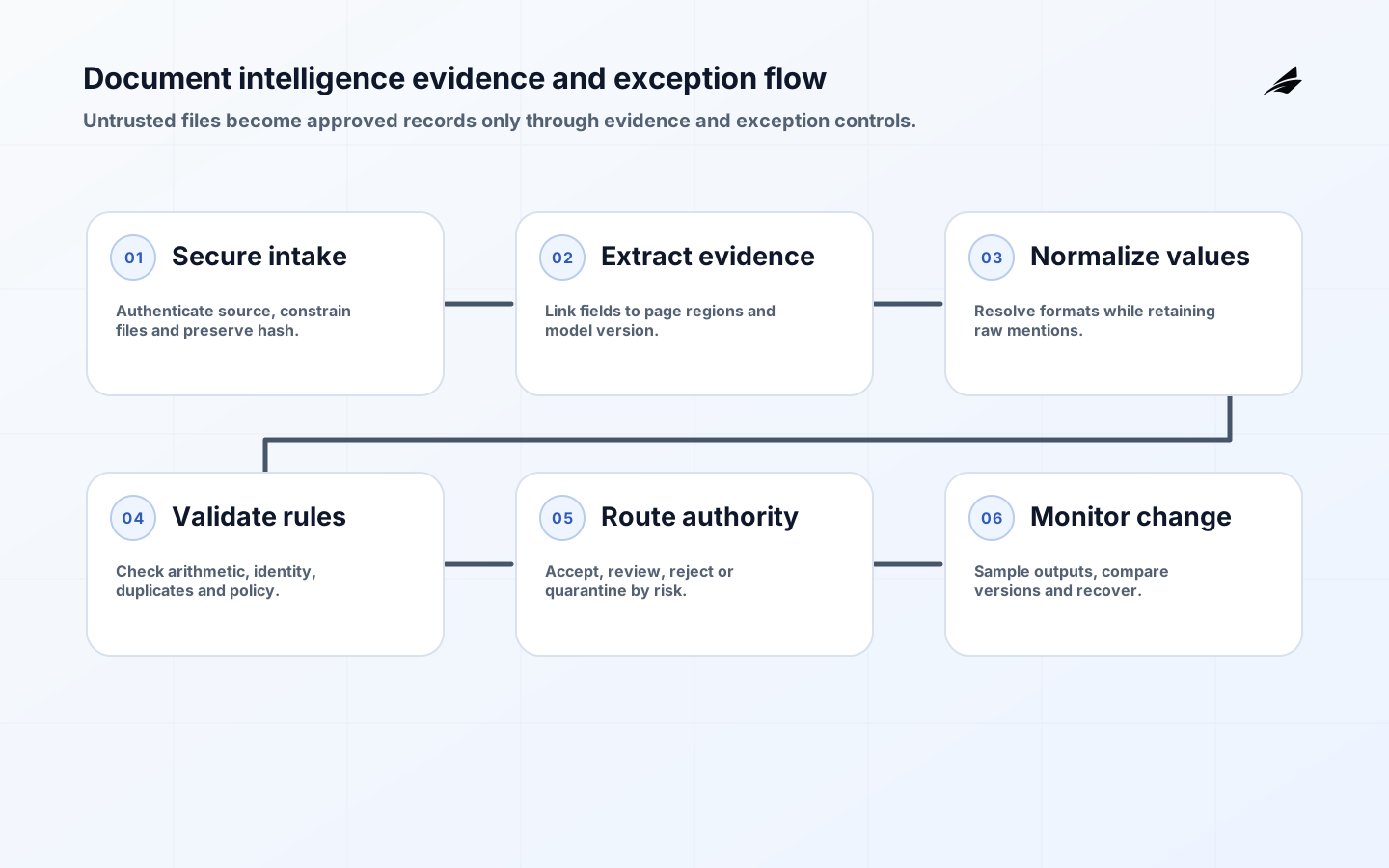
Document intelligence is not an OCR endpoint with a confidence score. It is an operating service that receives untrusted files, classifies them, extracts fields, applies business validation, routes uncertainty, and posts approved data into systems that create financial or customer consequences. IT managers should judge the whole path, because a model can read a date correctly while the workflow assigns it to the wrong invoice or supplier.
A useful first release narrows document type, source, language, field schema, and downstream action. It retains the original as evidence and makes every transformation traceable. Edilec's document intelligence operations playbook, retrieval pipeline guide, and workflow approval guide provide related implementation patterns.
Key takeaways
- Define success per document class, field, and downstream decision; one aggregate accuracy number is inadequate.
- Preserve file hash, page coordinates, model version, raw extraction, normalization, validation, and reviewer action.
- Use confidence as one routing input, calibrated on representative documents, never as proof of correctness.
- Treat documents as untrusted content and isolate parsing, malware checks, identity, and storage.
- Plan queue capacity, correction, replay, and model rollback before enabling straight-through posting.
Scope a document-to-decision contract
Choose one bounded workflow, such as domestic supplier invoices arriving through an authenticated mailbox. List accepted formats, page limits, languages, document variants, required fields, validation sources, retention, and final authority. Separate extraction from decision. The service may propose invoice number, dates, line items, tax, and total; an accounts-payable rule or reviewer determines whether the record may be posted and paid.
Identify the cost of each error. A missed optional reference may be tolerable; a wrong bank account or total is not. NIST's AI Risk Management Framework encourages risk work across govern, map, measure, and manage functions. In practice, map every extracted field to consequence, validation, reviewer authority, and recovery path before selecting a model.
| Field or decision | Failure consequence | Required treatment |
|---|---|---|
| Supplier identity | Posting to wrong account | Master-data match and ambiguity review |
| Invoice number | Duplicate payment or failed match | Format check and supplier-level uniqueness |
| Total and currency | Financial misstatement | Arithmetic, currency, and purchase-order checks |
| Bank detail | Misdirected payment | Never auto-update; independent verification |
| Line classification | Wrong coding or tax | Rule validation and sampled review |
Secure ingestion and preserve evidence
Accept documents only through known channels and authenticate the submitting principal where possible. Enforce file type, size, page, and decompression limits; scan for malware; render or parse in an isolated environment; and reject encrypted or malformed content through an explainable path. Do not trust extensions or embedded metadata. A document may contain active content, hidden layers, misleading instructions, or sensitive personal information unrelated to the business task.
Create an intake identifier and cryptographic hash before transformation. Store the original under access and retention controls, then link each page image, extracted token, field candidate, and review to that evidence. The NCSC secure AI guidance calls for protecting and documenting data, models, prompts, logs, and assessments. Logs can themselves be sensitive, so minimise payloads and protect investigative access.
Evaluate fields on representative documents

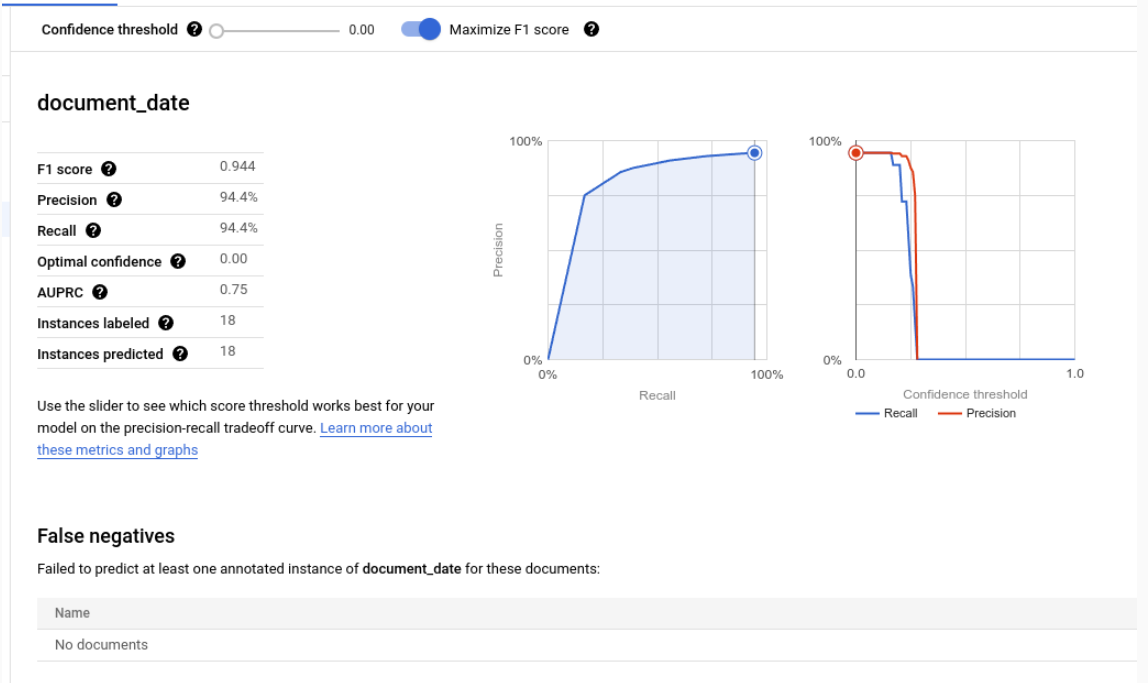
Build a labelled test set before tuning thresholds. Sample real variation: scans, photographs, skew, faint print, multi-page tables, handwritten additions, supplier templates, languages, and rare but consequential cases. Keep training, tuning, and final evaluation sets separate. Google's Document AI evaluation guide reports precision, recall, and F1 from predictions against annotations and supports field-level threshold analysis. Report those measures per field and document cohort rather than hiding weak classes in a weighted average.
Confidence is model-specific and must be calibrated. Microsoft's confidence guidance notes that confidence can support acceptance or human review, while read and key-value confidence are distinct. Plot observed correctness by score band for each critical field. Combine confidence with validation results, source trust, novelty, document quality, and consequence to route work.
| Route | Example criteria | Permitted outcome |
|---|---|---|
| Straight-through | Known source, high calibrated confidence, all deterministic checks pass | Create pending record with audit evidence |
| Focused review | One uncertain or conflicting critical field | Reviewer sees field and page evidence |
| Full review | Unknown layout, several conflicts, or high consequence | Reviewer verifies complete document |
| Reject | Unreadable, unsupported, malicious, or missing essentials | No posting; reason and resubmission path |
| Quarantine | Security or integrity concern | Restricted investigation without model processing |
Separate extraction, normalization, and validation
Keep the raw mention beside the normalized value. '03/04/26' should not silently become a date until locale and business context resolve it. Normalize units, currencies, decimal separators, addresses, and identifiers with versioned rules. Then validate arithmetic, cross-field consistency, master data, duplicate conditions, purchase-order status, and allowed ranges. The model supplies evidence; deterministic systems enforce constraints they can know.
Rejecting every mismatch can overload reviewers, while auto-correcting can conceal systemic defects. Give each validation a severity and action: warning, focused review, mandatory review, or hard reject. Record which rule fired and which value the reviewer accepted. Corrections become labelled operational feedback, but they should not flow automatically into training without quality, privacy, and poisoning controls.
Design the reviewer experience and authority
A reviewer should see the original page, highlighted evidence, proposed value, confidence, validation conflict, and relevant system-of-record data in one view. Keyboard-first correction and field-level assignment reduce handling time. Blindly asking a person to re-key the whole document defeats the purpose; showing only a model answer encourages automation bias. Make uncertainty and provenance legible.
Define who may accept, correct, reject, or escalate each class. Separate extraction review from approval of consequential changes such as bank details or payments. Track queue age by priority and document due date, not just average handling time. Provide a manual intake route during model or vendor outages and test how pending work is replayed without duplicate posting.
Work through an invoice exception
An invoice arrives from a known supplier. The extractor identifies a total of 18,540.00 with high confidence, but line arithmetic gives 16,540.00. The image shows a crease through the first digit. Because arithmetic validation fails, the field enters focused review despite confidence. The reviewer confirms 16,540.00, records the correction, and the workflow matches the purchase order. It does not update the supplier template or retrain automatically; the case enters a curated error set for later evaluation.
- Retain original hash, model and rule versions, proposed and accepted values, reviewer, and timestamps.
- Measure whether similar layout defects cluster by source, scanner, or processor version.
- Re-run the fixed processor against the locked evaluation set before promotion.
- Replay only unposted intake identifiers, preserving idempotency at the system-of-record boundary.
- Sample straight-through records independently so false confidence remains observable.
Operate versions, queues, and recovery
Version the processor, schema, normalizers, validation rules, and reviewer interface independently but record their combination on each case. Shadow a new model on live traffic without changing outcomes, compare it on a locked evaluation set, and canary by document class or source. Microsoft's Document Intelligence transparency note recommends pilots representative of the actual use and acknowledges that thresholds should reflect the scenario.
Monitor field-level precision and recall from reviewed samples, straight-through rate, review rate, correction rate, queue age, rejection reasons, duplicate prevention, posting failures, and cost per completed document. Segment by source and layout. A rising automation rate can be harmful if sampling shrinks or errors move downstream. Keep the old processor available long enough to stop or roll back, and reconcile records affected during an incident.
Compare document intelligence services on operations
A procurement comparison should use the same locked documents, field schema, validation rules, and reviewer workflow for every candidate. Measure field-level quality, layout and language coverage, latency, batch behavior, price at realistic page mixes, confidence calibration, regional availability, private connectivity, encryption, retention controls, support, and version-management options. Include poor-quality and adversarial files. A vendor's published benchmark rarely represents the exact forms, scans, and consequences in your queue.
Inspect portability before committing. Can the team export annotations, raw results, page coordinates, processor versions, and audit history in usable formats? Can a processor version be pinned while a replacement is evaluated? What notice accompanies retirement or material model change? Keep the intake identifier, canonical schema, validation, posting, and review authority in an application-owned layer where feasible. That boundary makes a provider change a controlled evaluation and migration problem instead of a complete workflow rewrite.
Finally, contract for failure. Define service objectives, regional behavior, rate limits, data deletion, security notification, support escalation, and access to incident evidence. Confirm the manual route can absorb priority documents during an outage and that replay does not duplicate records. A lower per-page price can become expensive when confidence is poorly calibrated, exceptions are hard to review, or model changes arrive without enough time to revalidate.
Frequently asked questions
What confidence threshold should we use?
There is no universal number. Calibrate scores on your documents per field, combine them with deterministic validation and consequence, and choose thresholds that meet an explicit error budget. Recheck calibration after model, source, or document-mix changes.
Does human review make the workflow safe?
Only when the reviewer has adequate evidence, authority, time, and an interface designed to reveal uncertainty. Sampling is still needed for auto-accepted work, and high-consequence actions may require a separate approval even after extraction review.
Should a generative model extract every document?
Not automatically. Compare specialised parsers, layout models, deterministic rules, and generative extraction against the same field-level evaluation. A mixed architecture may provide better cost, latency, explainability, and control than one general model.
Conclusion
Document intelligence becomes dependable when extraction sits inside a controlled evidence path. Scope the decision, secure intake, evaluate real variation, validate fields, equip reviewers, and version every component. The goal is not maximum automatic processing; it is correct, traceable work with uncertainty routed before harm reaches the system of record.