Developer handoff documentation is the set of maintained records and demonstrations that lets another engineer change, release, diagnose and recover a software system without depending on private memory. It is not a single handover document written at the end of a contract. The useful test is operational: can the receiving team obtain access, run a representative environment, understand the important boundaries, trace one request, make a safe change, deploy it, recognize failure and restore service?
Planning that evidence before development starts improves the system as well as the documentation. Ownership becomes explicit, interfaces become describable, deployment becomes reproducible and decisions acquire a durable rationale. Use this guide alongside Edilec's custom software discovery plan, API platform design guide and software support playbook. Together they cover what must be discovered, built and operated before responsibility can transfer.
Define handoff acceptance before delivery
Name the receiving roles and the responsibilities they will assume: product ownership, application maintenance, cloud operation, security response, data stewardship, vendor management and user support. A handoff to an internal engineering team differs from a transition to a managed service provider or a new supplier. Record the systems, repositories, environments, accounts, domains, certificates, data stores, integrations and third-party contracts in scope. Also state what remains outside scope and who retains it.
Turn acceptance into witnessed tasks. A receiver should clone and run the application from current instructions, locate a business rule, follow an API call across components, review a recent architecture decision, execute tests, create a deployment in a safe environment, find logs for a known request and walk through rollback. Evidence may include command output, deployment records and signed acceptance notes. Documentation is accepted when it supports competent action, not when a folder contains a required filename.
| Capability | Receiving-team exercise | Acceptance evidence |
|---|---|---|
| Access | Obtain approved repository and environment permissions | Named accounts with no shared credentials |
| Setup | Build and run from a clean machine | Current commands and verified prerequisites |
| Architecture | Trace one user action through components | Diagram, owners and decision records |
| Change | Implement and test a small modification | Review path and passing checks |
| Release | Deploy and reverse in a safe environment | Artifact, approval and rollback result |
| Support | Diagnose a seeded failure | Logs, alerts, runbook and escalation |
Make the repository the first reliable entry point
The repository should explain purpose, ownership, prerequisites, local setup, configuration, tests, common commands, deployment path and support contacts. Prefer executable setup and versioned configuration examples to a sequence of screenshots. Separate secrets from examples and document where developers obtain credentials. A clean-environment check in continuous integration can detect instructions that rely on an author's machine. If multiple repositories form one product, provide a small map that explains startup order and shared contracts.
Ownership should be visible in both organizational and repository terms. GitHub's CODEOWNERS documentation shows how repository paths can request review from responsible teams, but a file alone does not establish operational ownership. Confirm that listed teams exist, have access and understand escalation. Include expected response for security-sensitive modules, schema changes and production configuration. Remove departed people and temporary vendor identities before transfer.
Document architecture at useful levels
Use a small set of diagrams that answer different questions. A system-context view identifies users and external systems. A container view shows deployable applications and data stores. Component detail is valuable only where the boundary is difficult or consequential. The C4 model offers a consistent vocabulary for these levels. Keep diagrams close to the code or architecture records they describe and include a review date. A beautiful diagram without owners, protocols or trust boundaries is weak evidence for a handoff.
Record decisions whose rationale will matter later: tenancy model, identity boundary, data ownership, consistency choice, supplier dependency, queue semantics, failure behavior and rejected alternatives. Architecture Decision Records provide a lightweight pattern: context, decision, status and consequences. Mark replaced decisions as superseded rather than rewriting history. Link decisions to affected code, infrastructure and operational procedures so a future maintainer can distinguish deliberate constraints from accidental complexity.
- Show trust boundaries, data stores and external dependencies on architecture views.
- Name each component's owning team and deployment unit.
- Document why consequential alternatives were rejected.
- Record known capacity, security and operability limits.
- Keep generated diagrams reproducible and hand-edited diagrams reviewable.
- Test links and update dates as part of release or scheduled maintenance.
Specify interfaces, data and background work
Interfaces need machine-readable contracts and human operating context. The OpenAPI Specification can describe HTTP APIs, but the handoff must also explain authentication, authorization, tenancy, idempotency, pagination, rate limits, error semantics, deprecation and ownership. Include representative requests and denied cases. For asynchronous messages, document schema, ordering, retries, duplicate handling, dead-letter behavior and replay. Identify which system owns each business fact and how consumers reconcile changes.
Data documentation should cover conceptual entities, physical stores, migrations, classification, retention, backup and correction. Explain how seed or test data is produced without copying sensitive production records. Database migrations need forward and rollback expectations, especially when application versions overlap. Scheduled jobs and queues deserve first-class treatment: state where their progress is visible, how a stuck job is retried, and what prevents duplicate business effects. Many inherited systems fail in maintenance because background behavior was absent from the architecture narrative.
| Documentation asset | Must answer | Failure if missing |
|---|---|---|
| API contract | Inputs, outputs, security and error behavior | Consumers guess and create incompatible retries |
| Data dictionary | Meaning, owner, identifiers and lifecycle | Reports and integrations disagree |
| Migration guide | Ordering, compatibility and recovery | Release cannot be reversed safely |
| Job catalogue | Schedule, owner, idempotency and alerts | Silent delays or duplicate actions |
| Dependency register | Purpose, contract, credential and exit plan | Supplier failure has no owner |
| Environment map | Configuration and data differences | A safe test result does not represent production |
Explain delivery, observation and recovery
Document the route from source to production: branch and review policy, tests, dependency controls, artifact creation, configuration, deployment strategy, database changes, approvals and rollback. Identify which parts are automated and which require judgment. Use immutable artifact identifiers so a receiver can connect a commit to a build and environment. Provide a release checklist only where it expresses real decisions; do not duplicate pipeline behavior in a document that will drift.
Operational material should begin from user-visible failure. Define service objectives, dashboards, material alerts, log and trace access, incident roles, communication, known failure modes and restoration. Include one recent incident or exercise with sensitive details removed. The Diátaxis framework usefully separates tutorials, how-to guides, reference and explanation. A receiver needs all four: a guided first task, procedures for known operations, precise reference for commands and contracts, and explanation of why the system works this way.
Transfer security and supplier knowledge
Inventory human and machine identities, privileged roles, secrets, certificates, signing keys, domains and provider ownership. Rotate credentials controlled by the outgoing team and remove access after acceptance. Explain the threat model, security assumptions, unresolved findings and approved exceptions. A password vault transfer is not enough if no one understands which automation uses a credential or how rotation affects service. Verify emergency access without revealing secrets in the handoff document.
For suppliers, record the service owner, purpose, data exchanged, contract and renewal dates, support route, status page, security evidence, rate or quota limits, billing, export and exit procedure. Confirm ownership transfer with the supplier rather than assuming an email alias is sufficient. Preserve license and attribution obligations for code and media. The receiving team should know which dependency can stop a release or customer workflow and how to operate through a temporary outage.
Run a witnessed handoff flow
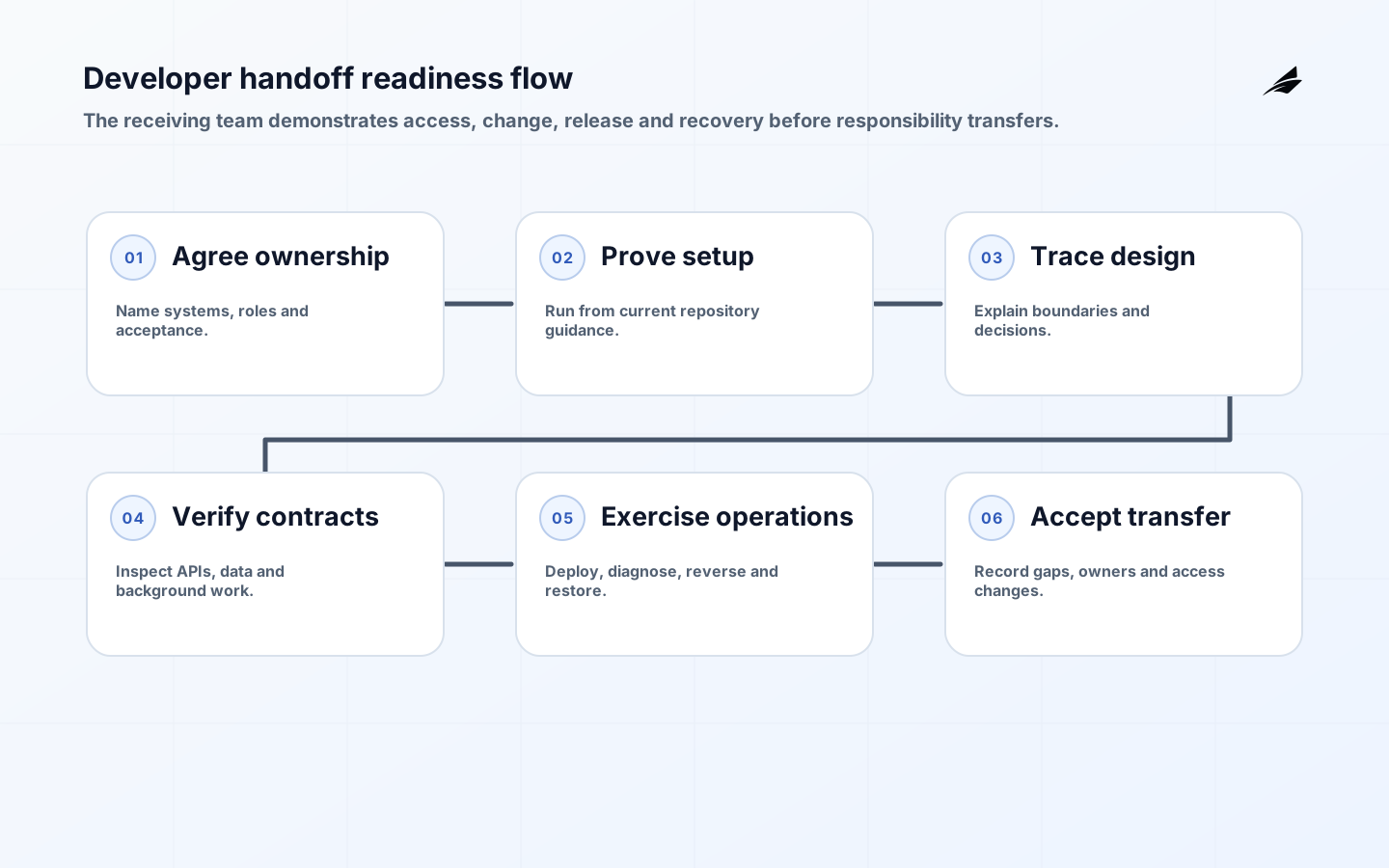
The six-stage flow below treats transfer as a sequence of demonstrated capabilities. Teams agree ownership and scope, prove runnable setup, explain architecture and decisions, verify interfaces and data, exercise release and recovery, and close with witnessed acceptance. Gaps return to the responsible owner with a due date. This is stronger than a single presentation because the receiver performs the work and reveals assumptions that written review misses.

Maintain documentation after transfer
Assign owners and review triggers to each durable asset. Interface contracts change with APIs, runbooks change after incidents, architecture views change with boundaries, and setup changes with dependencies. Link documentation changes to code review when practical. Track failed setup attempts, broken links and support questions as documentation defects. Schedule a focused review of critical procedures and access lists, but prefer event-driven updates after releases, supplier changes, incidents and ownership changes.
Key takeaways
- Define the receiving roles, system scope and acceptance exercises before development ends.
- Make setup reproducible from versioned repository instructions.
- Use concise architecture views and decision records to preserve rationale.
- Specify APIs, events, data and background jobs with failure behavior.
- Demonstrate deployment, diagnosis and recovery with the receiving team.
- Transfer identities and supplier ownership securely, then maintain documentation through real change.
Frequently asked questions
Should there be one handoff document?
Use one short index that points to maintained sources in repositories, architecture records, API specifications, deployment systems and runbooks. Copying everything into one file makes ownership and freshness worse.
How long should a handoff take?
Duration depends on system complexity and receiver familiarity. Plan overlap long enough for the receiver to perform setup, change, release and incident exercises, with time to repair gaps before outgoing access is removed.
Who accepts the handoff?
The accountable service or engineering owner accepts overall responsibility, while security, data, platform and support owners accept their areas. Acceptance should record unresolved risks rather than imply undocumented perfection.
Conclusion
Professional developer handoff documentation makes responsibility portable. It gives the next team a reproducible entry point, a map of deliberate decisions, trustworthy interface and data contracts, and the ability to release and recover safely. Plan those capabilities from discovery, keep evidence near the systems it describes, and make the receiver demonstrate real work. The result is maintainable software rather than a project that remains dependent on its original authors.