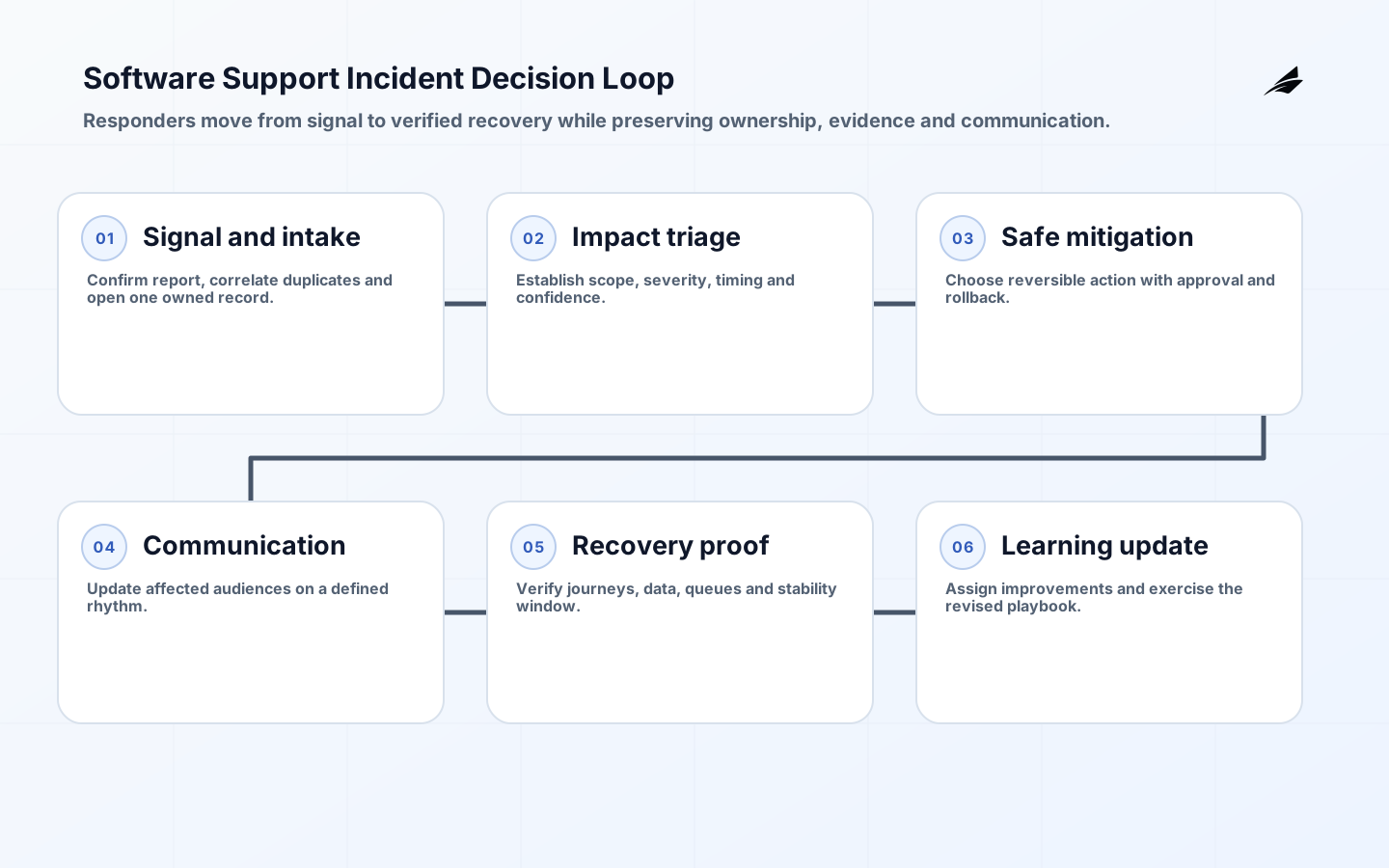
A software support playbook is a decision aid for a recurring operational situation. It helps the current responder establish impact, gather reliable evidence, take authorized action, communicate and leave the service safer for the next person. It is not a long troubleshooting encyclopedia or a substitute for engineering judgment. Useful playbooks are short enough to use under pressure, connected to live tools, and exercised often enough that stale permissions or commands are found before an incident.
This guide treats software support playbooks: a practical operating guide for technical decision-makers as a set of decisions that can be reviewed and tested. The aim is not to prescribe one vendor or promise a universal result. It is to help business and technical owners define boundaries, preserve evidence, expose failure behavior and decide when the work is ready to expand.
Define support ownership and service boundaries
List supported services, customer commitments, hours, intake channels, severity meanings and accountable owners. Clarify boundaries among customer support, operations, engineering, security, vendors and business leadership.
Assign incident commander, technical lead, communicator and scribe roles for significant events, while allowing smaller issues to use a lighter path. Define escalation by impact and uncertainty, not only elapsed time.
| Playbook element | Question answered | Required detail |
|---|---|---|
| Trigger | When should this playbook start? | Alert, report or observed condition |
| Impact | Who and what is affected? | Service, cohort, function and time |
| Actions | What can the responder do safely? | Expected result, risk and rollback |
| Escalation | Who decides when scope grows? | Role, channel, threshold and fallback |
| Verification | How is recovery proven? | User journey, data and stability checks |
Run a contact and access check. Every escalation route, account and vendor dependency should work for the people actually scheduled to respond.
Turn "Define support ownership and service boundaries" into a working control by naming one accountable owner, one maintained artifact and one review forum. The exit standard for this part of software support playbooks: a practical operating guide for technical decision-makers is concrete: Run a contact and access check. Every escalation route, account and vendor dependency should work for the people actually scheduled to respond. For this operating step, name the accountable owner, supporting evidence, exception route, and next measurable check.
Write playbooks around decisions and safety
Begin with trigger, scope and stop conditions. Then provide impact checks, dashboards, safe diagnostic steps, reversible mitigations, approval requirements, communication prompts, escalation and recovery verification.
Use exact links and commands where stable, but explain expected output and danger. Mark destructive or customer-visible actions clearly and require confirmation or specialist approval.
A responder unfamiliar with the component should be able to identify impact and reach the correct owner without guessing. Specialist repair can remain in a linked runbook.
Turn "Write playbooks around decisions and safety" into a working control by naming one accountable owner, one maintained artifact and one review forum. The exit standard for this part of software support playbooks: a practical operating guide for technical decision-makers is concrete: A responder unfamiliar with the component should be able to identify impact and reach the correct owner without guessing. Specialist repair can remain in a linked runbook. Within this part of the system, name the accountable owner, supporting evidence, exception route, and next measurable check.
Create a consistent triage path
Confirm the report, identify affected service and cohort, establish start time, inspect recent changes and compare symptoms with health indicators. Preserve evidence before restarting components that may erase it.
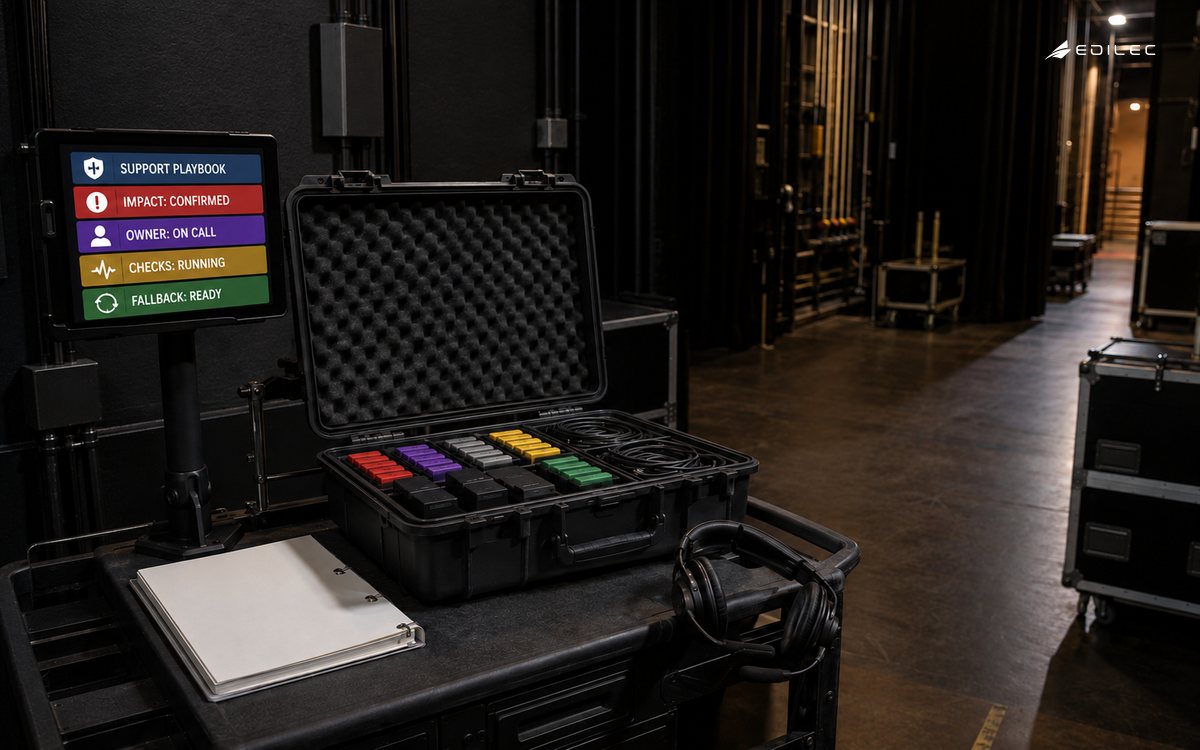
Separate impact from cause. Assign a provisional severity, state confidence and update it as evidence changes. Correlation with a deployment is useful but not proof that the deployment caused the incident.
Turn "Create a consistent triage path" into a working control by naming one accountable owner, one maintained artifact and one review forum. The exit standard for this part of software support playbooks: a practical operating guide for technical decision-makers is concrete: Use a triage record with timeline, queries, decisions and owners. Duplicate reports should join one incident rather than create competing investigations. When implementing this part of the system, name the accountable owner, supporting evidence, exception route, and next measurable check.
Communicate on a predictable rhythm
Define audiences, channels, update cadence and approvers by severity. Initial communication should state known impact, current action, next update and uncertainty without speculation.
Keep internal technical notes distinct from customer-facing status. Record material decisions and handoffs so a new responder can reconstruct context without reading every chat message.
Review whether updates were timely, consistent and accessible. Templates help structure information but must not force certainty the team does not have.
Turn "Communicate on a predictable rhythm" into a working control by naming one accountable owner, one maintained artifact and one review forum. The exit standard for this part of software support playbooks: a practical operating guide for technical decision-makers is concrete: Review whether updates were timely, consistent and accessible. Templates help structure information but must not force certainty the team does not have. Before releasing this part of the system, name the accountable owner, supporting evidence, exception route, and next measurable check.
Verify recovery and control rollback
Mitigation reduces impact; recovery restores the intended service; resolution addresses the incident sufficiently to close active response. Define verification for each rather than closing when a graph first improves.
Prefer reversible actions with bounded scope. Include rollback prerequisites, data reconciliation, queue drainage, customer repair and security review where appropriate.
Observe the service through an agreed stability window and confirm critical journeys, background processing and affected records. Assign remaining work before standing down.
Turn "Verify recovery and control rollback" into a working control by naming one accountable owner, one maintained artifact and one review forum. The exit standard for this part of software support playbooks: a practical operating guide for technical decision-makers is concrete: Observe the service through an agreed stability window and confirm critical journeys, background processing and affected records. Assign remaining work before standing down. While operating this control, name the accountable owner, supporting evidence, exception route, and next measurable check.
| Severity factor | Lower concern | Higher concern |
|---|---|---|
| User impact | Limited degraded convenience | Critical work blocked or unsafe |
| Scope | Single known account or component | Unknown or expanding cohort |
| Data | No integrity or confidentiality concern | Possible loss, corruption or exposure |
| Recovery | Known reversible mitigation | No proven path or repeated regression |
| Obligation | No external reporting trigger known | Contractual, legal or security escalation possible |
Turn incidents into owned improvements
Hold a learning review proportionate to impact. Reconstruct conditions, contributing factors, detection, response and recovery without reducing the event to one person’s mistake.
Create a small set of actions with owner, priority and verification. Update alerts, tests, architecture or playbooks when they directly address findings; avoid action lists that cannot be completed.
Track recurring incident patterns, action age and whether implemented changes alter detection or recovery. Close the loop by exercising the revised path.
Turn "Turn incidents into owned improvements" into a working control by naming one accountable owner, one maintained artifact and one review forum. The exit standard for this part of software support playbooks: a practical operating guide for technical decision-makers is concrete: Track recurring incident patterns, action age and whether implemented changes alter detection or recovery. Close the loop by exercising the revised path. When changing this part of the system, name the accountable owner, supporting evidence, exception route, and next measurable check.
Keep playbooks current through use and drills
Give every playbook an owner, last-reviewed date, supported service version and required access. Trigger review after major architecture, vendor, permission or incident changes.
Schedule tabletop exercises for coordination and controlled technical drills for tools and recovery. Rotate participants so knowledge and access are not confined to the primary maintainer.
Measure playbook use, broken links, failed commands, access gaps, time to establish impact, escalation delay and recovery verification. Archive obsolete playbooks visibly.
Turn "Keep playbooks current through use and drills" into a working control by naming one accountable owner, one maintained artifact and one review forum. The exit standard for this part of software support playbooks: a practical operating guide for technical decision-makers is concrete: Measure playbook use, broken links, failed commands, access gaps, time to establish impact, escalation delay and recovery verification. Archive obsolete playbooks visibly. During support for this part of the system, name the accountable owner, supporting evidence, exception route, and next measurable check.
Key takeaways
- Define support boundaries, severity and accountable incident roles before writing procedures.
- Structure playbooks around impact, decisions, safe actions, communication and verification.
- Preserve evidence and separate observed impact from suspected cause during triage.
- Treat mitigation, recovery and resolution as distinct milestones.
- Exercise playbooks, rotate responders and verify that learning actions change the system.
Frequently asked questions
What is the difference between a playbook and a runbook?
A playbook coordinates decisions and roles for a situation; a runbook usually gives detailed technical steps for a specific operation. Organizations use the terms differently, so define them locally and link rather than duplicate content.
How detailed should a support playbook be?
Detailed enough for a responder to establish impact, act safely and reach the right specialist. Move volatile commands or component-specific repair into maintained runbooks, and include expected results and rollback.
How often should playbooks be reviewed?
Review after relevant incidents and material system or access changes, plus a scheduled cadence based on service risk. Drills reveal staleness more effectively than a date-only sign-off.
Should every incident receive a post-incident review?
Use a proportionate threshold based on impact, recurrence, uncertainty and learning value. Even small incidents may deserve review when they reveal a systemic weakness; avoid heavy ceremony for routine known events.
Conclusion
Software support playbooks make response dependable by reducing ambiguity at the points where pressure is highest. The best ones connect live evidence, safe action, clear authority, honest communication and verified recovery. Keep them close to the service, let responders improve them, and test both the technical steps and the human handoffs. A playbook earns its place when it helps the next incident become less surprising.