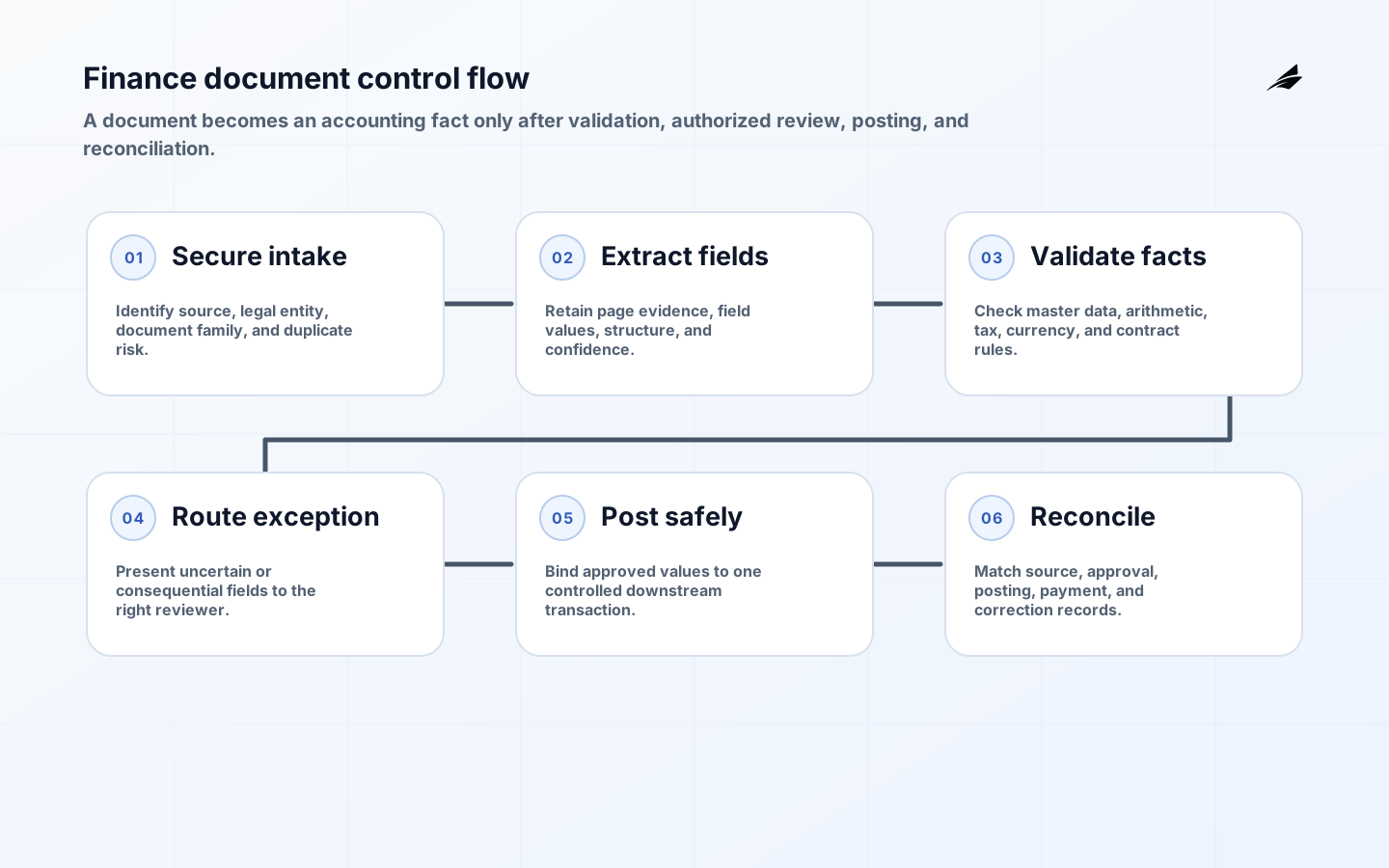
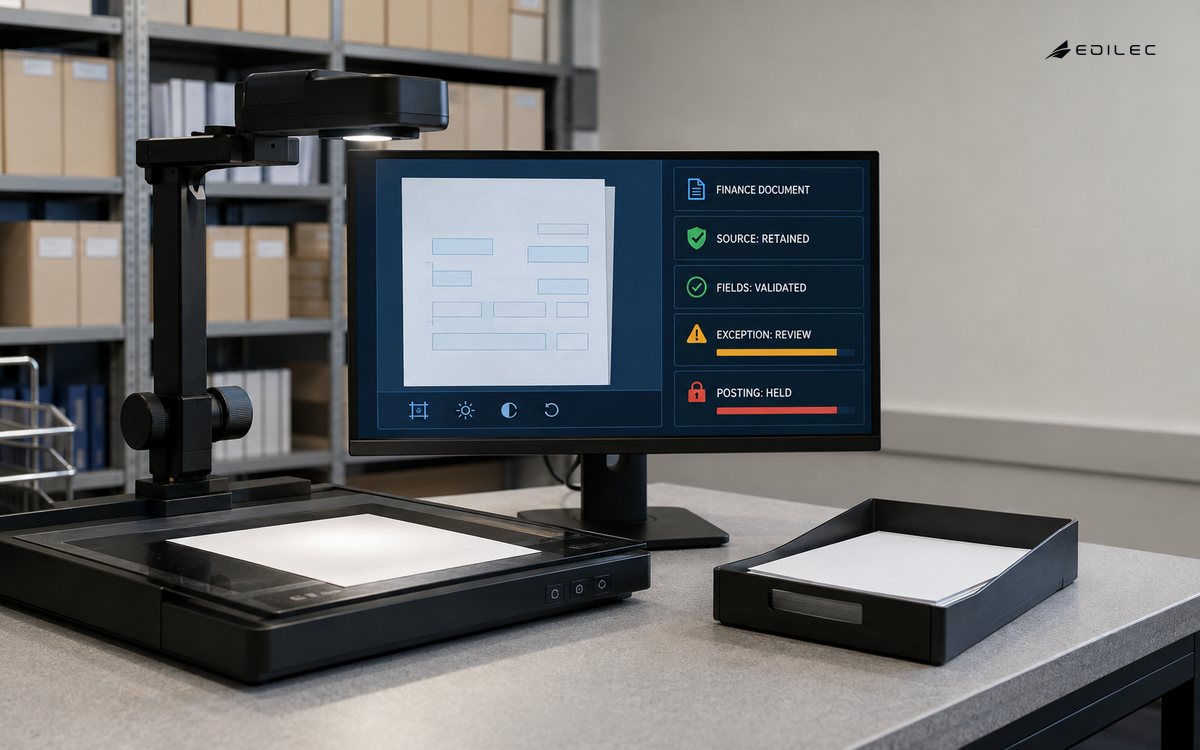
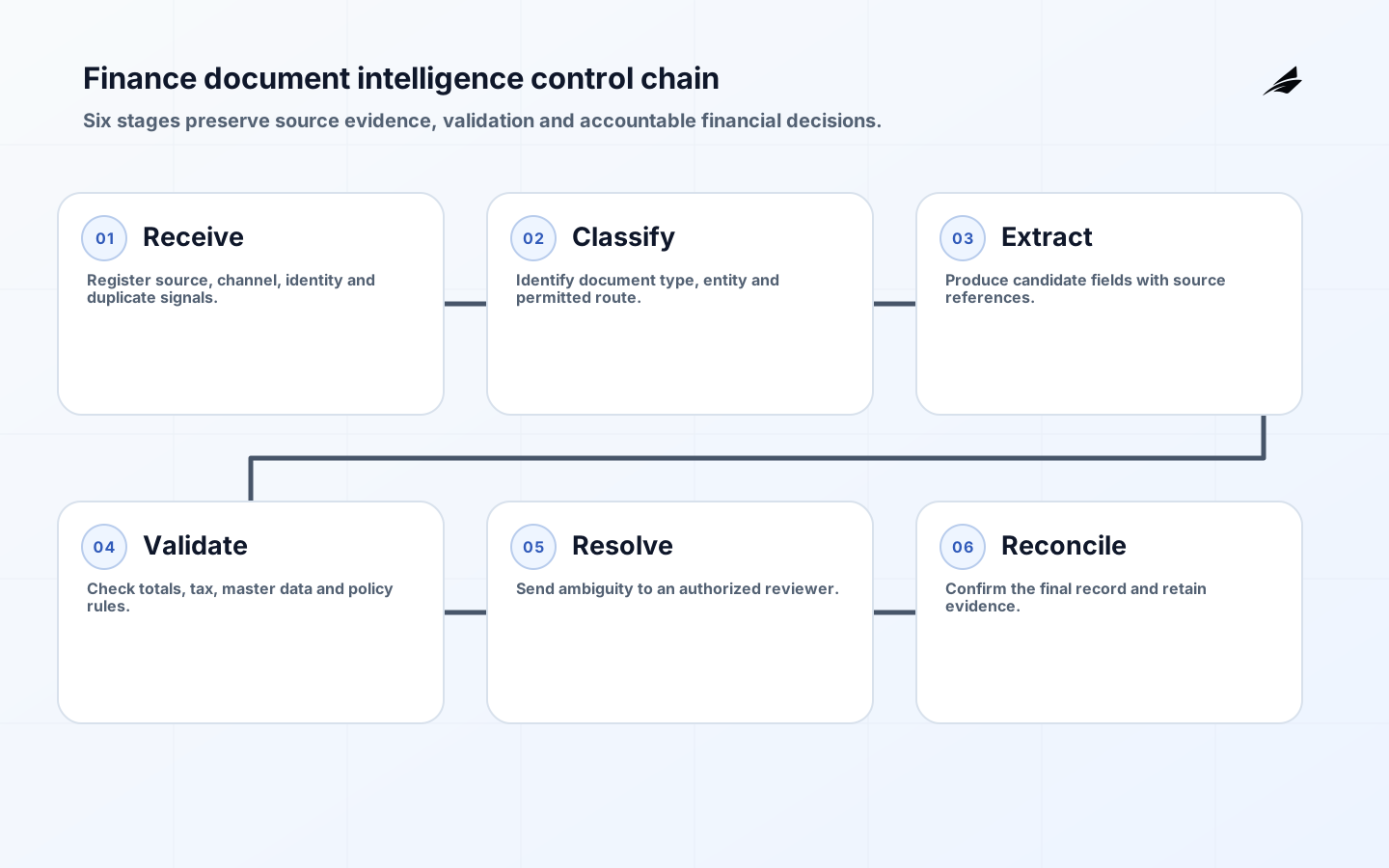
Document intelligence for finance teams is worthwhile when it shortens a controlled decision, not when it simply produces more extracted fields. A workable product turns an incoming invoice, statement, remittance notice or contract into a traceable case: the source is retained, its data is normalized, exceptions reach the right reviewer, and the final posting is reconciled with the system of record. Product leaders should begin with one recurring document family and one downstream decision, such as routing a payable for approval or matching a remittance to an open item. That boundary reveals the hard questions early: which source is authoritative, what confidence level is safe for automatic handling, which values may be corrected, and when must a person stop the workflow.
Define the finance control boundary
Map the existing path before choosing a model or an extraction vendor. Include arrival channel, duplicate detection, image quality checks, supplier or customer matching, field validation, coding, approval, posting, payment or collection, and the record retained for audit. Ask finance operators to bring awkward real examples: a credit note, a partial payment, a document with two currencies, an amended purchase order, and a document that belongs to the wrong legal entity. These cases expose where a plausible answer can still be operationally wrong. Give every state a business owner and make the workflow reject ambiguity rather than silently inventing a value. Automation can prepare a recommendation; it must not erase the distinction between a proposed field and an approved accounting fact.
| Decision | Make it explicit | Evidence |
|---|---|---|
| Document identity | Source, document type, version and duplicate rule | Retained original and content hash |
| Field authority | Where supplier, amount, tax and coding are confirmed | Source-to-field trace |
| Automatic route | Allowed confidence and matching conditions | Test cases and threshold record |
| Exception route | Reviewer, due time and escalation | Case history with reason |
| Posting | System that creates the financial record | Reconciliation result |
Design the evidence chain, not just extraction
Treat ingestion as an untrusted boundary. Files can be malformed, duplicated, mislabelled or carry instructions intended to manipulate an AI system. Store the original separately from extracted text, limit who can retrieve it, and send only the minimum content to each processing component. The case should retain source reference, extractor version, prompt or ruleset version where relevant, candidate values, validation results, reviewer edits and downstream identifier. That history helps a finance lead answer a practical question months later: why did this number enter the ledger? It also lets engineering compare model changes without turning production documents into an uncontrolled test set. Access policy should follow the case, including entity, vendor, account and reviewer role, rather than relying on a broad shared inbox permission.
Extraction quality has several dimensions. Character accuracy is not enough if a decimal separator is misread, a tax line is attributed to the wrong entity, or the correct value is sourced from an outdated attachment. Define field-level checks that compare totals, tax logic, purchase order state, vendor master data and prior documents. For high-impact fields, combine deterministic validation with a human decision rather than expecting a language model to act as a control. Build a small, versioned evaluation set from de-identified representative documents, including hard failures. Review false approvals and unnecessary reviews separately: the first threatens financial integrity, while the second consumes the capacity automation was meant to return.
| Failure pattern | Preventive control | Recovery action |
|---|---|---|
| Repeated invoice | Supplier, number, amount and date comparison | Hold case and link duplicates |
| Low-quality scan | Image and completeness check | Request replacement or manual entry |
| Confident but wrong field | Cross-field and master-data validation | Reverse draft action and correct case |
| Late approval | Queue age alert and delegated authority | Escalate without bypassing segregation |
| Posting mismatch | Reference-based reconciliation | Create an owned correction task |
Evaluate with operational cases
Set acceptance criteria around decisions, not a single aggregate accuracy score. Measure the share of cases that complete without reviewer correction, the rate of unsafe automatic routes, median exception age, duplicate prevention, reconciliation success and reviewer agreement on sampled cases. Segment each measure by document class, entity, language, source channel and supplier concentration so an apparently healthy average cannot hide a weak cohort. Before a version change, run the evaluation set and a shadow comparison against current handling. If a new extractor improves one field but increases unexplained exceptions, make the trade-off visible to finance before release. A quarterly control review should include the finance owner, security or privacy lead, engineering owner and the people who resolve exceptions.
- Keep a small, permissioned set of representative documents for regression testing.
- Test duplicate, missing-page, conflicting-total and wrong-entity cases.
- Record reviewer corrections as labelled operational feedback, not automatic truth.
- Separate extraction quality from posting and reconciliation outcomes.
- Require a named owner to approve changed thresholds or field mappings.
Calibrate decisions by field consequence, not one confidence threshold
Confidence is model evidence, not a finance approval rule. Microsoft’s Document Intelligence guidance explains that confidence is estimated at several levels and that visually similar documents can still behave differently for a model. Build policy at field and case level: a slightly uncertain supplier address may not block coding, while an uncertain bank account, legal entity, tax amount, currency, invoice total, or purchase-order match should stop straight-through processing. Validate extracted values against master data and arithmetic relationships before considering automation.
Test with the document population the finance team actually receives. The Google Cloud processor catalogue shows the typical invoice header and line-item fields available from a prebuilt parser, while Amazon Textract AnalyzeExpense separates summary fields from line-item groups. Those schemas are starting points, not proof of fit. Sample by supplier, scan quality, language, currency, page count, credit-note status, tax treatment, and exception history. Record field-level precision, recall where meaningful, correction effort, false straight-through rate, and reconciliation defects.
| Field or decision | Automation posture | Validation before posting |
|---|---|---|
| Supplier identity | Suggest and require an unambiguous master-data match | Tax identifier, legal entity, approved supplier status |
| Bank detail change | Never trust extraction alone | Independent change-control and known-contact verification |
| Invoice total and currency | Permit only after arithmetic and contract checks | Subtotal, tax, line totals, purchase order, tolerance |
| Coding recommendation | Allow suggestion with reviewer visibility | Account, cost center, project, policy, prior approved examples |
| Duplicate status | Block or route on meaningful similarity | Supplier, invoice number, amount, date, document fingerprint |
| Payment release | Keep separate from extraction approval | Due authority, segregation of duties, sanctioned payment route |
Release in bounded stages
Start in assist mode: prepare a structured case while a finance reviewer performs the established decision. Compare the proposed and final record, then identify which narrow conditions produce stable outcomes. The first automatic route should be a low-risk, reversible action with complete downstream checks, such as creating a draft rather than releasing payment. Use feature flags by entity or document type, a visible kill switch, and a clear rule for draining cases already in flight. Rollback means more than switching off a model. It means preserving source-to-decision evidence, reconciling affected records, notifying the responsible team and restoring the queue to an owned manual route. Release notes should state the changed capability, affected document classes, test evidence, monitoring owner and rollback decision maker.
Run a finance operations cadence
Document intelligence becomes dependable through routine stewardship. Daily queue review protects payment and collection timeliness. Weekly sampling finds patterns in corrections, new supplier layouts and access anomalies. Monthly reconciliation checks that workflow events match ledger and payment states. At a longer interval, reassess retention, supplier data access, model and rule versions, and whether an automated decision remains within the organization’s risk tolerance. Do not make reviewer overrides disappear in an attempt to improve a dashboard. An override may signal a new policy, a failing integration or a document class that needs a distinct path. The useful outcome is a workflow that gets more legible as it grows, with finance able to explain both its speed and its safeguards.
Key takeaways
- Scope the first release to a document family and a downstream decision.
- Retain the source, candidate values, validation results and human decisions as one evidence chain.
- Use deterministic checks for financial controls and people for material ambiguity.
- Measure unsafe automatic handling separately from reviewer workload.
- Release reversible draft actions before any action with financial consequence.
- Review corrections as signals for workflow design, not just model tuning.
Frequently asked questions
What should be automated first?
Choose a repetitive, bounded document class with reliable reference data and a reversible next step. A draft coding suggestion or a matched-case queue is usually safer than an irreversible posting or payment instruction. The first goal is to prove the evidence chain and exception route under real operating conditions.
Can confidence scores approve an invoice?
A confidence score may help route work, but it is not a business control by itself. Pair it with document-class rules, master-data checks, amount and tax validation, duplicate checks, and an approved authority path. Calibrate it on representative documents and review its performance after each material change.
Plan reconciliation and retention from the first case
Reconciliation should connect workflow completion to the financial system’s durable state. Define a daily or period-close comparison between accepted documents, draft records, posted records, payment or collection outcomes and unresolved exceptions. The comparison needs tolerances, an owner and a route for differences; an unowned mismatch report is only another queue. Retention should distinguish the original document, derived data, audit history, evaluation samples and operational telemetry. Finance, legal, privacy and security may set different requirements for each. Build deletion and legal-hold behavior into the case model early, then test it with a realistic request. These choices keep the workflow explainable long after the initial automation decision has faded from memory.
Conclusion
A finance document workflow earns trust when it can show what arrived, how a recommendation was produced, who resolved ambiguity and how the final record was reconciled. Build that operating path first; then use automation to remove the repetitive work inside it.