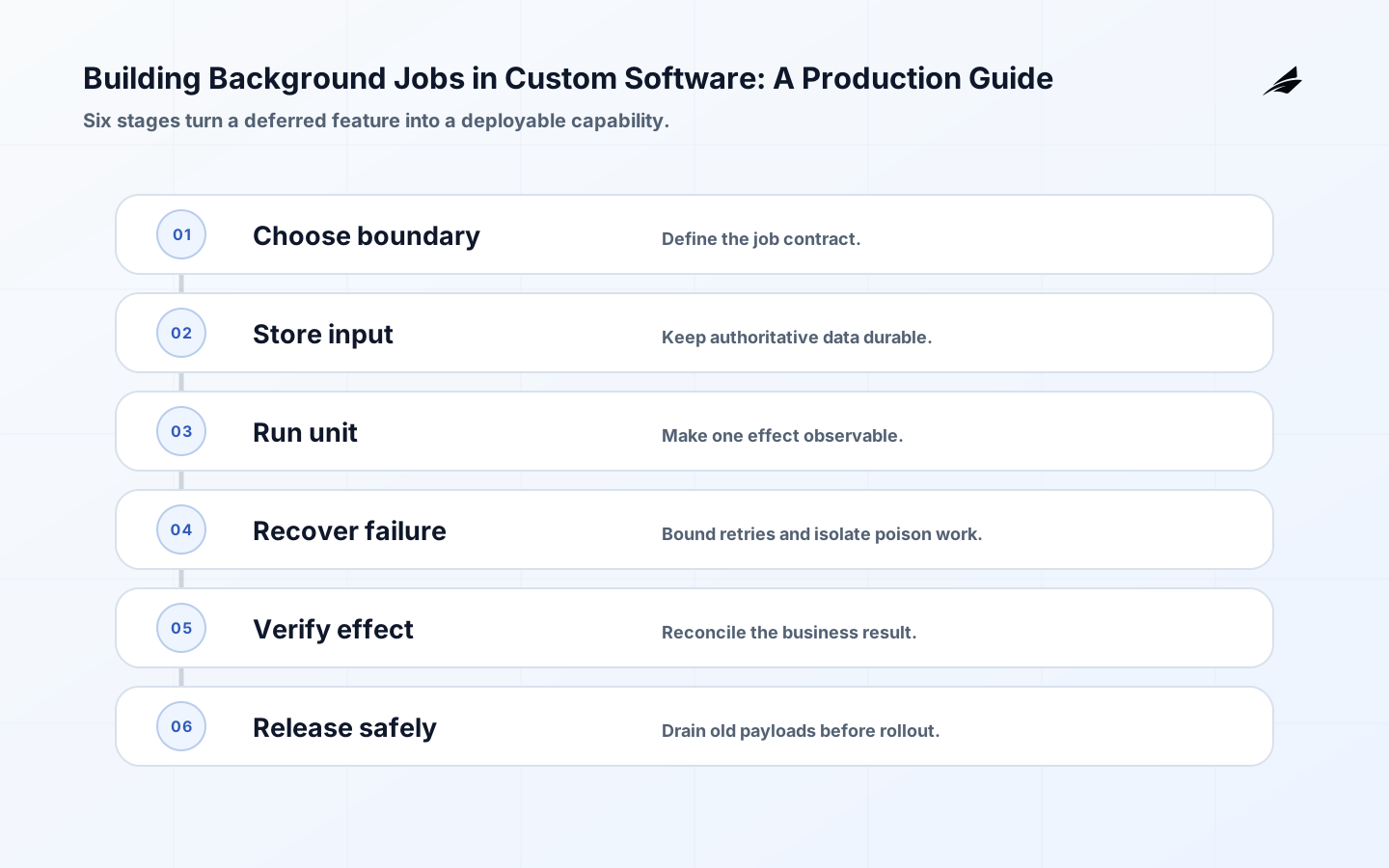
A background job in custom software is a contract between a request that can finish now and work whose result will exist later. The engineering challenge is not adding a queue client. It is deciding what the job is allowed to assume, how it receives authoritative input, what it may change, and how the product behaves when the process is interrupted. A good implementation keeps the payload small, treats the job as at-least-once work, and gives the surrounding system enough evidence to tell accepted, running, completed, and unrecoverable outcomes apart.
Use a concrete capability as the design test. Suppose an operations portal lets a manager upload a CSV of price changes. The request should validate the file, create an import record, and return a link to status. The job should fetch the stored file, validate each row, apply an approved batch, and publish an error report without silently changing rows it cannot prove. The database schema guide helps with the durable records, while event-driven systems helps distinguish an event notification from a command that expects one controlled effect.
Choose the boundary a custom feature can defend
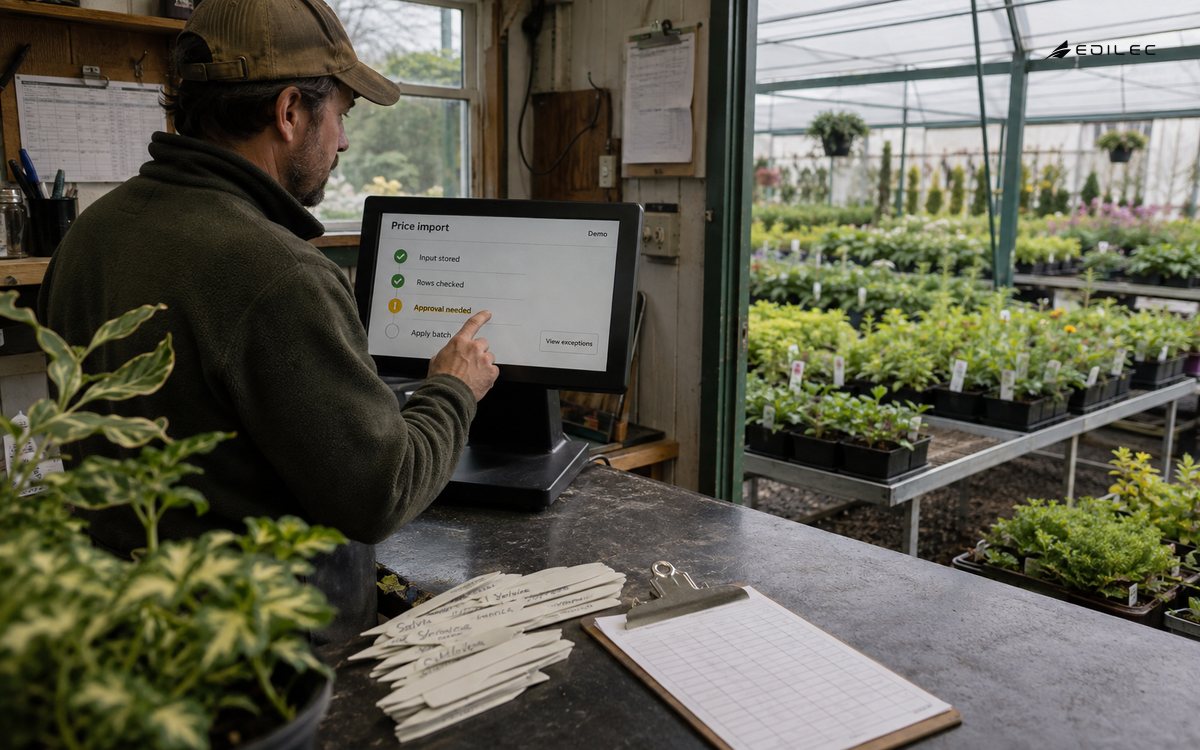
Start by separating the immediate decision from deferred execution. The request handler should authenticate the caller, validate the shape and size of the request, record the intent, and return a status that does not overstate completion. The worker should not re-interpret a mutable browser payload as its source of truth. It should load the accepted record and the versioned input that the product agreed to process. This division makes authorization and audit evidence easier to reason about, and it avoids a race in which a user edits a configuration while a queued job is still waiting.
A custom system often has more than one asynchronous mechanism: a queue for commands, a scheduler for time-based work, an event bus for notifications, and a batch store for long-running transformations. Choose by behavior. Google Cloud distinguishes Cloud Tasks, which provides precise task retry controls, from Pub/Sub, which distributes events to subscribers. That distinction is useful even when a team uses another platform. If one action must be completed by one handler under a bounded retry policy, model it as a task. If many consumers can react independently to a fact, model it as an event and give each consumer its own outcome.
| Boundary | Use when | Do not hide |
|---|---|---|
| Command job | One business action needs controlled execution. | Authority, idempotency key, and final effect. |
| Event consumer | Many consumers react to a recorded fact. | Consumer ownership and independent failure. |
| Scheduled task | Work occurs after a time or interval. | Timezone, missed schedule, and overlap policy. |
| Batch pipeline | A large input needs staged validation and writes. | Partial completion and resumable checkpoint. |
| Workflow | Several actions need durable coordination. | Compensation, timeout, and human review step. |
Store simple, durable inputs instead of frozen objects
A queued payload should be small enough to inspect, serialize, and replay. Sidekiq’s guidance is concrete: persist simple JSON-compatible identifiers rather than complex objects whose values can be stale by the time a job runs. The same rule applies in TypeScript, Python, Java, or any other stack. Put the import ID, tenant ID, requested version, actor reference, and idempotency key in the payload; keep large files, mutable pricing rules, and secrets in governed stores. When the job starts, re-load those records and check that their version and authorization still match the accepted intent.
Version the payload shape when a worker can outlive a deployment. A producer that adds a required field and a worker that still understands the old shape need an explicit compatibility rule. Prefer a tolerant reader for additive fields, retain an old handler until queued work drains, or publish a new job type when semantics change. CloudEvents provides a useful vocabulary for separating event context from data and for using type and dataschema to make evolution visible. Even a queue command benefits from the same discipline: name the intent, version the contract, and reject unknown semantics safely.
| Payload field | Purpose | Safety rule |
|---|---|---|
| jobType | Selects the business operation. | Version when behavior changes. |
| recordId | Locates authoritative input. | Re-read and verify current state. |
| requestedBy | Preserves actor context. | Store a reference, not a credential. |
| idempotencyKey | Protects the intended effect. | Enforce uniqueness at the effect boundary. |
| traceId | Connects request and execution evidence. | Propagate without putting secrets in logs. |
Break work into units that can be retried and observed
A large worker method is hard to retry because it mixes validation, external calls, writes, and notifications in one opaque attempt. Temporal recommends well-defined activities and notes that larger functions are easier to recover when divided into smaller units with shorter timeouts and idempotent effects. The principle is broader than Temporal. Make each unit answer one operational question: did the source validate, did the provider accept the request, did the local record change, or did the notification send? Keep the unit’s inputs explicit and record checkpoints when a long operation cannot be repeated cheaply.
For the price import, use stages such as scan file, validate schema, validate rows, create a proposed change set, obtain approval, apply batches, and publish a summary. Do not call a row-level write “successful” because the file was uploaded. Decide whether one invalid row blocks the batch, whether valid rows can commit, and how a correction is linked to the original import. The right answer depends on the business promise, but leaving it implicit guarantees that support will infer it from the first partial failure.
- Give every unit a bounded timeout and a clear completion record.
- Keep validation separate from irreversible writes.
- Use checkpoints for long inputs and record which version was processed.
- Avoid mixing user notification with the transaction that creates the business effect.
- Name the compensation or reconciliation path for partial completion.
Design retry, dead-letter, and reconciliation together
Retry behavior is part of the application contract. A provider timeout may justify another attempt, but a rejected address, malformed row, or revoked permission requires a different response. Amazon SQS describes at-least-once delivery, while Cloud Tasks exposes maximum attempts, retry duration, and backoff as configurable controls. Those platform settings do not tell the application what a safe retry means. Create an error taxonomy with transient, rate-limited, terminal-input, authorization, and unknown-effect classes. Attach a reason code, a next action, and an owner to each class before choosing defaults.
Dead-letter handling should not be a parking lot. Store the failed job’s business reference, last error class, attempts, and safe replay conditions. For unknown external effects, reconcile before replaying. A payment capture that timed out may have succeeded at the provider; a second attempt can create a duplicate charge. A notification may have been delivered even if the response was lost. Record provider references and use scheduled reconciliation or inbound events to resolve uncertainty. The error handling guide is useful here because the same taxonomy should make request failures and job failures understandable to operators.
Ship the capability in a compatibility window
Deploy producers and consumers with a plan for messages that cross the release boundary. Add the new handler before sending the new job type, accept old and new payload versions during the drain window, and remove the old path only after metrics prove that queued work has cleared. If a worker is horizontally scaled, assume a mixed fleet during rollout. Feature flags can control publication, but they do not replace schema compatibility or a rollback plan. The caching strategy guide offers a parallel lesson: a safe transition needs explicit freshness and fallback behavior, not a flag that hides disagreement.
Test the release with a queue containing old work, a partially completed record, and an external dependency that is slow or unavailable. Verify that a rollback does not strand messages in a format the previous worker cannot read. Keep migrations additive when possible, and make cleanup a separate change after the operational window closes. The smallest safe release is often a little less elegant than the final architecture, but it gives the team evidence about the real queue, dependency, and support behavior before more business paths depend on it.
Instrument the path from request to effect
A production background job needs a correlation story. Carry a request or trace ID, job ID, business record ID, attempt number, handler version, and dependency timing through logs and metrics. Keep payloads redacted and record references rather than sensitive content. Track the time between acceptance and first attempt, attempt duration, age of retryable work, dead-letter volume, state transitions that lack a matching effect, and the proportion of outcomes that required manual repair. A successful queue acknowledgement should not be the primary success metric; the business record reaching its promised state is.
Build a small operator view before launch. It should answer which version ran, which input was read, what state changed, which dependency failed, and what action is safe now. Include a replay preview that shows the key and expected effect before mutation. Alerts should separate an infrastructure outage from a growing terminal-input backlog. That distinction lets the service team scale or restore a dependency while product support helps users correct data. Observability becomes much more valuable when it is designed around decisions someone must make, not around every field a framework can emit.
Use an acceptance checklist that proves behavior
A background job is ready when its ordinary and exceptional behavior can be demonstrated by someone outside the implementation pair. Use one representative request and walk it from database commit to customer-visible completion. Then repeat it with a duplicate message, a worker crash after a side effect, an invalid input, a provider timeout, a revoked permission, an expired record, and a rollback during mixed-version deployment. Record expected state, durable evidence, user message, operator action, and whether a replay is allowed. These cases are more informative than a throughput number without a business effect.
Keep the checklist close to the service contract and update it when a provider, schema, or commercial promise changes. If the feature includes a bulk action, test concurrency and rate limits with data that resembles the largest supported input. If it sends notifications, test the boundary between an accepted send request and a provider delivery result. If it produces files, test retention, authorization, and regeneration. A test strategy guide can help map these cases to unit, integration, contract, and rehearsal coverage without treating every test as equally valuable.
- One request creates one durable business record before work is published.
- The payload contains identifiers and versions, not mutable snapshots or secrets.
- Duplicate execution produces one customer-visible effect.
- Retries stop on terminal errors and unknown effects go through reconciliation.
- A mixed-version deployment can drain old and new messages safely.
- Operators can explain, replay, cancel, or escalate with an audit trail.
The recommendations here are grounded in inspected primary guidance: Amazon SQS Queue Types, Temporal Retry Policies, Sidekiq Best Practices, CloudEvents Primer, Choose Cloud Tasks or Pub/Sub. Together, these sources clarify delivery semantics and worker failure choices; this guide applies them to a production contract for custom software.
Takeaways for custom software background jobs
- Choose a command, event, scheduled task, batch, or workflow boundary by behavior.
- Keep payloads small, versioned, and anchored to durable records.
- Divide work into units that have clear timeouts, checkpoints, and effects.
- Design retries, dead letters, and reconciliation as one failure model.
- Roll out producers and consumers with a compatibility and drain window.
- Make acceptance evidence useful to support, operations, and the next maintainer.
Common questions when implementing background jobs
Should every background job use a workflow engine?
No. A simple command with one durable effect may need only a queue and a record. Use a workflow when several steps, timeouts, human decisions, or compensation rules need durable coordination. Choosing a larger abstraction than the behavior requires can add more operating surface than it removes.
How small should a queue payload be?
Small enough to serialize predictably, inspect without exposing sensitive data, and remain valid while a job waits. Prefer stable identifiers, versions, actor references, and an idempotency key. Fetch the current authoritative record when execution begins and reject stale or unauthorized work according to policy.
When is a dead-letter queue useful?
It is useful when exhausted or malformed work must be separated from healthy traffic and given an owner. It is not a fix by itself. Store a business reference, classify the failure, define replay conditions, and reconcile unknown external effects before sending the work back.
Conclusion: ship background work as a contract
Custom software earns trust when delayed work remains explainable after deployment. Define the boundary, store authoritative inputs, keep units small, make effects idempotent, classify failures, preserve release compatibility, and build an operator path before the queue fills. The result is background processing that can grow with the product without becoming a separate, unowned system.