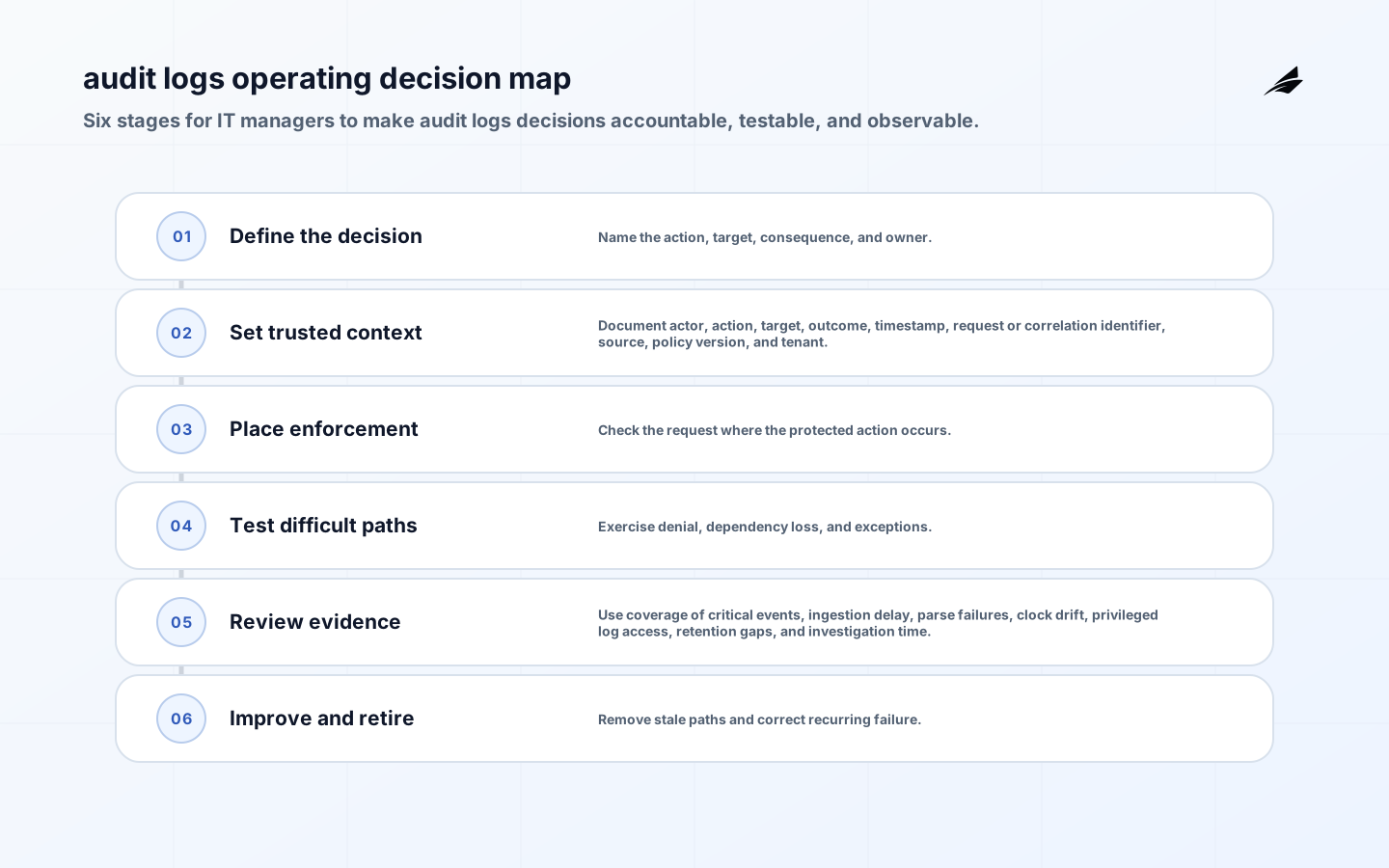
Audit logs are not a switch to enable; for IT managers, they are a way to make a high-consequence decision understandable when conditions are imperfect. The question is whether the team can explain who or what made a request, which facts were trusted, why the result was allowed or denied, and where the evidence lives. That question matters whenever a system must record an authentication event, authorization result, configuration change, data export, administrative action, or automation run. A credible operating approach treats audit logs as a capability with a defined scope, owners, tests, and a recovery path rather than a feature demonstrated only on the ordinary path.
Define the audit logs decision
Start with the harm, not a product configuration. List the workflows that can materially affect evidence for sensitive actions and security investigations, then write the action, target, actor, consequence, and accountable owner for each. For every entry, decide whether the system should prevent the action, require additional approval, allow a time-bounded exception, or simply observe it. This gives the team a reviewable boundary and exposes awkward cases early: automation acting for a person, cross-tenant support, a scheduled job, or an emergency action that cannot wait for a normal workflow. The baseline in NIST Guide to Computer Security Log Management is most useful when translated into these concrete local decisions.
For each protected path, name the context that actually changes the answer: actor, action, target, outcome, timestamp, request or correlation identifier, source, policy version, and tenant. Record where every fact comes from, who owns its quality, how fresh it must be, and what happens when it is absent, disputed, or malformed. A required fact without a source owner is a hidden dependency. For a high-impact request, a clear deny or hold-and-escalate result is usually safer than silently accepting stale context. This discipline also keeps product, operations, and security teams from arguing abstractly about audit logs after an exception is already in production.
| Decision area | Question to settle | Evidence to retain |
|---|---|---|
| Scope | Which audit logs decisions can cause material harm? | Named action, target, owner, and consequence |
| Trusted context | Which facts affect record an authentication event, authorization result, configuration change, data export, administrative action, or automation run? | Source, freshness expectation, and missing-data behavior |
| Exception | When may normal handling be bypassed? | Approver, reason, duration, and expiry |
| Verification | How will the team prove the decision worked? | Test result, event record, and review date |
Set boundaries and ownership
The enforcement point must be as specific as the business decision. Put the final check close to the service that performs the sensitive action, not only in a screen convention, dashboard, gateway, or runbook. Pass the minimum context needed, validate it, and return a result an investigator can understand later. OWASP Logging Cheat Sheet emphasizes that application-specific authorization logic still needs direct verification; that principle applies equally when audit logs depends on identity, workload, network, or policy controls. The receiving service should not treat a prior user-interface check as proof that its own obligation was met.
Ownership has to cover change, not just initial delivery. A documented event contract for high-risk actions, centralized collection, access control, and realistic retention and review practices. Give every policy, configuration, credential, event schema, or limit a named maintainer who can approve a revision and assess its effects. Capture a stable policy or configuration version with important results so a later investigation does not have to infer behavior from deployment times. The NIST Cybersecurity Framework 2.0 framing is useful here: the request itself should be evaluated with explicit context and not granted merely because it entered through a supposedly trusted network or application route.
Build and test audit logs deliberately
For audit logs, implement the smallest complete path before expanding coverage. Write a short contract that says what enters the decision, which component is authoritative, what the safe default is, what response a caller receives, and where the event is recorded. Test normal requests, malformed inputs, missing context, delayed dependencies, conflicting privileges, tenant boundaries, and the emergency path. Tests should assert the protected outcome, not only a status code or a front-end state. A control that behaves correctly only when all dependencies are healthy will surprise the team precisely when the control is needed most. Include a scenario unique to the protected asset before calling the control ready for wider use.
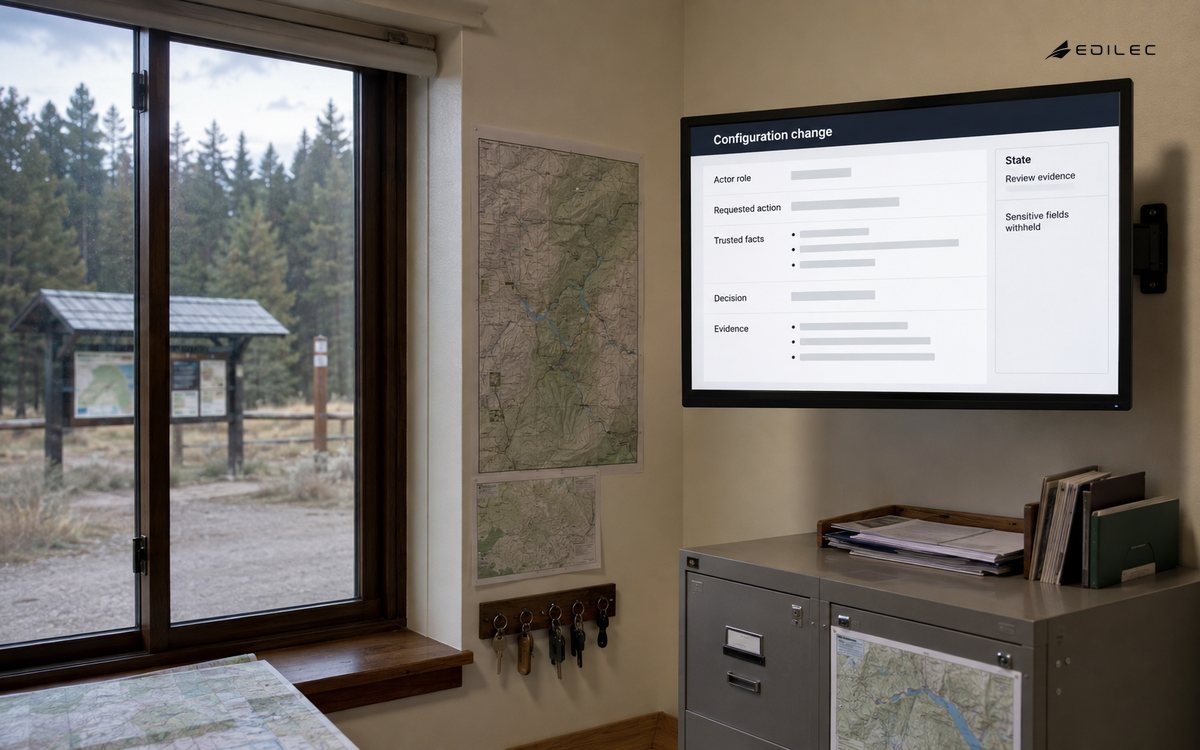
Use representative scenarios that a product owner and an operator can both recognize. Ask whether a user can retry, whether a workload can continue safely, whether a customer receives a meaningful response, and whether an on-call engineer can distinguish an attack from a faulty integration. Connect implementation work to audit logs practical guide, incident playbooks, and data retention guide when these adjacent concerns share the same request path. The goal is not an elaborate framework; it is a decision contract that remains readable as teams, vendors, and services change.
| Test case | Expected result | Operational check |
|---|---|---|
| Ordinary allowed request | Only the intended action completes | Record actor, target, result, and control version |
| Ordinary denied request | No partial side effect occurs | Return a safe response and a diagnosable reason |
| Context or dependency failure | Fail according to the documented default | Alert the responsible owner when availability or safety is affected |
| Emergency exception | Access is narrowly scoped and expires | Require reason, review, and removal evidence |
Operate with evidence
After release, review behavior rather than relying on a deployment checklist. Useful signals include coverage of critical events, ingestion delay, parse failures, clock drift, privileged log access, retention gaps, and investigation time. Pair a rate or count with a question: is a rise in denials a new attack, an expired dependency, a legitimate rollout, or a broken client? Segmenting by application, tenant, actor type, and action makes the answer less speculative. CISA Secure by Design supports treating governance and measurement as continuous work; the same principle keeps audit logs connected to the systems and people who must act on its signals.
Keep evidence proportionate and protected. A decision record should enable a reviewer to reconstruct the important path without recording secrets, unnecessary personal data, or full payloads. Set retention according to investigation, regulatory, and operational needs, then test whether a person can actually retrieve and interpret the record. Periodically review owners, exceptions, and stale configuration. That review is where a well-designed audit logs program becomes simpler over time: unused paths are retired, temporary access disappears, and recurring failures become engineering work rather than recurring manual triage.
Handle failures and exceptions
The recurring failure mode is collecting a large volume of generic events without the actor, target, outcome, or correlation needed to answer a real question. It is attractive because it shortens a local task, but it moves risk into a path that later reviewers cannot see. Design exceptions as first-class records: state the requested action, accountable owner, compensating control, approver, expiry, and review outcome. Do not make an exception permanent simply because an integration has not been updated. When a customer-facing workflow needs continuity, choose the least harmful fallback and make that choice explicit before an incident creates pressure to improvise.
When the control appears to have failed, preserve available evidence, establish the timeline from trustworthy sources, repair the event contract, and add an investigation exercise for the changed control. Preserve the relevant decision evidence and avoid broad reversals that create a second problem. Then ask a narrow set of questions: was the request identified correctly; was the authoritative context fresh; did enforcement happen at the right point; did an exception change the result; and did monitoring reveal the condition in time? This turns an incident into a specific correction to the contract, test suite, owner map, or runbook rather than a vague instruction to be more careful.
Key takeaways
- Define audit logs around named high-impact decisions and their consequences.
- Make every required context fact, policy, configuration, and exception owned and reviewable.
- Test the denied, degraded, cross-boundary, and emergency paths before broad rollout.
- Use coverage of critical events, ingestion delay, parse failures, clock drift, privileged log access, retention gaps, and investigation time to find drift, not merely to report activity.
- Remove temporary paths and stale configuration as part of normal operations.
Audit logs FAQ
Where should a team start? Start with one action that can cause a real business or customer harm and make its request path fully explainable. That is more valuable than trying to standardize every application at once. Once the team has a tested pattern for record an authentication event, authorization result, configuration change, data export, administrative action, or automation run, it can extend the same vocabulary, evidence, and review process to neighboring workflows.
How much detail belongs in the record? Retain enough context to answer who acted, what changed, which target was involved, what result occurred, and which version of the control made the decision. Avoid recording credentials, raw sensitive payloads, or any information that is unnecessary for investigation. The right level of detail is demonstrated by a timed investigation exercise, not guessed from a generic schema. For audit logs, confirm this during a review of an actual protected decision rather than only in a schema meeting.
When is an exception acceptable? An exception can be reasonable when a legitimate operation cannot safely wait, but it must be narrower than the normal rule and have a named owner, expiration, and review. Emergency access without expiry or evidence is simply a second, weaker system. Treat recurring exceptions as product or platform work that deserves a durable design. In a audit logs program, that review should identify the normal path the exception is meant to replace.
Conclusion
For IT managers, audit logs becomes dependable when it is treated as a series of accountable decisions rather than an isolated control. Define what matters, place enforcement where the action occurs, make trusted context and changes visible, and rehearse the hard cases. That approach gives builders a practical contract, operators useful signals, and leaders evidence that security work is protecting real business activity without obscuring how the system behaves. The operating detail will differ with the protected asset, but the accountability should not.