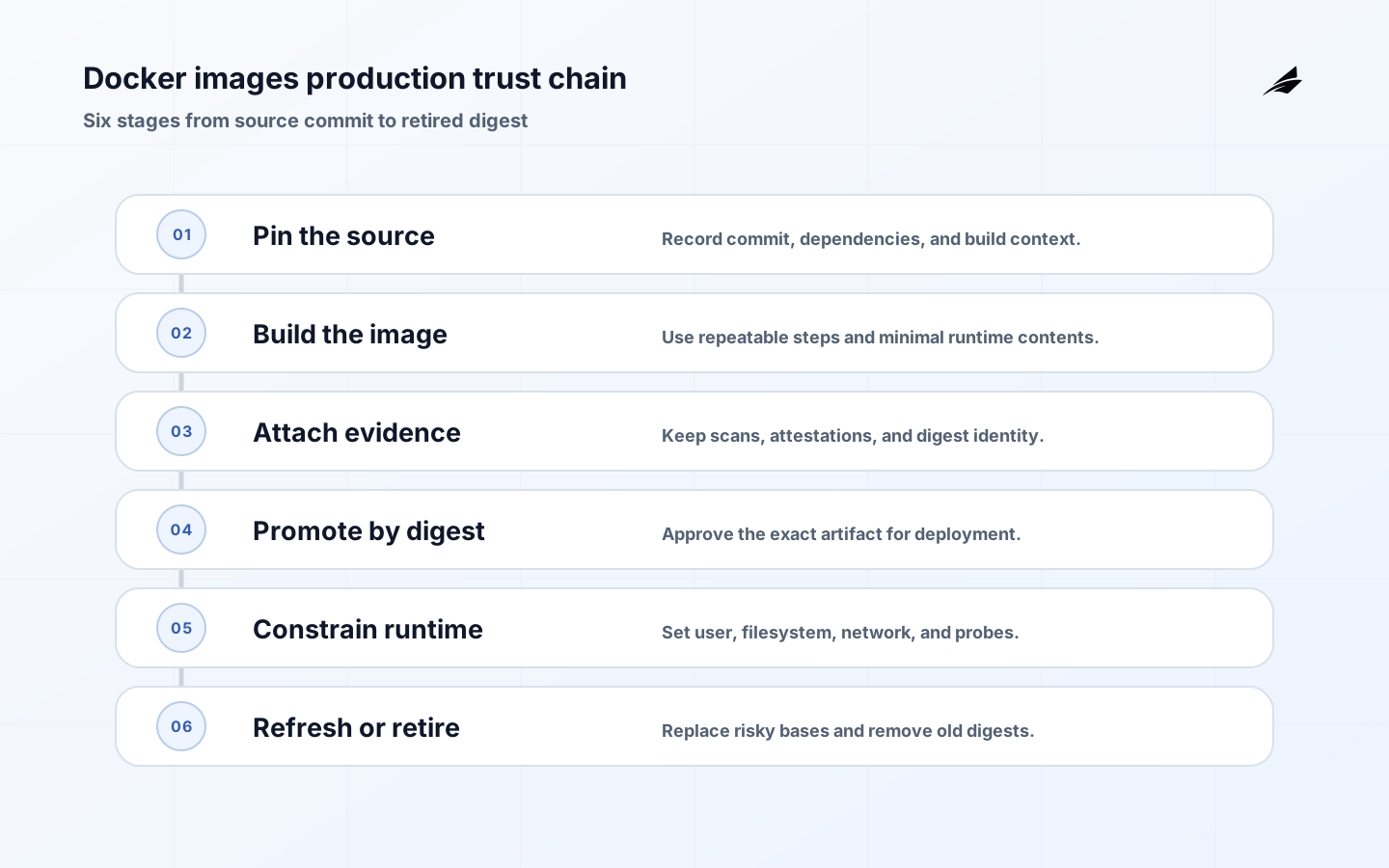
Docker images change character in production. Locally, an image is a convenient package that starts an application. In production, it is also evidence: it identifies the filesystem and configuration defaults delivered to a runtime, connects a workload to a build, and establishes a boundary for vulnerability response. A mutable tag such as latest is useful for a human workflow but not sufficient for a deployment decision because its target can change. Use an image digest to identify the exact manifest a runtime should fetch, while keeping a readable release tag for people. The broader Docker image architecture guide explores that distinction in more depth.
A production image needs an accountable owner, immutable identity, permitted runtime boundary, update path, recovery option, and evidence of what changed. The NIST AI Risk Management Framework and NIST Generative AI Profile provide lifecycle context for AI systems, especially when a digest must be traced from build to runtime. For Cloud and DevOps work, Google SRE release engineering, Kubernetes documentation, and NIST incident response guidance anchor repeatable change and recovery, especially when a digest must be traced from build to runtime. The OWASP LLM guidance adds a threat lens for model-connected services, and OpenSLO specification makes service objectives portable, especially when a digest must be traced from build to runtime. Connect the decision to Docker images, Kubernetes deployments, and SLOs when the decision crosses delivery boundaries, especially when a digest must be traced from build to runtime. Test ordinary work, missing evidence, stale state, unauthorized requests, partial failure, and recovery, especially when a digest must be traced from build to runtime. Keep the first bounded result in a change record, review exceptions with the people who own the work, and use the evidence to decide whether to expand, narrow, or stop, especially when a digest must be traced from build to runtime. The boundary is part of the service operating record.
Key takeaways
- Deploy a tested image digest; use tags for discovery and release communication, not identity alone.
- Separate build tooling from the runtime filesystem with multi-stage builds.
- Choose a trusted base deliberately and rebuild on a defined cadence because images are snapshots.
- Run as an explicit non-root user where the workload permits and keep secrets out of image layers.
- Treat admission, runtime policy, and rollback evidence as part of the image lifecycle.
Define image identity and ownership
An image reference has a repository, tag, and content digest. The digest is content-addressed and can identify the exact manifest selected at deployment; a tag is a mutable name that publishers may repoint. Record both in the release: the tag gives a recognizable version and the digest gives a reproducible object. Give every production repository an accountable owner, retention rule, and access model. That owner should know which services consume a base image and how quickly a critical rebuild can be tested and promoted. Without this inventory, a vulnerability notice becomes a search through CI logs and developer laptops instead of a focused operational task.
| Image decision | Recommended evidence | Operational value |
|---|---|---|
| Base selection | Publisher, digest, purpose, review date | Shows why the starting point is trusted and appropriate |
| Release image | Source revision, build record, image digest | Connects a running workload to a reproducible build |
| Runtime account | Declared user and required filesystem paths | Makes privilege and writable-state assumptions inspectable |
| Retirement | Consumer inventory and retention policy | Limits stale artifacts without removing needed rollback options |
Build a minimal, testable runtime
Multi-stage builds let compilers, package managers, and test-only files stay in a build stage while the final stage contains only what the process needs to run. That reduces transfer time and avoids carrying unnecessary tools into the workload, but small size is not the only goal. The final image must still contain required certificates, timezone data, diagnostics approved for the service, and a clear startup command. Use a .dockerignore file so credentials, local dependency caches, test output, and unrelated repository files never enter the build context. Test the final image, not just a development container, because missing runtime files and permissions surface only there.
Verify what enters the supply chain
A useful verification process distinguishes three questions: where did the source come from, what did the build use, and what is permitted to run? Pinning a base image by digest prevents an unnoticed base change during a rebuild; rebuilding it on a schedule deliberately incorporates patches. Generate provenance or attestations when the tooling supports them, and retain the build inputs, test result, and scanner result with the release record. Scanner findings require triage: a finding in an unreachable component may have a different response from an exposed remotely reachable library, but neither should disappear into a generic accepted-risk list. Set an owner and expiry for exceptions.
| Control | Question it answers | Common mistake |
|---|---|---|
| Digest pinning | Did this build start from the reviewed base? | Assuming a familiar tag cannot move |
| Build attestation | What source and build process produced this image? | Treating a signature as proof of runtime safety |
| Vulnerability review | Which finding has a reachable, material impact? | Using severity alone as a deployment decision |
| Runtime policy | May this image run with this identity and capability set? | Validating only before registry publication |
Run images with explicit boundaries
The image is only one part of the runtime contract. Define the process user, writable directories, exposed port, resource limits, health behavior, network access, and identity it needs to call dependencies. Containers should be replaceable: persistent customer data belongs in a managed durable service or volume with a recovery plan, not in an incidental writable layer. Avoid relying on shell access to repair a running container; it creates drift and loses the ability to reproduce the fix. The container platform should surface the image digest, release revision, and relevant logs and metrics so operators can correlate an incident with the deployed object.
Refresh images without surprising production
Because an image includes a snapshot of its base and dependencies, there is no permanent final build. Establish a rebuild cadence, trigger an expedited assessment for important advisories, and distinguish a rebuilt candidate from an automatically safe production release. Run the same application and integration checks that protect ordinary code changes, compare image contents where useful, and expose the candidate progressively. Keep the prior known-good digest available for a bounded rollback window. The valuable metric is not merely the number of images scanned; it is the time from an actionable issue to a tested, deployed replacement across affected services.
Docker image rollout questions
Question: Are image tags acceptable in a deployment manifest? Answer: Use tags for human readability, but pin the deployed artifact by digest so the runtime identity cannot change silently. Question: Is the smallest possible image always best? Answer: Not always. Minimize unnecessary attack surface while retaining required diagnostics, compatibility, patchability, and a supportable runtime.
Are image tags ever acceptable in a deployment manifest?
A versioned tag can be useful for readability, but pair it with or resolve it to an immutable digest for the actual release record. The key requirement is that an operator can identify the exact bytes that were approved and deployed later.
Is the smallest possible image always best?
No. Remove unneeded content, but do not omit runtime files the service needs or force unsafe workarounds during an incident. Minimalism should make the runtime easier to understand and maintain, not make it opaque.
Does rebuilding an image fix every vulnerability?
No. A rebuild picks up available fixed dependencies only when the base and package sources provide them. It must be followed by testing, deployment, and, when no fix exists, a documented mitigation or risk decision.
Rollback release evidence
- Confirm the production manifest resolves the selected tag to the retained image digest.
- Run the final image as its declared non-root user and verify only intended directories are writable.
- Review the build context to ensure local credentials, tests, and dependency caches are excluded.
- Test a rebuild with an updated base image before treating a scanner finding as remediated.
- Keep build tools out of the runtime stage unless a documented operational requirement justifies them.
- Attach source revision, build result, and image digest to the deployment record.
- Check that registry permissions distinguish publishers, deployers, and read-only investigators.
- Verify a restart produces the expected service behavior without relying on local container state.
- Review entrypoint and signal handling so the process can shut down predictably.
- Test the exact image that will run, rather than a development container with extra utilities.
- Document the approved emergency diagnostic route instead of adding a shell to every production image.
- Compare image contents between releases when a dependency update has unexpected operational effects.
- Set retention that preserves rollback candidates without allowing stale repositories to accumulate forever.
- Route actionable vulnerability findings to a named service owner with an assessment deadline.
- Verify secrets are supplied at runtime and never appear in Dockerfile history or build logs.
- Measure time from an actionable image issue to a tested deployed replacement.
- Rehearse replacing a compromised image digest while preserving a clear audit trail.
- Confirm registries retain enough metadata to answer which workloads used an affected image.
- Review whether the base image lifecycle is aligned with the service risk and maintenance capacity.
- Verify that an image promotion never rebuilds silently between the tested candidate and the production registry.
- Check that emergency access to image metadata is available to incident responders without granting them image publishing permission.
- Track the operational cost of dependency refresh work so the organization can fund a cadence that actually keeps production images current.
Conclusion
Image lifecycle ownership should include retirement. When a base image, package, registry, or build service is no longer trusted, identify every digest that depends on it and define the replacement sequence. A scan result needs runtime context: a vulnerable package in an unreachable build layer differs from a reachable library exposed on a public listener, although both deserve a documented decision. Verify signatures or attestations at the promotion boundary, restrict who can push to release repositories, and retain enough metadata to reproduce the build. Operators should be able to answer which source produced a running container, which policy admitted it, and how to stop or replace it.
Production Docker images are controlled release artifacts, not just compressed application folders. Identify them by digest, build them with a lean runtime contract, verify their origin and contents, and practice their refresh path. Those habits make container deployment safer without turning routine delivery into a security ceremony.