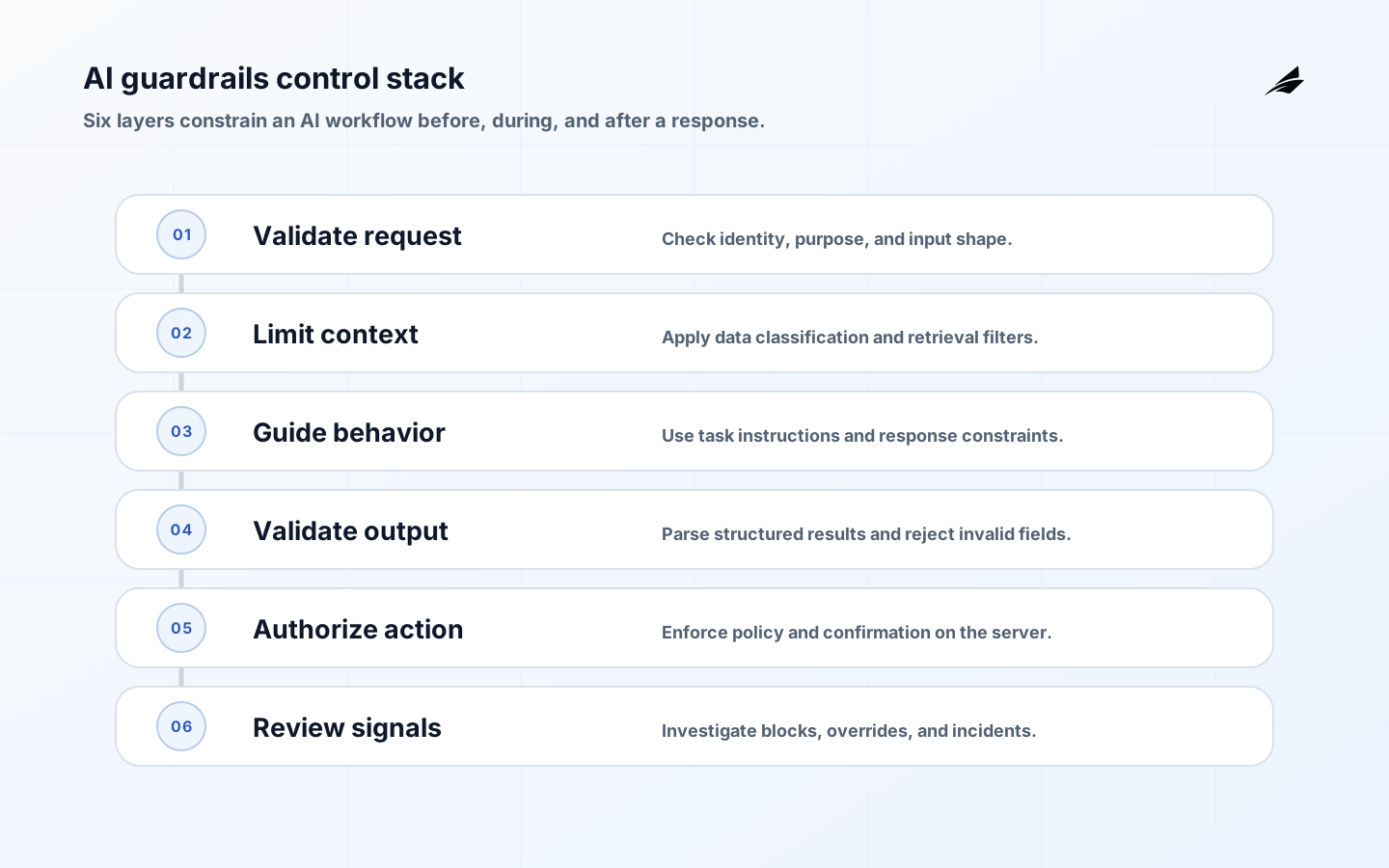
AI guardrails are the rules and technical controls that keep an AI-enabled workflow inside its intended boundary. They matter when a system can see sensitive context, influence a decision, or call a tool. A sentence in a prompt is not enough: a model can misunderstand it, a retrieved document can conflict with it, and a connected system may still accept an unsafe request. For a growing team, the practical question is which control belongs at which point in the workflow. This guide separates guidance for the model from application enforcement, review, and recovery. Prompt engineering can improve consistency, but it cannot replace guardrails that must hold under pressure.
Set the AI guardrail boundary
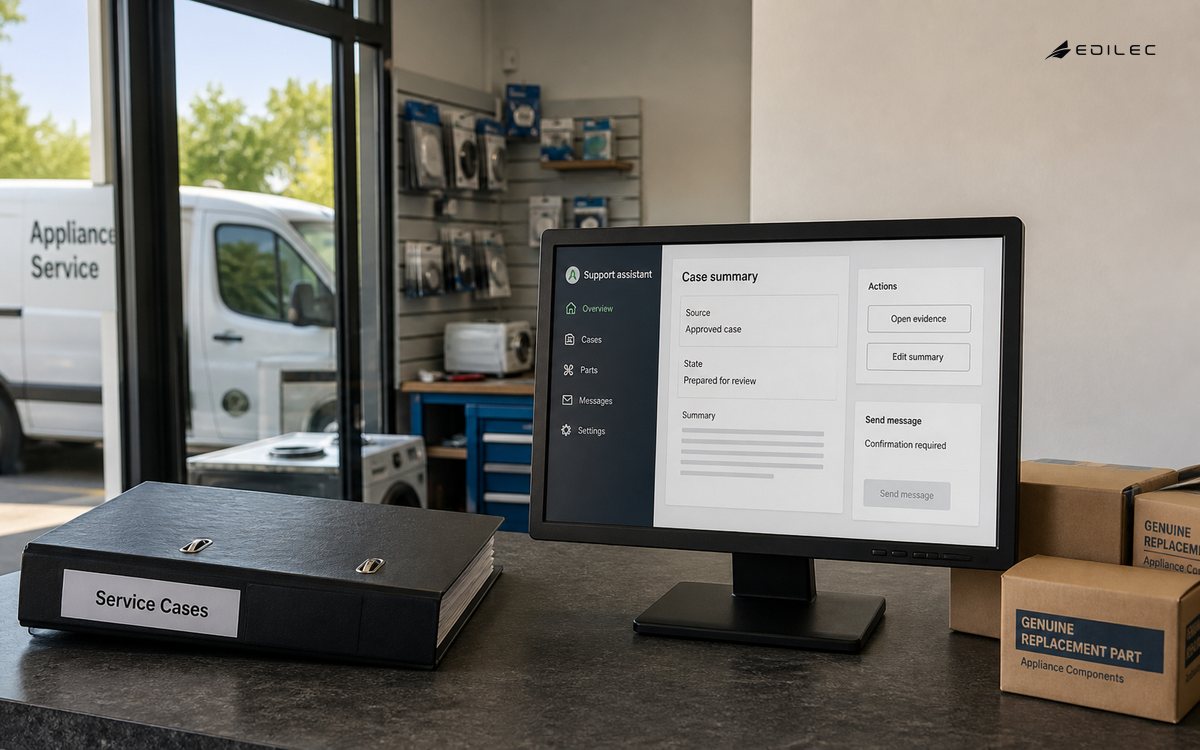
Write the permitted job in plain language. For example, an internal assistant may summarize an approved customer case for an authenticated support lead; it may not reveal another tenant's records, change entitlements, or send a message without confirmation. List the data categories, users, tools, downstream effects, and consequences of an error. The NIST Generative AI Profile is a helpful planning lens because it covers information integrity, privacy, and human-AI configuration. A narrow boundary gives engineers a way to decide whether a requested feature is an extension that requires new controls.
| Workflow element | Guardrail decision | Testable evidence |
|---|---|---|
| User request | Which intents are accepted? | Classification and refusal logs. |
| Input data | What may be included? | Redaction and access-policy results. |
| Tool use | Which action is permitted? | Server-side scope and confirmation. |
| Output | What must be shown? | Citation, warning, or review state. |
Use layers that fail independently
A useful AI guardrail stack starts before generation and continues after it. Validate identity and request shape, scope retrieval by permission, filter or transform sensitive inputs, constrain tool schemas, validate a proposed action on the server, and log the final disposition. Each layer should still make sense if another is bypassed. The OWASP Top 10 for LLM Applications is a practical source for reviewing prompt injection, insecure output handling, and excessive agency. The aim is not to block every unusual request; it is to stop unacceptable outcomes reliably.
- Keep secrets, policy logic, and authorization decisions outside model-visible context.
- Pass minimal data to the model and use typed tool inputs rather than free-form commands.
- Require explicit confirmation for consequential actions and record who confirmed them.
- Provide a safe refusal that names the next human or established process.
Protect data before it becomes context
Every context window is a data-disclosure decision. Classify sources by audience and sensitivity, then enforce that classification before retrieval or prompt construction. Do not assume a model will ignore a private field because an instruction says so. Redact unneeded identifiers, avoid copying unrestricted conversation histories into every request, and define retention for traces and feedback. For documents that may contain instructions, treat their text as untrusted content rather than privileged commands. This keeps an external upload or poisoned knowledge article from changing the system's operating policy.
| Risk | Control | What to inspect |
|---|---|---|
| Private data in context | Role and tenant filters before retrieval. | Sample source IDs and access decisions. |
| Prompt injection | Separate content from instructions; constrain tools. | Adversarial documents and tool-call traces. |
| Unsafe output reuse | Parse and validate structured output. | Rejected fields and validation failures. |
| Unbounded retention | Set purpose-based log retention. | Trace access and deletion records. |
Test bypasses and uncomfortable cases
Guardrails need adversarial testing before they meet real traffic. Build cases that ask for another user's data, try to override instructions through a document, request an undeclared action, submit malformed tool arguments, and pressure the system to act without evidence. Include normal cases so security does not quietly break useful work. Measure blocked unsafe attempts, false blocks, reviewer overrides, and time to resolve a safety incident. The UK National Cyber Security Centre guidance supports treating secure development and monitoring as ongoing practices rather than a launch checklist.
- Run red-team cases against changes to prompts, retrieval, tools, and policies.
- Verify that a denied request cannot reach the connected service through another path.
- Exercise escalation, pause, and rollback procedures with the responsible operators.
- Turn validated incidents into versioned tests with a clear owner and due date.
Make guardrails operable
Policy owners need a manageable route for changing rules, and operators need signals that distinguish routine refusals from a new failure pattern. Version policies alongside tool schemas and model configuration. Alert on sudden increases in blocked actions, unusual data access attempts, repeated override requests, or unexpected tool errors. Provide a case view that lets a reviewer see the request category, policy decision, evidence references, and resulting action without exposing more sensitive data than necessary. A guardrail nobody can inspect becomes an expensive guess.
Change guardrails with the product
Guardrails need change management because the workflow they protect will change. A new source, user group, tool, model, or action may invalidate assumptions that were sound in the initial release. Keep a compact policy record for each material control: its purpose, owner, enforcement point, test cases, alert signals, and exception procedure. Review the record whenever a feature begins to handle a more sensitive data category or a more consequential decision. This is also the moment to ask whether a rule is still understandable to users. A refusal that says only no may be technically correct but operationally costly; a refusal that explains the permitted next route is safer and more useful. The record gives product, security, and operations teams a shared object for that conversation.
Operational metrics should trigger investigation, not automatic relaxation of controls. A rise in blocked requests may reflect malicious probing, a confusing interface, a legitimate new use case, or an overly broad policy. Segment by request type, role, feature version, and outcome before deciding. Review overrides carefully: a high override rate can show that the safeguard is wrong, but it can also show that reviewers are compensating for a broken process. Test proposed policy changes in a limited environment with both normal and hostile inputs. Keep a rollback path for policy configuration and do not make an urgent production workaround the only version of a business rule. This discipline lets a team adapt guardrails without teaching users that persistent pressure is a way around safety.
AI guardrails implementation checklist
- Write the permitted user, task, data categories, tools, and prohibited outcomes for each feature.
- Enforce identity, tenant, and role checks before context is selected or a tool is invoked.
- Treat instructions found in retrieved documents and uploads as untrusted content rather than policy.
- Use schemas and server validation for every generated field that reaches another service.
- Keep secrets, broad credentials, and sensitive policy decisions outside model-visible context.
- Require explicit confirmation for actions that create external commitments or change a system of record.
- Set rate, spend, step, and output-size limits that stop malformed or abusive requests safely.
- Test prompt injection, data disclosure, malformed arguments, and policy bypass attempts before release.
- Record policy version, control decision, evidence references, and final disposition for investigations.
- Give users an understandable refusal and a permitted next step when the workflow cannot proceed.
- Alert on unusual blocks, repeated overrides, unexpected tool errors, and sensitive access attempts.
- Assign business, security, technical, and incident owners for each material guardrail.
- Review guardrails whenever a new model, source, user group, tool, or action enters scope.
- Exercise pause, credential revocation, rollback, and manual continuation in a test environment.
- Keep policy changes traceable so an urgent exception does not become an invisible permanent rule.
For a growing team, the most useful guardrail artifact is a short decision record attached to the feature release. It identifies the data and action boundary, the controls that enforce it, the person who can change those controls, and the evidence required to expand scope. Include the known residual risk rather than implying that a control eliminates uncertainty. When an incident or customer issue occurs, update the record with the observed path and the corrective test. This turns guardrails from a collection of filters into a shared operating agreement. It also makes review faster: stakeholders can see which safeguard is intended to prevent a particular outcome and whether the implementation still matches that intention.
Keep this record short enough to be used during delivery. A guardrail that cannot be explained to its owner is difficult to test, maintain, or defend when the workflow changes.
Key takeaways
- AI guardrails are a system of independent controls, not a single prompt instruction.
- Authorize data access and tool actions before the model sees or executes them.
- Test adversarial and ordinary cases together so safety does not hide usability regressions.
- Version rules, observe overrides, and give reviewers a clear recovery route.
AI guardrails FAQ
Do guardrails make an assistant safe by themselves? No. They reduce particular risks within a defined workflow. Good outcomes also require dependable source data, narrow authority, human review where consequences are high, and ongoing evaluation.
Where should content filtering run? Apply it at the boundary appropriate to the risk: before context is assembled, before an output is displayed, and before a proposed action reaches a service. One filter is rarely sufficient for every failure mode.
Who owns the rules? Assign business policy, security, product, and technical owners. A policy change that affects customer eligibility or regulated information should not be treated as a prompt-editing task.
Conclusion
The strongest AI guardrails make a workflow easier to explain. They establish what the system may do, prevent unsafe access or action through enforceable controls, surface uncertainty to the right person, and leave evidence for improvement. Start with one bounded capability, then extend authority only when the controls and operating team have earned it.