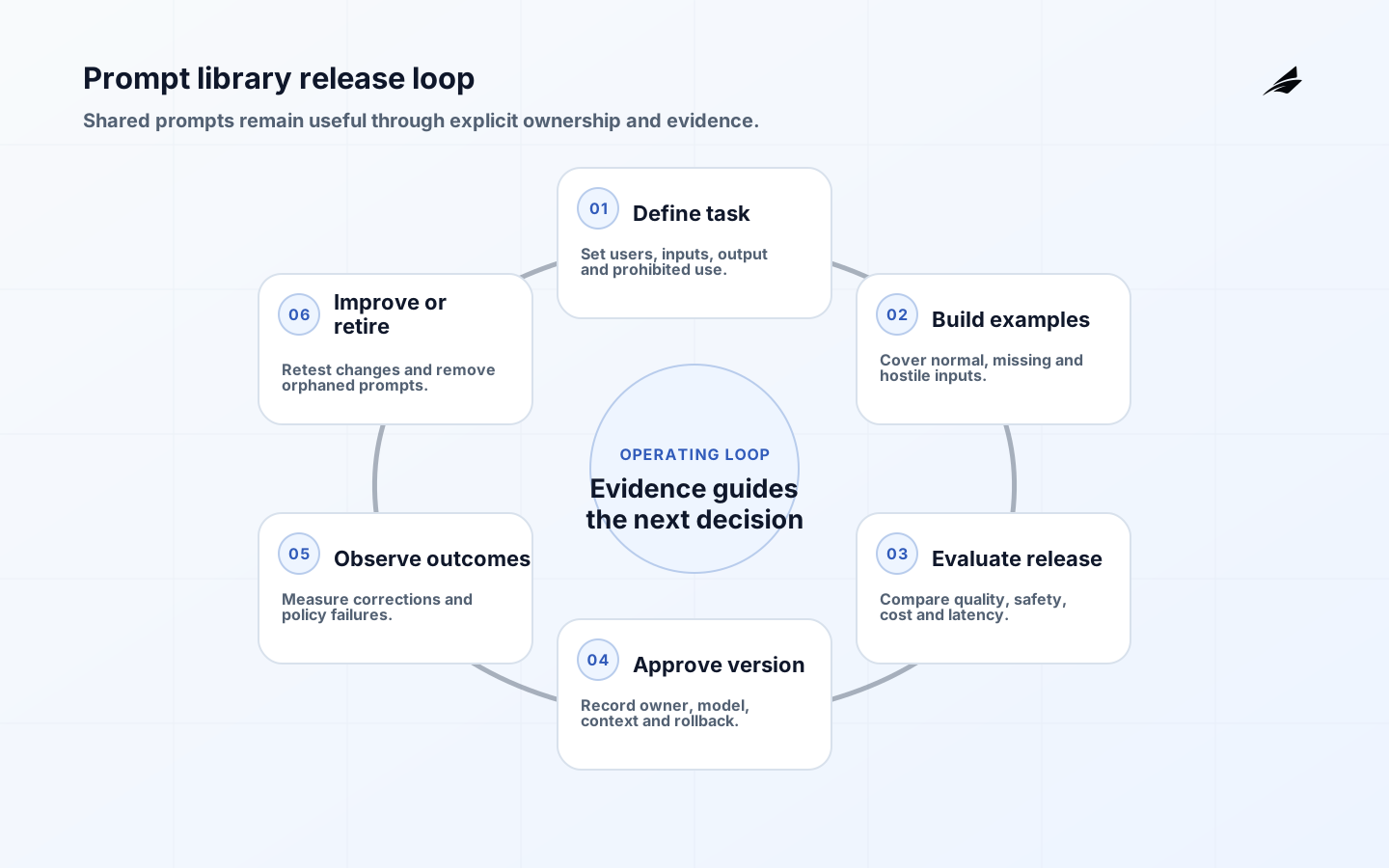
Prompt library management is not the maintenance of a folder full of clever text. It is the discipline of connecting a recurring task to approved context, an expected output, operating boundaries, representative examples, evaluation, and ownership. As a team grows, people naturally copy a useful prompt, alter it for a client, add a tool call, or paste sensitive context to make it work. That can create inconsistent customer communication, broken integrations, and unclear data handling. A durable library gives teams a reliable starting point while preserving room for documented, reviewed improvement. The NIST AI Risk Management Framework is useful framing because prompt behavior belongs inside an accountable AI system, not outside it as informal advice.
Give each prompt a clear contract
A prompt entry should state its purpose, intended users, approved model or capability assumptions, required inputs, allowed data classes, output format, prohibited actions, tool permissions, owner, version, and review date. Include a short explanation of the workflow it supports so a user does not repurpose a support summary prompt for a financial or personnel decision. Store examples as test cases, not as hidden instructions. The contract also helps engineers decide whether a prompt is really a product feature that deserves structured inputs, a service boundary, and normal release discipline.
| Prompt field | What it records | Why teams need it |
|---|---|---|
| Purpose and audience | Named workflow and authorized users. | Prevents accidental reuse in a different decision. |
| Inputs and data class | Required fields and handling boundary. | Makes missing context and sensitive data visible. |
| Output and limits | Format, citations, abstention, and prohibited claims. | Gives users a checkable result. |
| Owner and version | Accountable person, change record, review date. | Makes maintenance possible after the author moves on. |
Design templates around inputs and decisions
Keep stable instructions separate from variable business data. Pass structured fields when possible, and label each input’s source and authority. Ask the model to produce a defined artifact, such as a draft response with cited policy references, rather than an open-ended stream of advice. Define how it should handle missing information, conflicting sources, restricted data, and requests outside scope. The NIST Generative AI Profile is helpful when considering confabulation and information integrity: a template should make it easy to say “I do not have an approved source” instead of rewarding confident completion.
Test prompts as they change
Create a small, versioned evaluation set for each important prompt. Include normal examples, incomplete inputs, ambiguous requests, policy changes, malicious or irrelevant content, and outputs that should be refused or escalated. Record the model, retrieval or tool configuration, prompt version, expected behavior, result, and reviewer decision. Compare a proposed change with the current version before rollout. The OWASP Top 10 for LLM applications is relevant because prompt injection and excessive agency are system risks; tests should include the documents, tool results, and user messages through which those risks can enter.
| Change | Risk to check | Release evidence |
|---|---|---|
| Instruction wording | Altered output scope or tone. | Comparison on representative cases. |
| New source or retrieval | Stale, unauthorized, or conflicting context. | Permission and citation tests. |
| New tool access | Unexpected system action or data exposure. | Scoped policy test and action preview. |
| Model upgrade | Changed reliability, latency, or formatting. | Versioned regression results and rollback plan. |
Operate the library with ownership and access boundaries
Use a searchable catalog with clear categories, but avoid an ungoverned prompt marketplace. People should know which templates are approved for customer-facing communication, internal analysis, regulated work, or experimentation. Give owners a simple review queue for suggested changes and retire obsolete templates rather than allowing near-duplicates to multiply. Restrict editing and tool-enabled use according to role. The NIST Secure Software Development Framework supports applying change management and secure-development practices to the surrounding system where prompts, tools, and configurations are delivered.
- Create a contract that ties every reusable prompt to a real workflow and owner.
- Separate fixed instructions from structured, authorized business inputs.
- Define abstention, escalation, and output format rather than hoping for them.
- Evaluate important templates on normal, incomplete, adversarial, and changed conditions.
- Version, review, retire, and restrict prompts as maintained team assets.
Plan for the ways a library changes as teams grow
A new sales hire may find a prompt that produces a concise account summary and begin using it for renewal proposals. The original template may have been designed only for internal preparation, with no approved pricing or customer commitment language. The library should make that boundary visible and offer a separate, reviewed workflow for external communication rather than relying on the hire to infer the distinction.
An engineering team may connect a previously text-only prompt to a customer-record lookup tool. That is not a minor wording update. It changes the data boundary, permission model, evaluation set, and incident response needs. Treat the change as an integration release, test the tool scopes with real roles, and record how a user can see which records were used.
A policy owner may update a source document that several prompts rely on. The library should help identify affected templates, re-run their targeted tests, and publish a visible change note for users. This avoids the familiar failure where some staff continue to use an old saved prompt while others receive the new policy through a different path.
Measure reuse with quality, not copy counts
Plan for the moment when a reusable template should become a structured product capability. If many people use the same prompt to gather the same fields, apply the same rule, or call the same tool, a form, workflow service, or approved integration may be clearer and safer. The library should capture that signal instead of preserving an increasingly complicated prompt out of habit. Moving stable business logic into visible system controls reduces variation, gives users better feedback, and lets the prompt remain focused on the genuinely language-based part of the work.
Create a review rhythm that is proportional to use and consequence. A low-risk internal template may need a quarterly owner check, while a customer-facing or tool-enabled template should be reviewed after a policy, model, data, or workflow change. Ask the owner to confirm that examples remain current, expected outputs still match the product, sources and tools have appropriate access, and open corrections have been addressed. Publish a short note when a significant template changes so staff understand whether to revisit a saved workflow or retrain a team. The library becomes trustworthy when maintenance is visible, predictable work rather than an occasional cleanup campaign.
Track which templates are used, where users edit outputs heavily, which cases are escalated, whether citations are inspected, and which prompts generate recurring support questions. High reuse can mean a valuable asset or a widespread workaround for a missing product feature. Review the evidence with the workflow owner. If a template repeatedly needs the same human correction, improve its inputs, move the rule into code, or narrow its approved use. The aim is consistent, responsible completion of work, not a leaderboard of prompt popularity.
Key takeaways
Build a release record for every production prompt
A prompt library becomes dependable when a prompt release can be explained without relying on the author’s memory. Store the intended task, eligible users, input schema, required context, model and tool assumptions, output contract, prohibited use, evaluation-set version, approver and rollback target. The NIST Generative AI Profile treats generative AI risk across the lifecycle rather than as a one-time model-selection exercise. Prompt management should follow the same logic: changes to instructions, examples, retrieval, tools or model configuration are releases that can alter quality and risk.

Separate reusable content from runtime policy. A writing template may describe tone and required sections; authorization, tenant boundaries, disclosure rules and allowed tools belong in deterministic application controls. Do not ask a shared prompt to enforce a rule the application can verify directly. Store example inputs with expected properties rather than a single ideal answer, because legitimate outputs vary. Include difficult cases such as missing fields, conflicting context, hostile instructions, sensitive material and requests outside the prompt’s declared purpose.
| Release field | Question it answers | Failure it prevents |
|---|---|---|
| Purpose and eligibility | Who may use this prompt for which decision? | Convenient reuse outside the validated context |
| Inputs and context | Which fields and sources are required? | Silent guessing from incomplete or stale material |
| Output contract | What structure and uncertainty signals must appear? | Downstream parsing and review ambiguity |
| Evaluation version | Which representative cases passed? | Approving a change from one impressive example |
| Owner and rollback | Who responds and which release can be restored? | Orphaned prompts and prolonged production defects |
Teams can use the business prompt-library guide to define ownership, the internal-tool evaluation framework to build acceptance tests, and the RAG evaluation guide when prompts depend on retrieved company material. Review library health by active use, task success, reviewer correction, policy failures, cost and the age of unmaintained entries. Retire prompts that no longer have an owner or an evaluation path.
- A prompt library should contain contracts, owners, examples, and review dates, not only text.
- Structured inputs and defined outputs make prompts easier to test and safer to reuse.
- Critical policy and permissions belong in systems, not hidden instructions.
- Model, source, and tool changes require versioned evaluation and rollback planning.
- Usage data is useful when it reveals work quality and missing product capabilities.
Frequently asked questions
Which prompts belong in a shared library first?
Start with recurring, high-value tasks that have a clear owner and recognizable inputs and outputs: support drafting, meeting preparation, approved research summaries, or structured internal intake. Avoid sharing prompts for high-impact decisions until the workflow, source access, and review requirements are mature enough to support them.
Should everyone be able to edit a shared prompt?
Encourage suggestions from everyone, but protect approved versions with named owners and review. Open editing can be appropriate for low-risk experimentation spaces. Customer-facing, tool-enabled, or sensitive workflows need change records, test evidence, and a way to roll back when a well-meant adjustment changes behavior.
Conclusion
A prompt library scales when it captures the operating knowledge around the words: purpose, data boundary, expected artifact, evidence, ownership, and change history. Treat prompts as maintained product assets, and teams can reuse good judgment instead of repeatedly rediscovering it in private chats and copied documents.