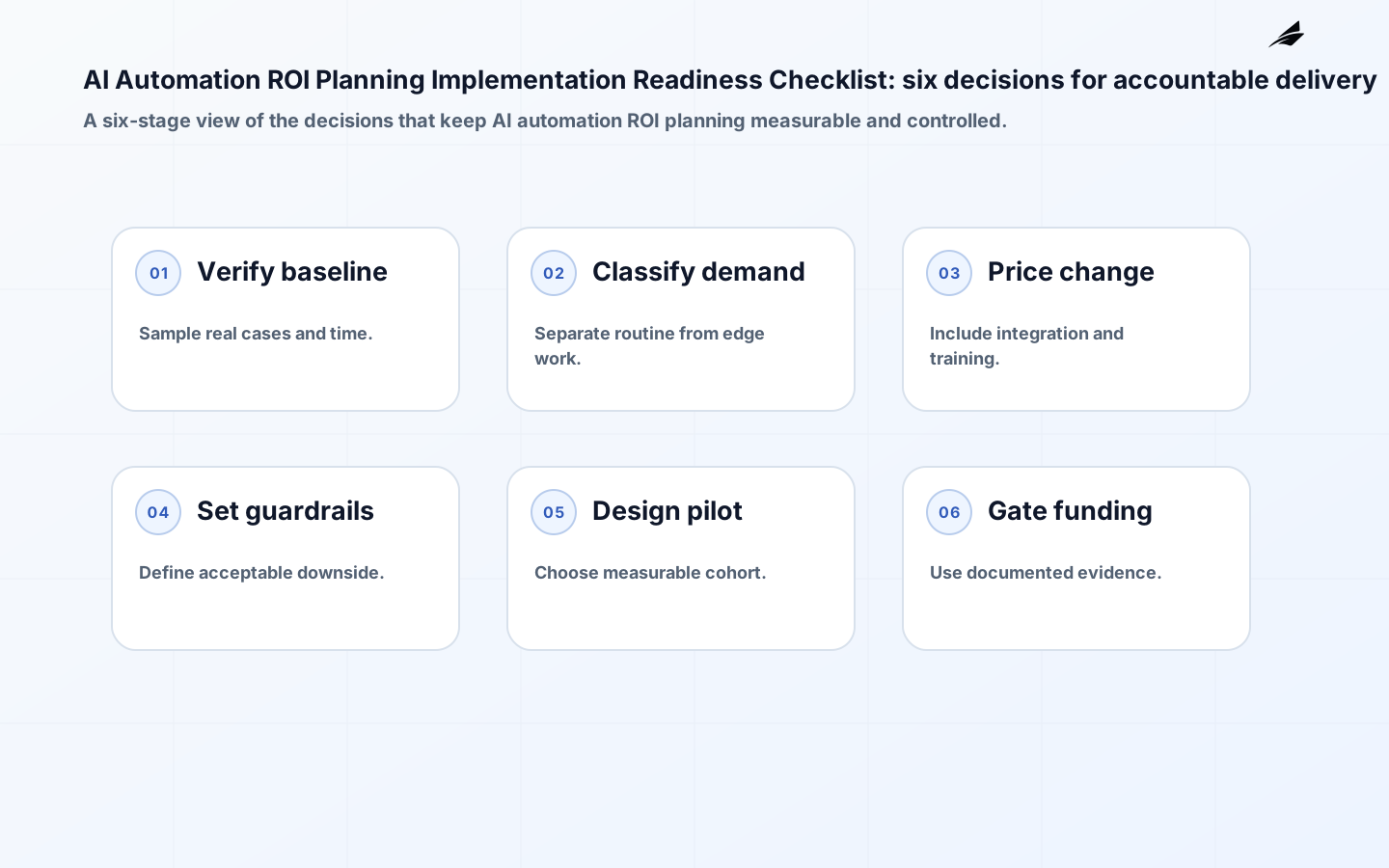
A AI automation ROI planning implementation readiness checklist should begin with a decision that a team can actually own. The goal is not to add an impressive AI feature to every task; it is to test whether an automation business case has enough operational evidence to fund a controlled implementation. Start with the person doing the work, the case that enters the workflow, the source of truth, and the moment at which a result changes what happens next. That framing exposes requirements that a product demonstration cannot: which data may be used, what an uncertain result looks like, who can override it, and how a customer or colleague can recover when the system is wrong. The NIST AI Risk Management Framework is useful here because it treats risk management as a lifecycle activity, not a final approval. A small, evidence-rich first use case is usually more valuable than a wide promise with no operating owner. For this design choice, name the accountable owner, supporting evidence, exception route, and next measurable check.
Define The Outcome
For AI automation ROI planning, write a one-page decision statement before choosing architecture or suppliers. Describe the user, the incoming process maps, baseline measurements, exception queues, and implementation estimates, the desired outcome, and the boundary of automation. State whether the proposal is ready for a pilot, needs discovery, or should be declined in plain language, then identify the accountable person who can change that boundary. Include the cases that must not proceed automatically, such as missing records, conflicting policy, an unfamiliar request, or a result with material consequences. This turns vague enthusiasm into testable scope. It also gives legal, security, operations, and delivery colleagues something concrete to challenge. The right first workflow has repeatable inputs, a clear handoff, a known fallback, and a measurable outcome; it is not simply the workflow with the loudest demand. Within this decision boundary, name the accountable owner, supporting evidence, exception route, and next measurable check.
| Decision area | Evidence to collect | Release implication |
|---|---|---|
| Business outcome | Sample cases and a named process owner | Stops the work becoming a generic assistant. |
| Data and access | Source inventory, purpose, and role mapping | Limits exposure and makes permissions testable. |
| Action boundary | Allowed action, reviewer, and fallback | Prevents a suggestion from becoming silent authority. |
| Operating model | Alert owner, support path, and review cadence | Makes the service maintainable after launch. |
Map The Workflow And Controls
For delivery teams working on AI automation ROI planning implementation readiness checklist, this operating decision should connect governed inputs, model behavior, permitted tools, human judgment, and recorded outcomes to evidence an accountable owner can inspect. Map the workflow as it is performed, including handoffs, delays, informal checks, and rework. Ask where the system receives information, what it retains, what it sends to a model or tool, and what system of record is changed. Do not infer permission from technical connectivity. A connector that can read a broad repository or call a downstream service needs the same deliberate access design as any other production integration. The OWASP guidance for LLM applications highlights risks such as prompt injection, sensitive-information disclosure, insecure output handling, and excessive agency. Translate those categories into local controls: approved sources, constrained tool permissions, output validation, logging that respects privacy, and a human route for uncertain or high-impact work. In this readiness review, move beyond the operating decision only after the owner can show the accepted result, the exception path, and the signal for another review.
Plan Evidence Before Build
In AI automation ROI planning implementation readiness checklist, delivery teams should make the relationship between governed inputs, model behavior, permitted tools, human judgment, and recorded outcomes explicit and reviewable. Treat implementation as a set of claims that need evidence. A team may claim that the workflow is useful, that it reaches only authorized data, that it assigns work correctly, or that it recovers from a failed tool call. Each claim needs representative tests and a named owner. Use historical cases only when their use is permitted and they represent the work being automated; supplement them with deliberately difficult cases, incomplete records, changed instructions, and attempts to cross the stated boundary. The NIST AI RMF Core organizes activities around govern, map, measure, and manage, a helpful way to avoid making evaluation a one-time score. Keep a versioned test set, record material configuration changes, and review differences between expected and actual behavior before expanding access or authority. This readiness review should close the information boundary only when the result, unresolved exception, and next review condition are recorded.
| Failure to test | Practical check | What to record |
|---|---|---|
| using a spreadsheet forecast as proof that the workflow can change safely | Run a negative case and confirm the route stops or escalates. | Input, system result, reviewer action, and final outcome. |
| Stale policy or source | Change a rule or document and repeat a representative case. | Version, effective time, and which result changed. |
| Tool or integration failure | Simulate a timeout, denial, and duplicate submission. | User message, retry behavior, and recovery owner. |
| Uneven user adoption | Observe the intended role completing normal work. | Time saved or added, corrections, and unmet needs. |
Run A Bounded Pilot
A dependable AI automation ROI planning implementation readiness checklist design makes governed inputs, model behavior, permitted tools, human judgment, and recorded outcomes visible to the owner responsible for this operating decision. Release the smallest cohort that can reveal the real operating conditions. Define entry criteria, volume limits, an exit condition, and an escalation channel before the pilot starts. Compare a sample of completed cases with the baseline process, not merely with the system’s internal confidence signal. Reviewers should be able to see enough context to disagree intelligently, and their corrections should be classified rather than folded into a single error count. Look for new work created by the automation: queue management, source maintenance, prompt or policy changes, vendor review, incident response, and user support. A pilot succeeds when it produces a defensible next decision, including a decision to narrow or stop. It does not need to prove that every benefit estimate will hold at full scale. The next step in this readiness review is justified when the team can trace the accepted outcome, the fallback route, and the owner of follow-up.
Measure Value And Risk Together
Measure baseline integrity, exception coverage, forecast sensitivity, and pilot decision quality together, because speed alone can hide displaced effort or poorer outcomes. Establish a baseline from sampled live work and document the assumptions behind it: demand mix, seasonal variation, skilled reviewer availability, and dependent-system performance. Report both aggregate outcomes and exception patterns. A faster path with a growing unresolved queue is not a finished improvement. Where personal data is involved, the ICO’s AI accountability guidance explains the importance of documenting the processing, roles, and safeguards, including meaningful human intervention where it is used. Keep decision logs proportionate to the risk, protect them appropriately, and set a review cadence that can respond to changed data, policy, or users. When changing this control, name the accountable owner, supporting evidence, exception route, and next measurable check.
Operate And Improve The Service
This operating decision for AI automation ROI planning implementation readiness checklist is strongest when governed inputs, model behavior, permitted tools, human judgment, and recorded outcomes can be reviewed as one operating record. After launch, make ownership visible. Someone should own source quality, access reviews, operational performance, and the business rule that defines success. Give support staff a way to identify the model or configuration involved in a case without exposing sensitive internals to every user. Set triggers for investigation: a rise in overrides, repeated routing failures, unexpected cost, a new type of input, or a policy change that affects the decision. Review the system’s boundary whenever it gains a new tool, data source, user role, or action. This is how a AI automation ROI planning capability stays useful as conditions change. The work is not complete at deployment; it becomes an operating service with measurable responsibilities. Acceptance in this readiness review requires a visible outcome, a bounded exception path, and a measurable reason to revisit the decision.
Ai Automation Roi Planning Takeaways
- Start with one owned workflow and a decision boundary that people can explain.
- Map data, permissions, tools, and fallback paths before expanding capability.
- Use representative and adverse cases to test the claims that justify release.
- Pilot with volume limits, reviewer context, and a way to classify exceptions.
- Track outcome quality, operating cost, and human recovery work alongside speed.
Ai Automation Roi Planning Faq
Delivery teams can keep AI automation ROI planning implementation readiness checklist accountable by recording how governed inputs, model behavior, permitted tools, human judgment, and recorded outcomes shape this operating decision. What is the first question to ask? Ask which decision or task would become better, faster, safer, or more consistent, and how that change will be observed. Is a high model score enough to approve a release? No. Evaluate the whole workflow, including permissions, tool behavior, user understanding, exceptions, and recovery. Should people always review results? Review should be proportionate to impact and uncertainty; low-risk drafting may need different controls from a decision that affects money, access, or rights. How should a team choose a pilot? Choose a bounded group with representative demand, a clear owner, and a safe manual alternative. What happens when the process changes? Revisit the scope, data assumptions, tests, and approval boundary before the changed workflow is treated as routine. For this readiness review, the responsible owner should be able to explain what passed, what remains exceptional, and which signal reopens review.
Ai Automation Roi Planning Conclusion
A strong AI automation ROI planning implementation readiness checklist gives a team a way to make a responsible next decision. Define the work, bound authority, collect evidence from real cases, and keep a recovery path in view. That discipline turns an AI initiative from a promising demonstration into an accountable operating capability. To govern this part of the system, name the accountable owner, supporting evidence, exception route, and next measurable check.