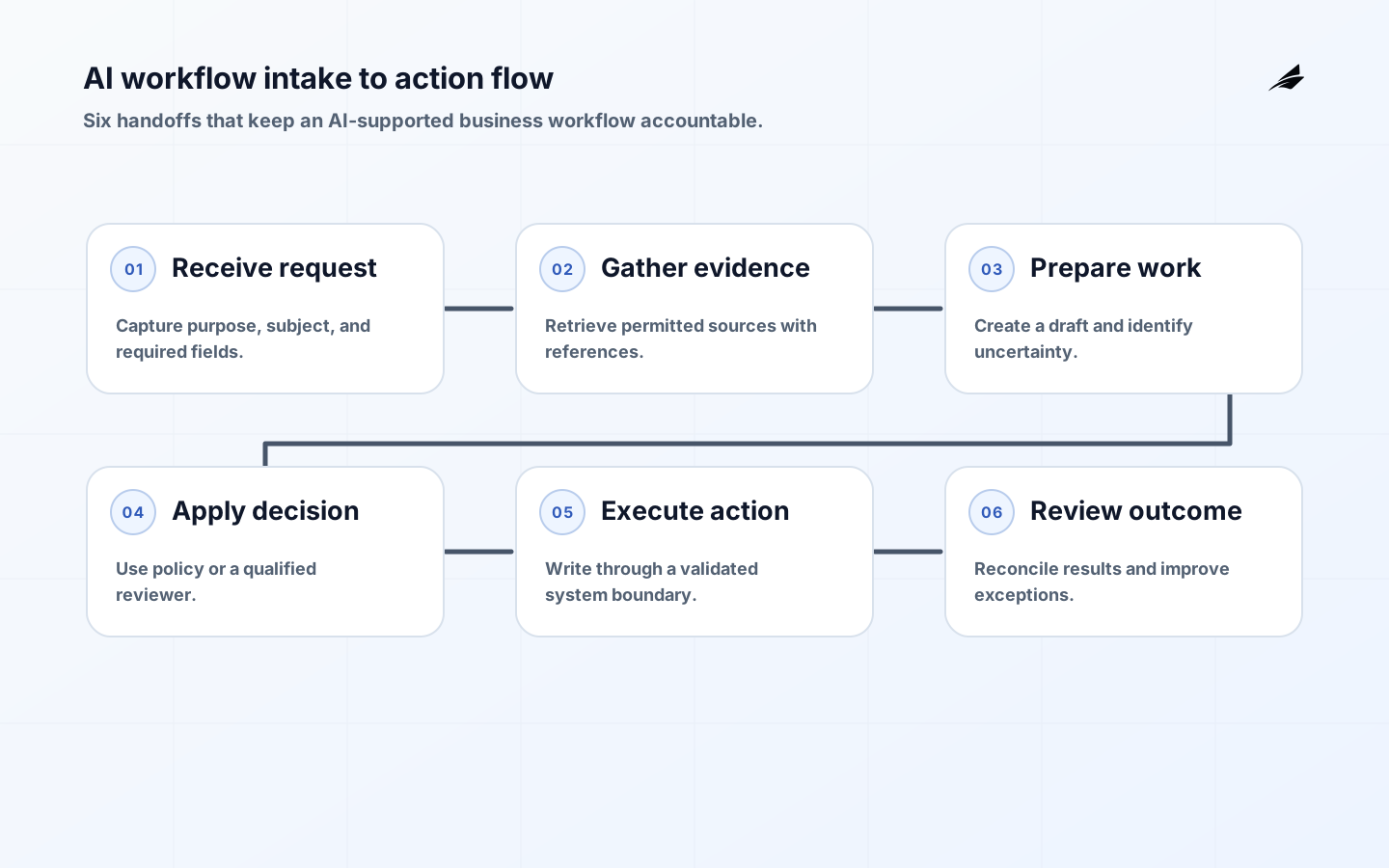
AI Workflow Series: From Intake to Action is a design pattern for a problem that chat interfaces often hide: a helpful answer is not the same thing as completed work. In a business workflow, someone submits a request, the system gathers evidence, a rule or person decides what is allowed, an action changes a system of record, and the result needs review. AI can assist at several of those points, but it should not blur them together. The NIST AI Risk Management Framework is useful because it directs attention to the context and consequence of an AI-supported decision. Start by naming the work outcome, the accountable role, and the point at which an error becomes material.
Write the workflow contract before building the assistant
Describe the request type, required information, source systems, allowed output, decision owner, action authority, and exception path. A request to summarize a case may be safely assisted; a request to close a case, approve a credit, or communicate a commitment requires stronger boundaries. Make state transitions explicit: received, incomplete, prepared, awaiting review, approved, executed, failed, and corrected. These states give users and operators somewhere to put real-world uncertainty. Without them, a conversational response can look complete while the record, approval, or downstream action never happened.

| Workflow step | AI can assist with | Control that remains necessary |
|---|---|---|
| Intake | Classify request and identify missing fields. | Validate identity and required business data. |
| Evidence gathering | Retrieve permitted records and draft a summary. | Preserve source references and access policy. |
| Decision preparation | Suggest options or explain a rule. | Apply the authoritative rule and reviewer judgment. |
| Execution | Prepare structured action payload. | Authorize, confirm, and record the system change. |
Make intake complete enough for accountable work
Design the intake screen or API to capture the requester's identity, the subject, purpose, deadline, source references, and any information a reviewer will need later. Let AI identify gaps, but do not let it manufacture missing facts to move work forward. If documents or prior messages are involved, retrieve only what the requester may access and label the provenance. The OWASP Top 10 for LLM applications is relevant because instructions hidden in untrusted content should not be able to alter tool use or the workflow state. Treat retrieved text as evidence, not as operating instruction.
Separate recommendation, decision, and action
Keep a visible boundary between a model recommendation, an approved decision, and an executed action. A recommendation may be based on incomplete context; a decision applies business authority; an action changes an external state. This separation enables appropriate controls: review for uncertainty, policy evaluation for eligibility, confirmation for high-impact changes, and idempotency for retried execution. The NIST Generative AI Profile discusses risks such as confabulation and information integrity that become especially important when generated text is close to a system write.
| State | Owner | What should be visible |
|---|---|---|
| Prepared | AI service or assigned worker. | Input sources, draft, and missing information. |
| Awaiting review | Named decision maker. | Policy result, rationale, and permitted choices. |
| Approved | Authorized role or deterministic policy. | Approval identity, scope, and expiry if applicable. |
| Executed or failed | System integration owner. | Correlation ID, resulting record, retry or correction path. |
Design exception work as a first-class path
Most workflow risk appears in exceptions: a source is unavailable, a request is ambiguous, an action is denied, an external service times out, or the user disputes a result. Give each exception a reason code, owner, priority, and next step. Preserve enough evidence for a person to continue without repeating intake. Do not hide failures behind a generic “something went wrong” message, and do not endlessly retry a consequential action. A thoughtful exception queue is often where AI creates its greatest value, by preparing context and routing work while leaving judgment and authority clear.
- Map the named states before choosing a chat, form, or automation interface.
- Keep request data, retrieved evidence, decisions, and actions as separate records.
- Use structured previews and confirmations before material system changes.
- Give failed and uncertain cases a visible owner and recovery route.
- Test whether an operator can explain any completed action from the work packet.
Build one narrow end-to-end path first
Choose a high-frequency but bounded workflow for the first release. Connect one intake route, one trusted data source, one review rule, one system action, and one measurable recovery path. Run it with real users in a controlled pilot. Observe where people correct the packet, leave the system, or need more context. Those moments reveal the true integration and policy requirements. The NIST Secure Software Development Framework supports treating these controls as development work, with reviewable changes and response practices rather than last-minute documentation.
Preserve state from request to business transaction
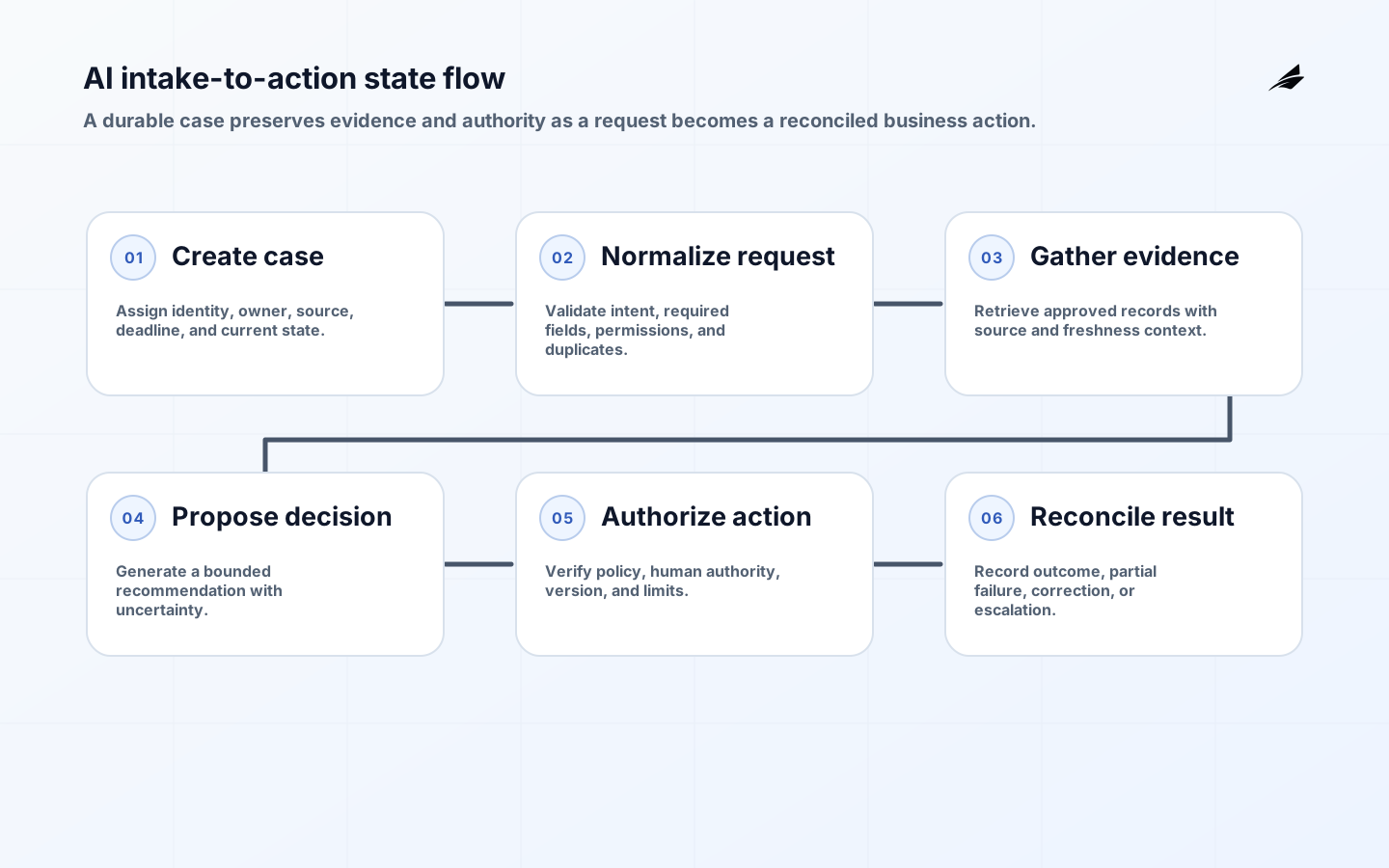
The workflow needs a durable case identifier before the model is called. That identifier should follow the request through normalization, retrieval, recommendation, approval, tool execution, and reconciliation. Store transitions as business events with actor, timestamp, source evidence, policy version, and reason. This makes the workflow resumable after a timeout and allows an operator to distinguish a model error from a failed downstream transaction. The NIST AI RMF Core specifically calls for human oversight processes to be defined and documented; a durable state model is where that oversight becomes executable.
Treat action as a separate trust boundary. The model may propose a customer reply, routing choice, or record update, but an application service must verify authorization, current record version, limits, and idempotency before executing it. Reconcile the result back to the case, including partial failure or rejection. For deeper implementation patterns, use Edilec’s guides to AI document intake, human review gates, and AI ticket triage. Together they cover the evidence, authority, and queue behavior that a chat transcript cannot provide.
Rehearse the messy cases before scale
Define a launch decision that is based on observed behavior rather than enthusiasm for a demonstration. The pilot should show that users can complete the named task, reviewers can resolve exceptions, source and action records join correctly, and support can recover from a failure. Capture the remaining limitations plainly and decide whether they are acceptable for the next audience. This is how a workflow grows with confidence: each expansion is tied to evidence that the previous boundary works, not simply to a request that the assistant be made available to more people.
During the pilot, ask users to complete the same work with and without the new packet, then compare not only elapsed time but also the quality of the final record. Inspect where the AI assistant helps a person notice a missing field or policy reference, and where it adds a needless review loop. Keep the first deployment reversible: retain the manual route, identify who can pause the feature, and avoid connecting an early version to every system action. A measured pilot creates the evidence needed to decide whether more automation will genuinely improve the work.
Imagine an intake that contains a customer identifier but no account authority. The assistant should identify the gap, avoid retrieving broadly, and direct the requester to the verification step. Imagine a record that conflicts with a newly uploaded document. The workflow should retain both sources, state the conflict, and route a reviewer rather than deciding which is true from prose alone. These tests make the workflow’s actual guardrails visible.
Now consider an approved action that times out after reaching a downstream system. The system must know whether the action was applied, avoid creating a duplicate, and show an operator the correlation record. This is why an action needs idempotency, status polling or reconciliation, and a correction route. An AI-generated explanation may help the operator, but the durable evidence comes from the business system and integration events.
Finally, consider a user who asks the assistant to override a rule because the case seems urgent. The feature may summarize the urgency and surface the authorized exception process, but it should not silently expand the user’s authority. A well-designed workflow makes legitimate urgency actionable while preserving the approval and audit trail that protects both the customer and the staff member.
Key takeaways
- AI assistance is most useful when the business workflow and ownership are already explicit.
- A request, a recommendation, a decision, and an action should remain distinct states.
- Evidence and policy checks must survive the handoff to a human reviewer.
- Exception queues are a design surface, not an afterthought.
- Pilot one complete path before spreading AI across many unconnected tasks.
Frequently asked questions
Can a chat interface be the whole workflow?
It can be a useful intake or assistance layer, but it rarely replaces the underlying records, permissions, approvals, and state transitions. Use chat where it reduces friction, then hand work into a structured packet and system of record when the outcome needs accountability or coordination.
When may a workflow act automatically?
Automatic action is appropriate only when the outcome is bounded, inputs are validated, authority is clear, failure is reversible or low-impact, and monitoring can detect unusual behavior. The more a task affects money, safety, access, or customer commitments, the more it should use independent policy checks and review.
Conclusion
A complete AI workflow is a chain of accountable handoffs, not a single generated answer. Capture enough context, prepare evidence, separate decision from action, and make recovery visible. That structure lets teams gain speed while preserving the people, records, and controls that make business work dependable.