Finance dashboard architecture for SaaS growth starts with an operating decision, not a collection of attractive tiles. In SaaS growth, the real work is to make evidence usable when the stakes are uneven: a reader must know what changed, what it means, and whether the information is dependable enough to act on. The useful scope is cash planning, revenue performance, retention, and forecast decisions. Write the decision in plain language before choosing a tool, data model, or refresh schedule. That moves the conversation from “what should the dashboard show?” to “what should this person do differently when this signal moves?” It also gives delivery teams a test for every requested field: does it improve the decision, the explanation, or the recovery path? Finance dashboard architecture succeeds when the reader can answer those questions without reconstructing the logic from a private spreadsheet.
Define the decision finance dashboard architecture must support
Start with the actual meeting, queue, or handoff where finance and operating leaders need one interpretable view of performance without silently blending bookings, billing, revenue recognition, and cash. Ask a few readers to describe the most recent difficult case, the evidence they looked for, and the action that followed. Their account reveals timing, acceptable uncertainty, and where a report needs drill-through rather than more headline measures. Name one accountable reader for the first release. A leadership review, an exception queue, and a weekly operating meeting can all use the same underlying data, but they should not be forced into one indistinct interface. State the decision horizon too: some questions need an intraday warning, while others need a close-controlled number. The answer determines the needed freshness, validation, and approval effort.
- Name the reader, the regular work moment, and the action that finance dashboard architecture is intended to improve.
- Record the decision horizon and the consequence of acting on a late, incomplete, or disputed result.
- Separate the first decision from exploratory questions that deserve a linked analysis rather than a crowded opening page.
- Ask which evidence would make the reader stop, escalate, or reverse a previously planned action.
- Write exclusions for the first release so adjacent requests do not become implied promises.
Set an operating contract before build work
Turn the decision into a short contract that both the domain owner and delivery team can inspect. For this guide, the evidence includes ledger balances, billing events, subscription changes, usage signals, forecast assumptions, and close status. Record which system is authoritative for each claim, what one row represents at the point of calculation, and how corrections arrive. Keep event time, load time, and publication time distinct; a result may be recently published while describing an older business state. The contract should also identify who may use the output, what role-based restrictions apply, and when a visible warning is preferable to a blocked release. A concise contract makes later trade-offs explicit. It is far easier to agree on a limitation before release than to explain a silent change after an important decision.
| Contract element | Question to settle | Evidence to retain |
|---|---|---|
| Decision boundary | Which action does finance dashboard architecture inform? | Named reader, work moment, and expected response. |
| Authority | Which record is the reference for this use? | Source owner, business key, and documented scope. |
| Timing | When is the result safe to use? | Expected arrival, freshness threshold, and last successful publication. |
| Recovery | What happens when control fails? | Owner, notification route, and disposition record. |
Model evidence at a defensible grain
A report becomes fragile when it joins events, snapshots, and summaries before anyone states what a row means. Write the grain as a sentence, then test it against a familiar example. Preserve durable identifiers, source timestamps, and enough lineage to trace a published value back through each transformation. When different systems name the same person, account, product, or transaction differently, make the crosswalk a controlled asset with an owner and effective date. Do not bury manual mappings in a personal workbook. Decide how late arrivals, deletions, corrections, and historical restatements behave before they reach a reader. Those choices are not plumbing details: they decide whether two reports can reconcile and whether a past decision can later be explained. For finance architecture, keep booked contract value, invoice, recognized revenue, cash receipt, and forecast assumption at separate grains; combining them early produces convincing but unusable trend lines.
- Describe one row in the most reusable model and list the identifiers that make it unique.
- Keep business time, system time, ingestion time, and publication time available when they answer different questions.
- Document join cardinality and the intended behavior when a matching record is absent or duplicated.
- Classify sensitive attributes before making an asset easy to discover or export.
- Version mappings, definitions, and history rules so a change can be located after the fact.
Define measures and controls for finance dashboard architecture
A metric, status, or exception label is a promise about interpretation. Give every material signal a business meaning, population, calculation, time window, owner, comparison point, and known limitation. Use a small set of worked examples to make inclusion and exclusion rules concrete. Then attach controls at the cheapest diagnostic point: source arrival, schema conformance, record validity, transformation output, and published totals. A threshold is useful only when it has a response. For a low-risk issue, readers may see a warning and a review date; for an issue that changes a priority, commitment, or reported total, suppress the measure or hold release. The delivery team should not need to invent this policy during an incident. For finance dashboards, a control should tie each close-sensitive metric to the approved ledger or subledger state and visibly distinguish preliminary operational estimates from closed numbers.
| Control area | Practical check | Release response |
|---|---|---|
| Completeness | Required records or attributes arrive for the expected population. | Warn, hold, or clearly scope the affected result. |
| Validity | Values meet agreed type, range, and reference rules. | Quarantine invalid rows and open an owner task. |
| Reconciliation | A material total ties to its accountable system. | Block publication until the variance is understood. |
| Timeliness | Data arrives within the stated decision window. | Display freshness and escalate a missed threshold. |
Deliver a usable release and review rhythm
Release one complete decision loop before expanding scope. Put the output in the actual operating context, verify access with the people who need to act, and watch what happens when the value is surprising or unavailable. A polished report that sends readers back to an ungoverned export has not completed the job. Publish freshness, scope, and exception status beside the result, not in a hidden runbook. Keep a small issue log that distinguishes a documentation question from a model defect, an access failure, or a changed business rule. Review the log with the domain owner on a predictable cadence. That conversation is where finance dashboard architecture becomes a maintained service rather than a one-time project.
- Reconcile a sampled set of records with the accountable source before broad release.
- Test the exception path with a named resolver, including a realistic late or missing input.
- Show readers the last successful publication, scope, and any material limitation.
- Capture questions from real use and classify them before adding more fields or pages.
- Schedule a decision-owner review for definitions, thresholds, source changes, and unresolved exceptions.
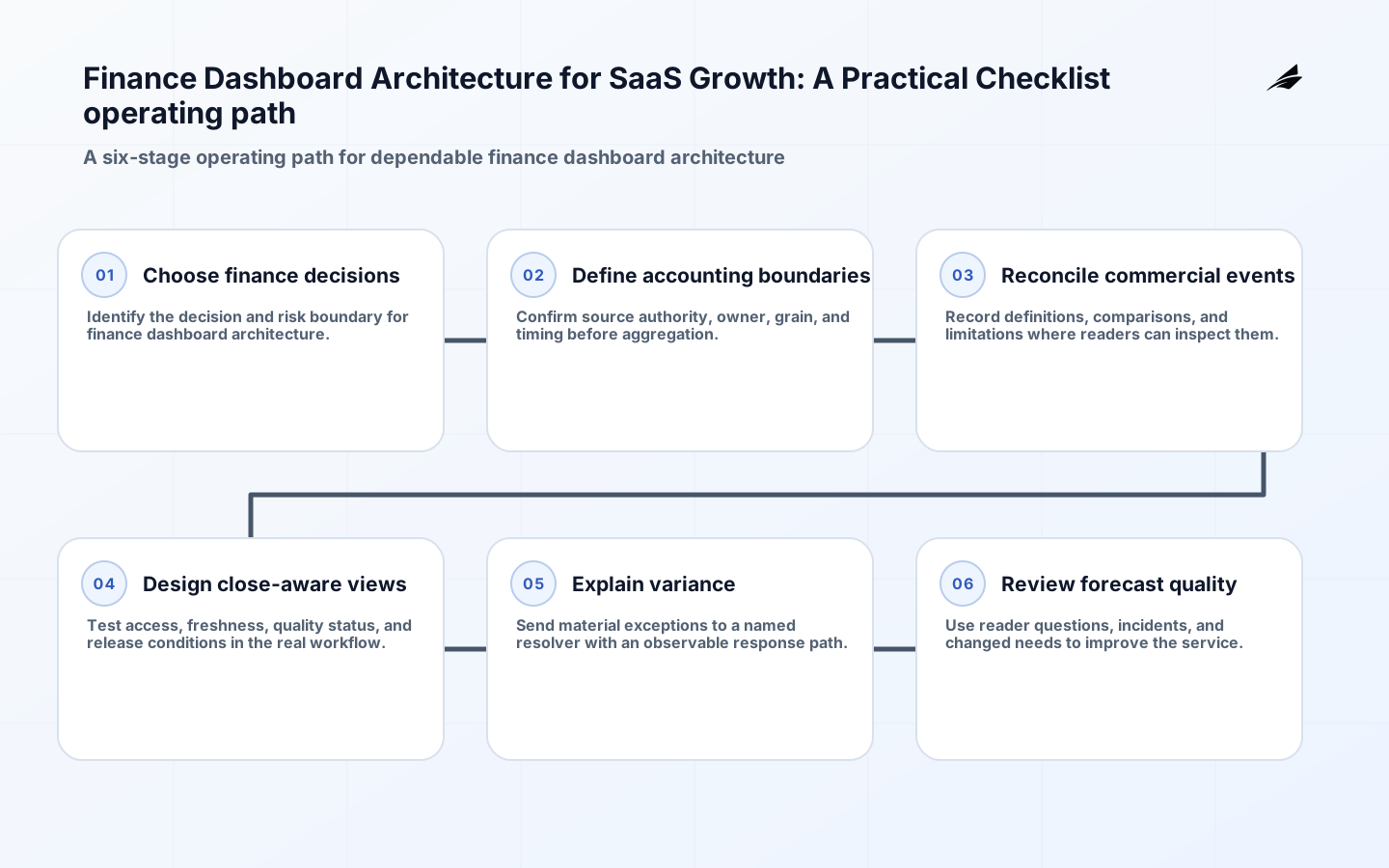
A six-stage operating path for finance dashboard architecture
The local diagram for finance dashboard architecture makes the delivery sequence inspectable. It starts with the decision and moves through owned evidence, definitions, controlled release, exception handling, and a review loop. The sequence matters because it keeps a reader-facing result connected to the people and records that make it credible. It is a discussion aid for planning and release reviews, not a substitute for the detailed contract and evidence register.

Key takeaways
- Finance dashboard architecture should begin with a named reader, decision, action, and acceptable level of uncertainty.
- A stated grain, source authority, and versioned definition make reconciliation and investigation possible.
- Freshness, scope, and quality status are reader-facing requirements, not internal implementation notes.
- Every material threshold needs an owner and a proportionate response path.
- Review actual use and exceptions to refine the service instead of adding features by default.
Frequently asked questions
How broad should the first finance dashboard architecture release be?
Start with the narrowest scope that supports a real decision in SaaS growth. It needs authoritative evidence, an intelligible definition, and one tested response path; it does not need every adjacent metric or historical source. A focused release exposes unclear ownership and data gaps early. Expand only after readers can use the first loop without relying on undocumented workarounds. The first view should answer one close or planning decision, such as retention risk against the forecast, with a stated close status and a reconciliation to the accountable finance system.
Who owns finance dashboard architecture definitions and exceptions?
The domain owner owns business meaning and fitness for the decision. The delivery owner implements, documents, monitors, and changes the technical path under that agreement. The reader who takes action must be able to challenge either side. When meaning changes, publish the effective date, rationale, and affected output so comparisons never quietly combine old and new logic. Finance owns accounting policy and close interpretation, commercial leaders own operational context, and analytics owns implementation, lineage, and observable refresh behavior.
What should happen when a control fails?
Match the response to decision risk. A missing optional descriptive field can remain visible with a clear warning, while a fault that alters a committed total, access boundary, or operating priority should block publication or replace the value with an explicit unavailable state. Give readers a concise status and next review time; give the resolver the failed rule, affected population, and source context. When close controls fail, do not substitute an unlabelled estimate for a reported amount; show the latest approved period and the reason the current period is unavailable.
Conclusion
Finance Dashboard Architecture for SaaS Growth: A Practical Checklist is most useful when it behaves as a dependable operating service. Define the decision, set the evidence contract, model at a defensible grain, document controls, and make release and exception ownership visible. That discipline gives finance and product leaders a smaller but more credible starting point. It also creates a foundation for later automation, new sources, and broader reporting without turning each change into a fresh argument about what the numbers mean.